
Easy Withdrawal Casinos in Australia — the Offshore Reality Behind the Promises
An “easy withdrawal casino” in Australia is, by definition, an offshore casino — there is no Australian licence that covers the product. The marketing promises real money in your account. The law says something else.

Current as of 22 November 2026; regulatory claims verified against the ACMA enforcement register and the Northern Territory Racing and Wagering Commission public licence list.
Table of Contents
- No Australian Casino Licence Exists — Here’s What That Means for Your Withdrawal
- Why Withdrawal Speed Is the Real Trust Signal at Offshore Casinos
- Real-Money Play from Australia — What Actually Reaches Your Bank Account
- Pokies and Slots: Playing Where the Payouts Actually Land
- Why Your 2026 Bonus Looks Bigger Than It Really Is
- The Deposit Fine Print That Can Trap Your Withdrawal
- Beyond the Pokies — Live Tables, Betting and Mobile Play
- Responsible Gambling When the Safety Net Doesn’t Reach Offshore
- The 10 Most-Trafficked Offshore Casinos Accepting Australian Players — Compared
- How We Evaluated and Ranked These Casinos
- Choosing an Offshore Casino You Can Actually Trust — Your Next Move
- Frequently Asked Questions
No Australian Casino Licence Exists — Here’s What That Means for Your Withdrawal
The first thing to clear up is the one the homepage does not: there is no licence in Australia for an online casino to take your money. Not federally, not in any state or territory, not anywhere. The Interactive Gambling Act 2001 — amended in 2017 and again in 2026 — makes it a criminal offence for a provider to offer online casino games, online pokies or in-play sports betting to a person physically in Australia. The Act targets the provider, not the punter. No Australian player has been prosecuted for opening an account at an offshore casino; the entire enforcement apparatus points at the operator.
That distinction matters for the rest of the page. ACMA — the Australian Communications and Media Authority — has had 1,564 illegal gambling and affiliate websites blocked by Australian ISPs as of March 2026. More than 225 illegal services have withdrawn from the Australian market since enforcement was strengthened in 2017. The regulator’s record is real and growing. The product it is removing is the same product every casino on this page sells.
The implication for a withdrawal is straightforward. A player at an offshore casino has no Australian regulator to complain to if a payout stalls or never arrives. There is no local ombudsman, no local licence condition requiring a payout window, no local advertising code that protected the marketing claim. The operator’s home-jurisdiction rules apply, and the operator’s own terms apply, and those are the two documents a player has left when something goes wrong.
This guide is not going to fix that. It can lay it out clearly and rank ten offshore operators by the only data point that exists — tracked Australian market share — and it can walk through the mechanics of withdrawal speed, bonus terms and responsible gambling at sites the regulator has spent eight years trying to block. It cannot convert an offshore casino into a safe Australian one.
What “Australian Casino” Actually Means — and What It Doesn’t
“Australian casino” is a marketing term, not a legal one. The casino brands on this page use .au-style names, AUD balances and payment pages that look local. None of it is regulated by any Australian authority. The licensing regime that exists in Australia — concentrated under the Northern Territory Racing and Wagering Commission — covers wagering on racing and sport only. There is no equivalent covering online slots, blackjack, roulette or live-dealer tables.
The gap between the label and the licence is the central feature of the Australian online casino market, and it is what every offshore operator markets into. A casino called Royal Reels or FairGO can target Australian players as directly as a licensed Australian bookmaker without any of the regulatory overhead — no BetStop connection, no credit-card ban compliance, no advertising caps, no point-of-consumption tax. The branding does the work the regulator would normally do.
Trust signals that are real at an Australian-licensed operator and meaningless at an offshore one: a licence number on the homepage (the offshore operator’s licence is in Curaçao or Malta or Kahnawake, not Australia), a local complaint channel (none exists), an AUD deposit that arrives instantly through PayID (the AUD arrives; the protection around it does not). Trust signals that travel better: years in operation, independent testing of the game library, named software providers, and a track record of paying withdrawals to Australian players. None of those are regulated by an Australian authority, which is the point.
ACMA Enforcement and the Sites That Disappear
ACMA’s enforcement toolkit is one-sided on purpose. It targets the provider. The clearest demonstration is the site-blocking programme: since November 2019, ACMA has had ISPs block illegal sites at the DNS level, and 1,564 sites have been added to the list as of March 2026. That is a functional block for an Australian customer on a standard broadband connection — the page does not load, the deposit button never appears.
The site-blocking power has limits. A blocked site can reappear at a new domain within hours. VPN use defeats it entirely. ACMA does not have a parallel power to compel a payout from an offshore operator, freeze its bank account or claw back a player’s losses. The 225-plus services that withdrew from the Australian market since 2017 did so voluntarily, often after blocking requests became routine and the cost of serving Australian players exceeded the revenue.
The next layer of enforcement changes what 2026 leaves behind. The Interactive Gambling Amendment (Gambling Reform) Bill 2026 passed Parliament on 19 August 2026, and from 1 January 2027 Australian banks and payment providers gain express authority to block transactions to illegal gambling operators. The mechanism is more powerful than a site block — it removes the deposit. ACMA’s enforcement to date has driven the supply-side retreat; from 2027, the payment rails themselves become a filter.
The current penalty ceiling for an operator that fails to enforce the credit-card and crypto ban is A$247,500. That is the figure attached to a specific payment-rule breach. The civil penalties for unlicensed provision of an online casino to Australian customers are separate and have not been the load-bearing part of the regime — the site-blocking and the voluntary withdrawals have been.
The comparison table below summarises what a player gets under licensed Australian wagering versus what an offshore casino provides. The difference is the entire subject of this page.
| Player Protection | Licensed Australian Wagering | Offshore Casino |
|---|---|---|
| BetStop self-exclusion coverage | Connected — 67,480 total registrations, 41,290 active as at 31 July 2026 | Not connected — a self-excluded person can still deposit |
| Legal recourse against the operator | Australian regulator and dispute resolution | Operator’s home jurisdiction and the operator’s own terms |
| Payment-method protections | Credit card and crypto banned since 11 June 2024 | No equivalent ban; the offshore operator accepts what it chooses |
| Advertising and inducement safeguards | State and federal caps; from 1 January 2027 athlete and influencer endorsements banned | No equivalent |
| Regulator oversight and site-blocking power | ACMA enforcement — 1,564 sites blocked, 225+ services withdrawn since 2017 | None in Australia |
Every cell on the left is missing on the right. The list is not exhaustive — it is the parts that touch a withdrawal.
Why Withdrawal Speed Is the Real Trust Signal at Offshore Casinos
With no Australian regulator to lean on, the only verifiable promise an offshore casino makes is whether it pays. Withdrawal speed is the visible half of that promise; the unseen half is what the operator does when a payout is contested, delayed or refused. The first half is measurable by players in forums and review sites; the second half is documented only in the operator’s own complaints record, which lives in another jurisdiction.
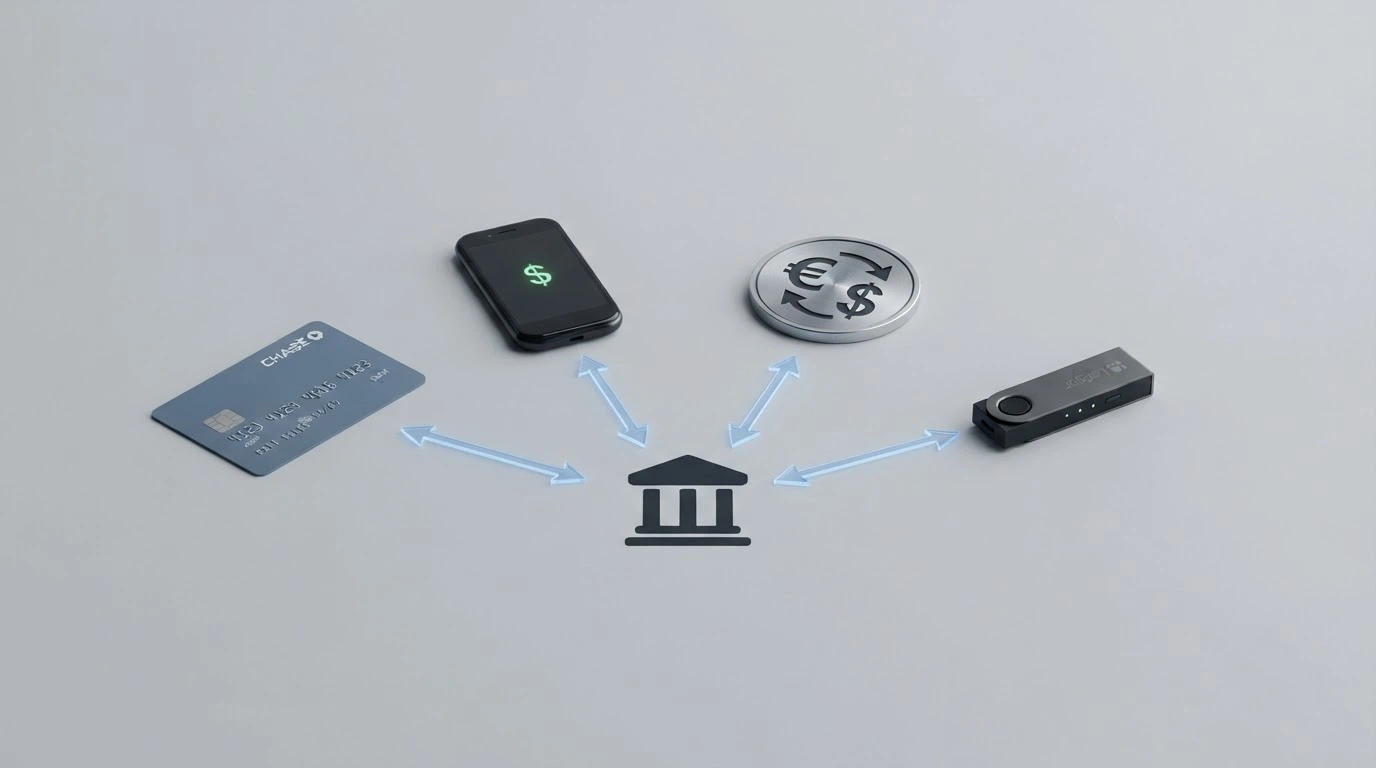
The cluster of mechanisms that determines how long a withdrawal takes is the same at every offshore casino, even where the brands differ. A request sits in a pending period — the operator’s window to review the account, the bet history, any bonus conditions, and the verification status. The pending period is where the operator’s decision is actually made. After that, the payout is released to the payment method, and the speed from that point depends on the method, the bank and the country.
For an Australian player, the meaningful comparison is not “Casino A pays in 12 hours, Casino B pays in 24”. The meaningful comparison is: what is the pending period, what methods does the casino actually process payouts through, what is the KYC position before the request is made, and what is the documented track record on disputes. Each of those questions has a different answer at each operator, and none of them is answered by a homepage banner.
The data this page can carry about each operator is limited to what tracked Australian market share records — the same data used to rank them. Per-operator withdrawal times, pending periods, KYC delays and dispute frequencies are not in this run. The qualitative framework below is what an Australian player needs to evaluate those numbers when they appear on a casino’s terms page or in a third-party review.
The Methods That Actually Move Money — and the Ones That Don’t
The legal deposit routes for licensed Australian wagering are debit card, bank transfer, PayID/Osko and BPAY. The offshore casino that targets Australian players accepts a different mix — typically a debit card, an international bank transfer, an e-wallet, and increasingly a cryptocurrency option. The credit-card ban that took effect for licensed wagering on 11 June 2024 does not bind an offshore operator; some still accept credit cards, and a player using one at an offshore casino sits outside the Australian consumer-protection net the ban was designed to create.
Crypto at an offshore casino sits in a different grey zone. Bitcoin, Ethereum and stablecoin deposits and withdrawals are common at offshore brands, and the speed is genuinely faster than any Australian-rail alternative — minutes rather than days for the on-chain leg. The risk is the rest of it: exchange-rate volatility on the AUD conversion, the absence of any Australian consumer-protection mechanism if a withdrawal is disputed, and the fact that the credit/crypto ban exists for a reason the offshore operator has chosen to ignore.
For an Australian player, the practical implication is method selection at the account stage, not at the withdrawal stage. A casino account opened with a credit card cannot always be cashed out to a bank account — operators routinely require the withdrawal rail to match the deposit rail. Picking a deposit method that does not also serve as a withdrawal method is a quiet way to lock funds on the casino side. PayID works as a deposit rail at licensed Australian wagering operators and at some offshore ones; it is not a withdrawal rail at offshore operators, which is the side of the transaction the page is about.
Same-Day, Instant and the Claims You Should Question
“Same-day withdrawal” and “instant withdrawal” are marketing terms with two distinct meanings inside them. The first meaning is provider-side: the casino releases the funds from the player account on the same day the request is made. The second is bank-side: the funds clear at the player’s Australian bank on the same day. The two are not the same, and the page exists because they are routinely conflated.
Provider-side processing on the same day is achievable at a well-run offshore casino, particularly for accounts that have already passed KYC. Bank-side clearing on the same day is not, in any meaningful sense, achievable from an offshore operator to an Australian bank account — international transfers clear through correspondent banks, and the standard timeline is one to five business days regardless of what the casino has released. Crypto is the partial exception: the on-chain leg is fast, but converting stablecoins to AUD and clearing into an Australian bank still introduces a banking-rail step the casino does not control.
The marketing claim to read carefully is the one that names a time window without specifying which half of the timeline it covers. “Within 24 hours” is meaningless without knowing whether that is the casino’s pending period or the full journey to a cleared bank balance. The only honest comparison is between operators on the same metric — pending-period length, or end-to-end time — and that comparison does not exist in published form for the operators ranked below.
KYC and the Withdrawal Gate Nobody Talks About
The verification step — KYC, “Know Your Customer” — is the most common reason a “fast” payout becomes a two-week wait. Offshore casinos that target Australian players are required, by their own licence conditions in Curaçao, Malta or Kahnawake, to verify the identity of every account holder before processing a withdrawal. The verification is typically requested at the first withdrawal attempt rather than at signup, which means a player can deposit and play for weeks without encountering it, and then meet it the moment they ask for their money back.
The standard KYC bundle is a government-issued photo ID, proof of address dated within the last three months, and the card or account used to deposit. Some operators add a selfie-with-ID check or a source-of-funds declaration above certain thresholds. Each item has a turnaround — the operator reviews, the player resubmits if anything is unclear, and the review resets. The realistic end-to-end timeline for a first withdrawal, with all documents ready at the start, is two to seven business days; the same withdrawal for an account that has to chase down a proof-of-address document can run to two weeks.
The single move that compresses this timeline is preparing the documents before the first withdrawal request — and that is preparation on the player’s side, not anything the operator does. Every minute spent uploading a clear photo of a current utility bill at signup is a day shaved off the first payout. Every operator on this page runs the same KYC process for the same reason; none of them are faster than the rest at the verification step itself, only at the pending period that follows it.
Real-Money Play from Australia — What Actually Reaches Your Bank Account
The end-to-end cashout path from an Australian player depositing at an offshore casino to cleared funds in an Australian bank account runs through more actors than the marketing page suggests. The casino is one. The payment processor handling the deposit is another. The offshore acquiring bank that receives the funds is a third. The Australian bank that clears the inbound transfer is a fourth. Each can add days; none owes the player the speed the homepage advertised.

The deposit side is usually friction-free. A debit card deposit clears in seconds; a PayID or Osko transfer moves same-day; BPAY takes one business day. The bottleneck is rarely there. The withdrawal side is where the timeline extends, because the operator’s pending period sits between the request and any of the rails above, and the operator’s KYC review sits between the first withdrawal and every withdrawal after.
The tax side is the part Australian players most often get wrong. Gambling and betting winnings are not assessable income under section 6-5 of the ITAA 1997, and gambling losses are not deductible under section 8-1 — unless the person is carrying on a business of betting or gambling. No Australian case has held the winnings of an ordinary punter assessable. The ATO’s position is that recreational play, even at an offshore casino, does not produce taxable income. The distinction that matters is “ordinary punter” versus “professional gambler”, and the threshold the ATO uses is sustained, systematic, organised play with the aim of producing assessable income — which an offshore casino punter playing for entertainment is not.
What does reach the bank account, then, is the full withdrawal amount net of any fees the operator charges, in AUD if the operator supports AUD or in another currency the player’s bank converts at its own rate. What does not reach the bank account is anything that the pending period holds, anything that KYC blocks, anything that an unmet bonus wagering requirement claws back, and anything the operator’s terms exclude. The rest of this section is about the size of each of those deductions.
Why Your Stake Size Changes the Withdrawal Conversation
Stake size is the variable most players underestimate. The withdrawal conversation is shaped by it because three of the four frictions above — pending period, bonus wagering, minimum and maximum withdrawal thresholds — scale differently at different stake levels.
A casual player depositing A$20 at a time and withdrawing A$50 faces minimum-withdrawal thresholds at the operator’s terms page that can exclude a small cashout entirely. The same player is unlikely to be playing through a bonus with serious wagering attached. A high-volume player depositing A$500 and withdrawing A$5,000 faces the opposite profile — the casino’s terms are designed for them, the bonus conversion matters more, and the maximum withdrawal threshold becomes the constraint. Different friction profile at each end.
The mechanism that ties stake size to withdrawal friction is bonus structure. A welcome offer that matches 100% up to A$500 with a 35x wagering requirement creates A$17,500 of required turnover for a player who deposits the maximum. The same offer at the minimum qualifying deposit creates A$3,500. The expected loss to the house across that turnover depends on the games played and their RTP, but it is non-zero at every stake level and meaningfully higher at the larger deposit. A player who treats the bonus as a free ride is paying for it in expected value; a player who reads the wagering requirement is paying for it explicitly.
The stake-size point that actually matters at the cashout step is the one the casino’s terms page makes about maximum withdrawal. Many offshore operators cap a withdrawal from a bonus-funded balance at a multiple of the bonus — five times the bonus amount, ten times, sometimes lower. A player who has played through the wagering requirement and then tries to withdraw a large bonus-converted balance meets the cap, and the rest is forfeited. The cap is in the terms, and it is the only place the cap is announced.
Cashout Accessibility: What “Easy” Means for Different Payment Types
“Easy” in “easy withdrawal casino” is doing more work than it should. The experience varies by payment type, and a method that is easy at deposit may be unavailable or restricted at withdrawal.
For an Australian player, the cleanest withdrawal rail is an international bank transfer to an Australian bank account that accepts inbound from the operator’s jurisdiction. Most Australian banks will accept the transfer; the timeline is the one-to-five-business-day correspondent-bank clearing time noted earlier, plus whatever pending period the operator applies. Debit cards are accepted for deposits at most offshore casinos but not for withdrawals — the operator pays the card network fees on a refund, and many refuse to do it. E-wallets (Skrill, Neteller, MuchBetter, MiFinity) work as withdrawal rails at offshore casinos but are not the cheapest, and the AUD conversion happens inside the wallet.
PayID works as a deposit rail at some offshore casinos accepting Australian players, because PayID is just an Australian fast-settlement layer over the standard banking system. It does not work as an international withdrawal rail — there is no correspondent-bank arrangement for an offshore casino to push AUD to an Australian account via PayID. The transfer that arrives in an Australian account via PayID clears as a standard OSKO or NPP payment from the operator’s sending bank, and the operator’s sending bank is almost always offshore. Crypto, where it is offered, is the cleanest in speed and the messiest in everything else — exchange rate, on-chain traceability, no chargeback recourse.
The pre-signup checklist that follows is short. Pick a deposit method the casino also supports as a withdrawal. Pick a withdrawal method the player’s Australian bank accepts inbound from the operator’s jurisdiction without manual intervention. Pick a method that does not force a currency conversion through an unfavourable rate. The first withdrawal will still take longer than the marketing promised; these are the moves that stop it taking longer than it needs to.
Pokies and Slots: Playing Where the Payouts Actually Land
Pokies — the Australian term for slot machines — are the dominant format at every offshore casino targeting Australian players, and they are the format whose payout behaviour most directly determines whether a withdrawal is meaningful. A player who has played 200 spins of a low-volatility pokie has a different bankroll profile than one who has played 50 spins of a high-volatility one; the withdrawal amount is the same on the screen, but the path to it has been different.

The standard online casino game library at an offshore brand accepting Australian players runs into the low thousands of titles. Slots make up the bulk; live-dealer tables, table games, scratch cards and crash games fill the rest. Pokies in the Australian vernacular map to slots in the international catalogue, and the game mechanics are identical — reels, paylines, bonus features, free-spin rounds, jackpot tiers.
What matters for the withdrawal is not the size of the library. It is the RTP — return to player — of the specific games played during the wagering of any bonus, and the volatility profile of the games chosen for the cashout journey. The offshore casino does not control these; the game provider does. The library size is a marketing feature; the RTP of the games the player actually loads is a financial one.
The data this guide carries about specific pokies and their RTPs is limited to qualitative discussion. No per-title RTP or volatility data is available for the operators ranked below in this run. The framework that follows — what to look for in a pokie when the goal is a real withdrawal rather than just a session — is general to the format and applies across the operators.
Pokies: What Australian Players Should Look For Beyond the Reels
The two numbers that matter on any pokie are RTP and volatility, and they work in opposite directions on the player’s experience. RTP is the long-run return to player — a 96% pokie returns, on average across millions of spins, A$96 of every A$100 wagered. Volatility is the variance around that average — a high-volatility pokie pays less often, but the wins are larger; a low-volatility pokie pays more often, but the wins are smaller.
For a player whose goal is a clean cashout, the practical advice is the same regardless of which offshore casino hosts the game: pick a pokie with a published RTP at or above 96%, pick a volatility that matches the bankroll session length, and avoid the games whose payout structure is locked behind a feature buy at a price the bankroll cannot absorb. The published RTP is in the game’s information panel at every legitimate provider; the volatility is usually described as low, medium or high in the same place.
The withdrawal angle on pokies comes in through bonus wagering. Most offshore casinos weight slot play at 100% toward wagering requirements — every dollar wagered on slots counts as a dollar against the playthrough. Table games and live-dealer titles are routinely weighted at 10% or 20%. The player who is trying to clear a bonus efficiently is playing slots; the player who is playing for entertainment and ignoring the bonus is playing whatever they like. The two strategies produce different bankrolls and different withdrawals.
Slots and Theme Range: Variety Without Losing Sight of the Payout
A casino’s slot library is its marquee feature on the homepage, and the count — “3,000-plus games” — is the number most prominently displayed. The number is real and largely meaningless. A player plays a handful of games over the life of an account, not the full library; the variety is for the marketing, not the gameplay.
What the variety actually signals is the depth of the casino’s relationship with its game providers. A library that includes titles from the major providers — Pragmatic Play, NetEnt, Microgaming, Play’n GO, Evolution for live dealer — is a casino that has invested in the technical integration work those providers require. A library that is heavy on lesser-known providers and lighter on the major ones is a casino that has chosen the cheaper path. Neither is dispositive of withdrawal behaviour, but the first is the better baseline.
For an Australian player evaluating a casino’s library without getting distracted by the count, the useful question is: are the major providers represented, are the games I am most likely to load available, and does the casino publish the RTP for each game in the information panel? If the answer to all three is yes, the library is functioning as it should. If the answer to the third is no, the casino is signalling that the player is not meant to see the long-run return on the games it hosts. That signal is one to weigh.
Why Your 2026 Bonus Looks Bigger Than It Really Is
The welcome bonus is the headline number on every offshore casino’s homepage. A$1,000 welcome package. 200 free spins. 150% match up to A$500. The headline is built to catch a player’s eye, and the fine print underneath it is built to do something else. This section is about the gap.

The mechanism that closes the gap is the wagering requirement — the multiplier that converts a bonus into a required turnover. A A$100 bonus with a 35x wagering requirement means A$3,500 of playthrough before the bonus, and any winnings from it, can be withdrawn. The bonus’s headline value is A$100; its real cost in expected turnover is A$3,500; the expected loss to the house across that turnover, at a 96% RTP, is roughly A$140. The player who reads only the headline believes they are up A$100; the player who reads the wagering requirement is paying A$140 in expected value to claim it.
The wagering requirement is not the only mechanism. Maximum bonus caps shrink the match percentage’s real value — a 100% match up to A$200 with a 35x playthrough is a A$200 bonus requiring A$7,000 in turnover, not the A$500 the headline implies. Minimum deposit thresholds exclude players depositing below the qualifying amount. Validity windows turn a bonus into a deadline — a 30-day expiry on a bonus that needs A$17,500 of turnover at the maximum deposit is a deadline a casual player will not meet. Maximum cashout caps on bonus-derived winnings are the most punitive mechanism of all and the one most often missed.
The bonus’s real cost is not a single number; it is the wagering requirement multiplied by the games’ house edge, and the games’ house edge depends on what the player actually plays. The qualitative framework below walks through each mechanism. Per-operator bonus amounts and wagering multiples are not available in this run; the framework is general to the format and applies across the operators.
Welcome Bonuses: The Offer That Hooks You — and the Terms That Hold You
The welcome package at an offshore casino is a deposit match — the casino adds a percentage of the player’s first deposit as bonus funds, typically with free spins attached. The match percentage is the headline; the maximum bonus cap is the ceiling; the wagering requirement is the cost; the validity window is the deadline. Reading those four numbers, in that order, is the difference between a bonus that costs A$50 in expected value and one that costs A$300.
A first deposit of A$100 against a 100% match up to A$500 with a 35x wagering requirement on the bonus produces A$100 of bonus funds, A$3,500 of required turnover, and roughly A$140 of expected house-edge loss at 96% RTP across slots. The player who deposits A$500 produces A$500 of bonus funds, A$17,500 of turnover, and roughly A$700 of expected loss. The match percentage is identical; the absolute cost has scaled by five times. The bonus is the same bonus; the player’s exposure is not.
The terms that matter beyond the wagering multiple are: which games contribute to the wagering (slots at 100% is standard; table games at 10–20% is common); what the maximum bet is during wagering (a A$10 cap on bonus-funded play is typical); and what the maximum cashout is on bonus-derived winnings (5x the bonus, 10x the bonus, sometimes less). A bonus with a 5x max cashout on a A$500 bonus is capped at A$2,500 in withdrawable winnings regardless of how the session ends. The rest is forfeit.
Free Spins: The Bonus That Looks Free but Rarely Is
Free spins are bundled with most welcome packages and offered as standalone reload bonuses through the life of an account. The terms attached to them are the same as the deposit-match bonus, with one structural difference: the player is not depositing to receive them, but the casino is converting the spin winnings to locked bonus funds rather than cash.
The standard pattern is: free spins play at a fixed stake per spin, the winnings land as bonus funds, and those bonus funds carry a wagering requirement before they can be withdrawn. A 50-free-spin package at A$0.20 per spin on a 96% RTP pokie produces A$10 of gross winnings on average, with a 35x wagering requirement attaching A$350 of playthrough to those winnings. The expected loss across that playthrough is roughly A$14 — meaning the player paid A$14 in expected value for a bonus that paid out A$10 on average before the wagering requirement.
No-deposit free spins — the kind offered without any deposit at all — are structurally different and structurally worse for the player. The casino is taking on no deposit risk, the wagering requirement is typically higher (50x–70x is common), and the maximum cashout is usually capped at a low figure (A$100 or less). The bonus reads as “free”; the math is the opposite.
The withdrawal angle on free spins is the maximum cashout cap. A free-spin bonus that produces A$500 of bonus-converted winnings is not a A$500 withdrawal — it is a A$500 balance subject to a wagering requirement and a cap that may allow only A$100 out. The rest is forfeit at the moment of attempted withdrawal. Reading the cap before claiming the bonus is the only move that matters.
The Deposit Fine Print That Can Trap Your Withdrawal
The deposit method a player chooses at signup sets terms for the withdrawal that the player may not revisit until the cashout is requested. Two patterns dominate at offshore casinos: the operator requires the withdrawal rail to match the deposit rail, and the operator restricts certain deposit methods from bonus eligibility entirely.
The first pattern is a payment-processing constraint dressed as a policy. An offshore casino that accepts a Visa deposit cannot always issue a Visa refund — the card network fees on a refund are higher than on a purchase, and the operator’s payment processor may refuse. The result is that a player who deposited with a debit card and wants to withdraw to a bank account is asked to use the same card or to make a bank transfer through a rail the casino controls. The player’s preferred rail may not be available.
The second pattern is a bonus-eligibility carve-out. Operators routinely exclude e-wallet deposits (Skrill, Neteller, MuchBetter) from welcome-bonus eligibility, on the basis that e-wallet deposits are harder to verify and easier to abuse. A player who deposits through Skrill to claim a welcome bonus may find the bonus voided, the wagering requirement unwound, and the bonus winnings confiscated at the first withdrawal attempt. The T&Cs that excluded Skrill were on the bonus terms page; the player who did not read them met the surprise at the cashout.
The legal framework in Australia makes this tighter at licensed operators and looser at offshore ones. Credit cards and crypto are banned for licensed wagering since 11 June 2024; the offshore casino accepts what it chooses, including methods that are banned for the regulated product. The legal deposit routes for licensed wagering are debit card, bank transfer, PayID/Osko and BPAY — and those same routes are the ones the player’s Australian bank is set up to receive on. An offshore casino that accepts a credit card deposit is signalling that it operates outside the Australian regulatory framework; the player is paying for that with a deposit rail that may not produce a withdrawal.
Bonus Wagering: The Multiplier That Eats Your Withdrawal
The wagering requirement is the multiplier that determines how much of the player’s bankroll has to pass through the casino’s games before a withdrawal is permitted. It is expressed as a multiple of the bonus, the deposit, or both, depending on the operator.
A bonus-only wagering requirement — 35x the bonus amount — is the most common structure. A A$100 bonus produces A$3,500 of required playthrough. A deposit-plus-bonus wagering requirement — 35x the deposit plus bonus — is rarer and significantly more expensive; a A$100 deposit with a A$100 bonus at 35x of deposit plus bonus produces A$7,000 of required playthrough, double the bonus-only version.
Game weighting is the second multiplier. Slots typically contribute 100% to the playthrough; table games and live-dealer titles contribute 10–20%; some games — usually the high-RTP variants — contribute 0%. A player clearing a bonus on roulette is doing ten times the required turnover of a player clearing the same bonus on slots. The same wagering requirement produces a very different playthrough requirement depending on what is played.
The multiplier that matters most for the withdrawal is the one that limits how much of the bonus-converted balance can actually be cashed out. A 35x bonus-only wagering requirement with a 5x max cashout produces a withdrawal ceiling of 5x the bonus amount, regardless of how the wagering ends. The rest is forfeit. The mechanism is in the terms; the surprise is at the cashout.
Deposit Qualifying: When Your Payment Method Disqualifies Your Bonus
The deposit-qualifying trap is the one players most often miss because it is announced in a paragraph most players skip. Offshore casino welcome bonuses are routinely restricted to deposits made through specific methods — debit card and bank transfer qualify; e-wallets (Skrill, Neteller, MuchBetter, ecoPayz) often do not. Crypto deposits are usually excluded from bonuses entirely.
The mechanism is operator-side: e-wallets and crypto deposits are harder to verify and have historically been associated with bonus abuse, where a player claims a bonus, withdraws the bonus-converted winnings through an e-wallet before the wagering requirement is genuinely played through, and abandons the account. The operator’s response is to exclude those methods from bonus eligibility.
The player-side consequence is straightforward. A player who deposits through Skrill to claim a 100% welcome bonus is depositing under terms that exclude the bonus. The bonus funds may be credited to the account and played; the wagering requirement may be completed; and at the first withdrawal attempt, the operator voids the bonus and confiscates the bonus-converted winnings. The T&Cs are the document that announces this; the bonus terms page is the page that carries the carve-out.
The pre-signup checklist that follows: read the bonus terms page before depositing, identify which deposit methods qualify, deposit through one of those methods, and never assume that the method on the cashier page is the method that will produce a withdrawal of bonus-converted winnings.
Beyond the Pokies — Live Tables, Betting and Mobile Play
The offshore casinos accepting Australian players are not exclusively slot platforms. Most carry live-dealer tables — real blackjack, roulette, baccarat and game-show titles streamed from a studio — and some carry a sportsbook. The withdrawal path is the same across formats; the bonus weighting is not.
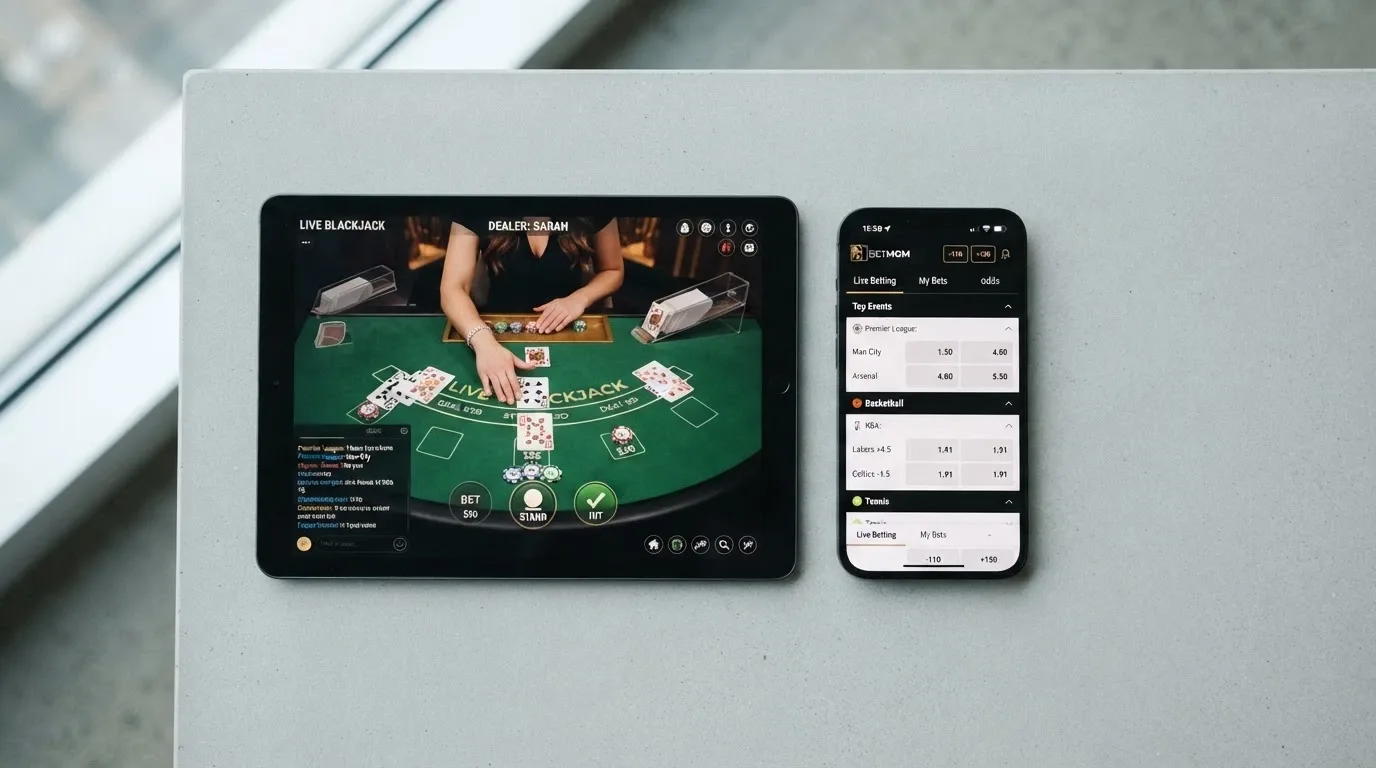
Live-dealer tables are the second-largest format after pokies at most offshore casinos, and the player experience is closer to a land-based casino than to a digital slot. The wagering weighting for live games is typically 10–20% of slot play — meaning a A$100 wager on live blackjack counts as A$10–A$20 toward a bonus playthrough. A player clearing a bonus on live tables is doing five to ten times the slot turnover; the same wagering requirement produces a much larger playthrough.
The sportsbook at an offshore casino accepting Australian players is a separate product under the same account, and the regulatory position is different. The IGA makes in-play sports betting a prohibited service to Australian customers. Pre-event wagering on sport and racing is licensed in Australia under state and territory regimes. An offshore sportsbook offering pre-event wagering to Australian players sits in a grey area — the product is licensed in Australia, but the operator is not. In-play betting, where offered, is prohibited under the IGA.
Mobile play is the default mode for Australian users at offshore casinos and is not a distinguishing feature at any operator on this page. The mobile experience is a browser-based responsive site at most, an app at some. The withdrawal process is platform-agnostic; the KYC process, the pending period, and the payment-rail constraints all apply identically whether the player requests a cashout from a phone or a laptop.
Live Casino Tables: Real Dealers, Real Money, Same Offshore Reality
A live-dealer table at an offshore casino is a real studio with a real dealer, streamed to the player’s device. The games are blackjack, roulette, baccarat and the game-show formats that have proliferated since 2020 — Dream Catcher, Monopoly Live, Crazy Time and their successors. The minimum stakes are typically lower than at a land-based casino, and the player can play multiple tables at once.
The withdrawal path from a live-table session is identical to the withdrawal path from a slot session — same pending period, same KYC verification, same payment rail. The bonus weighting is the difference. A live-table player clearing a welcome bonus is contributing a fraction of their wager to the playthrough, and the same wagering requirement produces a larger total turnover than a slot player would face. The casino is not being unfair; it is pricing the lower house edge on live tables against the bonus cost.
The risk on a live table is the same as on a slot — the house has an edge, the house edge compounds across a session, and the expected loss is the wagered amount multiplied by the game-specific house edge. The withdrawal mechanics are unrelated to the game format. The player’s choice of game is a question of expected value and entertainment; it is not a question of whether the casino will pay out.
Betting and Mobile: The Other Two Reasons Australians Land on These Sites
Sports betting and mobile-first play are the secondary draws at offshore casinos accepting Australian players, and they overlap with the primary draw in a way the marketing exploits. A player who came for the pokies stays for the sportsbook; a player who came for the sportsbook stays for the live-dealer tables. The account is shared; the wallet is shared; the withdrawal process is shared.
The sportsbook side carries a regulatory distinction that does not apply to the casino side. Pre-event wagering on sport and racing is licensed in Australia through state and territory regimes; in-play wagering is prohibited under the IGA. An offshore sportsbook offering both to Australian players is operating outside the Australian regulatory framework for the in-play portion and in a grey area for the pre-event portion. The casino side of the same operator is unambiguously outside the framework.
Mobile play, in 2026, is the default mode rather than a feature. The mobile experience at an offshore casino is a browser-based responsive site that adapts to the device; some operators offer a downloadable app, which carries its own distribution complication — apps in Australian app stores do not typically carry real-money gambling products from offshore operators, and the sideloaded version is the one in use. The withdrawal process is identical on mobile and desktop. The KYC document upload is easier on a phone (the camera is the scanner); the rest of the process is the same.
Responsible Gambling When the Safety Net Doesn’t Reach Offshore
The Australian responsible-gambling framework — BetStop, the National Gambling Helpline, the state-based counselling services — covers licensed wagering. It does not reach the offshore casinos on this page. An Australian player at an offshore casino is outside the framework’s perimeter, and the protections the framework provides — self-exclusion that propagates across all licensed operators, deposit limits enforceable by the regulator, advertising controls — do not apply.

BetStop, the National Self-Exclusion Register, had 67,480 registrations as at 31 July 2026, with 41,290 exclusions still active. The register is the centrepiece of the Australian self-exclusion framework. Offshore casinos are not connected to it; a player who has registered with BetStop can still open an account at an offshore casino and deposit, and the offshore casino has no obligation to refuse the deposit. The self-exclusion is at the licensed operators only.
The help infrastructure that does not depend on the operator’s licence still works. The National Gambling Helpline is 1800 858 858, free, confidential and staffed 24/7. Gambling Help Online provides web-based counselling. About 2.1% of Australian adults — roughly 430,000 people — experience problem gambling, and the help infrastructure exists for them regardless of where they play.
The minimum age for commercial gambling in Australia is 18. The offshore casinos on this page enforce age verification through their own KYC process; the age threshold is the same, but the enforcement happens at the operator level rather than through the Australian regulator.
Deposit Limits and Session Controls You Can Set Yourself
The responsible-gambling tools that work at an offshore casino are the ones the player sets themselves, on the operator’s platform, without any Australian regulatory backstop. The standard tools available at most offshore casino accounts are:
- Deposit limits — daily, weekly or monthly caps on the amount the player can deposit. The limit is set inside the account and is enforceable at the operator level.
- Session time limits — alerts or hard stops that close the session after a configured period. Available at most operators; the alert-versus-stop distinction matters.
- Loss limits — caps on net loss over a period. Less commonly available than deposit limits; the operator-side implementation varies.
- Reality checks — pop-up reminders of session duration and net position. A passive tool that the player can dismiss; useful as a pattern interrupt.
The tool that does not exist offshore is a national self-exclusion that propagates across operators. The Australian version — BetStop — does this for licensed wagering and is not available to offshore casinos. The closest equivalent at the offshore level is per-casino self-exclusion, which blocks the account at one operator and only that operator.
Self-Exclusion When BetStop Cannot Help
Per-casino self-exclusion at an offshore operator is a unilateral player action — the player contacts the casino’s support, requests the exclusion, and the casino closes the account. The exclusion typically has a minimum period (six months or one year) and cannot be lifted early. The mechanism works at the operator level and does not propagate to other operators.
The gap between per-casino exclusion and the national register is the gap between a single lock and a system of locks. A player who has self-excluded at one offshore casino can open an account at another, deposit, and continue. The pattern that leads to harm does not respect operator boundaries, and the tool that addresses it is BetStop — which the offshore casino is not connected to.
The responsible move for an Australian player who has self-excluded at an offshore casino and wants to extend the exclusion across the offshore market is to use the tools that are available — per-casino exclusion at each operator they have used, deposit-limit settings at any operator they continue to use, and the help infrastructure at 1800 858 858 or Gambling Help Online for the underlying support. The framework is thinner than the Australian one. The tools that exist still work.
The 10 Most-Trafficked Offshore Casinos Accepting Australian Players — Compared
The table below ranks the ten featured operators by their tracked share of Australian traffic and revenue, with their legal status in Australia as a constant. Every operator on the list is an unlicensed offshore casino; no Australian casino licence exists for any of them. The comparison is by market share, not by withdrawal speed or payout reliability — those metrics are not available in this run.
| Casino | Tracked AU Market Share | AU Legal Status |
|---|---|---|
| Rocket Play | 9.4% | Unlicensed offshore |
| Skycrown | 8.55% | Unlicensed offshore |
| Royal Reels | 2.51% | Unlicensed offshore |
| WinSpirit | 1.55% | Unlicensed offshore |
| Stake | 1.28% | Unlicensed offshore |
| Rainbet | 1.28% | Unlicensed offshore |
| Scream Casino | 0.99% | Unlicensed offshore |
| FairGO | 0.8% | Unlicensed offshore |
| Bizzo Casino | 0.57% | Unlicensed offshore |
| Rocket Casino | 0.57% | Unlicensed offshore |
The market-share figures come from tracked Australian traffic and revenue data; the legal-status column is the same for every operator by design. The two operators tied at 0.57% — Bizzo Casino and Rocket Casino — share a position but are not the same operator; the name similarity between Rocket Play (the leader) and Rocket Casino (tenth) is a separate branding risk worth noting. The verdict on each operator below is qualitative, drawing on the framework developed earlier — no per-operator withdrawal data is available in this run.
Rocket Play — The Market-Share Leader Among Australian-Facing Offshore Casinos
Rocket Play holds 9.4% of tracked Australian market share — the largest single share among offshore casinos serving Australian players, and a position that reflects sustained traffic rather than a one-off spike. The volume is real, and so are the questions it raises about why so many Australian players land at one operator.
9.4% of tracked market share signals: the casino has the brand recognition, the game library, the payment-rail coverage and the marketing spend to attract Australian players at scale. It is the operator a casual search is most likely to return. The volume also signals a larger absolute number of player disputes, withdrawal delays and KYC issues — not because the operator’s processes are worse, but because the denominator is larger. A 1% complaint rate at 9.4% market share is more total complaints than a 1% rate at 0.57%.
It does not signal regulatory compliance in Australia, an Australian licence, or any Australian consumer protection. Rocket Play is an unlicensed offshore casino, and the volume of its Australian traffic is the reason ACMA’s blocking list is in active use against operators in its category. Rocket Play is the operator where withdrawal reliability matters most to the largest number of Australian players, and the one most likely to be on the regulator’s current list.
Skycrown — The Strong Number Two with Near-Leader Traffic
Skycrown holds 8.55% of tracked Australian market share — within a percentage point of the leader, and a position that signals a near-equal brand presence among Australian players. The gap between Rocket Play and Skycrown is 0.85 percentage points; the gap between Skycrown and the third-ranked operator is more than six points. Skycrown sits at the leader’s shoulder rather than in the middle of the pack.
The narrow gap at the top of the table is the most informative feature of the ranking. Two operators holding a combined 17.95% of tracked Australian market share is a duopoly of audience attention; the remaining eight operators share 9.55%. The dynamics at the top — the welcome-bonus competition, the payment-rail coverage, the marketing spend on Australian-facing acquisition — are the dynamics that shape the offshore Australian market.
Skycrown’s legal status is identical to Rocket Play’s: unlicensed offshore, no Australian licence, no Australian consumer protection. The same withdrawal-reliability questions apply.
Royal Reels — The Brand Name That Sounds Local but Is Not
Royal Reels holds 2.51% of tracked Australian market share — a distant third in absolute terms, but a step-change drop from the top two. The name is the most “Australian-sounding” of any operator on the list, and the gap between the branding and the legal status is the cleanest example of what an offshore casino’s marketing can do.
The branding borrows from Australian gambling vernacular — “reels” maps to pokies, the royal register reads as authoritative, the .au-style positioning targets Australian search traffic. None of it is regulated by an Australian authority. The casino operates from outside Australia, holds no Australian licence, and offers no Australian consumer protection. The branding is a marketing choice; the legal status is the regulator’s.
Royal Reels’ 2.51% market share is roughly a third of the second-place operator’s volume, and it sits closer to the middle of the table than to the top. Royal Reels is exactly the kind of operator ACMA’s site-blocking programme is designed to reach.
WinSpirit — Mid-Table Traffic and What That Means for Player Experience
WinSpirit holds 1.55% of tracked Australian market share — a mid-table position with meaningful volume but no claim to market leadership. The operator sits at a position where volume alone is neither an endorsement nor a warning.
The mid-table position is where most of the framework above matters most. A leader at 9.4% market share is operating at a scale where withdrawal reliability is a structural concern; a sub-1% operator is operating at a scale where dispute resolution is harder to assess because the sample size is small. A 1.55% operator is in the band where neither scale advantage nor scale disadvantage is dominant, and the player experience is determined by the operator’s own processes rather than by the volume of complaints.
WinSpirit is an unlicensed offshore casino; the legal status is identical to every other operator on the list. The pre-signup checklist matters most at the mid-table position — the operator is large enough to be established and small enough that individual treatment varies.
Stake — The Global Brand with a Modest Australian Footprint
Stake holds 1.28% of tracked Australian market share — a modest Australian footprint for one of the most globally recognised crypto-casino and sportsbook brands. The brand carries more international recognition than any other operator on this list; the Australian market share is in the middle of the pack.
The global-versus-local dynamic is the defining feature of Stake’s position. A player who arrives at Stake via a global brand search is not arriving because of Australian-specific marketing — they are arriving because the brand is known internationally for crypto wagering, sponsorships and live-dealer product. The Australian share is a fraction of Stake’s global volume; the Australian-specific product offering may differ from what the brand offers elsewhere.
Stake is an unlicensed offshore casino from an Australian regulatory perspective. The global recognition does not confer Australian regulatory standing. The Australian player is in the same regulatory position as a player at any other operator on the list.
Rainbet — Tied with Stake and Fighting for the Same Players
Rainbet holds 1.28% of tracked Australian market share — identical to Stake’s share, and a tie that places the two operators in the same competitive band. The two are competing for the same pool of Australian players at effectively the same volume.
The tie is more informative than either operator’s individual share. Two operators holding identical market share are operating in the same segment — likely the crypto-friendly, mid-table offshore segment — and competing on overlapping acquisition channels. The competition is where the welcome-bonus terms, the payment-rail coverage and the marketing spend concentrate; the player is choosing between two operators with similar volume, similar legal status and likely similar mechanics.
Rainbet’s legal status is identical to every other operator on the list: unlicensed offshore, no Australian licence, no Australian consumer protection. The tie with Stake is a competitive fact, not a quality fact — a player evaluating Rainbet against Stake is choosing on the operator-specific terms page, not on market share.
Scream Casino — Under 1% but Still in the Tracked Set
Scream Casino holds 0.99% of tracked Australian market share — a fraction below 1%, and the boundary between the top half of the table and the bottom half. The operator is small enough that individual player experience is more variable and large enough to be in the tracked set.
The sub-1% position is where the caveat about sample size matters most. A 0.99% operator has fewer Australian players than the leaders; the absolute number of withdrawal complaints, KYC delays and dispute events is smaller; the player experience is determined by the operator’s processes on a case-by-case basis rather than by a statistical pattern. A player evaluating Scream Casino is evaluating the operator’s terms page, the game library and the payment-rail coverage, not the volume of complaints in a public forum.
Scream Casino’s legal status is identical to every other operator: unlicensed offshore. A sub-1% market share is not a quality verdict — it is a position, and the position carries less public information than the leaders’ positions do.
FairGO — Another .au-Targeted Brand Operating from Outside the Reach of Australian Law
FairGO holds 0.8% of tracked Australian market share — a sub-1% position with an Australian-targeted brand name. The “FairGO” framing — fairness plus the Australian slang “go” — reads as a promise of fair play to Australian players, and the gap between that promise and the operator’s legal status is the cleanest example after Royal Reels of the offshore-marketing pattern.
The brand signal is that of a casino targeting Australian players directly — the .au-style naming, the implied fairness claim, the positioning as an Australian-friendly product. None of it is regulated by an Australian authority. The operator holds no Australian licence, sits outside the BetStop framework, and offers no Australian consumer protection.
FairGO’s 0.8% market share is at the lower end of the table. The brand promise is the operator’s marketing, and the legal status is the Australian framework’s view — both are different documents.
Bizzo Casino — The Lower-Traffic Operator Where Withdrawal Data Matters Most
Bizzo Casino holds 0.57% of tracked Australian market share — tied for last on the table and at the lowest position where withdrawal-reliability assessment is hardest. The position means fewer public data points, fewer player reports and a thinner evidentiary basis for any claim about how the operator handles withdrawals.
The data-thinness at the bottom of the table is a feature of the ranking, not a bug. The ranking is structured around market share, and the lowest-share operators are the ones where the public evidence is sparsest. A player evaluating Bizzo Casino against a leader is doing so with less information; the operator’s own terms page and the operator’s KYC process become more important.
Bizzo Casino’s legal status is identical to every other operator: unlicensed offshore. The lowest market share on the table is the position where the player is most reliant on the operator’s own documents and the help infrastructure outside the operator.
Rocket Casino — Sharing the Name but Not the Traffic of the Market Leader
Rocket Casino holds 0.57% of tracked Australian market share — tied with Bizzo Casino at the bottom of the table, and a name-confusion risk with Rocket Play, the leader. The two operators share a first word in their names; they are not the same operator, and the brand confusion is the risk worth flagging.
The risk is that a player searching for “Rocket” may land at Rocket Casino when they meant Rocket Play, or vice versa. The market-share gap between the two is 8.83 percentage points — the largest gap between adjacent operators on the table. The two are not substitutes; they are separate operators at very different scales, and the legal status is the same — unlicensed offshore — but the player experience, the game library, the payment-rail coverage and the withdrawal process are not the same.
Rocket Casino operates without an Australian licence, similar to every other offshore casino on the list. The name similarity is the headline caveat, and the market-share gap is the scale difference.
How We Evaluated and Ranked These Casinos
The ranking criterion for this page is tracked Australian market share — the share of Australian traffic and revenue that each operator captures, drawn from offline market-share data. The data does not measure withdrawal speed, payout reliability, dispute resolution or game-library quality; it measures audience volume. The two are not the same thing, and that distinction has carried through.
The legal-framework data comes from offline regulatory references covering the Interactive Gambling Act 2001 and its amendments, ACMA’s enforcement record, the BetStop register’s published statistics, the Northern Territory Racing and Wagering Commission’s licence register, the ITAA 1997 tax treatment of gambling winnings, the National Gambling Helpline’s published contact details, and AIHW’s problem-gambling prevalence data. Each was checked against the regulator or authority’s own published material where available.
The legal benchmark applied to every operator is the same: there is no Australian casino licence. The Northern Territory Racing and Wagering Commission — the agency through which online wagering licensing is concentrated in Australia — does not licence online casinos. No state or territory does. The benchmark is the absence of a licence category, not a search of the NTRWC register for operator names.
What this page cannot verify, without per-operator withdrawal data from live sources, is the specific withdrawal times, KYC turnaround, dispute-resolution record, payment-rail coverage, bonus terms and game-library quality of each featured operator. Those are the data points a player needs to evaluate a casino, and this guide does not invent them. The market-share ranking is a proxy for audience volume; it is not a verdict on which casino pays out fastest.
Choosing an Offshore Casino You Can Actually Trust — Your Next Move
The first and non-negotiable filter is the licence check — and the result of that filter is the same for every operator on this page. No Australian casino licence exists for any of them. The framework the absence of a licence creates has walked through every section above: no BetStop coverage, no ACMA enforcement of the operator’s payout process, no Australian consumer protection on the deposit or withdrawal, no local ombudsman, no local advertising code. The framework is the same at every operator.

The second filter is the withdrawal-method check, applied before signup rather than at the cashout stage. Pick a deposit method the casino also supports as a withdrawal. Pick a withdrawal method the player’s Australian bank accepts inbound from the operator’s jurisdiction. Pick a method that does not force a currency conversion through an unfavourable rate. The KYC document bundle should be ready at signup, not at the first withdrawal.
The third filter is the bonus-terms check, applied before the welcome offer is claimed. The wagering requirement is the multiplier that determines the real cost of the bonus. The maximum cashout cap is the ceiling on what the bonus can produce. The deposit-method eligibility list is the carve-out that can void the bonus at the first withdrawal. None of this is on the homepage.
The single principle that holds across every operator on this page is the one this guide opened with: no Australian casino licence means no Australian safety net. The withdrawal-speed claims on the homepage are the operator’s marketing; the regulator’s enforcement record is the framework those claims sit inside. Both are different documents. A player who reads both is choosing with eyes open.
For an Australian player who decides to play despite the offshore status, the help infrastructure at 1800 858 858 and Gambling Help Online works regardless of where the play happens. The age threshold is 18. The tax treatment is that winnings are not assessable income for an ordinary punter. The minimum age and the tax treatment are the two facts this guide can hand the player with confidence; everything else about the withdrawal depends on the operator, the bonus terms, and the player’s own discipline.
Frequently Asked Questions
Are there any casinos with instant payouts in AUD?
No licensed Australian casino exists. Offshore casinos accepting Australian players can offer same-day provider-side processing on verified accounts, but the AUD transfer to an Australian bank account takes one to five business days through correspondent-bank clearing regardless of what the casino releases. Crypto is faster on-chain but slower to clear as AUD.
Do fast payout casinos require ID verification?
Yes. Every offshore casino accepting Australian players runs KYC — photo ID, proof of address and deposit-method verification — before the first withdrawal. A player who prepares the documents at signup rather than at the first cashout request shaves days off the first payout.
Can I use PayID for casino withdrawals in Australia?
PayID works as a deposit rail at some offshore casinos — it is just an Australian fast-settlement layer over standard banking. It does not work as an international withdrawal rail; the transfer arrives as a standard OSKO or NPP payment from an offshore sending bank. The on-screen speed at deposit does not transfer to withdrawal.
What is the maximum withdrawal limit at Australian online casinos?
The maximum is set by the offshore operator’s terms page, not by any Australian regulation. Common structures are daily or weekly caps in the low thousands of AUD, with higher caps for verified VIP accounts. Bonus-converted balances are subject to additional maximum-cashout caps that are typically lower than the standard withdrawal limit.
Why do casino withdrawals get delayed?
The most common cause is KYC at the first withdrawal — the operator has not seen the documents before and needs to review them. The second is the pending period, the operator’s window to review the account before releasing funds. The third is the payment-rail clearing time, outside the operator’s control once funds are released.
Is it safe to play at offshore casinos with fast payouts?
“Fast” is the operator’s marketing. The Australian position is that no Australian casino licence exists and no offshore operator is supervised by an Australian regulator. A player who plays is relying on the operator’s own terms and the player’s own pre-signup checks. BetStop, ACMA enforcement and Australian consumer law do not reach offshore casinos.