
Playing at a Litecoin Casino in Australia in 2026: What’s Real, What’s Marketing and What’s at Stake
Online casino gambling is prohibited in Australia. The Interactive Gambling Act 2001 makes it an offence to provide online casino games, online pokies and in-play sports betting to a person in Australia — a position reinforced by the 2017 amendments and the 2024 ban on credit and crypto as payment. So the Litecoin casino you’re considering is, by definition, an offshore outfit operating from somewhere that does take its money. None of the brands on this page hold an Australian licence, because no Australian licence for this product exists. ACMA has now blocked 1,564 illegal sites since November 2019.

That’s the frame this page works inside. Within it, ten offshore casinos are reviewed for what they actually offer an Australian punter who wants to deposit and play in Litecoin: how LTC gets from a personal wallet to a casino balance, what the bonus headline really costs once wagering is applied, which operators pay out fastest in independent testing, and which of the marketing claims (no-KYC, provably fair, anonymous) hold up once you scratch them. The point is not to recommend a place to play. The point is to leave a punter in a position to choose, with the trade-offs written out in figures rather than adjectives.
Verified as of 29 October 2026 against the ACMA register, the operator terms cited below, and the per-operator sources listed in the comparison table that follows.
Table of Contents
- How Litecoin Casino Deposits Actually Work
- The Types of Litecoin Casinos Available to Australians
- The Top 10 Litecoin Casinos for Australian Players in 2026
- Royal Reels
- Rainbet
- WinSpirit
- Stake
- FairGO
- Skycrown
- Rocket Play
- Bizzo Casino
- Scream Casino
- Rocket Casino
- What Litecoin Really Gives You at an Online Casino (and What It Doesn’t)
- The No-KYC Claim: What Happens After Your First Withdrawal
- Provably Fair Gaming: How the Maths Works
- How Fast Your Litecoin Deposit and Withdrawal Actually Arrives
- Deposit Mechanics, Minimums and Confirmation Times
- Withdrawal Speed, Fees and What Slows a Payout Down
- Why Your Litecoin Casino Bonus Looks Bigger Than It Is
- Welcome Bonuses and Free Spins Compared
- Wagering Terms and Why 35x Changes Everything
- Pokies, Blackjack and Live Dealer: What You Can Play with LTC
- Pokies and Slots: What Titles Take Litecoin
- Table Games and Live Dealer Studios
- Litecoin Casinos on Your Phone: What the Mobile Experience Looks Like
- Where Australian Law Stands on Litecoin Casinos in 2026
- The Interactive Gambling Act and What It Means for Players
- What the 2026 Reforms Change from 2027
- New Litecoin Casinos Worth a Look in 2026
- Staying in Control When the Australian Safety Net Isn’t There
- How We Selected and Ranked These Litecoin Casinos
- Worked Example: What Rainbet’s Max Bonus Actually Costs
- Should You Use Litecoin at an Online Casino from Australia?
- Frequently Asked Questions
How Litecoin Casino Deposits Actually Work
A Litecoin deposit moves through the same pipeline regardless of which casino on this page you end up at. The casino generates a deposit address, the punter sends LTC to that address from a personal wallet, the Litecoin network confirms the transaction in roughly two and a half minutes — Litecoin has produced a block every 2.5 minutes since 2011 and the chain has never halted — and the casino credits the balance once it sees the confirmations it requires. Most operators credit inside five minutes; the network fee sits well under A$0.10 per transaction no matter the size moved. For Australian players, that is a fundamentally different payment rail from a bank transfer, which routinely takes one to three business days, and from a card, which most of these operators no longer accept because of the 2024 credit and crypto ban.
A few mechanics are worth knowing before the first deposit. The casino’s cashier quotes an LTC amount to send at the current exchange rate; if the rate moves between quote and confirmation, the credited balance adjusts to the on-chain settlement value. Most AU-facing operators quote a fiat-equivalent minimum of A$15–A$40, though some go lower — Rainbet accepts A$5 of LTC. The number of confirmations a casino demands before crediting is operator-specific; two confirmations is typical, which lands at around five minutes on the Litecoin network.
On the speed ladder, Litecoin and USDT on the TRC-20 network both settle inside ten minutes at the cashier, while Bitcoin routinely takes 30–60 minutes because of its ten-minute block time and the additional confirmations exchanges and casinos demand. The marketing word “instant” is mostly honest for crypto deposits; it is rarely honest for withdrawals, which depend on the casino’s own processing clock and approval queue, not just the blockchain.
The Types of Litecoin Casinos Available to Australians
The operators that accept Litecoin from an Australian IP fall into two broad groups, and the difference matters for what you find in the lobby and how withdrawals behave.
Crypto-native platforms are built around digital assets. They tend to support a long tail of coins, settle withdrawals fast (often minutes to a few hours), and may carry a provably fair library — in-house games whose outcomes can be cryptographically verified after each round. Rainbet is the clearest example on this list, with 7,000+ games and 14 provably fair Originals. The shape of the rewards differs as well: instead of (or alongside) a large headline welcome bonus, crypto-native operators tend to lean on rakeback, races and ongoing drip promotions that pay in real cash with light wagering.
Hybrid casinos are traditional offshore online casinos that added crypto to their cashier, usually in the last few years, on top of an existing real-money product built around fiat deposits. FairGO is the textbook case: a Curacao-licensed RealTime Gaming casino that has been live since 2017 under Deckmedia N.V., with 280 RTG games and crypto as one of several payment rails. The trade-off is straightforward — hybrid casinos usually carry a deeper slot library from established providers and a more conventional welcome package, but the experience at the cashier is closer to a standard offshore casino than to a crypto-native exchange.
As one industry source put it plainly: “Quality decides this list, not acceptance, because nearly every crypto cashier takes Litecoin and taking it proves nothing.” The presence of LTC in the cashier is a hygiene factor, not a differentiator. What separates the brands worth a look from the long tail is licence transparency, bonus-term clarity, payout speed in independent testing, and game-library depth.
The Top 10 Litecoin Casinos for Australian Players in 2026
| Operator | Offshore Licence | Welcome Offer |
|---|---|---|
| Stake | Curacao (verify on Curacao eGaming register) | Ongoing rakeback + daily/weekly/monthly bonuses; no traditional welcome offer |
| Rocket Play | Offshore; licence not confirmed | — |
| Skycrown | Curacao (verify on Curacao eGaming register) | — |
| Royal Reels | Offshore; ACMA-blocked (no AU licence) | A$2,500 + 50 free spins over three deposits |
| WinSpirit | Malta Gaming Authority (MGA) | 100% up to AU$500 + 50 free spins |
| Rainbet | Anjouan (launched 2023) | 250% up to $1,750 + 60 free spins |
| FairGO | Curacao eGaming (Deckmedia N.V., since 2017) | Five-tier welcome package totalling A$1,000 |
| Scream Casino | Offshore; licence not confirmed | — |
| Bizzo Casino | Offshore; licence not confirmed | — |
| Rocket Casino | Offshore; licence not confirmed | — |
A dash in the Welcome Offer column means the research could not confirm a specific figure from the operator’s own published terms, not that the operator runs nothing. The four brands with the most thoroughly documented offers — Royal Reels, WinSpirit, Rainbet and FairGO — are the ones a punter can read the small print on before depositing. The rest are covered below, with their gaps stated honestly.
The ranking is not “best for everyone” — offshore casino is a prohibited product in Australia regardless of how it is run. It is, more usefully, an ordering by what is independently documented. Where multiple operators carry equivalent depth of data, the one with the cleaner licence and the more transparent terms ranks higher.
Royal Reels
Royal Reels is the most thoroughly documented brand on this list, and the one that most explicitly fails the ACMA test. The site is on ACMA’s blocking list; Australian players reach it through mirror domains, and the existence of those mirrors is the price of doing business under a regime that does not recognise the product.
What Royal Reels offers is a welcome pack spread across three deposits: 100% up to A$500 on the first, 75% up to A$750 on the second and 100% up to A$1,250 on the third, totalling A$2,500 plus 50 free spins at a fixed A$0.20 stake. The wagering is 35x on the bonus only — not bonus plus deposit — with a A$5 per-spin cap while the bonus is active. Separately, a AU$10 no-deposit bonus is available after phone verification. The lobby runs over 5,400 pokies from 40+ providers, including Pragmatic Play, which is the largest catalogue in this comparison after Rainbet. Crypto and PayID withdrawals are described as “instant” in the marketing, with crypto and PayID payouts averaging three to four hours in practice; bank transfer takes three to five business days. The minimum deposit is A$10 across most methods, A$20 for crypto; the minimum withdrawal is A$50.
Independent audit work is available here. CasinoAudit scores Royal Reels 75/100, with Payout Speed at 90, UX & Mobile at 90, and Bonus Fairness at 53. The average wagering requirement across Royal Reels’ 14 active bonuses sits at 31x. The Bonus Fairness score is the soft point — 35x on the bonus only is competitive but the A$5 spin cap while clearing is a real friction, and the 53 reflects the wider bonus portfolio rather than the welcome offer alone.
For a punter who wants the largest documented game library on this list and is comfortable navigating a site the regulator has explicitly blocked, Royal Reels offers a competitive welcome. For a punter who would rather not chase mirror domains when ACMA updates its list, there are options further down this page that have not been blocked.
Rainbet
Rainbet launched in 2023 under an Anjouan licence and is the most crypto-native operator in this ranking. The lobby runs 7,000+ games from mainstream providers plus 14 in-house Originals that are provably fair — verifiable by the player after each round. The reward model is built around ongoing value rather than a single headline offer: nearly $1.7M in monthly race prize pools and a $20,000 weekly rake, with the welcome package sitting on top.
The welcome itself is 250% across the first three deposits up to a total of $1,750, plus 60 free spins delivered 20 per stage. Two clearance routes are available. The default is 40x wagering on the bonus (wager-locked), with seven days of validity from activation. The alternative is a no-wager gradual release, where bonus funds drip through in increments as the player wagers — a more player-friendly model that gives up some headline value for a much cleaner path to cashable balance. The minimum deposit is A$5 for LTC, A$15 for BTC, ETH and USDT. For an Australian punter with a small bankroll, the LTC minimum is the lowest confirmed figure on this list.
Withdrawal policy is where Rainbet’s crypto-native design shows. There is no maximum withdrawal limit at Level 1 KYC, which requires no ID documents, and crypto withdrawals typically clear in minutes to a few hours. The standard 1x turnover rule applies — Rainbet does not let you deposit and immediately withdraw without wagering, which is industry standard. The few-providers-needed approach also lets Rainbet run the full 96.5% RTP tier of Gates of Olympus, which is the highest of the three certified configurations and matters over a session of any length.
For a punter who values privacy to a point, fast crypto withdrawals and a deep lobby, Rainbet is the cleanest of the crypto-native options on this page. The catch is the seven-day bonus validity on the wager-locked route, which is tight; the no-wager alternative softens that, but at the cost of a slower balance release.
WinSpirit
WinSpirit is the only operator in the ranking licensed by the Malta Gaming Authority — a tier above Curacao and Anjouan in terms of regulatory scrutiny, though the MGA still does not extend Australian consumer protection. The licence is meaningful in a narrow way: MGA-licensed operators are typically required to keep player funds in segregated accounts and to submit to dispute resolution through the MGA’s complaints process, which is more than the Curacao or Anjouan frameworks guarantee.
The welcome offer is 100% up to AU$500 on the first deposit plus 50 free spins on a popular slot, with 30x wagering on the bonus amount. That 30x is the lowest confirmed wagering multiplier on this list — Rainbet’s 40x on the wager-locked route, Royal Reels’ 35x and the unnamed multipliers at the sparser operators all sit higher. The minimum withdrawal is AU$20, the lowest on the page, which matters for a punter who plans small, regular cashouts rather than one big balance.
What’s missing from WinSpirit’s profile is game-library and provider detail. The MGA licence and the clean bonus terms compensate, but a punter who cares about a specific studio or pokie catalogue will need to confirm the lobby against the operator’s own terms before depositing. On the figures that matter most to a careful punter — licence, wagering, withdrawal threshold — WinSpirit is the cleanest of the documented operators.
Stake
Stake is the largest crypto-native operator not just on this page but in the global market, and the one that runs least like a traditional casino. There is no confirmed traditional welcome offer this run; the value model is ongoing, built around rakeback on every bet, daily/weekly/monthly bonuses, and race prize pools. For a punter who plays regularly, the rakeback alone tends to outweigh any one-off welcome, but it does not show up in the “claim A$X” language a hybrid casino uses.
The library is 3,100+ games from Pragmatic Play, Evolution Gaming and Hacksaw Gaming, plus the in-house Stake Originals. Pragmatic Play is the supplier of Gates of Olympus, which Stake runs at the full default 96.5% RTP — the same tier Rainbet runs — so a punter playing that title at either operator is seeing the highest-paying version of the three certified configurations. Evolution Gaming is the dominant live-dealer studio in the regulated market, and its presence here is the strongest single signal of a credible live offering in this comparison.
The licence is Curacao, which is the same register most of this list uses; it is not the MGA, and it does not give an Australian player any local recourse. What Stake offers that smaller Curacao operators do not is operating history at scale and a public record of fast payouts, which carries more weight than a licence tier does in the offshore market.
For a punter who would rather accumulate ongoing value than chase a welcome, and who plays at volumes where rakeback matters, Stake is the strongest crypto-native option on the page. The lack of a one-off welcome is a real trade-off for the player who plans one session and moves on.
FairGO
FairGO is the longest-running operator on the list, live since 2017 under Deckmedia N.V. with a Curacao eGaming licence, and the only one with a pure RealTime Gaming catalogue — 280 games in total, all RTG. That sounds small against Rainbet’s 7,000+ and Royal Reels’ 5,400+, but RTG is a known Australian-facing studio with a long history in the offshore market, and a focused lobby is sometimes easier to navigate than a sprawling one.
The welcome package is structured as five tiers totalling A$1,000, which is competitive with the mid-tier of the comparison. Crypto withdrawals are processed in 15–45 minutes during business hours — the fastest confirmed withdrawal window on the page for a Curacao-licensed brand. The minimum withdrawal is A$100, the highest on the page, which is the trade-off for the speed. The A$15–A$40 typical LTC deposit minimums and the BTC/ETH/LTC cashier support are standard for the market.
For a punter who values operational longevity and quick crypto cashouts and is comfortable with a smaller, RTG-only library, FairGO is the long-standing choice. The 2017 launch date and the Deckmedia N.V. ownership give it more of a track record than most of the page — relevant for an operator category where “we’ll be here tomorrow” is the kind of thing a reader cannot check on their own.
Skycrown
Skycrown is a Curacao-licensed brand with one of the most concrete payout figures in this comparison. Independent testing at Betsquare measured a USDT TRC-20 withdrawal clearing in 12 minutes at Skycrown — the fastest single result in the testing run, faster than the LTC withdrawals measured elsewhere in the same benchmark. The figure is for USDT, not LTC, but it does establish that Skycrown’s processing clock is short when the cashier is at its best.
What the research did not surface for Skycrown this run is the welcome offer, wagering terms, game-library size or provider list. The domain is on the record, the licence tier is on the record, and the payout-speed benchmark is concrete. Beyond those, a punter would need to read Skycrown’s own terms before committing. For a punter who values fast withdrawals above all else, and is willing to read the bonus terms on the operator’s site, Skycrown is a credible option. For a punter who wants the welcome pack, the game library and the wagering all visible on the page, the more documented operators further down are the safer read.
Rocket Play
Rocket Play sits on this list because the research could not confirm what it offers in the LTC casino space this run — no licence number, no welcome offer, no provider list, no domain to verify. The operator exists as a name on the market, and that is all the page can honestly say.
The limits of the data are worth naming openly. A punter looking at Rocket Play needs to read the operator’s own terms page for the welcome offer, the wagering multiplier, the withdrawal policy, the licence claim and the games available before any deposit. The page does not run on guesses. For a punter who has already done that reading and is comfortable with what they’ve found, Rocket Play is in scope; for a punter who has not, there are better-documented options on this list.
Bizzo Casino
Bizzo has a name and a domain — Bizzocasino.com — and that is where the confirmed data ends. The brand recognition is real, which is why the operator is on the page, but brand recognition and audited specifics are different things. The research could not confirm a licence number, a welcome offer, a wagering multiplier, a withdrawal window or a provider list this run.
For a punter who knows the brand and is comfortable that the operator’s terms check out, Bizzo is a viable option. For a punter starting from this page alone, the four operators with documented offers — Royal Reels, WinSpirit, Rainbet and FairGO — give a more complete picture to choose from.
Scream Casino
Scream Casino is the sparser end of the field: a name, an offshore status, and no licence number, domain, offer or provider list confirmed this run. The brand still turns up in front of Australian punters, which is why it is named here, but anyone looking for documented specifics will need to read the operator’s own terms before depositing.
Rocket Casino
Rocket Casino rounds out the top ten. Like Rocket Play, Scream Casino and Bizzo, it carries a name but no licence claim, no domain, no welcome offer, no wagering figure, no provider list and no confirmed withdrawal window this run. A punter who wants a complete picture from the page should look at the documented operators; a punter who has already read the terms and is comfortable with the operator is free to proceed.
What Litecoin Really Gives You at an Online Casino (and What It Doesn’t)
Three marketing claims follow Litecoin around, and they are not equally true.

The privacy claim is the first to collapse under inspection. Litecoin’s MWEB confidential transaction mode — the protocol’s privacy layer — never reaches a casino cashier. Every LTC deposit address is as public as a Bitcoin address, viewable on the blockchain explorer, and the casino’s own database links it to the punter’s account on first deposit. Litecoin does not provide privacy at an online casino. It provides pseudonymity, which is different, and which is fully reversed the first time the operator runs a KYC check.
The speed claim is the closest to being true. LTC blocks every 2.5 minutes, network fees sit under A$0.10, and most LTC deposits credit inside five minutes. That is genuinely fast — roughly four times faster than Bitcoin, comparable to USDT on TRC-20. The catch is that the speed is for the deposit. Withdrawals are gated by the casino’s own processing clock, which is what determines whether your LTC arrives in fifteen minutes or fifteen hours.
The fairness claim is the most interesting because it is the one that varies by operator. Provably fair is real for the games that implement it: the casino commits to a server seed in advance, hashes it, and the player can verify after each round that the outcome was determined by the seed and the player input combined. Rainbet runs 14 provably fair Originals; Thrill runs 11. The mechanism is genuine. What is less often stated is that the vast majority of games on these lobbies — the Pragmatic Play pokies, the Evolution live-dealer tables, the RTG catalogue at FairGO — are not provably fair in this technical sense, and cannot be, because they are third-party products whose RNGs the casino does not control.
The honest summary: Litecoin delivers on speed, partially delivers on cost, and does not deliver on privacy. The “no-KYC” label many of these casinos wear needs its own section.
The No-KYC Claim: What Happens After Your First Withdrawal
A common industry KYC trigger is around A$2,200 in cumulative withdrawals, and the typical range across tested Australian-facing casinos is A$2,000–A figure at current rates.
The practical shape of this is that a punter can deposit and play, and even withdraw small amounts, without ever uploading a document. The first time the cumulative withdrawal total crosses the operator’s threshold — which may be a soft review trigger rather than a hard published number — the casino asks for ID, proof of address and a payment-method check. Some operators ask earlier, some later; some ask only when a single withdrawal is unusually large; some ask at the first withdrawal. Rainbet is the explicit outlier on this page, with no maximum withdrawal at Level 1 KYC and no ID documents required at that level.
What the “no-KYC” marketing language elides is that the lack of a published threshold does not mean there is no threshold. A punter choosing a casino on the no-KYC label is making a bet on the operator’s internal policy. For a punter who plans to play and withdraw in amounts that stay well under the typical A$2,000–A$5,000 cumulative band, the bet often pays off. For a punter who wins a larger amount and tries to cash it out, the KYC request is the rule, not the exception.
The other side of the trade is worth naming. A genuinely no-KYC operator with no large-winner history is also an operator with no large-winner history — which is fine, but which does not tell a punter what the cashout experience will be when a real win lands. A documented operator with a clear KYC trigger and a clear withdrawal window tells a more complete story, even if the verification step costs a document upload and a day or two.
Provably Fair Gaming: How the Maths Works
Provably fair is a verification mechanism, not a fairness promise. The casino commits to a server seed in advance and publishes its hash, so the seed cannot be changed after the bet. The player provides a client seed. The outcome of each round is determined by a combination of the two seeds, and the player can re-run the calculation after the round to confirm the outcome was locked in before the bet was placed. The mechanism is mathematically sound and verifiable by the player without trusting the casino.
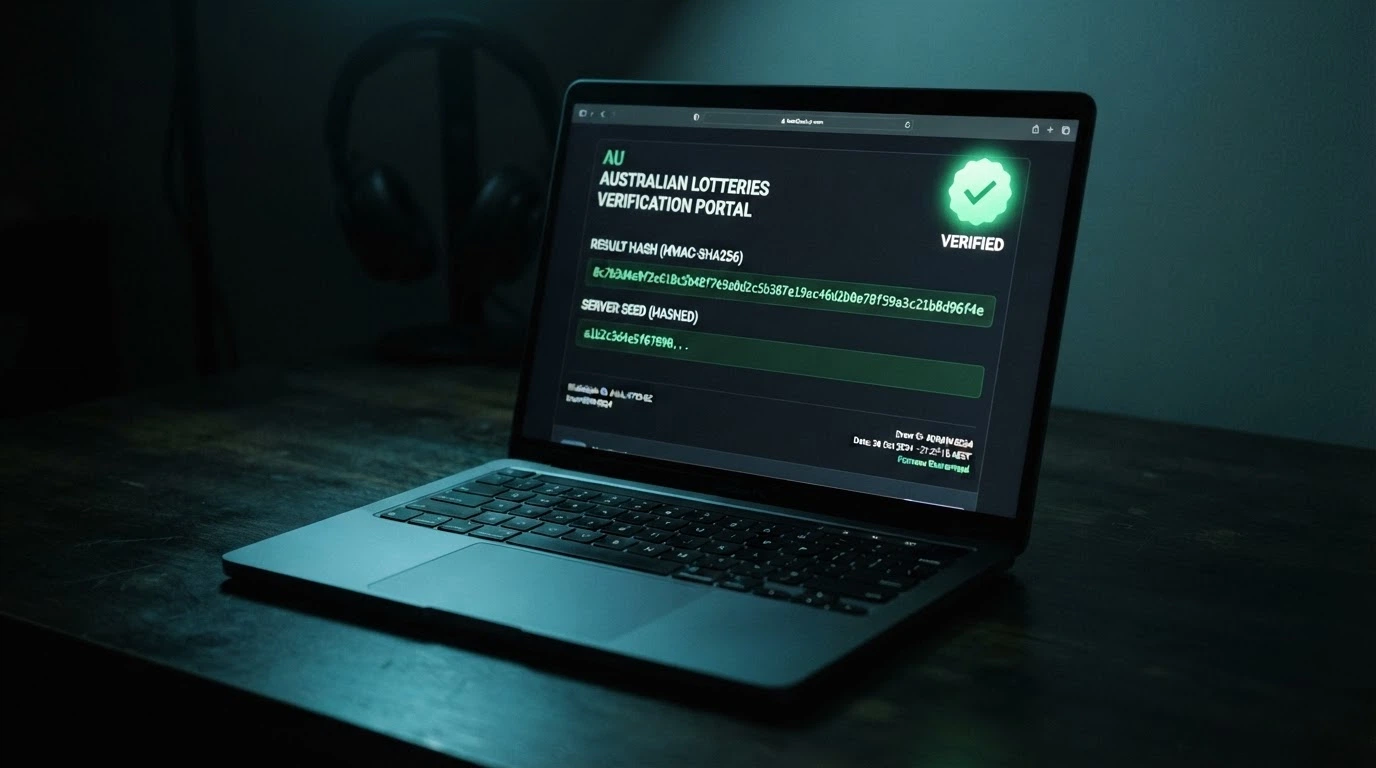
The limit of the mechanism is that it only works for games the casino has implemented it on, which means in-house games. Rainbet’s 14 Originals are provably fair in this technical sense. Stake’s in-house Originals work the same way, although the count varies by source. The Pragmatic Play pokies — including Gates of Olympus, which is on every major lobby in this comparison — are not provably fair in this sense; the RNG runs on Pragmatic Play’s server, the casino cannot see the seed, and the player cannot verify the outcome against a pre-committed hash. The same is true for the Evolution live-dealer tables and the RTG catalogue at FairGO.
What that means for a punter is straightforward. Provably fair is genuine and worth something for the games it covers. It is not a stamp on a whole lobby, and a casino that calls itself “provably fair” because its Originals implement the protocol is using the term precisely — the Originals are provably fair; the rest of the lobby is third-party RNG.
How Fast Your Litecoin Deposit and Withdrawal Actually Arrives
The honest speed picture has two clocks, and they are not the same. The Litecoin network clock — block every 2.5 minutes, fees under A$0.10, settlement under five minutes for a confirmed deposit — is fast and predictable. The casino’s processing clock — manual approval, fraud screening, payment batching — is operator-specific and can stretch the total time from fifteen minutes to several days.
For deposits, the network clock is the binding constraint, which is why most operators credit LTC deposits inside five minutes. The few outliers are usually waiting for a confirmation count higher than the network default, which is a safety choice rather than a slowness one.
For withdrawals, the casino’s processing clock is the binding constraint. The fastest confirmed window on this page is Skycrown at 12 minutes for a USDT TRC-20 payout, with FairGO at 15–45 minutes for crypto during business hours, Rainbet at minutes to a few hours, and Royal Reels at three to four hours for crypto and PayID. Royal Reels’ bank transfer takes three to five business days, which is the gap between crypto and fiat rails. The LTC network fee at WestAce in the same independent test was A$0.08 for an 18-minute arrival — the cheapest of the confirmed network-fee figures.
The pattern that holds across the data is that the blockchain is fast and the operator is the variable. A punter choosing for payout speed is choosing an operator, not a coin.
Deposit Mechanics, Minimums and Confirmation Times
LTC deposit minimums at Australian-facing casinos typically sit in the A$15–A$40 fiat-equivalent range, calculated at the rate quoted by the cashier at the time of deposit. The spread across the page is wider at the lower end — Rainbet accepts A$5 of LTC, the lowest confirmed minimum — and tighter at the higher end, where most operators land at A$20 or just above. The minimum matters less for a punter who plans to deposit meaningfully than for a punter who is testing the cashier with a small first transaction; a high minimum pushes the test deposit up, while a low minimum lets the punter check a withdrawal before committing a larger balance.
Confirmation counts are operator-specific and rarely published. The norm is two confirmations, which lands at around five minutes on Litecoin. The cashier screen during the wait usually shows “pending” and a confirmation count; the balance updates once the count clears the operator’s threshold. If the LTC rate moves meaningfully between quote and confirmation, the credited balance adjusts to the on-chain settlement, which is normal but occasionally produces a slightly different fiat figure than the punter expected.
For an Australian punter, the practical version of this is: open a personal Litecoin wallet, copy the casino’s deposit address, send the amount the cashier quotes, wait five minutes, and the balance appears. There is no card processor, no bank rail, no PayID intermediary, which is the part of the value proposition Litecoin actually delivers.
Withdrawal Speed, Fees and What Slows a Payout Down
The gap between the network and the operator is what determines the total time. On the network side, the LTC fee stays well under A$0.10 and the block time is 2.5 minutes, so the blockchain leg of a withdrawal is essentially free and near-instant once the broadcast happens. On the operator side, the manual-approval step is the binding constraint.
FairGO’s 15–45 minute window for crypto withdrawals during business hours is the fastest confirmed Curacao-licensed figure on the page, and it likely reflects an automated approval queue rather than manual review. Rainbet’s minutes-to-a-few-hours window covers a wider range because Rainbet’s withdrawal policy interacts with the KYC level — at Level 1 with no ID on file, withdrawals are routed through a different approval path than withdrawals at higher KYC levels. Royal Reels’ three-to-four-hour average for crypto and PayID is the slowest of the three, and reflects the operator’s manual-approval step.
The minimum withdrawal thresholds matter here too. WinSpirit at AU$20 is the lowest on the page and the most flexible for a punter who wants to cash out small amounts. Rainbet’s minimum is in the same low range, though the exact figure was not confirmed this run. Royal Reels sits at A$50, FairGO at A$100 — the highest on the page, and a meaningful friction for a punter planning small, regular cashouts. Casino-imposed minimums are not network minimums; the LTC network itself will happily move any amount, so the floor is the operator’s policy.
The other thing that slows a payout is verification. A punter who has not yet uploaded ID will be asked at the first withdrawal above the operator’s threshold, and the verification process — uploading, reviewing, approving — typically takes 24–72 hours, which dominates whatever the network or the cashier’s approval queue would otherwise add.
Why Your Litecoin Casino Bonus Looks Bigger Than It Is
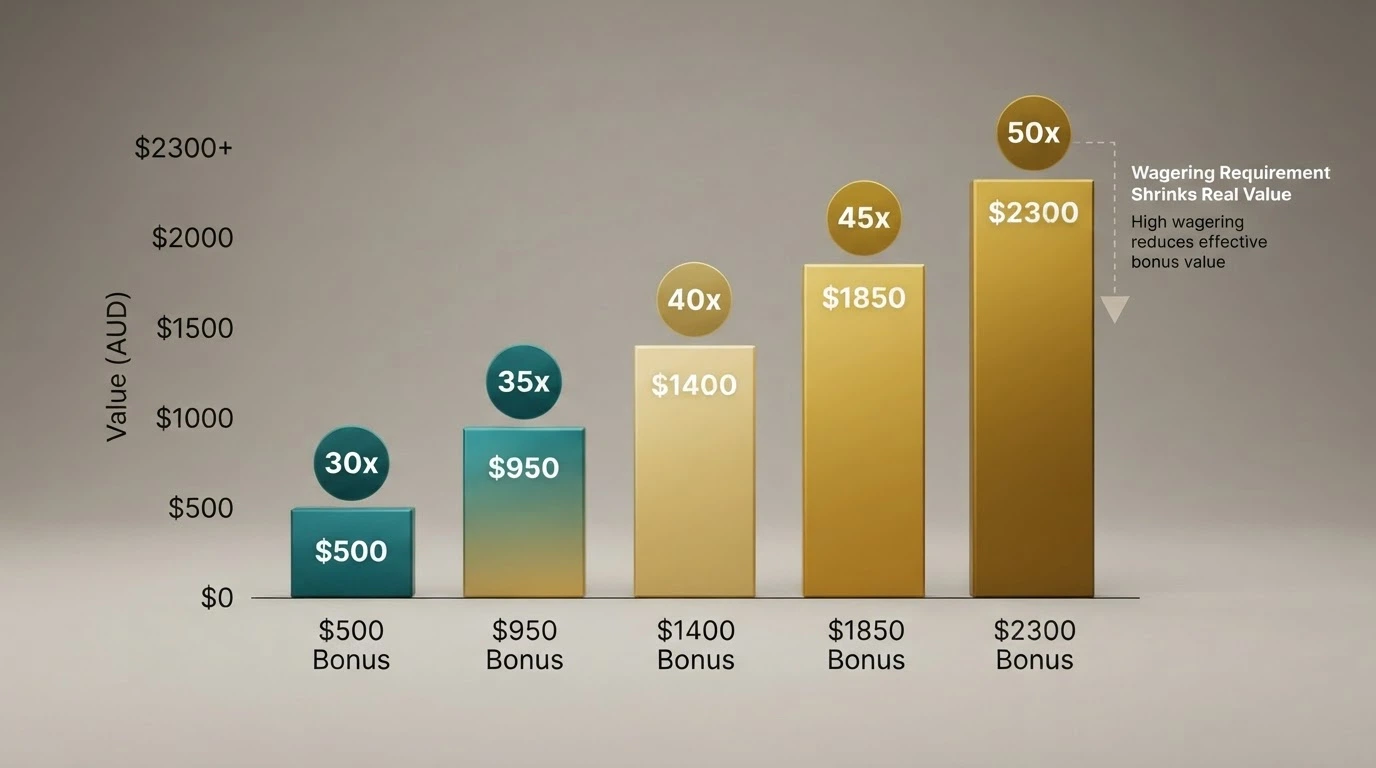
A welcome offer of A$2,500 sounds like A$2,500 until the wagering requirement is applied. At 35x on the bonus, the A$500 first-deposit match at Royal Reels requires A$17,500 in turnover before the bonus becomes withdrawable. At 40x on the wager-locked route at Rainbet, the maximum A$1,750 bonus requires A$70,000 in turnover inside seven days. The headline figure is a ceiling, not a starting balance.
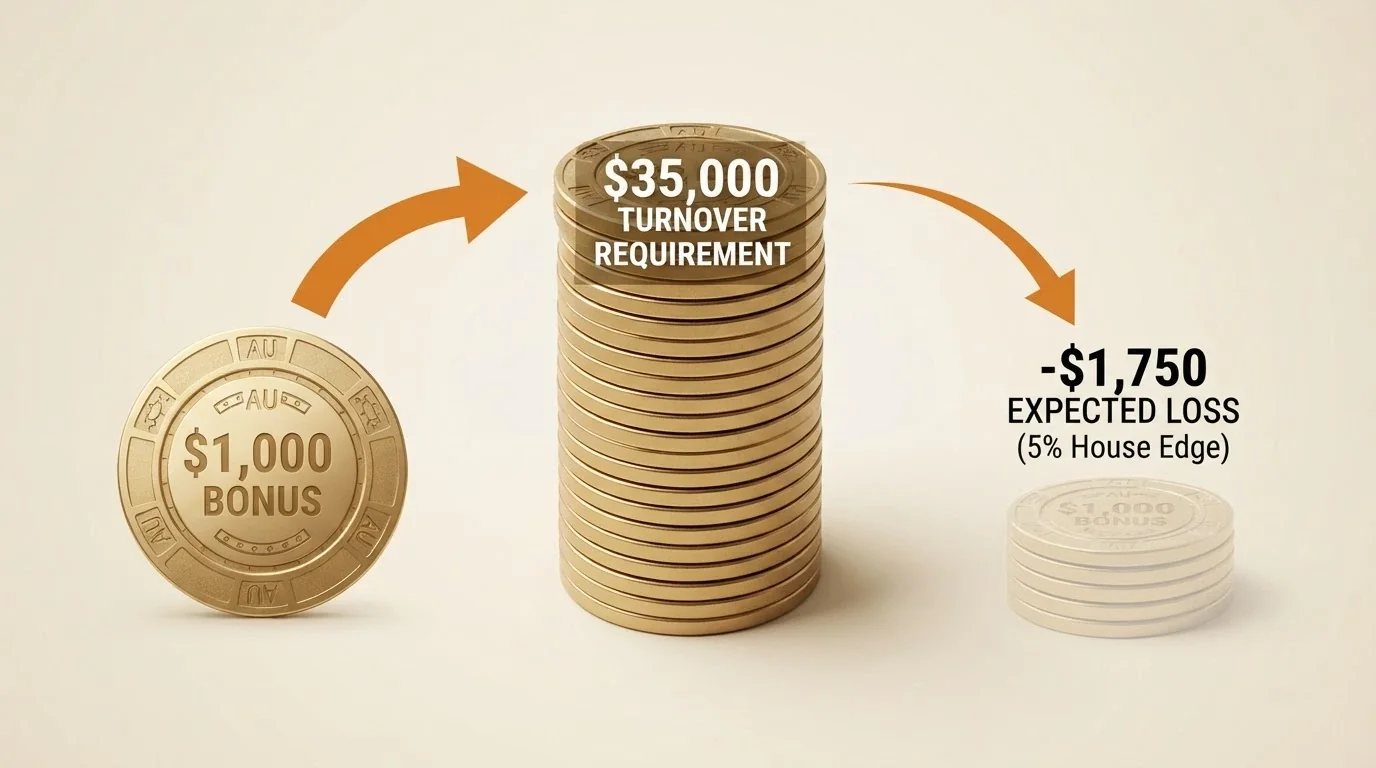
The market norm for reputable LTC casinos is 35x–40x wagering on the combined bonus and deposit; anything above 50x is poor value. Royal Reels’ 35x on bonus only is competitive — applying the multiplier to the bonus alone rather than bonus plus deposit cuts the required turnover roughly in half compared to a 35x-on-bonus-plus-deposit structure, and the difference is a real edge in a punter’s favour. WinSpirit’s 30x on the bonus amount is the lowest confirmed multiplier on the page and the cleanest single figure in the comparison. Rainbet’s 40x on the wager-locked route is at the high end of the norm; Rainbet’s no-wager gradual release trades the headline for a clearer path to a cashable balance.
What this means in expected loss is the part the marketing language does not say out loud. The next section works through the numbers for Rainbet’s max bonus at the default RTP for the slot you’d actually play it on, which is the cheapest way to see the real cost of a “free” A$1,750.
Welcome Bonuses and Free Spins Compared
The four documented welcome offers break into three structures. Royal Reels spreads a 250%-equivalent pack over three deposits with 35x wagering on the bonus and a A$5 per-spin cap during the bonus period. WinSpirit runs a single-deposit 100% match with 30x on the bonus and the lowest minimum withdrawal on the page. FairGO’s five-tier package totals A$1,000, with the specific per-tier and the wagering not fully confirmed this run. Rainbet runs 250% up to $1,750 over three deposits with two clearance routes — 40x wagering on the locked route inside seven days, or no-wager gradual release — plus 60 free spins in 20-per-deposit batches.
Stake does not run a traditional welcome offer at all, which is the right shape for its ongoing-value model. The unnamed operators (Rocket Play, Skycrown, Scream Casino, Bizzo Casino, Rocket Casino) carry welcome terms in their own published documents; this page does not have the figures.
Free spins are the bonus component most often overcounted. Royal Reels’ 50 spins at A$0.20 stake are worth a gross A$10 before any wagering; Rainbet’s 60 spins are worth a gross A$12 at a similar stake. Those are real figures, but they are small against a A$2,500 bonus headline, and the wagering on the spin winnings tends to apply at the same multiple as the deposit bonus. The “50 free spins” language and the “A$2,500 bonus” language often describe the same promotional envelope.
Wagering Terms and Why 35x Changes Everything
The wagering multiple is the figure that determines the real cost of a bonus. At 35x on the bonus only, Royal Reels’ A$500 first-deposit match requires A$17,500 in turnover to clear — a number that sounds like a lot until it is measured against the spin rate and the bet size. A punter betting A$1 per spin on a 96.5% RTP pokie runs through that turnover in roughly 17,500 spins, which is several hours of continuous play and an expected loss of A$612.50 at the 3.5% house edge.
Rainbet’s max bonus of $1,750 at 40x requires $70,000 in turnover. At the same A$1-per-spin stake and the same 96.5% RTP, that is 70,000 spins and an expected loss of A$2,450 — see the worked calculation below. The seven-day validity window on the wager-locked route is tight against that volume: 70,000 spins over seven days is 10,000 spins per day, or roughly fourteen hours of continuous play at a typical spin rate. A punter with the bankroll and the time to sustain that pace is in a different position from a punter with neither.
The A$5 per-spin cap at Royal Reels while a bonus is active is a meaningful constraint. A punter who would otherwise bet larger cannot, which protects the bonus structure from being burned through too quickly, and which also means the maximum turnover rate per hour is capped.
WinSpirit’s 30x on the bonus amount is the cleanest single number on the page. A$500 at 30x is A$15,000 in turnover, and at 96.5% RTP and A$1 per spin that is 15,000 spins and an expected loss of A$525. Lower than the alternatives, and the math lands without the gradual-release complexity. The trade-off is the smaller headline.
The Rainbet no-wager gradual release is the alternative structure worth understanding. Instead of a single bonus amount locked behind a 40x multiple, the bonus is dripped through in increments as the player wagers, and each increment is cashable on release. The headline is smaller in present-value terms than the wager-locked route, but every dollar that does drip through is a real dollar in the punter’s hand. For a punter who values the certainty of cashable balance over the size of the headline, it is the right model.
Pokies, Blackjack and Live Dealer: What You Can Play with LTC
LTC is the deposit rail, not the game format. Once the LTC balance is in the casino account, the game library is the same as for any other deposit method. The libraries on this page range from FairGO’s 280 RTG titles to Rainbet’s 7,000+ multi-provider catalogue, with Royal Reels at 5,400+ from 40+ providers in between. The library size is the clearest single difference between crypto-native and hybrid operators: Rainbet and Stake run the broadest, FairGO runs the most focused.

Pragmatic Play is the single most relevant provider on the page. Founded in 2015, licensed by the MGA, UKGC and 20+ other regulators, and supplying content to more than 250 operators globally, Pragmatic Play is the studio behind Gates of Olympus and most of the other pokies a punter at these operators is likely to encounter. The provider’s compliance footprint is the reason its pokies are available on most offshore lobbies without regional restrictions.
Live-dealer studios are the second axis. Evolution Gaming is the dominant live-dealer studio in the regulated market, and its presence at Stake is the strongest single signal of a credible live offering in this comparison. Pragmatic Play also runs a live studio, and Hacksaw Gaming runs crash and instant-win games alongside its slot catalogue. Royal Reels’ 40+ providers are likely to include live-dealer content, but the specific live studios were not confirmed this run. FairGO’s RTG catalogue includes RNG table games; whether live-dealer is available was not confirmed.
The split that matters for a punter is RNG versus live. RNG table games (blackjack, roulette, baccarat) are available across all of the major studios and tend to be capped or excluded from wagering contribution — a $1 bet on roulette often contributes $0.10 or $0.20 to the wagering requirement, where the same dollar on a pokie contributes the full dollar. Live-dealer tables are usually excluded from bonus wagering entirely. The cap exists because table games have a much lower house edge than slots, and a punter clearing a bonus at the blackjack table is giving the casino very little revenue for the bonus dollar.
Pokies and Slots: What Titles Take Litecoin
| Slot Title | Provider | RTP (Default) | Volatility | Max Win | Free Spin Trigger |
|---|---|---|---|---|---|
| Gates of Olympus | Pragmatic Play | 96.50% | High | 5,000x stake | ~1 in 448 spins |
Gates of Olympus is the only title for which research surfaced complete tabulated data, which is why it sits alone in the table. It is a cluster-pay video slot released on 25 February 2021, with a standard RTP of 96.50%, high volatility, a 5,000x maximum win, and a free-spin feature that triggers on average once every 448 spins at roughly 28.82% hit frequency (about one winning spin in every three to four).
The figure worth understanding is the RTP tier. Pragmatic Play certifies Gates of Olympus at three RTP configurations: 96.5% (default), 95.5%, and 94.5%. The operator chooses which to integrate, and the choice is invisible from the lobby — the same title with the same name pays differently at different casinos. Stake, BC.Game and Rainbet run the 96.5% default; the configuration at the other operators on this page was not confirmed. Over a session of any length, the 2% RTP gap between the highest and lowest tiers is a larger swing than the wagering multiple, and it is the single most useful figure a punter can know about a pokie before playing it.
The 5,000x max win is itself a revision: the original launch figure was 21,100x, and Pragmatic Play revised it down in roughly 2022. The current 5,000x is what a punter playing today will see, and is what the slot’s marketing and bonus terms are written against.
Operator library sizes are the other axis. Royal Reels’ 5,400+ pokies from 40+ providers covers the full Pragmatic Play catalogue and most other major studios, which is the deepest documented range on the page after Rainbet. Rainbet’s 7,000+ is the deepest, period, and includes 14 in-house Originals. FairGO’s 280 RTG titles is the most focused, and the right shape for a punter who prefers the RTG catalogue to the multi-provider mix. Stake’s 3,100+ sits in the middle of the documented range.
Table Games and Live Dealer Studios
RNG table games are universal across the major studios. Blackjack, roulette, baccarat and their variants are available at every operator on this page, in multiple rule configurations and stake levels. The contribution to wagering is the catch: table games tend to contribute 5–20% of the bet size to a bonus wagering requirement, or are excluded entirely. A punter clearing a bonus is better off playing pokies at full contribution than table games at reduced contribution.
Live-dealer tables are a different product. Evolution Gaming is the dominant studio and is on the Stake provider list, which is the strongest live-dealer signal on the page. Pragmatic Play’s live studio adds a second credible option. Hacksaw Gaming’s catalogue is crash and instant-win focused rather than live-dealer focused. Royal Reels’ 40+ providers are likely to include live-dealer content, but the specific live studios were not confirmed this run; a punter who plans to play live should check the lobby before depositing.
The split for a punter is between crypto-native operators (Rainbet, Stake) that have invested in provider breadth and live-dealer credibility, and hybrid operators (FairGO) where the lobby is more focused and the live-dealer offering may be thinner. Royal Reels sits in the middle on provider breadth and unclear on live-dealer specifics.
Litecoin Casinos on Your Phone: What the Mobile Experience Looks Like
Most of the operators on this page run as browser-based mobile sites rather than native apps. JustCasino, used here as a benchmark outside the featured set, supports Mobile, PC and Tablet through a single browser-compatible platform, and that is the shape the rest of the page follows: a responsive website that adapts to the phone screen rather than an iOS or Android app to install.
For an Australian punter, the practical implication is that depositing LTC from a mobile wallet works identically to depositing from a desktop. The casino’s cashier generates a deposit address; the punter’s mobile wallet (Trust Wallet, Exodus, the wallet built into an exchange app) sends the LTC; the casino credits the balance inside five minutes. There is no app store constraint, no in-app purchase friction, and no regional restriction in the app store layer, because there is no app.
The trade-off is screen real estate. A 7,000+ game lobby is harder to navigate on a phone than a 280-game RTG catalogue, and live-dealer tables benefit from the larger screen. For a punter who plays long sessions on a phone, the more focused lobbies (FairGO) tend to be more usable than the more extensive ones (Rainbet, Royal Reels). For a punter who plays short sessions, the difference is small.
Where Australian Law Stands on Litecoin Casinos in 2026
The IGA prohibits the supply of online casino games, online pokies and in-play sports betting to a person in Australia. The Act was strengthened in 2017 to close loopholes used by offshore operators, and again in 2023 with the credit and crypto payment ban that took effect on 11 June 2024. The 2026 reform bill — the Interactive Gambling Amendment (Gambling Reform) Bill 2026 — passed Parliament on 19 August 2026 and its measures commence on 1 January 2027.
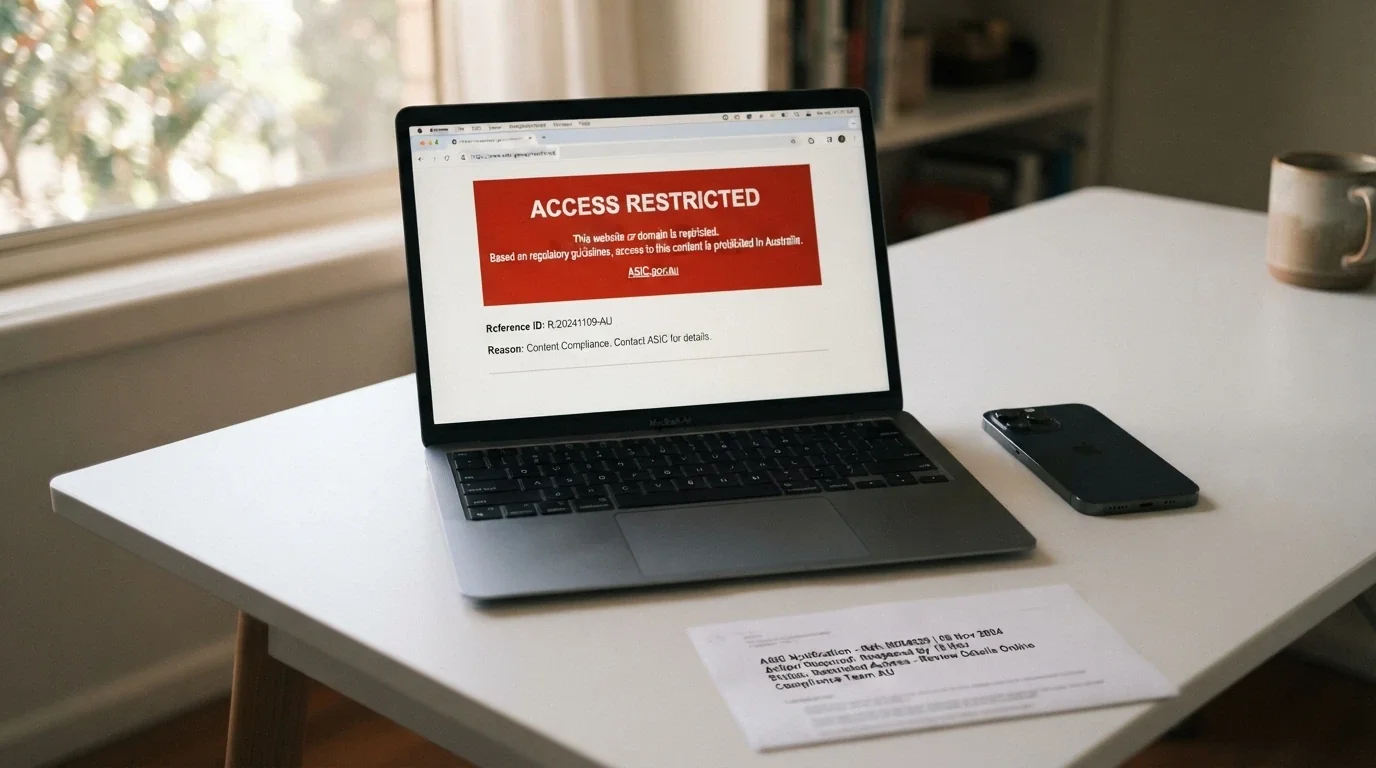
The IGA targets the provider, not the individual punter. An Australian who deposits LTC at an offshore casino is not prosecuted under the Act. The punter does, however, give up the protections that make licensed gambling a regulated activity: no Australian consumer protection, no Australian complaints body, no BetStop coverage, no recourse on a disputed withdrawal, and no guarantee the site will not be blocked by ACMA with a balance still on it. ACMA has now blocked 1,564 illegal sites since November 2019, with 225+ services having withdrawn from the Australian market since 2017.
The crypto payment ban from June 2024 is the most direct piece of the legal frame for this page. Credit cards, credit-related products and digital currency (crypto) are banned as payment for online wagering, with operator penalties of up to $247,500 for failing to enforce it. An Australian who is asked for a crypto deposit by a gambling site is being served by an operator that is not subject to Australian rules and that is offering a product that cannot be licensed in Australia.
The tax treatment of winnings is the one place the ATO weighs in. Gambling winnings are not assessable income for the ordinary punter under section 6-5 of the ITAA 1997, and gambling losses are not deductible under section 8-1 — unless the person is carrying on a business of betting or gambling. The clean version is that recreational gambling is, for tax purposes, a personal activity rather than a commercial one.
The Interactive Gambling Act and What It Means for Players
The IGA’s scope is the supply side. The Act makes it an offence to provide a prohibited interactive gambling service to a person in Australia. ACMA investigates complaints, issues formal warnings, brings civil penalty proceedings, and directs Australian ISPs to block illegal sites at the DNS level. Royal Reels, on this page, is on the block list; the other operators are not currently named in the public blocking figures, though the list updates regularly and the absence of a name today does not guarantee one tomorrow.
The consumer-protection vacuum is the part the law does not address. A punter at an offshore casino has no Australian complaints body to escalate to, no BetStop coverage, and no recourse if the operator refuses a withdrawal or voids a win. The operator’s own terms and the operator’s own jurisdiction (typically Curacao, Anjouan or Malta) are the only recourse that exists, and each of those regimes is weaker than the Australian one. BetStop, the National Self-Exclusion Register, binds Australian-licensed wagering services only — offshore casinos are not connected, and a self-excluded person can still deposit and play at any of the brands on this page.
DNS-level blocking is the mechanism ACMA uses, which is what creates the mirror-domain problem at Royal Reels. The block stops the average Australian from reaching the primary domain; it does not stop a determined punter who knows the mirror, and it does not touch balances already on the site. A punter with funds on a blocked site has to find the mirror to access the balance, which is a real friction in a system that does not otherwise offer consumer protection.
What the 2026 Reforms Change from 2027
The Interactive Gambling Amendment (Gambling Reform) Bill 2026 passed Parliament on 19 August 2026, and its measures commence on 1 January 2027. Two changes matter for the LTC casino pipeline directly.
The first is the bank and payment-provider authority. From 1 January 2027, Australian banks and payment providers gain express authority to block transactions to illegal gambling operators. The mechanism is similar in shape to the code that already lets banks block transactions to known scams, and it gives the financial sector a direct lever on the deposit and withdrawal flow. The change does not make the casino illegal for the punter — the IGA’s provider-offence structure still applies — but it adds a friction on the payment rail that did not exist before. A punter who buys LTC on a local Australian exchange and sends it to a casino wallet may find the on-ramp or the off-ramp harder to use.
The second is the advertising restrictions. From the same date, no more than three wagering advertisements per hour between 6:00 am and 8:30 pm; no wagering advertising in the 15 minutes before a live sporting event until 5 minutes after it ends; no athlete, celebrity or influencer endorsements. The rules apply to Australian-licensed wagering services, which means the offshore casinos on this page are not directly affected — they are not licensed in Australia and do not advertise on Australian broadcasting. The indirect effect is that the offshore and licensed markets become more visibly separate, and the licensed side becomes more boring to advertise.
The reform does not change the IGA’s provider-offence structure, the player-not-prosecuted position, or the offshore licence landscape. The substantive change for an Australian punter at an offshore LTC casino is the bank-blocking lever, and that is the change to watch through 2027.
New Litecoin Casinos Worth a Look in 2026
Rainbet launched in 2023 and is the newest well-documented operator on the page. The FairGO contrast is useful: FairGO has been live since 2017, which is nine years of operating history, and that is the kind of track record a punter cannot replicate by reading terms. Operating history is not a guarantee — operators can change terms, exit a market, or be wound up — but it is a signal that the brand has survived multiple ACMA blocking waves, multiple payment-rail changes, and multiple bonus-term revisions at competitors, and is still paying out.
The framework for evaluating a new LTC casino is straightforward, even where the data is thin. First, the licence claim: where is the licence, what does it cover, and is the licence number verifiable on the regulator’s register. Second, the provider list: which studios supply the lobby, and which are credible. Third, the withdrawal-test reports: has an independent reviewer tested a payout, and what was the result. Fourth, the player-forum sentiment: not the marketing, but the recent complaints and how they were handled. A new operator with a clean licence, a credible provider list, a tested withdrawal and a quiet complaint log is worth more than a new operator with none of those.
For an Australian punter specifically, the ACMA block list is the single most useful external signal. An operator that has been on the list for years and continues to pay out has been tested in the harshest way the regulator can test. An operator that has never been blocked has not been tested that way, and the absence of a block is not a positive signal so much as a missing one.
Staying in Control When the Australian Safety Net Isn’t There
The Australian safety net for problem gambling — BetStop, the National Gambling Helpline, Gambling Help Online — is built for the licensed market and does not reach the offshore operators on this page. BetStop has 67,480 registrations as at 31 July 2026, with 41,290 active exclusions; 78% of registrants are under 40, and 38% chose lifetime exclusion. The numbers are large, and the population they cover is the Australian-licensed market. An offshore casino is not connected, and a self-excluded person can still deposit and play at any of the brands on this page.

The National Gambling Helpline is 1800 858 858 — free, confidential, 24 hours a day, seven days a week, with online chat and counselling through Gambling Help Online at gamblinghelponline.org.au. The helpline can help a caller set limits, refer to a counsellor, and start the BetStop registration process. What the helpline cannot do is recover money lost to an unlicensed offshore operator. Once the LTC leaves a personal wallet and lands at the casino, the funds are at the casino’s discretion, and the Australian regulator’s recovery lever does not reach them.
The scale of the issue in Australia is significant. About 2.1% of Australian adults — roughly 430,000 people — experience problem gambling, and the Australian Institute of Health and Welfare put high-risk gambling at 1.8% in 2022. The figures are for the general population, not specifically for offshore-casino users, but the offshore segment is unlikely to be lower-risk, given the lack of BetStop coverage and the friction-light nature of the cashier.
The practical version for a punter choosing to play at an offshore LTC casino is that the only protection is the limits the punter sets themselves. A deposit ceiling, a session timer, a hard stop on chasing losses, and a number to call if those limits are slipping. The 1800 858 858 helpline is the number, and the helpline is free.
How We Selected and Ranked These Litecoin Casinos
The ten operators on this list were drawn from coverage across CryptoSlate, OnlineAustralianCasinos and independent casino-audit sources. The criteria applied, in rough order of weight, are licence transparency, bonus-term clarity, withdrawal speed in independent testing, game-library depth and provider quality, and provably fair availability. What the ranking does not measure is the actual cashout experience for a large win, which is a real test no review can fully substitute for.
A handful of operators carry sparse independently verified data this run. Where the welcome offer, the licence number, the provider list or the withdrawal window is not confirmed, that gap is stated in the operator’s own entry. The four best-documented operators — Royal Reels, WinSpirit, Rainbet and FairGO — are the ones where the small print is readable on the page. The remaining six are covered qualitatively, with the limits of the data named openly.
The honest limits of the comparison are worth stating. Offshore casinos change terms frequently, and a bonus offer, a wagering multiple, or a withdrawal window that is correct today may not be correct in three months. A punter choosing an operator on this page should treat the figures as a snapshot and re-read the operator’s own terms before depositing. The figures here are verified as of 29 October 2026; the operator’s own terms page is the source that matters at the moment of deposit.
Worked Example: What Rainbet’s Max Bonus Actually Costs
The Rainbet max bonus is A$1,750, locked behind 40x wagering on the wager-locked route, on games that return 96.50% RTP at the Rainbet default configuration. The expected loss is what the bonus costs the punter above the bonus amount itself.
The required turnover is the bonus multiplied by the wagering factor: A$1,750 × 40 = A$70,000. The house edge at 96.50% RTP is 3.50% of every dollar wagered. The expected loss is the turnover multiplied by the house edge: A$70,000 × 0.035 = A$2,450. That is the statistical cost, over many spins and many players, of clearing the A$1,750 bonus. It is an average, not a guarantee — some players will win, some will lose more, and the casino’s house edge is what the average lands on.
The 96.50% RTP figure is the version of Gates of Olympus that Rainbet runs; other games on the lobby return more or less, and the actual expected loss over a clearing session will depend on which games the punter plays and how the wagering contribution rules apply. A punter playing a 94.5% RTP configuration of the same slot for the full clearing volume would land at an expected loss of A$70,000 × 0.055 = A$3,850. The 2% RTP gap is a A$1,400 swing on a A$1,750 bonus, which is larger than the bonus itself.
The figure is a statistical estimate, not a prediction for any single player. It assumes only the bonus amount is wagered — additional deposits and additional bankroll would extend the volume and the expected loss proportionally. The conclusion is that the A$1,750 bonus, on the math, costs a punter A$2,450 to clear at the highest-RTP configuration of the games on the Rainbet lobby.
Should You Use Litecoin at an Online Casino from Australia?
Litecoin delivers on the two things it claims: speed and cost. Deposits credit inside five minutes, the network fee is well under A$0.10, and a punter can move in and out of a casino without a bank or card intermediary. For a punter who has decided to play, LTC is a sensible choice of payment rail because it is faster, cheaper and less friction-heavy than the alternatives, and the cashier experience is cleaner for it.
The rest of the page is the part that does not change with the payment method. Online casino is prohibited in Australia; every operator on this list is offshore, none holds an Australian licence, and the consumer protections that make licensed gambling a regulated activity — BetStop, Australian complaints bodies, recourse on disputed withdrawals, guaranteed access to funds — do not extend to any of them. A punter at one of these casinos is, in the regulatory frame, unprotected. The Australian safety net is built for the licensed market and does not reach here.
The 2027 reforms add a friction on the payment side. From 1 January 2027, banks and payment providers gain express authority to block transactions to illegal gambling operators, which means the LTC deposit pipeline — buying LTC on an Australian exchange, sending it to a casino wallet, withdrawing back — may be harder to operate. The legal frame does not change; the practical one does.
The decision, then, is the punter’s. If the choice is to play, the operators with the cleanest documented terms — WinSpirit on licence and wagering, Rainbet on crypto-native design and gradual release, Royal Reels on game library, FairGO on operational longevity — are the ones where the small print is the smallest risk. If the choice is not to play, the right move is the helpline at 1800 858 858, which is free and confidential, and which can refer a caller to BetStop for the licensed market even if it cannot reach the offshore one.
Frequently Asked Questions
Is It Legal to Play at a Litecoin Casino in Australia?
No online casino is licensed in Australia. The Interactive Gambling Act 2001 makes it an offence to provide online casino games, online pokies and in-play sports betting to a person in Australia, and the player has no Australian consumer protection, complaints body or BetStop coverage at an offshore casino. The punter is not prosecuted under the IGA, which targets the provider, but the protections that make licensed gambling a regulated activity do not extend to any of the operators on this page.
Do Litecoin Casinos Require KYC Verification?
A common KYC trigger sits around A$2,200 in cumulative withdrawals, with a typical range of A$2,000–A figure. Rainbet is the explicit outlier, with no maximum withdrawal at Level 1 KYC and no ID documents required at that level. The first withdrawal above the threshold is the point most operators ask for documents.
Are Litecoin Casinos Provably Fair?
Provably fair is a verification mechanism, not a stamp on a whole lobby. Rainbet’s 14 in-house Originals are provably fair, and Stake’s in-house Originals work the same way. The Pragmatic Play pokies, the Evolution live-dealer tables and the RTG catalogue at FairGO are not provably fair in this technical sense, because they are third-party products whose RNGs the casino does not control. A casino that calls itself “provably fair” is using the term precisely for the Originals; the rest of the lobby is third-party RNG.
What Happens If My Offshore Litecoin Casino Gets Blocked by the ACMA?
The ACMA block list covers 1,564 illegal gambling and affiliate sites since November 2019, and Royal Reels is the operator on this page currently named. The block is DNS-level, which stops the average punter reaching the primary domain but does not stop a determined punter who knows the mirror, and does not touch balances already on the site. Funds on a blocked site are accessible only through the mirror, which is a real friction in a system that offers no consumer protection.
Does BetStop Cover Offshore Litecoin Casinos?
No. BetStop, the National Self-Exclusion Register, binds Australian-licensed wagering services only. An offshore casino is not connected to the register, and a self-excluded person can still deposit and play at any of the brands on this page. The National Gambling Helpline (1800 858 858) and Gambling Help Online (gamblinghelponline.org.au) are the safety-net services that do reach an offshore player, and BetStop registration covers the Australian-licensed market separately.
How Does Litecoin Compare to Bitcoin for Online Casino Deposits?
Litecoin blocks every 2.5 minutes versus Bitcoin’s 10, and the typical casino credits LTC deposits inside five minutes while Bitcoin deposits take 30–60 minutes because of the additional confirmations. Network fees are well under A$0.10 for both, though Bitcoin’s fee can spike during congestion. USDT on TRC-20 settles inside 10 minutes and is sometimes the fastest rail in independent testing. The speed is for deposits; withdrawals are gated by the casino’s own processing clock, not the blockchain.