Best 5-reel pokies for Australian players in 2026: ranked, explained and honestly priced
 Available in AU
Data current as of 18 October 2026, licence claims verified against the Australian Communications and Media Authority’s published register and the operator terms pages in force on that date.

Five-reel pokies are the default format of online slots worldwide, and the titles Australians actually load — Big Bass Bonanza, Sweet Bonanza, Wolf Gold, Book of Dead — sit on a five-reel grid. What separates a forgettable spin from a session you return to is not the reel count. It is the combination of return-to-player percentage, volatility, bonus mechanics and the price the bonus terms put on the offer before any of those numbers reach your balance. This page ranks the best five-reel pokies available to Australian players by RTP, explains how each mechanic works, then walks through the ten offshore operators Australians reach when they want to play for real money — and the legal and protective gap that sits underneath all of them.
Table of Contents
- How to play 5-reel pokies for free — no deposit, no download
- What makes a 5-reel pokie worth your time in 2026
- Playing 5-reel pokies for real money from Australia — what you actually risk
- Why your 5-reel pokie bonus is smaller than it looks
- Why online pokies are banned in Australia — and what the 2026 reform changes
- 10 offshore casinos where Australians play 5-reel pokies in 2026
- Staying in control: the responsible gambling tools every Australian pokies player should know
- How we picked the best 5-reel pokies and casinos for this review
- Which 5-reel pokie should you actually play? A verdict from the data
- Frequently asked questions
How to play 5-reel pokies for free — no deposit, no download
Three routes exist for Australians who want to try five-reel pokies without risking money: demo mode inside an operator lobby, instant-play browser versions on review sites, and bonus features tested inside free play. Each delivers something, and each stops short of the thing a real-money session actually involves.
How free-play demo mode works on 5-reel pokies
Demo mode loads a pokie with a play-money balance — typically a few thousand credits that the browser refreshes when they run out. The reels, symbols, paytable, bonus triggers, free-spin rounds and tumble features behave exactly as they do in the real-money version. The random number generator is the same engine, and the published RTP is the same number, because the title is the same piece of software. What demo mode gives a player is the chance to see how often a bonus round actually fires, how a hold-and-spin feature behaves on a near-miss, and how a high-volatility title feels over fifty or a hundred spins without watching a real balance drain.

The one thing demo cannot replicate is the weight of the stake. A spin that wins 0.4 credits in demo is a meaningless event; a spin that costs A$1 in real money and wins the same amount is a loss the player feels. That is why session pace, bet sizing discipline and the decision to walk away all read very differently in a real-money session, and why demo is best treated as a mechanic test, not a practice run at the actual experience.
Demo availability varies by title and by operator. Most major providers — NetEnt, Play’n GO, Pragmatic Play, Thunderkick, Yggdrasil, Wazdan — build demo access into the game client. Whether the operator surfaces that button, or hides it behind sign-up, depends on the operator’s own configuration. Starburst, Book of Dead, Sweet Bonanza and Big Bass Bonanza are widely available in demo through the providers’ own sites and through review pages that embed the game client.
Playing free 5-reel slots without downloading or registering
Modern pokies run on HTML5 and load in any modern browser on desktop and mobile. There is nothing to install, no app to download, no client to maintain. A player opens a browser, navigates to an operator lobby or a review-site embed, and the game runs in the tab. On a phone the same title runs full-screen in landscape, with the same reel layout and the same bonus animations.
Instant play does not mean no data collection. An operator still records the session — the IP address, the device fingerprint, the games visited, the duration of play. A player who later opens a real-money account on the same operator will find their demo history waiting. The cleanest no-data route is the providers’ own demo pages, which sit outside the operator stack entirely.
What changes when a player moves from free play to a real-money account is everything the demo could not show. Bet sizing becomes a real decision. Losses become real losses. Time-on-site becomes money spent. The same bonus round that felt exciting in demo becomes a calculation against a wagering requirement. The free-play session is the test drive; the real-money session is the purchase.
Bonus features and free spins you can trial without a deposit
Demo mode is the cheapest way to see a bonus engine work. A player can run a hundred spins on Starburst and watch the expanding wild re-spin feature land — and see how rarely it lands, and how much the feature pays when it does. A session on Book of Dead lets the free-spins round trigger, and the expanding symbol mechanic that turns a low-pay symbol into a screen-filler is visible inside the demo balance. Sweet Bonanza’s tumble feature and the multiplier bombs that arrive during free spins behave identically in demo, and the player can watch a 100x multiplier drop on the tenth tumble of a chain and see exactly what a 21,100x max win looks like before any real money is on the line.
What a player cannot learn from the demo bonus is what the win is worth. A A$2 tumble win in play money is not the same as a A$2 tumble win on a real-money spin, because the real-money spin sits inside a session with a real balance, a real wagering target, and a real time cost. The bonus engine is the same; the value of what comes out of it is not.
What makes a 5-reel pokie worth your time in 2026
Five reels is the industry standard, and the structural difference between a five-reel pokie and anything else has narrowed to the point of being unremarkable. What still separates the titles worth loading from the catalogue filler is the combination of return-to-player percentage, volatility class and the design of the bonus engine. Get any of those wrong and the session reads as either a slow grind or a fast burn.
How 5-reel pokies work: reels, paylines and ways to win
A five-reel pokie spins five vertical strips, each populated with symbols, and pays out when a defined pattern of matching symbols lands on an active payline or, in some titles, anywhere on adjacent reels. The classic configuration is 25 or 30 fixed paylines, but the range runs from 10 lines on tighter titles to over 100,000 ways to win on Megaways games.

A payline is a pre-drawn path across the reels — left to right, in a V, in a zigzag — and the player pays one unit per active line. A 25-payline pokie at A$0.01 per line costs A$0.25 per spin. Ways-to-win titles drop the lines entirely and pay any matching symbol on adjacent reels from left to right; 243 ways is the standard 3×5 configuration, and Megaways titles expand the symbol count per reel on every spin, generating thousands or hundreds of thousands of possible combinations.
Reel Power is an Australian contribution to the format. Developed by Aristocrat, Reel Power removes paylines and replaces them with reel-based ways-to-win, where activating a reel costs one credit and the player chooses how many reels to enable. 5 Dragons, one of Aristocrat’s best-known Reel Power titles, runs on 243 ways and is a direct ancestor of the modern ways-to-win structure. The mechanic lets the player scale risk without scaling line-count, and it remains a signature of Aristocrat’s catalogue.
The building blocks above the reels are the same in every title. Wild symbols substitute for other symbols to complete a winning line. Scatter symbols pay anywhere on the reels, regardless of paylines, and typically trigger the bonus round. Multiplier symbols multiply a win by a fixed or random amount. Expanding wilds grow to cover a full reel, often locking in place for a re-spin. Those four symbol classes — wild, scatter, multiplier, expanding — are the material every bonus feature is built from.
Classic vs modern: from 3-reel cabinets to Megaways
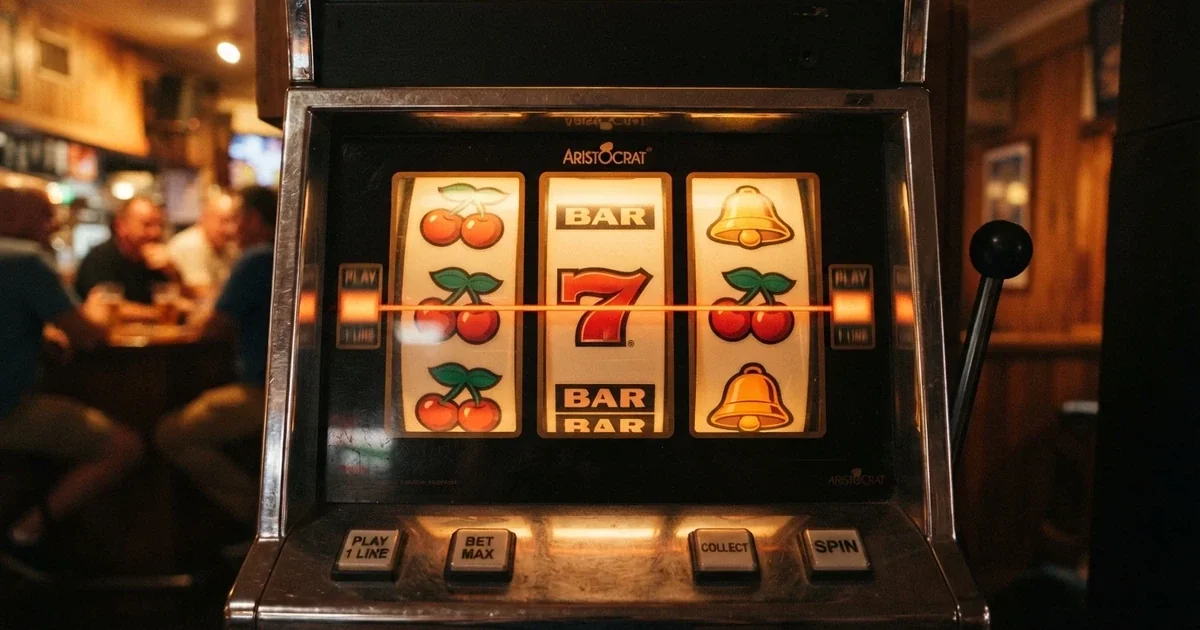
The three-reel pokie is the parent format. One payline, three symbols per reel, no bonus features beyond the occasional wild. The format survives in pub cabinets and online classics because the rhythm is simple and the hit frequency is high — small wins come often, the session feels active, and the variance is low. A player who wants a slow, even session still finds what they want on a three-reel title.
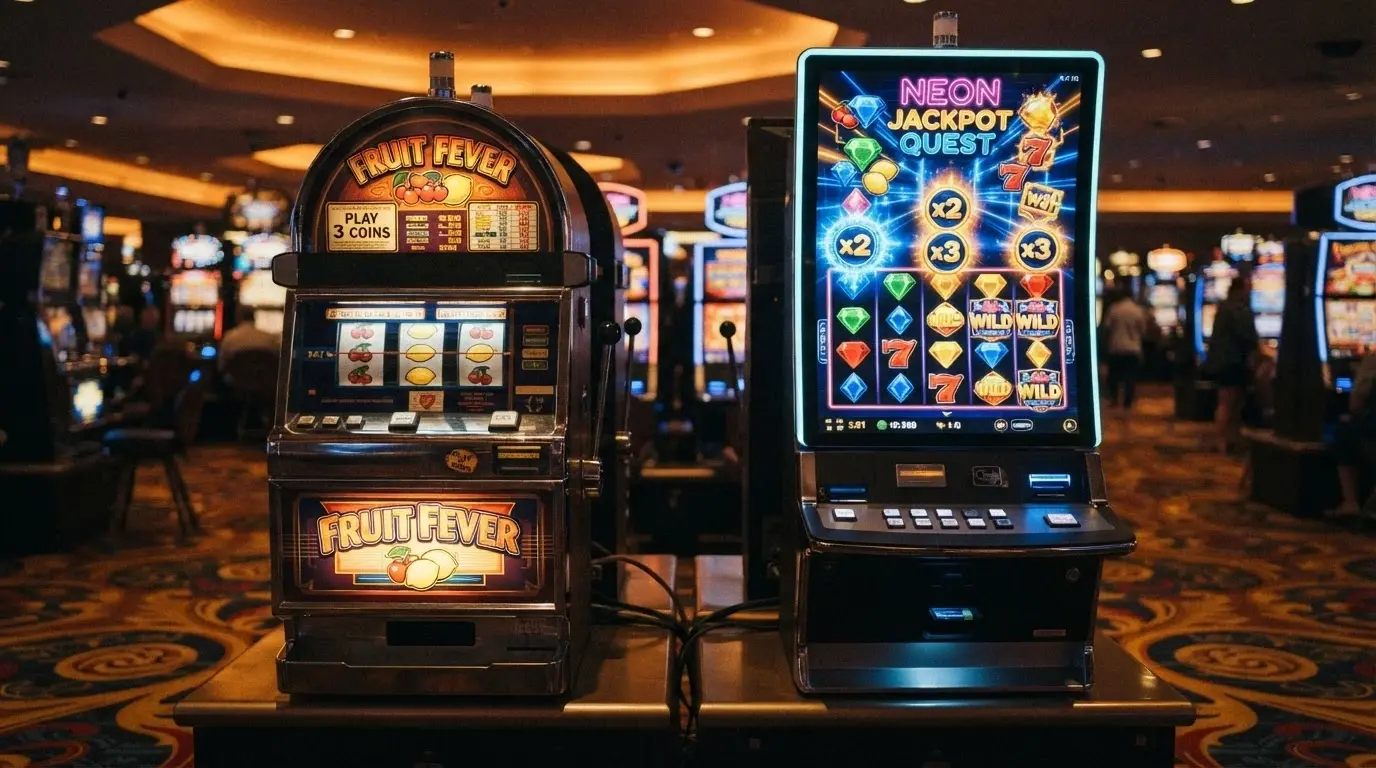
The five-reel format adds two reels and a row of complexity. With more symbols in play, paylines can multiply — 10, 20, 25, 50 — and the grid can host a fifth reel of bonus triggers. The first five-reel video pokies, in the late 1990s and early 2000s, added scatter pays and free-spin rounds and turned the pokie from a single-line spin into a multi-feature game. 5 Dragons sits in this era: a five-reel Aristocrat video pokie with 243 ways, scatter pays, and a free-spins round with symbol-choice mechanics.
The modern five-reel pokie is a different animal again. Megaways, developed by Big Time Gaming, randomises the symbol count on each reel on every spin, so the number of ways to win changes from spin to spin — sometimes 324, sometimes 117,649. Cascading or tumbling reels remove winning symbols and drop new ones into their place, allowing chain wins on a single paid spin. Multiplier trails build across a cascade sequence. Bonus rounds buy directly from the base game for a fixed multiple of the stake. The pokie has become a system of interlocking mechanics, and the player is making decisions — when to buy, when to ride, when to switch — that the three-reel format never required.
Which type suits which player is a temperament question, not a maths one. A player who wants long sessions on a small bankroll does better on a low-volatility five-reel or a classic three-reel. A player who wants the chance of a session-defining win on a single spin is closer to a high-volatility modern title like Sweet Bonanza or Book of Dead.
Online 5-reel pokies vs the pub screen — what changes
The same pokie title often runs in two places: an online casino lobby and a pub or club cabinet on a licensed Australian floor. The reels look the same, the symbols are the same, the bonus feature is the same. What changes is everything around the reels.
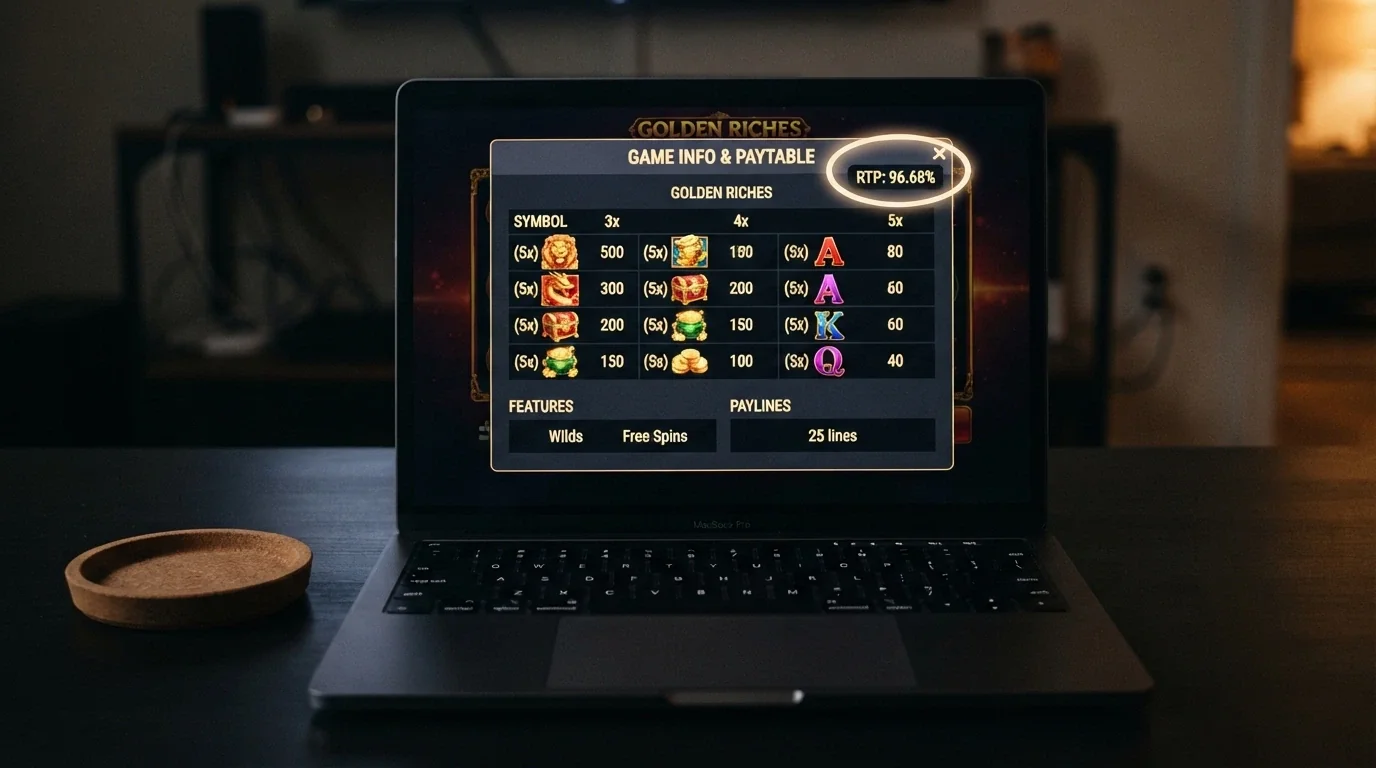
Online RTP for five-reel pokies typically sits in a 94%–98% band, with the publisher publishing the figure in the game information panel. Land-based cabinets on Australian pub and club floors typically run lower — often 87%–92% — and the figure is rarely published on the machine itself. 5 Dragons is a useful illustration: its online RTP is 95.17% with the ante bet engaged and 90.93% without it, and the gap between the two figures is the kind of margin the cabinet version rarely closes.
Bet flexibility is the other difference. Online minimums run as low as A$0.10 a spin, and the player can scale in cent increments. A pub cabinet typically has a fixed credit denomination, and the minimum bet is the smallest credit size the venue allows — often A$0.50 or A$1 per spin. The online player can grind a small bankroll across a long session; the pub player commits a larger amount per spin from the first press.
Session pace and auto-play are the third difference. Online pokies run as fast as the player can press spin, with auto-play configurable for 10, 100 or 1,000 spins at a time. A pub cabinet is paced by the machine — the spin animation, the win presentation, the loss sequence — and a player cannot skip the cycle. The online player is in control of the rhythm; the pub player is at the mercy of the cabinet.
Game providers sit on both sides of the divide, but not symmetrically. Aristocrat is the most visible dual presence — its land-based cabinets dominate Australian pub floors, and its online titles are widely available through aggregators. Pragmatic Play, Play’n GO, NetEnt and the rest of the modern online providers run almost exclusively in the online space, with their titles rarely seen in physical cabinets. The two worlds overlap in name more than in catalogue.
The highest-RTP 5-reel pokies available to Australian players
The table below ranks the 14 five-reel pokies with publisher-confirmed RTP data, ordered from highest to lowest return. Volatility and max win sit alongside RTP because RTP alone is not the answer to which pokie is best — a 98% title with low volatility and a 900x max win is a different proposition from a 96% title with high volatility and a 21,100x ceiling.
| Slot Title | Provider | RTP | Volatility | Max Win |
|---|---|---|---|---|
| 1429 Uncharted Seas | Thunderkick | 98.60% | Low | 2,200x |
| Blood Suckers | NetEnt | 98.00% | Low | 900x |
| Big Bass Bonanza | Pragmatic Play | 96.71% | Medium-High | 2,100x |
| Burning Reels | Wazdan | 96.63% | Adjustable | 5,000x |
| Divine Fortune | NetEnt | 96.59% | Medium | 1,000x |
| Sweet Bonanza | Pragmatic Play | 96.51% | High | 21,100x |
| Piggy Riches | NetEnt | 96.38% | Medium | 7,500x |
| Valley of the Gods | Yggdrasil | ~96.2% | Medium | 5,800x |
| Book of Dead | Play’n GO | 96.21% | High | 5,000x |
| Starburst | NetEnt | 96.09% | Low-Medium | 500x |
| Wolf Gold | Pragmatic Play | 96.01% | Medium | — |
| Money Mouse | Pragmatic Play | 96.00% | Medium | 2,500x |
| Gonzo’s Quest | NetEnt | 95.97% | Medium-High | 37,500x |
| 5 Dragons | Aristocrat | 95.17% | Medium-High | — |
What a 98% RTP means over 10,000 spins is the figure that matters in practice. A A$1 spin across 10,000 spins is A$10,000 in turnover. At 98% RTP, the long-run return is A$9,800 — an expected loss of A$200. The same 10,000 spins at 95% RTP cost A$500. That A$300 difference, spread across a session, is what the RTP spread actually buys.
High RTP alone does not make a pokie the best choice. Blood Suckers at 98% with a 900x max win and low volatility will deliver small, frequent wins — the session reads as steady, not exciting, and the ceiling is low. Sweet Bonanza at 96.51% with a 21,100x max win will eat a bankroll over hundreds of dead spins and then occasionally return a session-defining hit. The player who picks on RTP alone gets the lowest long-term loss; the player who picks on the combination of RTP, volatility and max win gets the session profile they actually want.
Playing 5-reel pokies for real money from Australia — what you actually risk
Every real-money pokie session an Australian plays runs through an offshore operator. The Australian Communications and Media Authority has directed ISPs to block 1,564 illegal gambling and affiliate websites since November 2019, and more than 225 illegal services have withdrawn from the Australian market since enforcement was strengthened in 2017 — but the supply keeps finding routes around the blocks. The legal status of the operator and the protection available to the player are the two numbers every Australian should fix in their head before depositing.
What playing for real cash means when the operator sits offshore
The offshore operator sits outside Australian licensing. No state or territory regulator has approved it, because no approval framework exists for the product — online casino games and online pokies are prohibited under the Interactive Gambling Act 2001, full stop. The licences the operator does hold are typically Curaçao eGaming, sometimes paired with Kahnawake, and the standards those regulators apply bear no resemblance to the ones the Northern Territory Racing and Wagering Commission applies to licensed Australian wagering services.
The consequence for the player is the absence of every safeguard that exists on the Australian-licensed side. The ACMA cannot investigate a complaint about a refused withdrawal. The state and territory regulators cannot compel a payout. The Australian Financial Complaints Authority has no jurisdiction. BetStop does not bind the operator. The only recourse a player has is the operator’s own internal dispute process — and if the operator declines to engage, the player is left with the credit-card chargeback route, which the operator’s terms typically exclude.
The player’s own legal position is different. The IGA targets the provider, not the individual. The ACMA’s own position is that the Act is enforced against operators offering prohibited services to Australians, and the player is not prosecuted. The legal risk sits on the side supplying the product, not the side consuming it. The financial risk — a refused withdrawal, a voided bonus, a confiscated balance on a terms-of-service technicality — sits entirely on the player.
Deposit methods that Australian players can still use
Credit cards, credit-related products and digital currency (crypto) have been banned as payment for online wagering since 11 June 2024. An operator that asks for either is, by that fact alone, operating outside Australian rules. The penalty for an operator that fails to enforce the ban is up to A$247,500 per breach.
The channels that remain are Australian bank-transfer options and e-wallet routes. PayID and Osko deliver near-instant transfers between Australian bank accounts using a phone number, email or ABN as the identifier. BPAY is the bill-payment rail that most Australian banks still support, though processing times are longer. E-wallets and prepaid vouchers sit in a grey area that the operator typically navigates by routing through an offshore payment processor.
The tell that identifies an operator outside Australian rules is the deposit screen. If the cashier lists Visa, Mastercard or crypto before it lists PayID, the operator is not running under Australian compliance. The same operator may still process a PayID deposit, but the front of the cashier is the indicator. From 1 January 2027, banks and payment providers gain express authority to block transactions to illegal gambling operators, and the front of the cashier is about to get harder to maintain.
Real-money bonuses versus free-play offers
A demo balance is play money the player cannot withdraw and the operator cannot keep. A bonus is a real-money credit the player can withdraw — after meeting the conditions the operator has attached to it. The two are not on the same scale, and treating them as if they are is the most expensive mistake a player new to online pokies makes.
A welcome package is the operator’s first hook. The structure typically spans the player’s first two to five deposits, with each deposit matched at a different percentage and capped at a different ceiling. Bizzo Casino, for instance, runs a four-deposit package up to AU$7,750 plus 175 free spins with a 40x wagering requirement. Royal Reels runs a three-deposit package up to A$2,500 plus 50 spins at 35x wagering on the bonus only. SkyCrown spreads A$4,000 plus 400 free spins across five deposits, again at 40x. The headline numbers are large, and the conditions are where the value actually lives.
Free play, in the sense of a demo balance, costs the player nothing and gives the operator nothing. It is the only truly free offer in the online pokie ecosystem, and the only one where the player walks away with what they brought. Real-money bonuses are funded by the operator, and the operator funds them because the attached conditions, on average, return more to the operator than the bonus pays out. That is the arithmetic every bonus term is built on, and it is the arithmetic a player should run before claiming.
Why your 5-reel pokie bonus is smaller than it looks
The headline figure on a welcome package is not the number that reaches the player’s pocket. Wagering requirements, game weightings, validity windows and per-spin caps shrink the bonus before any of it can be withdrawn, and the player who skips the terms page pays for the skip.
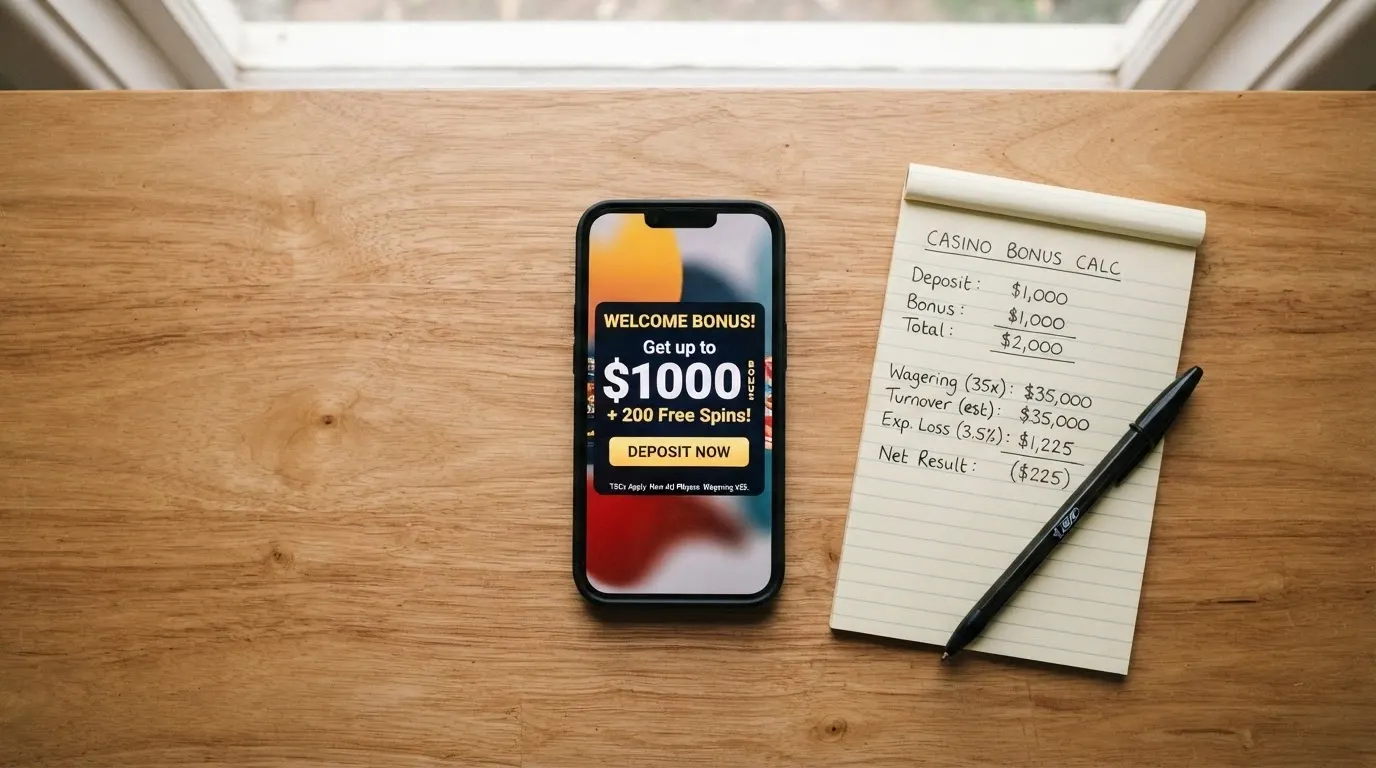
Royal Reels’ A$2,500 welcome package carries a 35x wagering requirement on the bonus only, with a A$5 per-spin cap during clear-down. Bizzo’s AU$7,750 package carries a 40x wagering requirement with a AU$6.50 max bet during the same window. SkyCrown’s A$4,000 package carries 40x. RocketPlay’s $2,000 package carries 40x. The wagering multiplier is the single most important number on the bonus, and the table that follows it — which games contribute, how much, and for how long — is where the multiplier actually applies.
To clear a A$2,500 bonus at 35x wagering on the bonus only, a player has to turn over A$87,500 on eligible games. At A$1 per spin on a 96% RTP pokie, that is 87,500 spins. The expected loss on those spins is A$87,500 × 0.04 = A$3,500. The bonus is worth A$2,500; the cost of clearing it is A$3,500. The player is A$1,000 behind before any of the bonus money is theirs to keep. That is the arithmetic a 35x wagering multiplier quietly delivers, and it is the arithmetic a player should run on every welcome package before clicking claim.
Validity windows add time pressure on top of the turnover. Most welcome bonuses expire within 7 to 30 days of being credited, and the player has to clear the wagering inside that window or forfeit the bonus and any winnings tied to it. The shorter the window, the harder the player has to push — and the more the house edge compounds against them. Game weightings are the third compression: pokies typically contribute 100% to wagering, but table games often contribute 0% to 20%, and a player who fires up blackjack with bonus money in the balance burns through the clock without burning down the requirement.
How bonus rounds work in 5-reel pokies
The bonus round is the feature that distinguishes a five-reel pokie from a three-reel cabinet, and four engines cover most of what a player will encounter.
Free-spin rounds are the most common. A scatter symbol, typically three or more, triggers a fixed number of free spins — 8, 10, 15, 20 — during which a modifier is usually active. Book of Dead’s free-spin round runs ten spins with a randomly chosen expanding symbol that stretches to fill its reel whenever it lands. Starburst’s “bonus” is technically a re-spin: a wild locks in place, the remaining reels re-spin, and the wild stays locked if another wild lands. The expanding wild re-spin in Starburst is the simplest bonus engine in modern pokies and the one that produces the most consistent session energy.
Hold-and-spin features, also called lock-and-spin or respin-and-collect, drop the reels to a stripped-back symbol set and award a fixed number of respins — usually three. Each special symbol that lands locks in place and resets the respin counter. The round ends when the respins run out without a new symbol landing, and the locked symbols are paid out. Money Mouse and several other Pragmatic Play titles run a version of this engine. It is a low-skill, high-tension feature: the player is waiting for the next symbol to land, and the round ends abruptly when the respin counter expires.
Cascading-reel or tumble features remove winning symbols from the grid and drop new ones into their place, allowing chain wins on a single paid spin. Gonzo’s Quest introduced the mechanic to the mainstream — its “avalanche” feature is the model — and Sweet Bonanza runs a tumble on every spin, with multiplier bombs that arrive during free spins and stack across a tumble sequence. Multiplier trails in cascade features can climb into triple digits, and that is where the large max-win figures on cascade-heavy titles come from.
Pick-a-prize and wheel-spin features present the player with a closed selection — chests, cards, wheels, symbols — and reveal a prize. The mechanic is older and less common in modern five-reel pokies, but it appears in bonus-buy titles and in the secondary features of larger games. The feature is a costume over a random number generator; the player is not making a meaningful choice, and the prize distribution is fixed.
Free-spins features vs deposit-match bonuses — which delivers more value
The two bonus types are priced differently. A pack of 50 free spins at A$0.20 a spin on a 96% pokie has a face value of A$10 in spin cost and an expected return of A$9.60. A 100% deposit match up to A$500 credits the player with A$500 in bonus money, but the wagering requirement — typically 35x to 40x on the bonus — costs more in expected loss than the bonus adds. The free-spin pack is the better deal if the wagering on the deposit match is at the upper end of the market range, and the deposit match is the better deal if the wagering is at the lower end.
Stake, the only operator in the featured set with no traditional match bonus, sidesteps the comparison entirely. Its promotions are wager-free races and raffles, and the player who opts into one keeps what they win without a clear-down. The trade-off is that the player is not getting a deposit match in the first place, and the headline bonus a player might compare across operators is not present.
The wager-free exception is rare, and the player who finds it has found a genuinely better offer. The player who does not find it should run the wagering arithmetic before claiming any welcome package, and should treat the headline number as a starting point rather than a destination.
Why online pokies are banned in Australia — and what the 2026 reform changes
The Interactive Gambling Act 2001 prohibits online casino games, online pokies and in-play betting on a sporting event once it has started. The ban is not a regulatory grey area — it is a statutory prohibition with civil penalties attached, and the Australian Communications and Media Authority has been enforcing it with ISP blocking, civil penalty proceedings and referrals since 2017. The 2026 reform, which passed Parliament on 19 August 2026 and commences on 1 January 2027, sharpens the enforcement apparatus further. It does not legalise online pokies for Australians, and it does not change the offshore-only reality the player faces.

The Interactive Gambling Act explained: what is prohibited and why
The IGA draws a line through interactive gambling in Australia. Online casino games — including online pokies, online blackjack, online roulette and online baccarat — are prohibited. In-play sports betting, where a wager is placed after a sporting event has started, is prohibited. The prohibition is absolute: there is no licensing framework, no application process, and no state or territory that issues a permit for the product.
What the IGA does not prohibit is pre-event wagering on racing and sport, lotteries, and keno, all of which are licensed at the state and territory level. The Northern Territory Racing and Wagering Commission, operating through Licensing NT, is the de facto national licensor for online wagering, and the major Australian-facing brands — Sportsbet, Ladbrokes, TAB — operate under NT-issued permits. The licensed market is a real and regulated market; it just does not include online pokies.
The ACMA enforces the prohibition. It investigates complaints, issues warnings, refers operators for civil penalty proceedings and directs Australian ISPs to block illegal sites. Since November 2019, the ACMA has had 1,564 illegal gambling and affiliate websites blocked. More than 225 illegal services have withdrawn from the Australian market since 2017. The enforcement record is the clearest answer to the question of whether the prohibition is real: it is, and it has been for almost a decade.
The individual player is not prosecuted. The IGA targets the provider — the company supplying the prohibited service to a person in Australia. The ACMA’s own statement of position is that enforcement is operator-side. The player is not at legal risk, but the player is at financial risk, and the financial risk is unmediated by Australian consumer protection.
The 2026 gambling reform: what changes on 1 January 2027
The Interactive Gambling Amendment (Gambling Reform) Bill 2026 passed Parliament on 19 August 2026, and its measures commence on 1 January 2027. The reform does not legalise online pokies. It rebuilds the licensed wagering market and gives the ACMA sharper tools against the illegal one. The changes that matter for a pokie player in Australia are these:
- Wagering advertising is capped at three ads per hour between 6:00 am and 8:30 pm. Radio ads during school drop-off and pick-up times are barred.
- A live-sport blackout prohibits wagering advertising from 15 minutes before a live event until 5 minutes after it ends, between 5 am and 8:30 pm.
- Athletes, celebrities and influencers are barred from promoting wagering products. Broadcasting of sporting odds is banned outright. Wagering advertising in sports venues and on uniforms is banned.
- Online wagering ads are restricted to logged-in, confirmed over-18 users who have not opted out. The National Wagering Advertising Opt-out Register — AdStop — will be administered by the ACMA.
- Direct marketing of inducements is prohibited for 14 days after a customer signs up, for 90 days after a person deregisters from BetStop, and indefinitely for customers flagged as at-risk.
- New regulatory powers enable financial institutions to restrict transactions to gambling platforms operating illegally. The credit-card and crypto ban that took effect on 11 June 2024 was the first move on this front; the reform completes it.
- The ACMA’s enforcement costs are recovered via a levy on licensed interactive wagering service providers under the Interactive Gambling (Cost Recovery Levy) Bill 2026.
None of this changes the offshore reality for online pokies. The reform is targeted at licensed wagering services — the sportsbooks and racing operators — and at the advertising and inducement machinery that surrounds them. The offshore casino that an Australian player reaches today is the same operator the player will reach on 2 January 2027, with the same Curaçao licence and the same absence of Australian consumer protection. What the reform does is make it harder to find that operator through an Australian-channel advertisement, and harder to fund a deposit through an Australian bank.
Offshore vs licensed: the protection gap every Australian player faces
The licensed Australian wagering system and the offshore pokie market do not meet. The BetStop National Self-Exclusion Register — 67,480 registrations as at 31 July 2026, with 41,290 exclusions still active — binds every Australian-licensed wagering service. It does not bind a Curaçao-licensed casino operating offshore. A player who has self-excluded from Australian wagering and then signs up at an offshore casino has not self-excluded from the offshore casino, and the offshore casino has no mechanism to check.
The same gap exists for every other safeguard. Deposit limits, take-a-break tools, activity statements — all of them are operator-side features on the Australian-licensed side, and all of them are absent on the offshore side. The ACMA cannot investigate a complaint about a refused withdrawal because the ACMA has no jurisdiction over the operator. The state and territory regulators cannot compel a payout. The Australian Financial Complaints Authority has no reach. The player is relying on the operator’s own dispute process, and if the operator declines to engage, the player is out the balance.
The credit-card and crypto ban is the cleanest tell of where an operator sits. A cashier that lists Visa, Mastercard or crypto before it lists PayID is operating outside Australian compliance. From 1 January 2027, banks and payment providers gain express authority to block transactions to illegal operators, and a deposit that processed cleanly in 2026 may not process in 2026 + 1. The ISP-blocking regime is the second tell. The ACMA’s list of 1,564 blocked sites is not static, and a site that is reachable this month can disappear next month without notice.
10 offshore casinos where Australians play 5-reel pokies in 2026
Every operator in this ranking sits outside Australian licensing. No state or territory regulator has approved any of them, because no approval framework exists for the product they sell. The comparison ranks what each one actually offers — bonus terms, game catalogue, provider mix — not what a local regulator has approved, because no local regulator has approved any of them.
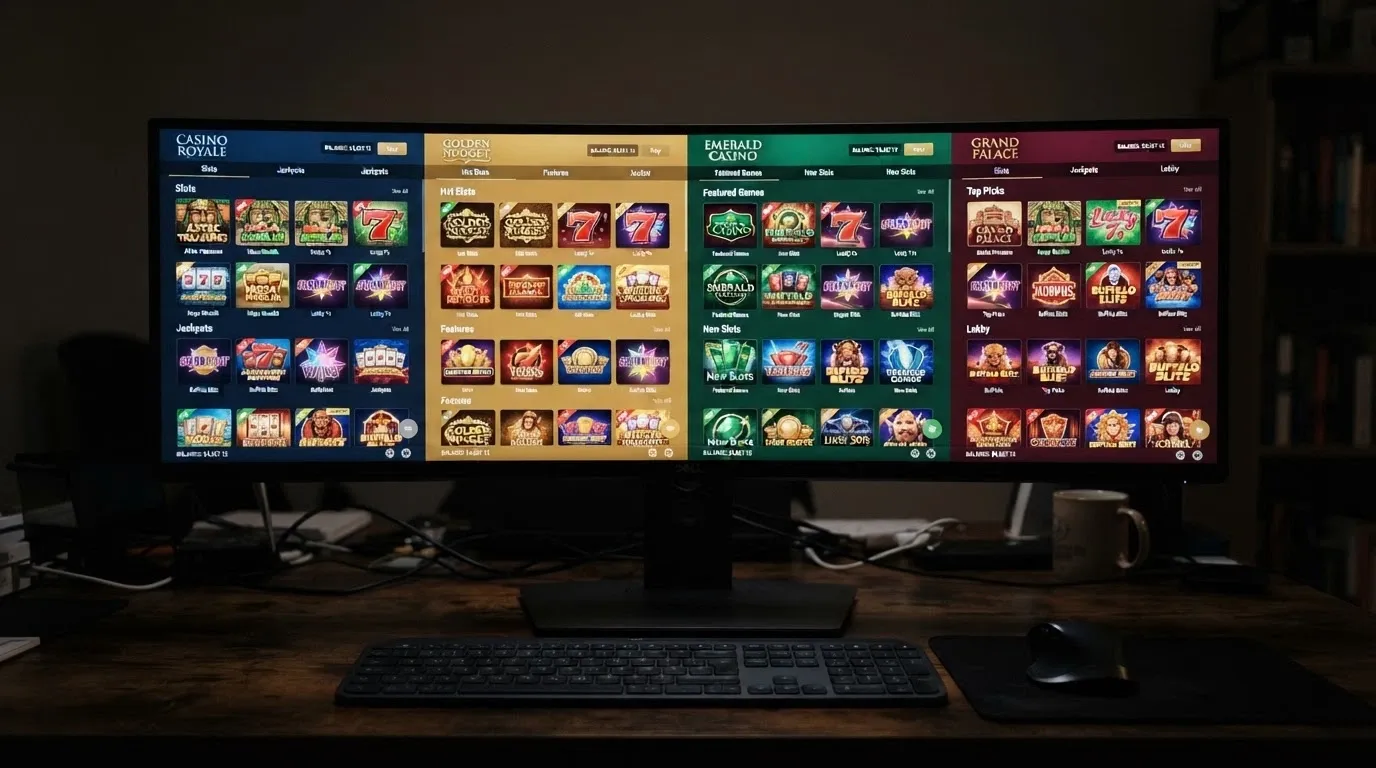
| Online Casino | Welcome Bonus | Wagering Requirement | Free Spins | Game Providers |
|---|---|---|---|---|
| Royal Reels | A$2,500 + 50 spins | 35x bonus only | 50 at A$0.20 | Pragmatic Play, Play’n GO |
| SkyCrown | Up to A$4,000 + 400 FS | 40x | 400 across package | Pragmatic Play, Hacksaw, Play’n GO, NetEnt, Red Tiger, BTG, Push Gaming, Thunderkick, Microgaming |
| Bizzo Casino | Up to AU$7,750 + 175 FS | 40x | 175 + Monday up to 170 | Pragmatic Play, Hacksaw, Play’n GO, NetEnt, Red Tiger, BTG, Push Gaming, Thunderkick, Microgaming |
| RocketPlay | Up to $2,000 + 100 FS | 40x | 100 + Friday 20–100 | SOFTSWISS, 3,000+ titles |
| Stake | No match bonus | Wager-free promos | N/A | 4,000+ titles, 30 Stake Originals |
| FairGO | — | 30x on pokies | — | — |
| Rainbet | 250% up to $2,100 + 60 FS | 40x or no-wager | 60 | — |
| Scream Casino | — | — | — | — |
| WinSpirit | 200% + 25 FS | 40x | 25 | — |
| Rocket Casino | — | 45x–50x | — | — |
Royal Reels — A$2,500 across three deposits at 35x wagering on the bonus
Royal Reels runs a three-deposit welcome structure: a first deposit matched at 100% up to A$500, a second at 75% up to A$750, and a third at 100% up to A$1,250, with 50 free spins included. The total ceiling is A$2,500 plus 50 spins. The wagering requirement is 35x on the bonus only — a meaningful distinction, because “bonus only” means the player wagers the bonus amount, not the bonus plus the deposit. A A$500 first-deposit bonus at 35x bonus-only requires A$17,500 in turnover; a “deposit + bonus” calculation at the same multiplier would require A$35,000.
The per-spin cap during clear-down is A$5. That ceiling rules out max-bet grinding, and it forces the player into a longer session at a lower stake. The game catalogue runs to roughly 1,400 pokies out of 1,800 total titles, with Pragmatic Play and Play’n GO anchoring the provider mix. The top 50 most-played pokies in the lobby average around 96.4% RTP, which is consistent with the online norm.
The operator is offshore, holds no Australian licence, and offers no Australian consumer protection. The 35x bonus-only multiplier is the lowest reported in the featured set after FairGO, and it is the single number that makes Royal Reels a credible choice for a player who plans to clear the welcome. The verdict: best for a player who will clear the bonus and wants the lowest multiplier in the set, with the understanding that the A$5 cap will stretch the clear-down.
SkyCrown — A$4,000 + 400 free spins with Curaçao registration
SkyCrown’s welcome package is the largest free-spin allocation in the featured set: 400 free spins across five deposits, alongside matched bonus funds up to A$4,000. The structure breaks down as a first deposit of 100% up to A$300 plus 100 free spins, a second at 75% up to A$500 plus 75 free spins, a third at 50% up to A$700, and additional tiers through the fifth deposit. The wagering requirement is 40x on the bonus.
The provider mix is the broadest in the featured set: Pragmatic Play, Hacksaw Gaming, Play’n GO, NetEnt, Red Tiger, Big Time Gaming, Push Gaming, Thunderkick and Microgaming. The 1% rakeback offer, up to A$1,500, carries no wagering — a meaningful contrast to the welcome package, and a feature the player can use without the clear-down pressure.
The operator is offshore under a Curaçao registration. The slot count was not confirmed in this round, and the player should check the current lobby size before depositing. This operator offers strong free-spin volume and provider variety, though the 40x wagering requirement is the standard cost for the package.
Bizzo Casino — 3,200+ pokies and a AU$7,750 welcome package
Bizzo runs the highest welcome ceiling in the featured set at AU$7,750 plus 175 free spins, spread across four deposits. The first deposit is tiered — 50%, 75% or 125% depending on the deposit size — up to AU$2,500. The second deposit is 50% up to AU$1,000 plus 50 free spins. The wagering requirement is 40x, with a AU$6.50 max bet during clear-down. Monday Free Spins add up to 170 free spins for returning players.
The catalogue is the largest in the set at 3,200+ pokies, drawn from the same nine-provider mix as SkyCrown — Pragmatic Play, Hacksaw, Play’n GO, NetEnt, Red Tiger, Big Time Gaming, Push Gaming, Thunderkick and Microgaming. The dual registration — Curaçao 8048/JAZ2017-067 and Kahnawake — gives the operator two offshore licences, neither of which is Australian.
The 40x wagering and AU$6.50 cap are the numbers that matter. At 40x, a AU$2,500 first-deposit bonus requires A$100,000 in turnover at the AU$6.50 max bet, and the expected loss on those spins is A$100,000 × 0.04 = A$4,000. The bonus is worth AU$2,500; the cost of clearing it is A$4,000. The arithmetic does not work in the player’s favour, and the Monday Free Spins exist because the welcome package, on its own, does not retain a player who runs the numbers. Bizzo is an option for players seeking a massive catalogue, but the 40x wagering effectively limits the value of the welcome bonus.
RocketPlay — 3,000+ games on the SOFTSWISS platform
RocketPlay runs a two-deposit welcome: a 100% first-deposit match plus 100 free spins, and a 200% second-deposit boost. The total ceiling is $2,000 plus 100 free spins at 40x wagering. Friday Spins add 20 to 100 free spins on deposits, depending on the size.
The catalogue runs to 3,000+ games on the SOFTSWISS aggregator platform, which is a software layer rather than a single studio — the games are licensed from individual providers and distributed through the platform. The player sees a large lobby; the underlying supply is the same multi-provider mix that runs through every SOFTSWISS casino. The operator is offshore under a Curaçao-style registration.
The 200% second-deposit boost is the standout term, because a higher match percentage accelerates the bonus-to-deposit ratio and reduces the effective wagering burden. A 200% match on a A$500 deposit credits A$1,000 in bonus, and 40x on that bonus is A$40,000 in turnover — a high number, but lower in proportional terms than a 100% match at the same multiplier. The verdict: best for a player who plans to deposit twice and wants the second deposit to carry the weight.
Stake — crypto-only casino with wager-free promotions
Stake is the only operator in the featured set with no traditional welcome match bonus. The promotional model is wager-free races, raffles and leaderboard competitions, with no clear-down requirement on the winnings. Deposits are crypto-only, processed under Curaçao eGaming 8048/JAZ.
The catalogue is the largest in the set at 4,000+ games, including 30 Stake Originals — provably fair titles where the player can verify each outcome against the published hash. The provably fair mechanic is the closest thing to a transparency guarantee the offshore market offers, and it is genuinely stronger than the standard RNG certification the rest of the set relies on.
The absence of a welcome match is the trade-off. The player who values wager-free promos and crypto settlement has found the right operator. The player who values a large headline bonus and is willing to pay wagering for it has not. Stake suits players who prefer crypto-based play and wager-free promos, avoiding the clear-down requirements found at other casinos.
FairGO — 30x wagering and a 24-hour cool-off period
FairGO reports the lowest wagering multiplier in the featured set at 30x on pokies, paired with a 24-hour cool-off period on withdrawals — a delay the player should factor in before depositing. The welcome bonus amount, free-spin count, game provider list and slot count were not confirmed in this round, and the player should verify all four directly with the operator before signing up.
The operator is offshore, holds no Australian licence, and offers no Australian consumer protection. The 30x multiplier is the headline number; the absence of confirmed data on every other term is the cost. FairGO stands out for its lower 30x wagering multiplier, which may appeal to players prioritizing clear-down terms over promotional volume.
Rainbet — 250% match with a choice of wager or no-wager terms
Rainbet runs a 250% welcome match up to $2,100 plus 60 free spins across three deposits, and offers the player a structural choice: a Wager Lock at 40x, or a No Wager Lock option that drops the multiplier entirely. The choice is the only one of its kind in the featured set, and the trade-off sits in the bonus percentage — the no-wager option typically comes with a lower matched amount or a tighter free-spin allocation.
The game provider list and slot count were not confirmed in this round, and the player should check both directly with the operator before depositing. The operator is offshore. The verdict: best for a player who wants the choice between a traditional wagered bonus and a no-wager alternative, with the understanding that the no-wager option is the genuinely better deal and the wagered option is the comparison point.
Scream Casino — limited confirmed data as at 2026
Scream Casino is one of the least-documented operators in the featured set. The welcome bonus, wagering requirement, free-spin terms, game provider list and slot count were not confirmed this round, and the player should verify all five directly with the operator before depositing. The operator is offshore and holds no Australian licence.
The absence of confirmed data is the only honest signal this review can carry. A player who proceeds on the basis of the operator’s own marketing without independent verification is accepting the operator’s terms at face value, and the recourse if those terms are not honoured is the same as it is for every other operator in the set: none. The verdict: only for a player who has independently verified the terms and is comfortable proceeding on the operator’s own representation.
WinSpirit — 200% welcome bonus with 25 free spins
WinSpirit runs a 200% welcome match plus 25 free spins at 40x wagering on promotions. The structure is the simplest in the featured set: a single-deposit match with no multi-tier breakdown. Full details regarding the game provider list and total slot count were not provided this round; please verify these directly with the operator.
The operator is offshore. The 200% match is competitive against the 100% baseline that most of the set runs, and the 25 free spins are a modest inclusion. The 40x wagering is the cost. The verdict: best for a player who wants a clean single-deposit match and is willing to verify the catalogue details independently.
Rocket Casino — 45x–50x wagering with a A$5 max bet during clear-down
Rocket Casino reports the highest wagering multipliers in the featured set at 45x on standard deposits and 50x on deposits over A$100, with a A$5 max bet during clear-down. The welcome bonus amount and free-spin terms were not confirmed this round, and the player should verify both directly with the operator.
The 45x–50x range is steep against the rest of the set, where 35x to 40x is the norm. A A$500 bonus at 50x requires A$25,000 in turnover, and the expected loss on those spins is A$25,000 × 0.04 = A$1,000. The bonus is worth A$500; the cost of clearing it is A$1,000. The arithmetic is worse than the rest of the set, and the player should clear only if the bonus terms are otherwise favourable. The verdict: only for a player who has verified the welcome terms directly and concluded the bonus is worth the high wagering burden.
Staying in control: the responsible gambling tools every Australian pokies player should know
Australia has built one of the world’s most comprehensive responsible-gambling infrastructures. The National Self-Exclusion Register, a 24/7 helpline, online counselling, deposit limits and activity statements are all live and operating. None of them reach a player who is playing at an offshore casino, and that is the gap every Australian pokie player should understand before they deposit.

The scale of gambling harm in Australia — the numbers that matter
About 2.1% of Australian adults — roughly 430,000 people — experience problem gambling, according to the Australian Institute of Health and Welfare. Roy Morgan’s March 2026 figures put the broader harm rate at 13.0% of the population — 2.86 million people — experiencing some form of harm from their own gambling. Adding harm from others’ gambling lifts the figure to 15.1% of Australians, or about 3.32 million people.
The financial cost is large. Between March 2025 and March 2026, Australians lost A$36.0 billion to gambling, according to The Australia Institute. That figure covers all forms of gambling — pokies, racing, sports betting, lotteries, casino table games — and the pokie share, on pubs and clubs alone, has historically been the largest single component.
The demographic that carries the heaviest load is younger adults. 78% of BetStop registrants are under 40, and 38% have chosen lifetime exclusion. The 67,480 Australians who have registered with BetStop as at 31 July 2026 are a self-selected group — they have decided to exclude — but the demographic skew is a signal that the harm is concentrated in the under-40 cohort, not evenly distributed across the adult population.
Practical limits and tools for pokies players
The tools that exist on the Australian-licensed side are deposit limits, take-a-break periods, activity statements and BetStop self-exclusion. Deposit limits let the player cap how much they can deposit in a day, a week or a month. Take-a-break is a cooling-off period during which the account is locked. Activity statements show the player what they have spent, what they have won and what they have lost, over a defined period. BetStop is the national self-exclusion register, live since August 2023, and registration excludes the player from every Australian-licensed wagering service for a chosen period — three months, twelve months, or lifetime.
Every one of these tools is operator-side on the Australian-licensed market, and every one of them is absent on the offshore market. A Curaçao-licensed casino has no obligation to offer deposit limits, no mechanism to enforce a take-a-break, no activity-statement standard, and no connection to BetStop. The player who wants these tools on the offshore side has to impose them on themselves — and the player who has self-excluded through BetStop and then signs up at an offshore casino has not self-excluded from the offshore casino, because the offshore casino is not in the register.
Where to get help: BetStop, the National Gambling Helpline and beyond
Three resources every Australian should know. They are free, confidential and reachable today, and they cover the licensed market. They do not reach offshore operators, and the player who needs them should know that before they need them.
- The National Gambling Helpline is 1800 858 858. It is free, confidential and staffed 24/7. The line routes callers to counsellors in their state or territory.
- Gambling Help Online, at gamblinghelponline.org.au, provides online chat, email support and structured counselling programs. The service is free and confidential.
- BetStop, the National Self-Exclusion Register, is at betstop.gov.au. Registration excludes the player from every Australian-licensed wagering service for a chosen period. As at 31 July 2026, 67,480 Australians have registered.
The limitation all three share is the same one: none of them reach an offshore casino. A player who needs these tools is a player who should not be playing at an offshore operator, and the honest framing is that the offshore market is not a place the Australian support system can follow.
How we picked the best 5-reel pokies and casinos for this review
The pokie ranking draws on publisher-confirmed RTP and volatility data from the providers’ own game information panels, cross-referenced against the listings carried by PayoutVerdict, Slotozilla, AusSlots and Australia-casino-review.com. The fourteen titles in the RTP table are the ones where the publisher publishes a confirmed figure, and the volatility and max-win columns are drawn from the same sources. Where a figure was not confirmed, the cell carries an em dash rather than a guess.
The casino ranking draws on operator terms pages in force on the date of review, cross-referenced against affiliate databases that track welcome packages, wagering requirements and provider mixes. The ACMA’s ISP-block list and the register of civil penalty proceedings were checked to confirm the offshore status of each operator. The 1,564-site block count and the 225-service withdrawal count come from the ACMA’s own published enforcement record. BetStop registration data and BetStop demographics come from the ACMA’s published statistics as at 31 July 2026. The 2026 reform measures come from the Australian Parliament’s record of the Interactive Gambling Amendment (Gambling Reform) Bill 2026 and from the Australian Labor Party’s published summary of its provisions.
The review does not verify real-time bonus validity, withdrawal speed, player-dispute outcomes or demo-mode availability per operator. The bonus figures are the figures in force on the date of review and are subject to change. Withdrawal times vary by payment method, by operator and by the player’s verification status, and a player who needs a specific withdrawal time should check the operator’s payments page before depositing. The credit-card and crypto ban took effect on 11 June 2024 and is a fixed compliance fact; everything else about the offshore market moves.
Which 5-reel pokie should you actually play? A verdict from the data
The RTP data says one thing. 1429 Uncharted Seas at 98.60% and Blood Suckers at 98% return more to the player over the long term than any other title in the table. They are also low-volatility titles with max wins of 2,200x and 900x respectively, which means the session reads as steady rather than dramatic. A player who picks on RTP alone gets the lowest expected loss; a player who picks on the combination of RTP, volatility and max win gets a session profile closer to what they actually want from a pokie.
The bonus maths says another. A welcome package with 40x wagering costs more in expected loss than it adds in value, unless the player clears the bonus on a high-RTP title. A 40x bonus on a 96% pokie is a worse deal than the same bonus on a 98% pokie, because the higher-RTP title returns more per spin and the house edge compounds less. The arithmetic is small per spin but large over the volume of turnover a 40x multiplier requires. A player who clears a welcome bonus on Blood Suckers or 1429 Uncharted Seas is running a fundamentally different calculation from a player who clears it on Starburst or Wolf Gold.
The legal landscape says the third thing. Every real-money pokie session an Australian plays sits offshore. Every consumer protection, every self-exclusion tool and every dispute-resolution mechanism sits on the Australian-licensed side. The two do not meet, and the player who crosses the line crosses it without a safety net. The ACMA cannot help. BetStop does not bind the operator. The only recourse is the operator’s own internal process, and the only protection is the player’s own discipline.
The practical verdict is four steps. First, try the title in demo mode before depositing — every title in the RTP table above is available in demo through its provider. Second, target titles with RTP above 96.5% if the bankroll is the limiting factor. Third, read the wagering terms before claiming any welcome package, and run the turnover arithmetic against the expected loss. Fourth, know that BetStop and the ACMA cannot help if an offshore operator refuses a withdrawal, and deposit only what the player can afford to lose at an operator that may or may not pay out. The best pokie is the one the player enjoys on the terms they have actually read, at an operator that has actually answered their questions, with a bankroll they can actually walk away from.
Frequently asked questions
Can Australians legally play online pokies?
No. Online casino games including online pokies are prohibited under the Interactive Gambling Act 2001. The Act targets the provider, not the player, so individual players are not prosecuted. Every real-money pokie session an Australian plays runs through an offshore operator that holds no Australian licence. Australian consumer protection, the BetStop self-exclusion register and ACMA complaint handling do not reach those operators.
What is the RTP of popular 5-reel pokies like Starburst and Book of Dead?
Starburst (NetEnt) has a published RTP of 96.09% with low-to-medium volatility and a 500x max win. Book of Dead (Play’n GO) runs at 96.21% with high volatility and a 5,000x max win. The two are the most widely available five-reel pokies in the offshore market and are commonly cited as comparison points because their RTP and volatility profiles sit in the middle of the range rather than at either extreme.
What is the difference between 5-reel and 3-reel pokies?
A 3-reel pokie has three vertical strips, typically one payline, no bonus rounds beyond a possible wild, and a high hit frequency of small wins. A 5-reel pokie has five strips, multiple paylines or ways to win, scatter pays, free-spin rounds, and the bonus engines covered in the bonus-rounds section above. The 3-reel format suits a player who wants a slow, even session on a small bankroll. The 5-reel format suits a player who wants bonus features and the chance of a larger win on a single spin.
How do I deposit money to play pokies online in Australia?
The credit-card and crypto ban took effect on 11 June 2024, so an operator that lists Visa, Mastercard or cryptocurrency on its cashier screen is operating outside Australian compliance. The channels that remain are Australian bank-transfer options including PayID, Osko and BPAY, plus e-wallet and prepaid voucher routes that route through offshore processors. From 1 January 2027, banks and payment providers gain express authority to block transactions to illegal gambling operators.
What is the maximum win on Sweet Bonanza?
Sweet Bonanza (Pragmatic Play) has a published max win of 21,100x the stake, achieved through the multiplier bomb mechanic during the free-spins round. The base-game tumble feature does not carry the same multiplier ceiling. The title runs at 96.51% RTP with high volatility, which means long dry stretches between significant wins and a session profile built around waiting for the bonus round.
Are my winnings taxable in Australia?
Betting and gambling winnings are not assessable income under section 6-5 of the ITAA 1997, unless the person is carrying on a business of betting or gambling. A casual player who wins at an offshore casino does not owe Australian income tax on the winnings. The Australian Taxation Office treats recreational gambling winnings as non-assessable, and the player is not required to declare them on a tax return.
How does the credit card ban affect playing pokies online?
Credit cards, credit-related products and digital currency (crypto) are banned as payment for online wagering in Australia since 11 June 2024. An operator that accepts either is, by definition, outside Australian compliance. The penalty for a non-compliant operator is up to A$247,500 per breach. Players who encounter an operator asking for a credit card or crypto on the cashier screen should treat that screen as the clearest possible signal that the operator is not running under Australian rules.
Published by the Microgaming Casinos AU team.