Online Craps for Australian Players — The Offshore Reality and the Tables Behind It
 Available in AU
Online craps is the fastest-moving dice game in a casino, and it is one of the few table games where the maths actually rewards restraint. Australians who want to play it online, though, are stepping into a market the law does not recognise. The Interactive Gambling Act 2001 makes it an offence to provide an online casino to a person physically in Australia — there is no licence for online casino anywhere in the country, not federally and not in any state or territory. Every casino offering craps to an Australian player does so from offshore, under a jurisdiction the Australian regulator does not authorise.
Current as of 18 October 2026 · licence claims verified against the ACMA register and the Interactive Gambling Act 2001 (Federal Register of Legislation)
That single fact reshapes the rest of the page. A craps player in Australia is not choosing between licensed and unlicensed brands — the licensed option does not exist. The choice is between offshore operators, with all the protections and recourse that absence implies, and not playing online craps at all. The guide below works from that premise. It covers the craps shortlist Australian players actually access, the rules and the variants a new player needs, the bonus mechanics that quietly shrink a welcome offer at the craps table, and the consumer-protection gap that offshore status creates.
Table of Contents
- What Online Craps Means for Australian Players in 2026
- The Best Offshore Casinos for Craps — Our 2026 Shortlist
- How to Play Craps — From Come-Out Roll to the Point
- Craps Tables, Bubble Craps & the Variants Worth Knowing
- Live Dealer Craps — When the Table Comes to Your Screen
- Free Craps vs Real-Money Play — Where to Start
- Why Your Craps Bonus Is Smaller Than It Looks
- Is Online Craps Legal in Australia? The IGA Reality
- Staying in Control — Responsible Gambling Tools for AU Players
- How We Evaluated Every Craps Casino on This List
- Frequently Asked Questions
- Playing Online Craps From Australia in 2026 — What to Do Next
What Online Craps Means for Australian Players in 2026
Craps is a two-phase dice game. A shooter throws two dice; on the first roll, called the come-out, a natural 7 or 11 wins for Pass Line bettors, a 2, 3 or 12 loses, and any other total — 4, 5, 6, 8, 9 or 10 — sets the point. Once a point is set, the shooter keeps rolling until either that point comes up again (Pass Line bets win) or a 7 appears first (Pass Line bets lose, a result called seven-out). That is the whole engine. Everything else on the table is a way to bet on it.
Why this guide, and why now, is the Australian-specific framing. AU players searching for online craps in 2026 land on offshore casinos because there is no licensed Australian online casino to land on. The guide exists to walk that gap honestly — explaining what the offshore shortlist looks like, how the game itself works, and what an Australian player should understand about the legal and protective environment before a deposit goes in. What follows is the structure: the shortlist and how it was built, then a bottom-up tutorial on the game, then the variants worth knowing, then live dealer, free play and bonuses, then the IGA reality and the responsible gambling tools that exist on the Australian side.
How an Online Craps Table Works — Your First Look at the Game
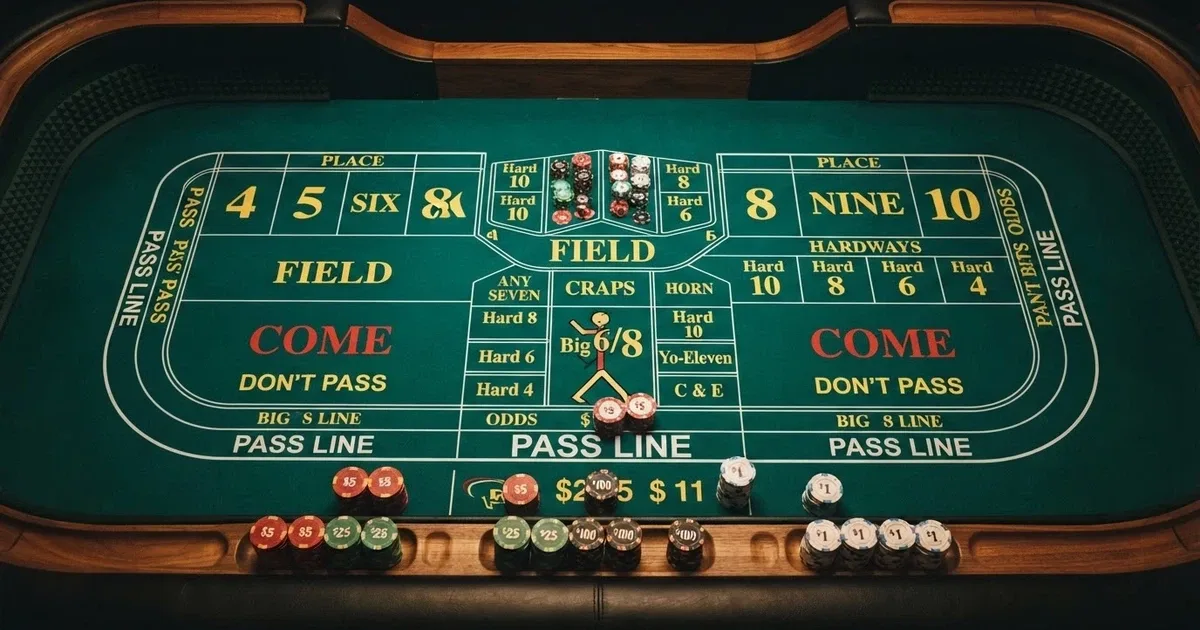
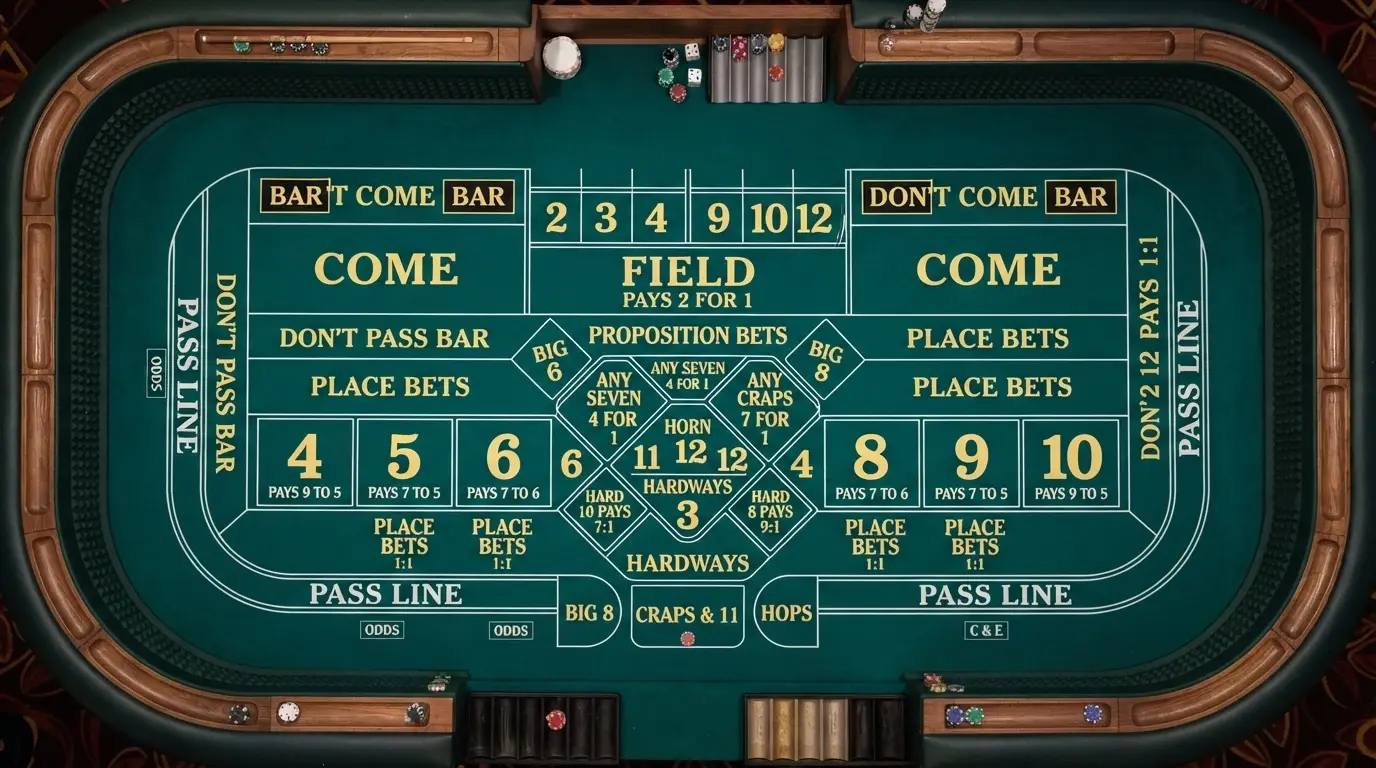
The online craps table reproduces the physical felt in software. A digital layout sits at the centre of the screen: the Pass Line and Don’t Pass Bar run along the outer edge, the Come and Don’t Come boxes sit just inside, the Place bet numbers occupy the middle, and the proposition bets — Any 7, Any Craps, Hardways, Horn — fill the centre in a cluster sometimes called the “sucker zone” because of their house edges. Chips stack on the player’s side of the screen and drag onto the chosen betting area. A live or RNG-based round resolves behind the layout.
The pace of a round depends on which version the player has loaded. RNG-based digital craps plays almost as fast as the player can click — every come-out resolves in seconds, no human delays the action. Live dealer craps, by contrast, runs at human tempo: the dealer calls the result, the betting window closes before each throw, and the dice get launched by an automatic mechanical arm. Bubble Craps and its Crapless variant sit between the two — no dealer, but physical dice shaken inside a sealed transparent dome. First-time players should know that the betting layout, the come-out/point structure, and the house edge apply identically across all three. Only the pace, the visuals and the trust mechanism change.
The Best Offshore Casinos for Craps — Our 2026 Shortlist
Every casino on this list is offshore. None holds an Australian casino licence, because none can — the Interactive Gambling Act 2001 prohibits providing an online casino to a person in Australia, and no licence for that product exists federally or in any state or territory. These are the offshore brands that hold real market share among Australian-traffic casino players, ranked in the order the operators skill returned them. The ranking is qualitative: craps availability, live-dealer offering, licence jurisdiction and bonus terms are weighed as available, but no scored formula is applied. Per-operator licence details were not confirmed in this round — the table below makes the baseline explicit.
A craps player weighing these brands should check three things beyond the marketing. First, confirm the licence jurisdiction directly on the operator’s own terms page (a Curaçao or Anjouan licence is the common offshore holding). Second, check whether the craps lobby offers more than one variant — a single Evolution live craps table is the minimum, but RNG versions from Microgaming, Evoplay or Betsoft widen the choice. Third, read the bonus terms for game weighting, because craps typically contributes far less toward wagering than slots, which shrinks the real value of any welcome offer at the craps table.
How This Shortlist Was Built — What Counts for Craps Players
The shortlist draws on the Australian market-share table supplied by the operators skill and ranks the ten offshore brands Australian players access in practice. The ACMA official register was checked to confirm no operator holds an Australian casino licence — the baseline applies to every brand on this list, because no licence for that product exists. Craps title availability, live-dealer offerings, bonus terms and wagering conditions were considered per operator, and per-operator specifics that could not be confirmed are flagged qualitative in the write-ups below. The ranking is qualitative, not scored: craps availability and live-dealer offering carry the most weight, followed by licence jurisdiction, then bonus mechanics and payments.
The table below captures the single most important fact about every operator on this list. That fact is the one that decides whether an Australian player can approach the brand on its own terms or has to step outside Australian law to play.
| Casino | Licensed in Australia? |
|---|---|
| Rocket Play | No |
| Skycrown | No |
| Royal Reels | No |
| WinSpirit | No |
| Stake | No |
| Rainbet | No |
| Scream Casino | No |
| FairGO | No |
| Bizzo Casino | No |
| Rocket Casino | No |
The ten brands differ on craps game availability, live-dealer offering, jurisdiction and bonus terms. They do not differ on the question the table answers, because no operator can. The absence of an Australian column with a “Yes” is not a missing data point; it is the point itself.
Rocket Play
Rocket Play sits at the top of the AU-traffic market-share ranking for offshore casinos and runs a typical Curaçao-licensed offshore product. The craps lobby has not been independently confirmed in this round; the standard offering across similarly-positioned offshore brands is a single live-dealer craps table from Evolution plus one or two RNG craps variants. Rocket Play’s wider casino library runs into the thousands, which suggests table-game coverage is present, but the craps-specific lineup is best confirmed directly on the operator’s site before depositing. Welcome bonus terms and wagering multipliers were not obtained this round and should be checked at the source. As an offshore brand with no Australian licence, Rocket Play accepts Australian players but sits outside the Australian consumer-protection regime — BetStop does not reach it, and any dispute over a withdrawal has no Australian avenue. For a craps player comfortable with that gap and prioritising brand familiarity over jurisdictional depth, Rocket Play is a reasonable starting point.
Skycrown
Skycrown, ranking second in the AU-traffic share, provides an offshore product with a similar shape to Rocket Play’s: a large casino library, the standard live-dealer craps offering from Evolution, and one or two RNG craps variants in the table-games lobby. The craps-specific depth has not been independently confirmed this round, so the practical move is to open the craps tab and check before depositing. Skycrown’s positioning sits between the highest-share offshore brand and the mid-list: the AU-traffic share is substantial, and the operator has been a consistent presence in the offshore market. Welcome bonus mechanics were not confirmed this round and warrant direct verification. Like every brand on this list, Skycrown sits outside Australian law — no AU licence, no BetStop coverage, no Australian dispute avenue. For a craps player who wants an established offshore brand with a real AU-traffic presence, Skycrown is the natural second stop after Rocket Play.
Royal Reels
Royal Reels holds third place on the AU-traffic share table. Its craps-specific offering has not been independently confirmed in this round, and the practical expectation from an offshore brand of this size is a single Evolution live-dealer craps table plus at least one RNG craps variant. The brand’s wider library runs into the low thousands and the payments suite is the typical offshore spread (cards, e-wallets, crypto). Bonus mechanics were not confirmed this round. Royal Reels is a mid-list offshore option — established enough to have real AU-traffic share, but the same offshore caveats apply as on every other brand here: no AU licence, no Australian consumer protection, no BetStop reach. For a craps player comparing mid-list offshore brands, Royal Reels is a sensible inclusion rather than a standout pick.
WinSpirit
WinSpirit sits fourth on the AU-traffic share table and runs an offshore casino product comparable in shape to its peers higher up the list. Craps availability was not independently confirmed this round, so the practical move is to verify directly on the operator’s site before depositing — the standard expectation is a live craps table plus an RNG variant, but specifics need a direct check. Welcome bonus mechanics were not obtained this round. WinSpirit is a reasonable mid-list option for a craps player who already has the offshore-brand landscape mapped and is selecting between established AU-traffic names. The offshore caveats — no AU licence, no Australian consumer protection, no BetStop coverage, no Australian dispute avenue — apply in full. For a casual craps player who wants AU-traffic share behind the brand name, WinSpirit fits the brief.
Stake
Stake, holding fifth place in the AU-traffic share, offers a different shape of offshore product from the rest of this list. Stake is known as a crypto-first operator, and its table-games lobby is wide even if the craps-specific lineup needs direct verification this round. For Australian players, the crypto-first shape is itself a tell: credit cards, credit-related products and digital currency are banned as payment for online wagering from 11 June 2024 under Australian law, and an AU player funding a Stake account from a domestic bank is doing so via a payment method the ACMA could, in principle, ask a bank to block after 1 January 2027. Stake’s welcome bonus mechanics were not obtained this round. As an offshore, crypto-leaning brand, Stake suits experienced craps players comfortable with the offshore-and-crypto combination and the consumer-protection gap that comes with it.
Rainbet
Rainbet sits sixth on the AU-traffic share table and is one of two brands at the same share tier as Stake in the underlying operators data. The craps-specific offering has not been independently confirmed this round, and the practical expectation is similar to its AU-traffic peers — a live craps table and at least one RNG variant, pending direct verification. Rainbet’s payments and bonus mechanics were not obtained this round and should be checked at source. The brand is a mid-list offshore option: established enough to hold real AU-traffic share, sitting in the same offshore-and-unlicensed-by-Australia category as the rest of the list. For a craps player working through the mid-list offshore names, Rainbet is a sensible inclusion rather than a differentiator. The offshore caveats — no AU licence, no Australian consumer protection, no BetStop coverage — apply in full.
Scream Casino
Scream Casino holds seventh place on the AU-traffic share table and operates a standard offshore casino product. The craps-specific offering has not been confirmed this round, and the practical move is to verify directly on the operator’s site. Bonus terms were not confirmed this round. Scream Casino is a mid-list offshore brand: established enough to register on the AU-traffic share table, but the same baseline caveats apply — no AU casino licence (because none can exist), no Australian consumer protection, no BetStop coverage, no Australian dispute avenue if a withdrawal is refused. For a craps player comfortable with the offshore-and-unlicensed-by-Australia framework, Scream Casino fits a mid-list selection without standing out.
FairGO
FairGO is an interesting case on this list. The brand positions itself toward Australian players and accepts AUD directly, which gives it a distinctive shape on the AU-traffic share table. That positioning does not change the legal reality: FairGO is an offshore operator with no Australian casino licence, because no such licence exists. The Australian-facing positioning means payments and bonus terms may be tailored differently from the more globally-targeted brands above it on the list, but the offshore caveats are identical. The craps-specific offering has not been independently confirmed this round, so direct verification on the operator’s site is the practical move before depositing. For a craps player who wants an Australian-facing experience at an offshore brand and is comfortable with the consumer-protection gap, FairGO is a reasonable fit, but it is not a differentiator on the legal question that matters most.
Bizzo Casino
Bizzo Casino sits ninth on the AU-traffic share table and operates a standard offshore casino product with a wide library. The craps-specific offering has not been confirmed this round, and the practical move is to verify directly on the operator’s site. Bonus wagering terms were not sourced this round. Bizzo is a mid-list offshore brand in the same category as the rest of this list: established enough to hold AU-traffic share, but the same baseline caveats apply. No AU casino licence exists, no Australian consumer protection reaches the operator, no BetStop coverage, no Australian dispute avenue. For a craps player working through the established offshore names, Bizzo Casino is a sensible inclusion rather than a differentiator.
Rocket Casino
Rocket Casino holds tenth place on the AU-traffic share table and operates a standard offshore casino product comparable in shape to its peers on this list. The craps-specific offering has not been confirmed this round and should be verified directly on the operator’s site. Bonus mechanics were not available this round. Rocket Casino is the lowest-share brand on this list: it makes the cut because it holds measurable AU-traffic share among offshore casinos, but it does not stand out from the names above it on any specific craps-related dimension. The same offshore caveats apply as to every other brand here — no AU casino licence, no Australian consumer protection, no BetStop coverage, no Australian dispute avenue. For a craps player who has worked through the higher-share names and is casting wider, Rocket Casino is a reasonable final inclusion.
How to Play Craps — From Come-Out Roll to the Point
The engine of craps is the two-phase structure. A round begins with a come-out roll, the shooter throws two dice, and the result determines whether the round ends immediately or shifts into the point phase. Once a point is established, the shooter keeps throwing until either the point repeats (Pass Line bets win) or a 7 appears first (Pass Line bets lose). Every bet on the table attaches to this engine in some way — some bets resolve on the come-out, others ride through the point phase, and the proposition bets in the centre ignore both phases entirely and resolve on the next single roll.
The Come-Out Roll & the Point — How a Round of Craps Unfolds
The come-out roll is the round’s first throw. If the dice show a 7 or 11, the result is called a natural: Pass Line bets win and the round is over. If the dice show a 2, 3 or 12 — collectively called craps — Pass Line bets lose and the round is also over. Any other total (4, 5, 6, 8, 9 or 10) sets the point: a white “ON” puck flips onto that number on the table layout and the round enters the point phase.
In the point phase, the shooter keeps rolling. Two outcomes end it: the shooter rolls the point number again (Pass Line bets win), or the shooter rolls a 7 first (Pass Line bets lose, the round ends, and the dice pass to the next shooter). Any other total — anything that is not the point and not a 7 — is irrelevant; the round continues. The dealer calls the result, the puck flips on and off, and the betting window opens and closes around each throw. Once seven-out ends the round, a new shooter takes the dice and a new come-out begins.
Craps Rules at a Glance — What Every New Player Needs to Know
The Pass Line is the table’s foundational bet: it wins on a natural come-out, loses on a come-out craps, and rides through the point phase to win if the point repeats before a 7. Don’t Pass is its mirror: it wins on come-out craps (except 12, which is a push), loses on a natural, and wins in the point phase if a 7 appears before the point. House edges are 1.41% on Pass Line and 1.36% on Don’t Pass — both among the lowest on a casino floor.
Come and Don’t Come are the in-round equivalents of Pass and Don’t Pass. They work the same way but only after a point is established: a Come bet placed during the point phase becomes its own pass-line contract on the next throw, winning on a natural, losing on a craps, and migrating to whatever number hits as its own private “point” within the larger round. Place bets sit on individual numbers (4, 5, 6, 8, 9, 10) and win if that number rolls before a 7. The Place bet edges split sharply: 6/8 at 1.52%, 5/9 at 4.00%, and 4/10 at 6.67% — the 6 and 8 are the cheapest Place bets on the table, the 4 and 10 the most expensive.
Proposition bets live in the centre of the layout and resolve on a single roll. Any 7 (the “Big Red”) pays 4:1 and carries a 16.67% house edge — the worst standard bet on the table. Any Craps pays 7:1 with similar edge territory. Horn bets combine 2, 3, 11 and 12 into a single wager. Hardways bet that a specific total will roll as a double before it rolls any other way or a 7 appears. Proposition edges range between 5.56% and 16.67%, and the centre layout earns its nickname honestly. The only wager with a 0% house edge is the Odds bet.
Payouts, Odds & the House Edge — Where the Smart Money Sits
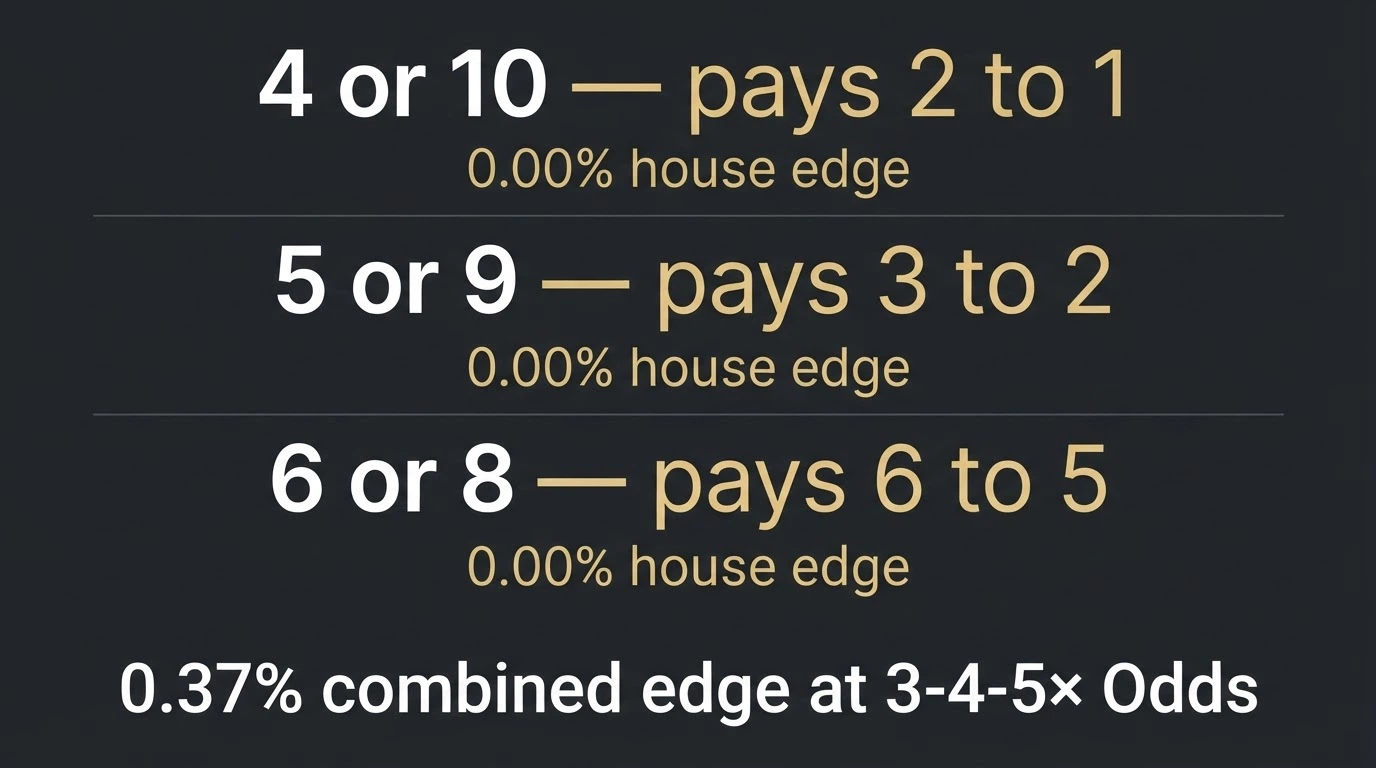
The Odds bet is the one exception that makes craps unique among casino games. It pays true mathematical odds — 2:1 on points of 4 or 10, 3:2 on points of 5 or 9, and 6:5 on points of 6 or 8 — with a 0% house edge. Casinos allow Odds bets as a supplement behind a Pass Line, Don’t Pass, Come or Don’t Come wager, and the player can size them at 3×, 4× or 5× the original line bet depending on the point (3× on 4/10, 4× on 5/9, 5× on 6/8 — the 3-4-5× system). At 3-4-5× Odds, the combined Pass Line + Odds house edge drops to approximately 0.37%. That is the lowest edge available on any standard casino table game.
The table below sets out the five craps game titles whose RTP was confirmed in this round. Volatility data is sparse across the craps category and is shown where research confirms it.
| Game Title | Provider | RTP | Volatility |
|---|---|---|---|
| Microgaming Craps | Microgaming | 98.64% | Low |
| Vegas Craps | Microgaming | 99.53% | — |
| Evolution First Person Craps | Evolution | 99.17% | — |
| Evolution Craps Live | Evolution | 99.17% | — |
| Roll the Dice | Evoplay | 98% | — |
The headline reading: every confirmed title sits at 98% or above on optimal bets, which is consistent with craps being the lowest-edge table game on the floor. The Evolution titles match each other at 99.17% on the Don’t Pass/Don’t Come line because the maths of the game is identical — only the dice delivery changes. The 1.17-point gap between Evolution’s First Person Craps and Vegas Craps on optimal bets reflects the different bet types each game offers: First Person Craps carries proposition bets whose RTP drops as low as 83.33%, while Vegas Craps omits some of those options.
A Craps Strategy That Actually Works — Bet the Pass Line, Take the Odds
The single craps strategy the maths supports is the simplest one: bet Pass Line (or Don’t Pass, if the table allows and the player tolerates the social friction of betting against the shooter), back it with the maximum Odds the casino allows, and stop. At 3-4-5× Odds, the combined house edge on Pass Line plus Odds falls to approximately 0.37%. That is the floor. No betting system can drive it lower, and no betting system can beat the underlying probabilities — every Martingale, Iron Cross or “hit the field for ten rolls in a row” scheme returns to the same house edge once the bets resolve.
The proposition bets are where discipline matters most. Any 7 at 16.67% house edge and the rest of the centre layout between 5.56% and 16.67% extract roughly a dollar for every six the player risks, compared to roughly one dollar for every 250 on a full-Odds Pass Line contract. A player who splits their bankroll 50/50 between the Pass Line and the proposition centre is giving back the entire edge advantage of the smart side of the table. The casino does not need the player to lose every proposition bet; it only needs the player to play enough of them. The same is true of any Place bet on 4 or 10 at 6.67% — placing 6 and 8 instead keeps the edge at 1.52%.
A worked example makes the cost concrete. Take Microgaming Craps, with an RTP of 98.64% on optimal bets, a $5 stake per roll, and a 100-roll practice session. The expected loss under those assumptions is 100 rolls × $5 × (1 − 0.9864) = $6.80. That is the statistical cost of 100 optimal bets at the craps table — a small fraction of the $500 staked, and the floor the game offers. The same session loaded with proposition bets instead of Pass Line plus Odds would extract several times that figure, even with the same stake size. The maths does not negotiate: the lower the house edge, the more rolls a bankroll survives, and craps already gives the player the lowest edge on the floor.
Bankroll management is where the rest of the strategy lives. A flat Pass Line plus Odds unit sized at 1% to 2% of the session bankroll lets a player survive the natural variance of craps — even optimal bets lose roughly 49% of point-phase decisions. Sessions should have a stop-loss and a stop-win, and the player should walk when either triggers. The psychology of craps is faster than most table games: a come-out roll resolves every few seconds in RNG play, and a hot streak on proposition bets can pull a player off the smart side of the table before they notice. The strategy is the strategy; the discipline to stay on it is the harder part.
Craps Tables, Bubble Craps & the Variants Worth Knowing
The standard craps table layout is the same in software as it is on a casino floor — Pass Line along the outer curve, Don’t Pass Bar above it, Come and Don’t Come boxes just inside, Place bet numbers through the middle, and the proposition cluster at the centre. A craps table is a large piece of furniture because it has to accommodate up to a dozen players standing around it, each with their own betting area. Online, the layout compresses to fit a single screen. The bets are identical. The only difference is who is rolling the dice.
The Craps Table Layout — Every Betting Zone Explained
Walking the table from the outside in, the first zone is the Pass Line and its mirror, the Don’t Pass Bar. These bets ride with the shooter across the whole round. Just inside sit the Come and Don’t Come boxes — functionally Pass and Don’t Pass bets that get placed mid-round, after a point is already established. Place bet numbers (4, 5, 6, 8, 9, 10) fill the middle of the layout, each with its own payoff printed below the number. The Field bet area sits near the stick and resolves on a single roll, paying even money on 3, 4, 9, 10 and 11 and 2:1 on 2 or 12 (or 3:1 on 12 at some tables). The centre of the layout is the proposition zone: Any 7, Any Craps, Horn bets on 2, 3, 11, 12, and the Hardways (hard 4, 6, 8, 10). This is the sucker zone. Every bet in the centre carries a house edge between 5.56% and 16.67%, and the layout is intentionally clustered to look like a single tempting block. The Pass Line plus Odds contract sits at 0.37% combined edge at 3-4-5× Odds, by contrast, and that single ratio is why craps rewards restraint.
Bubble Craps, Crapless Craps & Electronic Tables — The New Breed
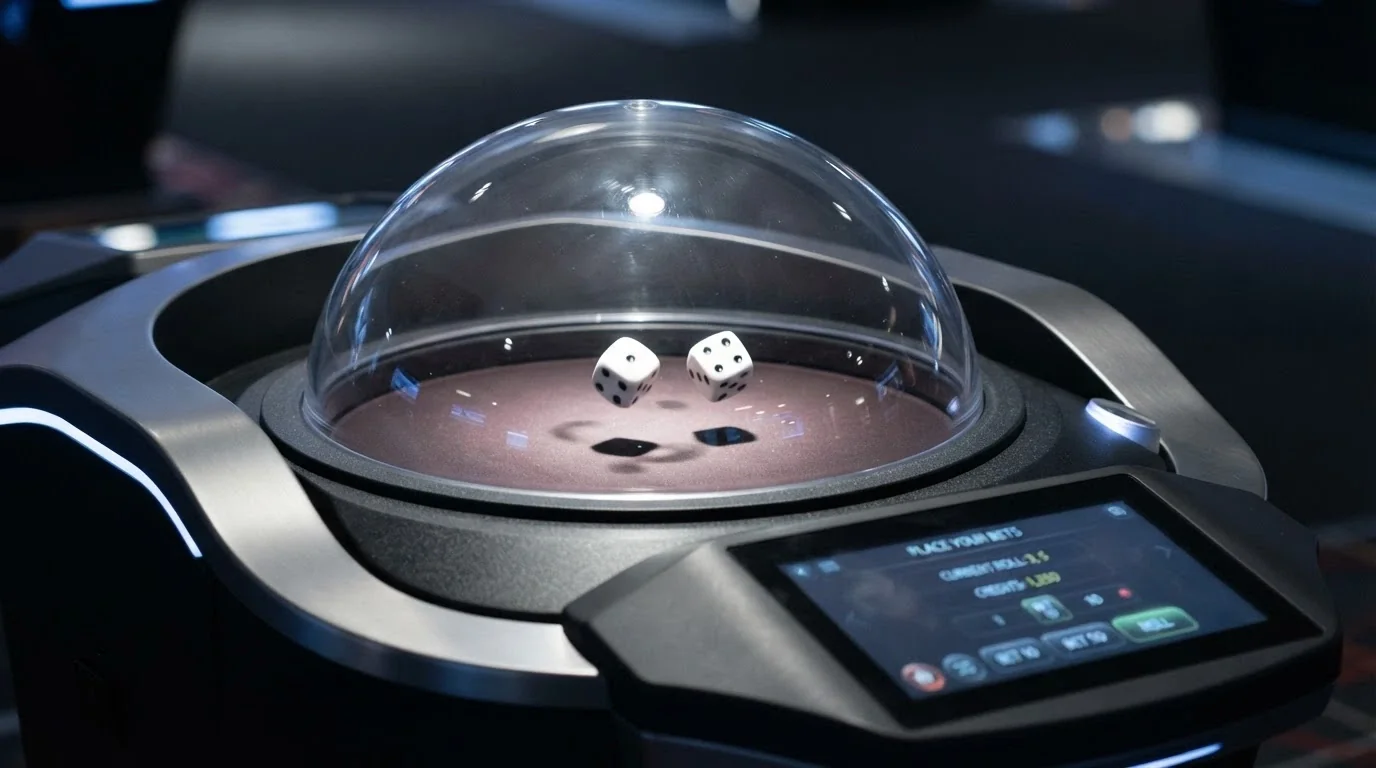
Bubble Craps is the variant that strips the dealer out of the equation. ICONIC21 launched Bubble Craps and Bubble Crapless Craps as a simultaneous dual release, and the Crapless version is described as a first-of-its-kind online product — the variant eliminates instant losses on the come-out roll. In standard Bubble Craps, rolling a 2, 3 or 12 on the come-out means you lose immediately, in keeping with traditional craps rules. In Bubble Crapless Craps, those same numbers become point numbers, which means a come-out roll of 2, 3 or 12 establishes a point rather than ending the round. The trade is structural: the Crapless version removes the come-out craps loss but also removes the come-out craps win on Don’t Pass bets. The house edge adjusts accordingly and remains competitive with standard craps on optimal bets.
Both Bubble Craps versions broadcast 24/7 from an automated table with no live dealer staffing required. The physical dice are housed inside a sealed transparent dome and a mechanical arm shakes and launches them. There is no RNG in the chain — the dice are real, the physics is real, and the only human role is the player placing bets on a touchscreen terminal that wraps around the dome. Minimum bets at bubble craps terminals are typically $3 to $5, against $10 to $25 or more at a live craps table, which makes Bubble Craps the most accessible real-dice format for a smaller bankroll. The dome-based format also suits players who want the trust mechanism of physical dice without the human tempo of a streamed live table.
Aruze Gaming produces the Shoot to Win Craps bubble machine for the land-based market, seating 8 to 10 players around a single dome; Interblock makes the Organic Craps machine with proprietary side bets like Lucky Shooter. These are the hardware templates behind the ICONIC21 online products. RNG-based electronic craps — the purely software versions — sit at the other end of the spectrum: no physical dice, no dome, no dealer, just a certified random number generator resolving every roll. Microgaming Craps, Vegas Craps and Evoplay’s Roll the Dice are all RNG-based. They play the fastest and offer the lowest minimum stakes of any craps variant.
Live Dealer Craps — When the Table Comes to Your Screen
Live dealer craps is the closest online equivalent to standing at a real table. A dealer runs the round from a studio, the dice are physical, and an automatic mechanical arm launches them. The player’s interaction is through a betting interface overlaid on the streamed video. It is slower than RNG play — every throw needs the dealer to call the result, the betting window to close, and the arm to launch — but it is the only online craps format where the player watches real dice move.
Evolution Craps Live — How the Market Leader Runs a Real Table Online
Evolution’s Craps Live is the dominant live-dealer craps product online, and it is the table that nearly every AU-traffic offshore casino with a live-dealer lobby features. The setup is a full-size green craps table in an Evolution studio, staffed by a live dealer who calls the result, manages the betting window and flips the ON/OFF puck between rounds. The dice are physical and are launched by an automatic mechanical arm — no human hand throws them, which removes the variance a casino-floor stickman would introduce and keeps the outcomes provably random within the physics of the dice. The studio streams 24/7.
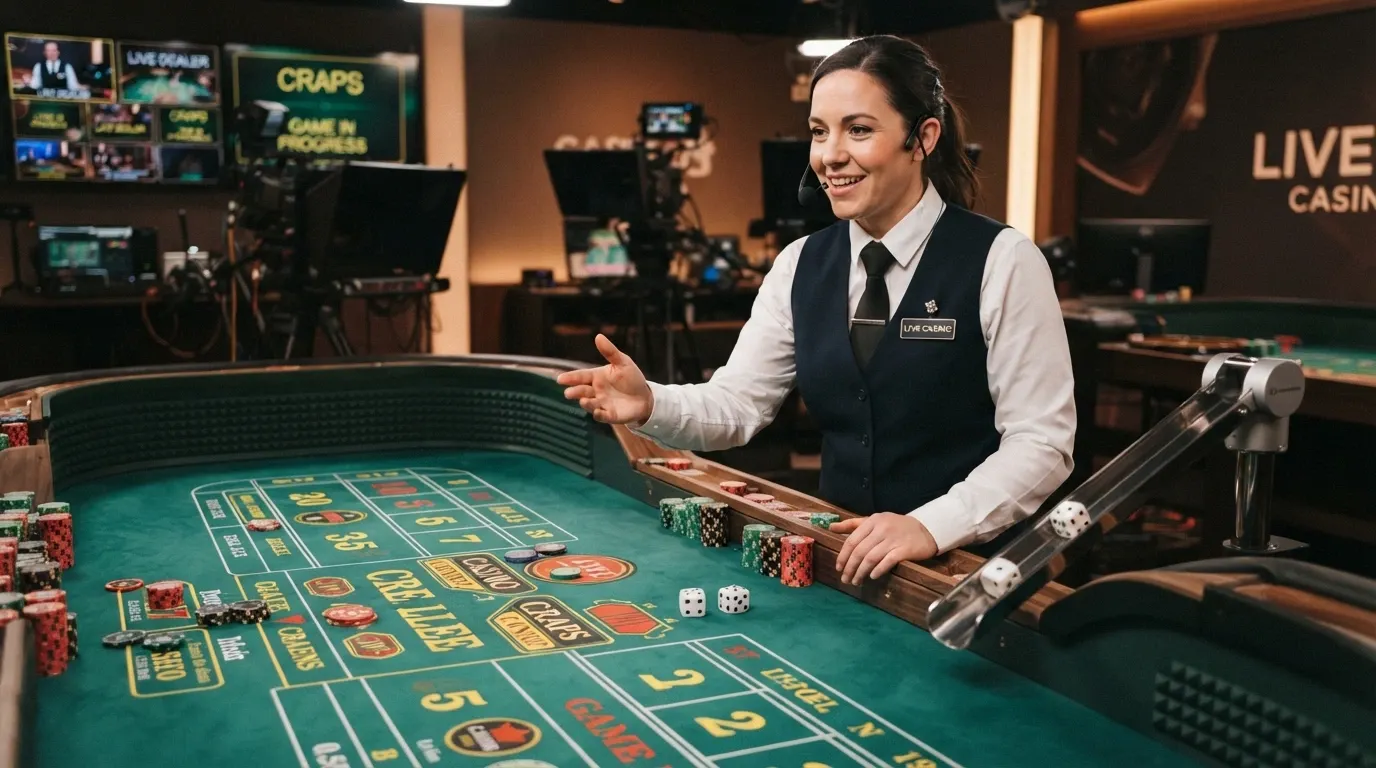
Craps Live carries an optimal RTP of 99.17% on the smart bets (Don’t Pass/Don’t Come at 0.83% house edge, with the same math applying to the Pass Line plus Odds contracts). The maximum individual payout is 30:1, which sits on the long-shot proposition bets. The interface includes an “Easy Mode” view that hides the proposition cluster and shows only the line bets and Place numbers, designed for new players who do not yet want the centre of the layout competing for their attention. Bet limits run the same range as Evolution’s other live tables: low enough for a small bankroll, high enough to clear any bonus playthrough the casino might impose on a live-dealer contribution. Craps Live is the format where the social and visual experience of craps survives the transfer online, and it is the natural first stop for a player who has learned the game in RNG mode and wants to see how a real table feels.
Live Dealer vs RNG Craps — What Actually Changes at the Digital Table
The maths does not change between formats. Evolution’s First Person Craps (RNG-based) and Evolution’s Craps Live (live-streamed with physical dice) both carry an optimal RTP of 99.17% on the smart bets, because the rules of craps are the same in either case. What changes is everything around the maths.
RNG craps plays at digital speed. The player clicks a bet, the next roll resolves in a second or two, and a hundred rolls fit into the time a single live-dealer round might take. That pace favours bankroll efficiency — more decisions per minute means the player’s edge (or the house’s edge) compounds faster. It also favours bad decisions: proposition bets are one click away, and a player who gives in to temptation on every roll sees the cumulative edge bite far faster than at a slowed-down table.
Live dealer craps plays at human tempo. The dealer calls the result, the betting window closes, the arm launches the dice, and the round resolves. The pace is roughly 60 to 90 seconds per decision once the point phase begins, which gives a player time to think between rolls. The trust mechanism is also different: a player who does not fully trust an RNG can watch the physical dice land in the dome. The downside is slower bankroll turnover, which means the same session at the same stake unit extracts fewer decisions per hour. For a player who wants the social texture of craps and is happy to pay for it in slower play, live dealer is the obvious pick. For a player whose priority is to grind through a bonus playthrough as efficiently as possible, RNG craps is the better tool.
The other meaningful difference is the proposition bet ceiling. First Person Craps drops to an RTP of 83.33% on its worst proposition bets (16.67% house edge — the same Any 7 figure as on a live table), and Craps Live offers identical proposition edges in identical payout ratios. The dice delivery does not soften or sharpen the sucker zone; the centre layout is the centre layout in both formats. The trust mechanism changes. The math does not.
Free Craps vs Real-Money Play — Where to Start
Free-play craps is the single smartest first move a new AU player can make. Most offshore casinos in this list run demo mode on their RNG craps titles, which means a player can sit at the table, place every bet on the layout, and watch the rolls resolve without risking a cent. Demo mode mirrors the real-money product exactly: same bets, same payouts, same RNG. The only thing it does not simulate is the psychological pressure of real money on the line, which is itself a reason to spend meaningful time in demo before switching.
Practice Tables, No-Sign-Up Play & Cash Stakes — Picking Your Entry Point
No-registration instant play is the lightest entry point. Many offshore casinos let a visitor open a craps table without creating an account — the casino drops straight into a demo session on the RNG game. This is the right starting point for a player who is still deciding whether craps is the game for them. The trade-off is that demo play does not exercise the bankroll discipline that real money demands, and a player who learns the layout in instant-play demo will still face a learning curve when a real stake sits behind every bet.
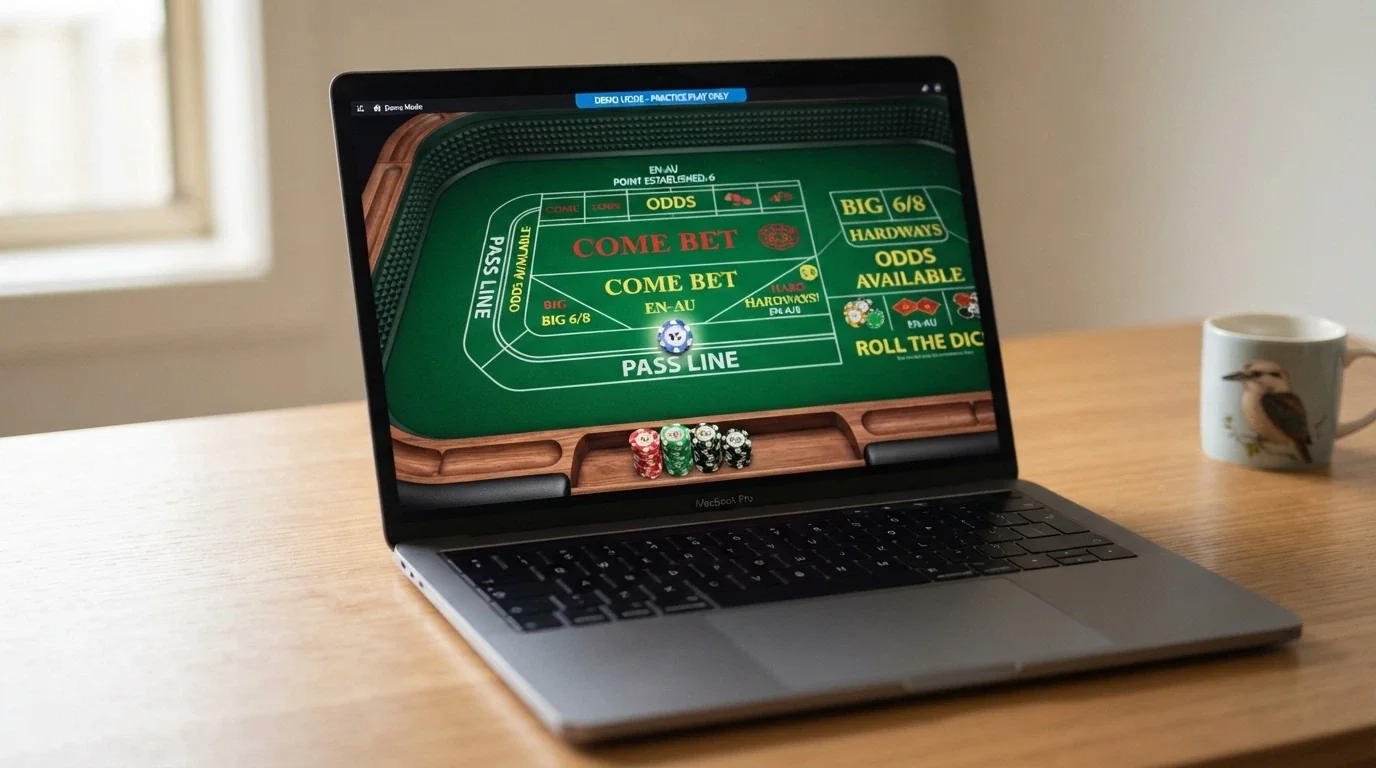
Demo credits and practice strategies are the next step up. Most offshore casinos offer a fixed pool of demo credits that resets on reload, which lets a player run a structured practice session: 100 rolls on Pass Line plus Odds to see what a flat-bet session looks like, 100 rolls loaded with proposition bets to see what the centre layout costs, and 100 rolls cycling between Place 6/8 and the line to feel the variance. The worked example in the strategy section above used exactly that structure — 100 rolls at $5 on optimal bets produces an expected loss of $6.80 at Microgaming Craps’s 98.64% RTP. That is the floor of the game.
The real-money transition changes three things. First, the chip denominations and minimum bets become real: bubble craps terminals run $3 to $5 minimums against $10 to $25 or more at a live craps table, which is a five-to-eight-times difference in the same game. Second, the bankroll has a finite size, and the variance of craps — even on optimal bets, roughly 49% of point-phase decisions lose — can empty a small bankroll quickly without a stop-loss. Third, the bonus terms start to matter, because a real-money deposit typically triggers a welcome offer with a wagering requirement. Craps usually contributes far less toward that requirement than slots, which is the subject of the next section. The honest progression for a new AU player is instant-play demo, then longer demo sessions with structure, then a small first deposit with a pre-set limit and the bonus terms already read.
Why Your Craps Bonus Is Smaller Than It Looks
Welcome bonuses at offshore casinos are sized for slot players. A typical offer matches a deposit by 100% to 200% and applies a wagering multiplier in the 30× to 50× range to the bonus amount, sometimes the bonus plus deposit. The headline figure looks large — a $200 deposit matching 100% delivers a $400 bankroll to play with. The actual value at the craps table is much smaller, because the casino applies a game-weighting system that reduces the contribution of table games toward clearing the wagering requirement.
Bonus Wagering on Table Games — Why Craps Contributes Less
Game weighting is the mechanism behind the discount. Slots typically contribute 100% of every wager toward clearing the playthrough requirement. Table games like craps usually contribute somewhere between 5% and 20%. That means a $10 wager on craps counts as $0.50 to $2.00 toward the playthrough, against the full $10 if the same money went on slots. The effective wagering requirement on craps scales with the weighting gap: a 35× playthrough on the bonus at 10% game weighting becomes an effective 350× turnover on craps.
The maths on a worked example makes the gap concrete. Take a $200 deposit that triggers a 100% match, with a 35× wagering requirement applied to the bonus, and a 10% craps weighting. The bonus is $200, the headline turnover is 35 × $200 = $7,000, and the craps turnover needed to clear is 10× that figure — $70,000. At a $5 stake per Pass Line plus Odds decision and roughly 60 decisions per hour at a live table (or 200 per hour at RNG speed), clearing that bonus at the craps table alone is a multi-session project. The same playthrough on slots, at $1 spins and 500 spins per hour, clears in roughly 14 hours. The welcome offer is the same dollar figure on paper; it is a very different proposition across games.
The validity window is the other place the bonus shrinks. Offshore casinos typically impose 7 to 30 days to clear a welcome playthrough. Craps at a live dealer table clears far fewer decisions per hour than slots, which means a 7-day window is tight even on optimal bets. A player who takes a bonus with a short validity window and a low craps weighting is paying the bonus’s opportunity cost on a game that was never going to clear it within the time available. Maximum cashout caps add a further wrinkle: some bonuses cap the winnings a player can withdraw from bonus play, and craps’ low house edge means a player who clears a bonus slowly will likely have a small bankroll uplift at the cashout point — making a cap irrelevant on a small win and restrictive on a large one.
The practical move is to read the bonus terms for two phrases: “game weighting” or “game contribution”, which lists the percentage each game type counts toward the playthrough; and “excluded games” or “restricted games”, which lists any titles that contribute 0%. A craps player who takes a bonus without reading those lines is funding the casino’s marketing budget with their own playthrough. A craps player who reads them first knows exactly what the offer is worth at the craps table before a dollar goes in.
Is Online Craps Legal in Australia? The IGA Reality
The Interactive Gambling Act 2001 prohibits the provision of online casino games to people in Australia. There is no licence for online casino anywhere in the country, not federally and not in any state or territory. The Act targets the provider, not the player, which is why no Australian has been prosecuted for playing at an offshore casino — but the prohibition is the law, and the offshore status of every brand on this list is not a grey area. It is the legal status the IGA assigns.
The Interactive Gambling Act & the ACMA — How Australia Enforces the Ban
The Interactive Gambling Act 2001 is the foundation. The Interactive Gambling Amendment Act 2017 strengthened it by closing the loopholes offshore operators had been using and giving the Australian Communications and Media Authority (ACMA) its enforcement and blocking powers. The Interactive Gambling Amendment (Gambling Reform) Bill 2026 passed Parliament on 19 August 2026 and its measures commence on 1 January 2027 — including restrictions on wagering advertising and inducements, an inducement marketing ban that runs 14 days after sign-up, 3 months after BetStop deregistration and indefinitely for at-risk customers, and a Wagering Advertising Opt-out Register that lets a person exclude across all services in one step.

The ACMA’s enforcement record since 2017 is substantial. Since its first blocking request in November 2019, the ACMA has had 1,564 illegal gambling and affiliate websites blocked by Australian ISPs. More than 225 illegal services have withdrawn from the Australian market since the 2017 enforcement strengthening. The civil penalty regime is sized to make the calculus obvious: up to $2,475,000 per day for an individual provider and up to $12,375,000 per day for a corporation providing prohibited interactive gambling services. The 2026 reform adds a new lever: from 1 January 2027, banks and payment providers gain express authority to block transactions to illegal gambling operators, which means an AU player funding an offshore casino account from a domestic bank is using a payment channel the regulator can now ask the bank to close.
What is licensed under Australian law is narrower than what is searched for. Wagering on races and sport placed before the event begins, lotteries and keno — through operators licensed by a state or territory. The Northern Territory Racing and Wagering Commission, administered through Licensing NT, is the de facto national licensor for online wagering, and licences run for terms of up to 20 years. None of those licences covers online casino. The brands on this list do not hold one because none can.
Offshore Casinos, Player Risk & What the Law Actually Prosecutes
The individual player is not prosecuted. The IGA targets the provider, not the person accessing the service, and no Australian has been charged for playing at an offshore casino. That is the only protection an AU player has, and it is not a consumer protection — it is the absence of a criminal one.
- The player gets no Australian consumer protection. There is no Australian dispute resolution avenue if an offshore operator refuses a withdrawal, changes bonus terms after a deposit, or closes an account with a balance still on it.
- BetStop does not cover offshore casinos. The National Self-Exclusion Register binds Australian-licensed wagering services only. An offshore casino will keep accepting bets from a self-excluded Australian player because it is not connected to the register.
- Site blocking can strand a balance. The ACMA’s 1,564 blocked sites since November 2019 include active offshore casinos, and a player with a positive balance on a blocked site has no Australian avenue to recover it.
- Payment methods are themselves regulated. Credit cards, credit-related products and digital currency are banned as payment for online wagering from 11 June 2024, with penalties of up to $247,500 for non-compliance. Legal deposit routes for licensed wagering are debit card, bank transfer, PayID/Osko and BPAY. From 1 January 2027, banks and payment providers gain authority to block transactions to illegal gambling operators, which means the deposit route offshore casinos prefer is exactly the one the Australian regime is most able to disrupt.
The honest framing is this: an Australian craps player accessing an offshore casino is acting in a space the law defines as prohibited, without the protection of Australian consumer law, the BetStop register, or the deposit and dispute mechanisms that licensed wagering operators provide. The choice remains the player’s, but the choice should be made with the legal shape of the space in view.
Staying in Control — Responsible Gambling Tools for AU Players
The Australian responsible-gambling infrastructure is built for licensed wagering, not offshore casinos. That distinction is the entire point of this section. BetStop, the National Gambling Helpline, the National Consumer Protection Framework — these tools reach an AU player only when the AU player is using an AU-licensed wagering service. At an offshore casino, the player is on their own.
About 2.1% of Australian adults — roughly 430,000 people — experience problem gambling, with the Australian Institute of Health and Welfare putting high-risk gambling at 1.8% in 2022. The number is the reason this section sits on the page. The offshore gap is the reason it has to be specific about what does and does not reach the player.
BetStop, Helplines & Deposit Limits — The Tools That Actually Work
BetStop — the National Self-Exclusion Register — went live on 21 August 2023. A single registration excludes a person from every Australian-licensed online and phone wagering service in one step. As at 31 July 2026, BetStop had 67,480 registrations across three years of operation, of which 41,290 exclusions were still active — more than 60% of everyone who ever registered. 78% of registrants were under 40, and 38% chose lifetime exclusion. Exclusion periods range from a minimum of 3 months to a lifetime, and removal requires a statutory declaration confirming the person has received counselling from a qualified counsellor, psychologist or doctor.
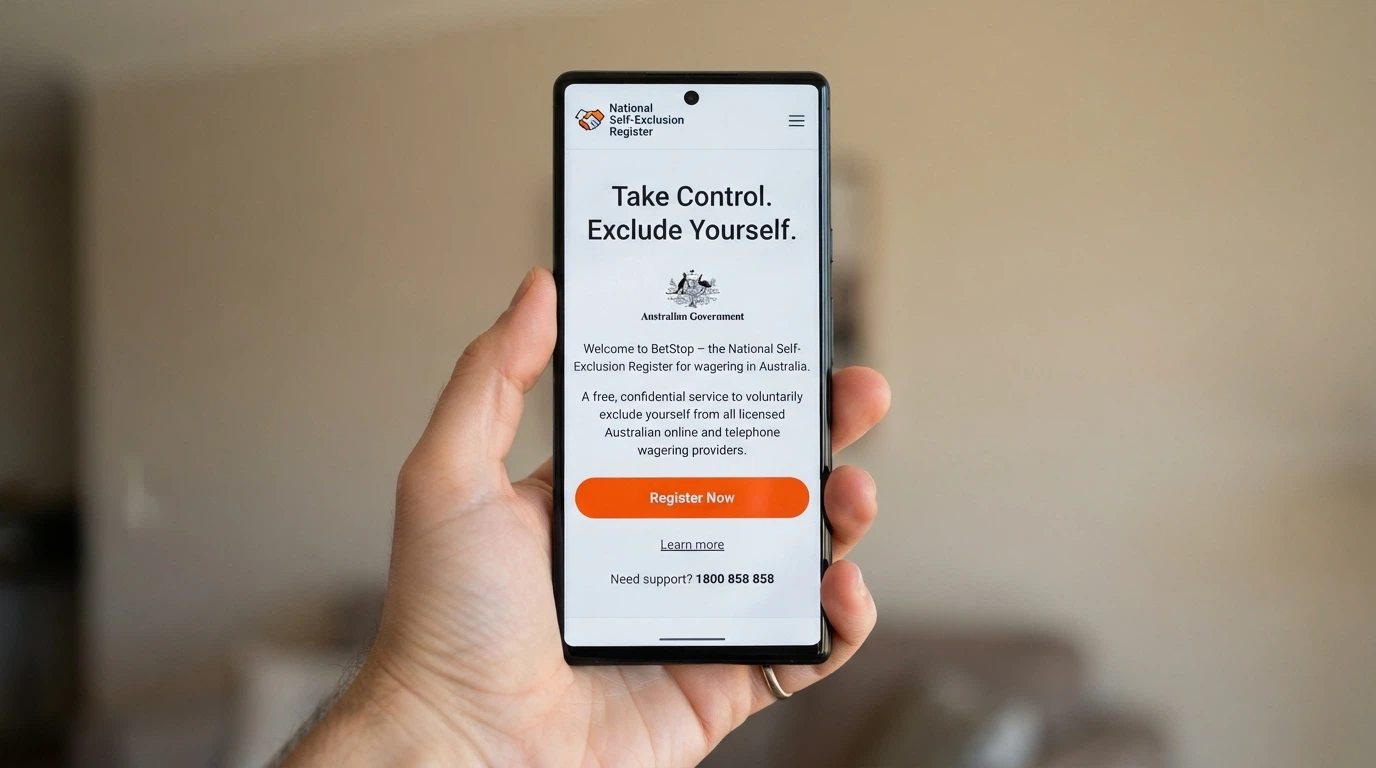
- BetStop covers around 150 licensed wagering services. Offshore casinos are not connected. A self-excluded Australian player at an offshore casino will not be excluded by the offshore operator, and BetStop does not reach it.
- The National Gambling Helpline is 1800 858 858 — free, confidential, staffed 24 hours a day, 7 days a week, with online chat and email counselling through Gambling Help Online at gamblinghelponline.org.au. The helpline is for any Australian experiencing gambling harm, regardless of where they have been playing.
- The National Consumer Protection Framework’s 10 measures cover the AU-licensed side: prohibition of lines of credit, strong identity and age verification, restricted inducements, easy account closure, voluntary deposit limits, monthly activity statements, consistent gambling messaging, trained staff and the National Self-Exclusion Register. None of these tools reaches an offshore casino.
- The 2026 reform adds further inducement bans: 14 days after sign-up, 3 months after BetStop deregistration, indefinitely for customers identified as at risk. Those rules apply to licensed wagering services.
- The offshore gap means the player must set their own limits manually — deposit caps at the operator level, session-time reminders, or self-exclusion requested directly from the offshore operator, which the operator is not obliged to honour.
The tools exist. They work for the licensed market. For an AU player at an offshore casino, they do not.
How We Evaluated Every Craps Casino on This List
The shortlist was built from the Australian market-share table supplied by the operators skill, ranked by AU-traffic share among offshore casinos. The ACMA official register was checked to confirm that no operator on the list holds an Australian casino licence — the baseline applies to every brand, because no licence for that product exists. Craps title availability, live-dealer offering, bonus terms and wagering conditions were considered per operator; per-operator specifics that could not be confirmed in this round are flagged qualitative in the write-ups. The ranking is qualitative, not a scored formula: craps availability and live-dealer offering carried the most weight, followed by licence jurisdiction, then bonus mechanics and payments.
No operator scores were fabricated. No per-operator weighting was imposed beyond the qualitative ordering above. The methodology is reproducible: another round of operator-sweep data would refine the per-operator write-ups, and any per-operator licence confirmation would tighten the table, but the baseline fact — no AU casino licence exists for any operator here — does not move.
Frequently Asked Questions
Is It Legal for an Australian Player to Access Offshore Craps Casinos?
The IGA targets the provider, not the player, and no Australian has been prosecuted for playing at an offshore casino. The real risks sit on the consumer-protection side: no Australian dispute avenue if a withdrawal is refused, no BetStop coverage because BetStop binds only Australian-licensed wagering services, and the possibility of site blocking leaving a balance stranded on a site the ACMA has had ISPs block — 1,564 sites since November 2019.
What Is the House Edge on a Pass Line Bet in Craps?
Pass Line carries a 1.41% house edge, with Don’t Pass at 1.36%. Backing the line bet with the Odds wager — which pays true mathematical odds with a 0% house edge — drops the combined edge to approximately 0.37% at 3-4-5× Odds (3× on 4/10, 4× on 5/9, 5× on 6/8). Place bet edges for comparison: 6/8 at 1.52%, 5/9 at 4.00%, 4/10 at 6.67%.
Do the Odds Change Between Live Dealer and Computer-Generated Craps?
No. Evolution’s Craps Live (physical dice via an automatic launcher) and First Person Craps (RNG-based) both carry an optimal RTP of 99.17% on Don’t Pass/Don’t Come. The proposition bets drop identically — to as low as 83.33% RTP in both formats — because the maths of the game is the same. What changes is pace, atmosphere and the trust mechanism of watching real dice.
What Are the Dome-Based Automated Craps Machines at Online Casinos?
Bubble Craps uses physical dice inside a sealed transparent dome shaken by a mechanical arm — no RNG, no dealer. ICONIC21 launched Bubble Craps and Bubble Crapless Craps as a simultaneous dual release; the Crapless variant makes 2, 3 and 12 into point numbers on the come-out, eliminating the instant come-out loss. Both versions run 24/7 with minimum bets of $3 to $5 versus $10 to $25 or more at a live craps table.
Do Welcome Bonuses Actually Work on Craps Games?
Technically yes, but the game weighting shrinks the offer at the craps table. Craps typically contributes 5% to 20% of what slots contribute toward the wagering requirement, which means a 35× playthrough on a $200 bonus at 10% weighting becomes an effective 350× turnover on craps. The validity window — often 7 to 30 days — is also tight for a slow-paced table game. Read the bonus terms for “game weighting” before depositing.
What Should I Do If I Am Experiencing Gambling-Related Harm?
If you or someone you know is experiencing gambling harm, support is available. The National Gambling Helpline is 1800 858 858, operating 24 hours a day, 7 days a week. You can also access free, confidential support and counselling through Gambling Help Online at gamblinghelponline.org.au, or use the BetStop register to self-exclude.
Playing Online Craps From Australia in 2026 — What to Do Next
The shape of the decision is straightforward. No licensed Australian online casino offers craps, because the IGA prohibits providing the product and no licence exists. The choice is between offshore casinos — which sit outside Australian law, outside Australian consumer protection, and outside the BetStop self-exclusion register — and not playing online craps at all. That choice is the player’s, but it should be made with the legal shape of the space visible.
For a player who decides to play, the practical order is well-established. Start in demo mode at one of the offshore brands above, work through the come-out and point phase on Pass Line plus Odds until the round flow is automatic, and graduate to a small real-money deposit with a pre-set session limit and the bonus terms already read. The bet to make is Pass Line plus full Odds at 3-4-5×. The bet to avoid is the proposition centre. The figure that matters is the 0.37% combined house edge at full Odds, which is the floor of the game.
Three checks sit between a deposit and the table. Verify the operator’s licence jurisdiction directly on its own terms page, because an Australian-facing brand running from Curaçao or Anjouan is an offshore brand by any reasonable reading of the IGA. Read the bonus terms for game weighting before claiming any welcome offer, because craps’ 5% to 20% contribution rate is the single biggest discount on a bonus’s headline figure at the craps table. And set a deposit limit and a session-time limit manually at the operator level, because BetStop will not cover an offshore casino and the responsible-gambling infrastructure that reaches a licensed wagering service stops at the offshore boundary.
Online craps is accessible to Australian players in 2026 — but only through operators that sit outside Australian law. The game itself rewards restraint more than almost any other casino table, with Pass Line plus full Odds running at a 0.37% combined house edge and proposition bets running as high as 16.67%. The maths is the maths. The legal shape around it is the part a player has to read for themselves.
Prepared by the Microgaming Casinos AU editorial staff.