
No-Deposit Free Spins on Online Pokies in Australia: What the Bonus Page Doesn’t Tell You
“Free” describes the entry price. The exit cost is something else. A no-deposit free-spins offer at an offshore casino costs the player nothing to claim, and the headline number — fifty spins, a hundred spins, two hundred — is what every affiliate page leads with. What follows in the small print is where the arithmetic of the offer actually lives, and it is the part the marketing does not emphasise. This page works through what those terms mean, what the law says about every operator making the offer, and what a player should reasonably expect to walk away with. The short version: in Australia, online pokies are illegal to provide. Every “no-deposit free spins” offer an Australian player encounters is being made from outside the country’s licensing system, and that fact shapes every protection the player would otherwise have.

Data current as of 18 October 2026, verified against the ACMA register, BetStop statistics and state and territory licensing records.
Table of Contents
- Why Free Spins on Online Pokies Rarely Pay What They Promise
- No-Deposit Free Spins: The Real Cost of a “Free” Bonus
- The Legal Reality: Online Pokies Are Prohibited in Australia
- Responsible Gambling Tools and Where to Get Help
- Offshore Operators Offering Free Spins to Australian Players
- Rocket Play
- Skycrown
- Royal Reels
- WinSpirit
- Stake
- Rainbet
- Scream Casino
- FairGO
- Bizzo Casino
- Rocket Casino
- How You Pay (and Get Paid) at Offshore Pokies Sites
- How We Evaluated These Operators
- What You Should Actually Do About No-Deposit Free Spins
- Frequently Asked Questions
Why Free Spins on Online Pokies Rarely Pay What They Promise
Free spins on a pokies title are a feature round built into the game’s maths, and they are also a promotional credit handed out by a casino to attract sign-ups. The two share a name and almost nothing else. The first is a chance to win at the host game’s RTP. The second is a small balance locked behind wagering, a cashout cap and a clock, and what survives those three gates is what the player might withdraw.
The headline number is set to impress. Fifty spins reads better than a ten-dollar balance, and a hundred spins reads better than a twenty. The starting face value of fifty spins at A$0.20 each is A$10. Twenty-five spins at A$0.50 each open at A$12.50. Those numbers are what the marketing copy prints, and they are the upper bound of what the offer can ever return. They are not the player’s expected return.
What free spins are on a pokies title
A pokies title runs on reels, paylines and a published return-to-player percentage. The free-spins round triggers when a designated number of scatter symbols land on a single spin — three scatters is the most common threshold, sometimes four. The game then awards a set number of spins at the same stake the triggering spin was played at, deducting nothing from the player’s balance for the duration of the round. Any line hits during those spins pay into the balance. Some titles let the round retrigger if scatters land again inside it; others stack wilds, walk a multiplier up one step at a time, or open a pick-style bonus layered on top of the spins. The mechanic is part of the game’s design and is baked into the RTP figure the developer publishes.
Two specific titles carry known RTPs in research. Big Bass Bonanza, by Pragmatic Play, runs at 96.71% RTP at its highest setting, with a high volatility profile and a 2,100× maximum win; the game also publishes lower RTP settings at 95.67% and 94.5% depending on the operator configuration. Wolf Gold, also by Pragmatic Play, runs at 96.01% RTP with a 2,500× maximum win. Those numbers are the ceiling on what a free-spins round can return over volume. The player will not hit that ceiling in any single session, and the operator configures which RTP setting the player is playing at — a 96.71% title is not automatically a 96.71% title on every site.
How free spins trigger and what determines their value
Three numbers set what a free-spins round is worth. The stake the spins are played at sets the per-spin payout ceiling. The RTP of the host title sets what the house keeps over volume. The number of spins sets the upper bound of what the round can produce. A round of fifty spins at A$0.20 with a 96.71% RTP has an expected return of A$9.68 across the round in raw line hits, before any bonus-round mechanics multiply individual wins. The starting face value is A$10; the expected return is A$9.68. The arithmetic of the game is precise, and it is what the headline number is replacing.
Spin stakes at offshore casinos sit between A$0.10 and A$0.50 per spin for free-spins offers. Outside that range, the offer changes character — a A$1 spin on a high-volatility title can swallow the round without a single line hit, and a A$0.05 spin pays so little that line hits barely register. The A$0.20 to A$0.30 band is the standard, because it produces the kind of headline number the marketing wants while keeping the round economically meaningful to the player. The stake is set by the operator, not the player, and the player almost never gets to choose it.
The gap between starting face value and expected return is the house edge expressed as a number. A 96% RTP means the house keeps roughly four cents of every dollar wagered across the lifetime of the game. That figure compounds across the volume the player puts through the wagering requirement, and it is the reason the headline number is not the figure the player walks away with.
Free spins on sign-up versus during regular play
A promotional free-spins credit at sign-up is a customer acquisition cost. The operator is paying the player a small balance to complete registration and to start playing on real titles. The cost is not the spin value — the cost is the deposit the operator hopes the player will make next. An in-game free-spins round is part of the title’s design, and the cost of it is already inside the game’s published RTP. Conflating the two is the first error an offshore bonus page encourages. The promotional credit is a hook, not a gift. The in-game round is a feature, not a windfall.
Reload free spins, awarded to existing players, sit between the two. They are promotional in structure and in-game in execution — the player claims them at the cashier, and they land on a specific title. They carry wagering and a cashout cap in the same way a sign-up offer does, with terms that are typically less generous than a welcome package and more generous than a one-off. The structural point is the same: the headline number is set to attract, and the small print sets the cost.
The real value of 25, 50 or 100 free spins
Twenty-five spins at A$0.20 to A$0.50 per spin open at a face value of A$5 to A$12.50. Fifty spins at the same stake open at A$10 to A$25. A hundred spins at A$0.20 sit at A$20, and a hundred spins at A$0.50 reach A$50. The marketing copy leads with the headline figure because the headline figure is what the player remembers. The cashout cap and the wagering requirement are what the player encounters next.
The cashout cap voids everything above it. A typical A$50 cap on a hundred-spin offer means the A$50 face value is also the maximum possible withdrawal, regardless of what the spins produce. A 35× wagering multiplier on winnings turns a small win into a large turnover target, and the A$5-per-spin max bet while bonus funds remain active keeps the player from racing through the wagering in one large session. Every term is calibrated to extend the time the player spends on the site, and the headline number is what the player sees first.
Key Terms Summary
| Term | Typical Range |
|---|---|
| Wagering Requirement | 30× to 60× |
| Cashout Cap | A$50 – A$100 |
| Validity Window | 3 – 14 days |
| Eligible Games | Selected slots (100% contribution) |
Typical Wagering and Cashout Ranges
| Term | Typical Range |
|---|---|
| Wagering Requirement | 30× to 60× |
| Cashout Cap | A$50 – A$100 |
Bonus Validity and Eligibility
| Term | Typical Range |
|---|---|
| Validity Window | 3 – 14 days |
| Eligible Games | Selected slots (100% contribution) |
No-Deposit Free Spins: The Real Cost of a “Free” Bonus
A no-deposit free-spins offer is free to claim. It is not free to extract value from. The terms that govern withdrawal — wagering multiplier, cashout cap, validity window, game contribution — are what decide whether a player ever sees the cash, and they are written in the operator’s favour. A no-deposit bonus is best read as a time-limited chance to study how a platform handles promotions before putting any money in. The headline number is just the opener. The useful part is in the terms, where bonus credit moves through wagering and eventually becomes eligible for cash, if the conditions are met.
The worked example the page works through is drawn from research: fifty spins at A$0.20 per spin, an A$8 win on the round, a 35× wagering multiplier on winnings. The expected loss across the A$280 turnover at 96.71% RTP is approximately A$9.21 — a statistical estimate, not a guaranteed outcome for any individual spin session. That figure is the cost of the bonus in expected terms, and it sits in front of a cashout cap that would void any win above the cap and a validity window that closes before most players clear the wagering.
What “no deposit” actually means in 2026
“No deposit” means the operator does not ask for a payment before issuing the bonus. It does not mean there is no cost. The bonus balance is held in a separate wallet from the real-money balance, and only the real-money balance can be withdrawn once the wagering requirement is cleared. The bonus balance is what the player plays with during the wagering period, and what survives the wagering — after the cashout cap — moves into the real-money wallet. The two wallets are deliberately separate, and the mechanics of moving between them are what the terms page controls.
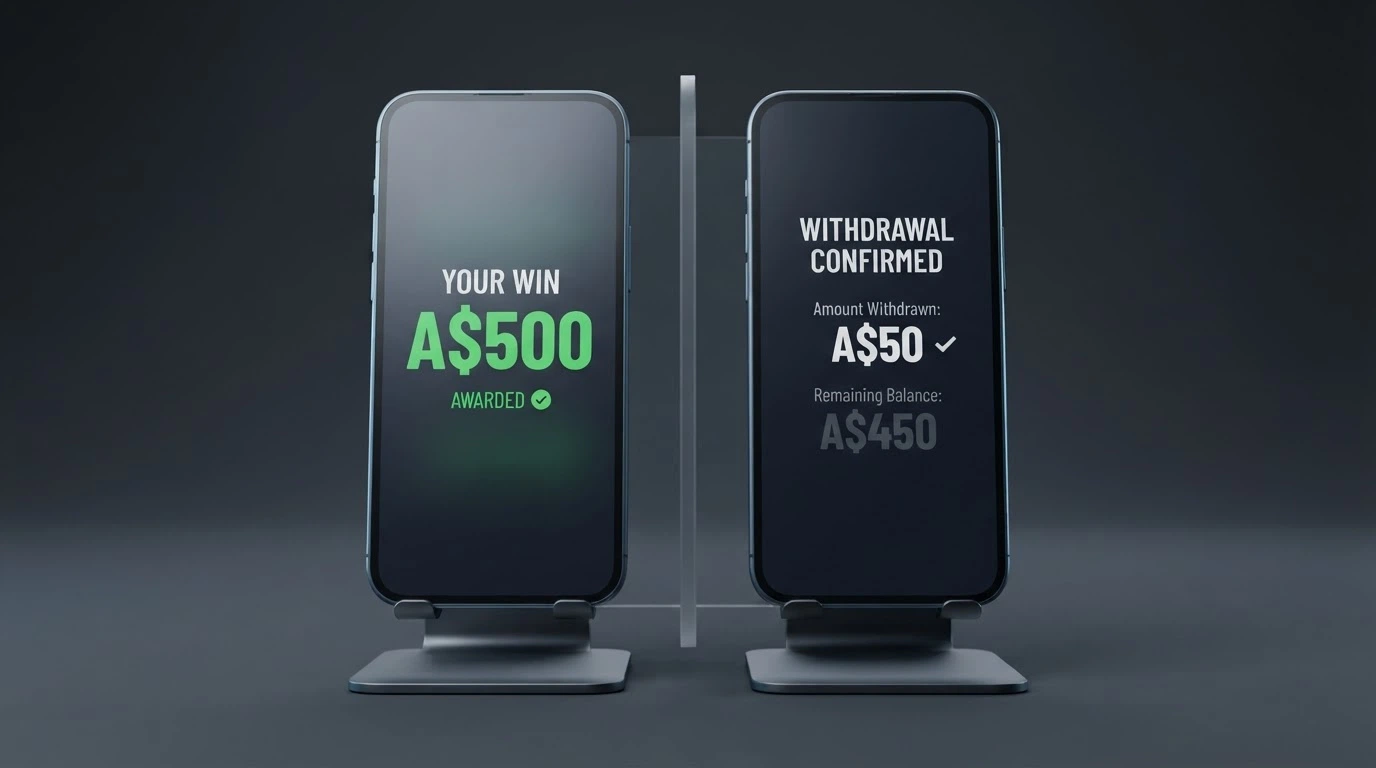
A player who wins A$500 on the free spins round, with a A$50 cashout cap, withdraws A$50. The remaining A$450 is voided. The casino’s payout terms state that the cap is the maximum the player can extract from the bonus balance regardless of the round’s outcome, and the cap is not negotiable after the fact. The cashout cap is what keeps a no-deposit offer cheap for the operator — even a hot streak on a high-volatility title produces only the capped amount.
How to claim no-deposit free spins — the step-by-step process
- Register an account at an offshore casino, providing an email address and a password.
- Verify identity — KYC requires a driver’s licence or passport, a recent utility bill, and sometimes a selfie. The process takes 24 hours to 5 business days.
- The free spins credit to the nominated pokies title, either automatically on registration or after a support request.
- Winnings from the spins land in the bonus balance, not the real-money balance.
- The wagering requirement begins the moment the spins are played. The clock starts.
Wagering requirements: why your winnings are not yours yet
Wagering requirements apply to winnings from the spins, not the face value of the spins themselves. A player who wins A$8 from forty free spins at a 35× multiplier must wager A$280 before the A$8 becomes eligible for withdrawal. The multiplier is applied to the winnings, and the resulting turnover target is what the player has to put through eligible games before any of it can be cashed out.
The industry standard for no-deposit offers in Australia runs from 30× to 60× on winnings. At the low end, a A$10 win requires A$300 of wagering. At the high end, the same A$10 win requires A$600. The wagering applies to pokies at 100% contribution rate — table games count 5–10%, live dealer games almost always count zero. The contribution rates are written so that the player who switches away from pokies to clear the wagering on a familiar game finds the wagering barely moves.
The max bet while bonus funds remain active is typically capped at A$5 per spin. A player who breaches that cap — even once — risks having the bonus voided and the bonus balance wiped. The cap exists so that the player cannot race through the wagering requirement in a single high-stake session. It is the operator’s tool to keep the player on the site long enough for the marketing to do its work.
Failing to clear the wagering inside the validity window voids the bonus balance. The clock starts at the moment the spins are credited, and the clock does not pause for sleep, for work or for a different game. A 35× wagering target cleared inside a week on a single title is a tight fit even for a player who is at the screen for hours each day, and most players do not clear it at all.
Cashout caps: the A$50–A$100 ceiling on your “win”
A typical no-deposit bonus carries a maximum cashout of A$50 to A$100. Some operators set the cap as low as A$20; others, for VIP players, push it to A$200. The cap sits between the player’s winnings and the withdrawal screen, and it voids everything above it. A player who wins A$500 on the spins and clears a 35× wagering requirement at A$280 of turnover, with a A$50 cap, walks away with A$50. The remaining A$450 is voided by the terms the player agreed to at registration.
A common rule is five times the bonus value. A A$10 credit pays A$50 at most. The rule is the operator’s cost-control mechanism, not the player’s protection, and it is what keeps a no-deposit offer cheap to issue. The cost-control framing is honest: the operator knows that even with a tight cap, the marketing return on a no-deposit offer is the deposit the player makes next.
Validity windows: 24 hours to 14 days to use or lose
Free-spin offers typically carry a validity window of 3 to 14 days, with the shortest windows running as little as 24 hours. The window covers both the use of the spins and the clearance of the wagering requirement. When the window closes, any unused spins and any uncleared bonus balance are voided. The player who did not finish wagering inside the window loses what survived the spins.
A short window is not designed for the player’s convenience. It is designed to compress the player’s decision-making and to push the player toward a deposit before the bonus expires. The licensed Australian wagering market has already moved against this design: from 1 January 2027, direct marketing of inducements is prohibited for 14 days after a customer signs up — the regulator has accepted that a fast-window bonus is a marketing hook, not a player benefit.
Game restrictions and contribution rates that shrink your playthrough
Pokies contribute 100% toward wagering requirements. Table games contribute 5–10%, sometimes zero. Live dealer games are almost always excluded. The contribution rates matter because a player who switches from pokies to a familiar table game to clear wagering finds the wagering target barely moves — A$280 on pokies becomes the effective equivalent of several thousand dollars on a 10% table-game contribution rate.
The eligible-game list on a no-deposit offer is typically a short roster of high-RTP pokies titles, and the eligible-game list does not usually include the player’s first choice. The terms state which games count and at what rate, and the terms are written so that the path of least resistance — sticking to the eligible games — is also the path the operator wants the player on.
The Legal Reality: Online Pokies Are Prohibited in Australia
Every operator listed on this page is an offshore casino. None of them holds an Australian licence because none of them can. Online casino games, online pokies and in-play sports betting are prohibited to provide to a person in Australia under the Interactive Gambling Act 2001, strengthened by the Interactive Gambling Amendment Act 2017. There is no federal or state online casino licence anywhere in the country. The prohibition targets the provider, not the individual player, but it also removes every consumer protection the player would otherwise have.

The prohibition has real teeth. The Australian Communications and Media Authority has directed Australian ISPs to block 1,564 illegal gambling and affiliate websites since November 2019. More than 225 illegal services have withdrawn from the Australian market since 2017. Civil penalties run up to A$2,475,000 per day for an individual provider and A$12,375,000 per day for a corporation. On 16 January 2026, the ACMA issued eight infringement notices to Tabcorp at A$19,800 each, totalling A$158,400, for providing a prohibited in-play betting service — an enforcement action against a licensed wagering operator, let alone an unlicensed casino.
The Interactive Gambling Act 2001 and what it bans
The Interactive Gambling Act 2001 draws a bright line. Online casino games, online pokies and in-play sports betting are prohibited to provide to a person physically in Australia. The Interactive Gambling Amendment Act 2017 strengthened the Act and gave the ACMA the enforcement and site-blocking powers that have driven the 1,564-block figure and the 225-withdrawal count. Civil penalties for providing a prohibited service run up to A$2,475,000 per day for an individual and A$12,375,000 per day for a corporation, and the penalties are not theoretical.
Licensed wagering is a different product. Races and sport placed before the event begins, lotteries and keno are permitted through operators licensed by a state or territory regulator. The Northern Territory Racing and Wagering Commission, administered through Licensing NT, is the de facto national licensor — large online bookmakers including Sportsbet, bet365, Ladbrokes and approximately fifty others hold NT licences. Those licences cover wagering, not casino, and no equivalent casino licence exists.
ACMA enforcement: 1,564 sites blocked and counting
The ACMA’s enforcement has been measured in sites and services, not press releases. The 1,564 blocked-site figure covers every illegal gambling website and every affiliate website the ACMA has directed Australian ISPs to block since November 2019. The 225-withdrawal figure covers illegal services that chose to exit the Australian market rather than face ongoing enforcement. Both figures are published by the ACMA, and the ACMA has stated plainly that since its first blocking request in November 2019, 1,564 illegal gambling and affiliate websites have been blocked.
The blocking is DNS-level, not advisory. A blocked site is inaccessible from an Australian ISP, and the block is the operator’s reason to either withdraw from the Australian market or accept the ongoing risk. The Tabcorp enforcement in January 2026 shows the ACMA will act against licensed operators as well — eight infringement notices totalling A$158,400 for in-play betting that crossed the prohibited-service line. The ACMA is not a regulator that posts warnings and moves on.
BetStop: why Australia’s self-exclusion register cannot protect you offshore
BetStop, the National Self-Exclusion Register, has been live since 21 August 2023. By 31 December 2025, 54,859 people had registered and 35,135 had active exclusions. By 31 July 2026, the total had reached 67,480 registrations, with 78% of registrants under 40 and 38% choosing a lifetime exclusion. The minimum exclusion is three months; the maximum is lifetime.

BetStop’s limitation is its scope. BetStop binds Australian-licensed wagering services only. An offshore casino is not connected to the register, and an offshore casino will keep taking a self-excluded person’s money. A player who registers on BetStop and then visits an offshore casino to play pokies has taken a meaningful step against the licensed Australian market and done nothing about the offshore market the offer comes from. The two systems are not connected, and the offshore casino has no obligation to honour the BetStop registration.
How to recognise an unregulated operator targeting Australian players
A handful of practical tells signal an offshore operation before a player signs up. Credit cards and cryptocurrencies have been banned as payment for online wagering since 11 June 2024 under the Interactive Gambling Amendment (Credit and Other Measures) Act 2023, and a site accepting either from an Australian player is operating outside the licensed payment rails. An AUD deposit option that goes through an offshore payment processor — typically named as such only in the cashier’s fine print — is a second tell. A site that lists no Australian state or territory licence is a third. A site that offers no BetStop integration and no Australian complaints body is a fourth. None of those tells is conclusive on its own. All of them together are.
The 2026 reform — what changes on 1 January 2027
The Interactive Gambling Amendment (Gambling Reform) Bill 2026 passed Parliament on 19 August 2026. Its measures commence on 1 January 2027. The reform tightens the advertising, inducement and payment-blocking rules around gambling in Australia, and the parts that affect the no-deposit free-spins market are precise. Banks and payment providers gain express authority to block transactions to illegal gambling operators, which closes a payment route offshore casinos currently rely on. Direct marketing of inducements is prohibited for 14 days after a customer signs up, for 3 months after a person deregisters from BetStop, and indefinitely for customers identified as at risk of gambling-related harm.
The advertising-side changes are equally specific. No more than three wagering advertisements per hour between 6:00 am and 8:30 pm on broadcast television. A live-sport blackout runs from 15 minutes before an event starts to 5 minutes after it ends. Radio wagering advertisements are barred during school drop-off and pick-up times, and broadcasting sporting odds is banned outright. Athletes, celebrities and influencers are barred from promoting wagering products. Online keno, marketed as “pocket pokies”, is being banned alongside a crackdown on harmful online lottery products. The reform package takes the existing prohibition and adds a set of friction points around it, with the explicit goal of reducing the conversion rate of the marketing hook.
Responsible Gambling Tools and Where to Get Help
A no-deposit free-spins offer is a conversion tool. The offer is designed to get a player past registration, past identity verification, past the cashier and onto real-money titles. The short validity window and the high wagering multiplier push the player toward a deposit before the bonus expires. The licensed wagering market has already recognised the dynamic, and the inducement marketing ban taking effect on 1 January 2027 is the regulator’s response. The data on gambling harm is the context that makes the response more than a regulatory tidy-up. More than 3.3 million Australians are experiencing some form of gambling harm. The number is not a footnote.
How a “free” bonus leads to real-money deposits
The behavioural funnel runs in five steps. The player registers, claims the free spins, plays them through, attempts to clear the wagering, and hits a point where the bonus balance runs short. At that point, the choice is to walk away from the bonus or to deposit to continue playing. The operator has designed the offer so the second option is the easier one — the player is already verified, already inside the cashier, already familiar with the title, and already losing time the validity window is consuming.
The licensed wagering market’s response to that funnel is the inducement marketing prohibition taking effect on 1 January 2027: no direct marketing of bonuses for 14 days after a customer signs up. The regulator has accepted that a fast-window bonus is a marketing hook, not a player benefit, and the prohibition is calibrated to cut the hook before the deposit happens. The offshore market operates outside that rule. The marketing hook is the entire offer.
Responsible-play tools available to Australian punters
Licensed wagering operators are required to offer deposit limits, activity statements and take-a-break functions, under state and territory licensing conditions. The deposit limits are customer-set; the activity statements show the player what they have wagered, lost and deposited over a chosen period; the take-a-break functions let the player lock the account for a chosen window. The suite is not generous — it is the minimum — but it is enforceable by an Australian regulator, and it sits on top of BetStop for full self-exclusion.
Offshore casinos carry none of these obligations. No Australian regulator oversees the player-protection measures at an offshore site, no mandatory toolkit is in place, and no complaints body exists to recover money from an offshore operator that refuses a withdrawal. The gap is not small. It is the difference between a licensed product that the regulator can act on and an unlicensed product that the regulator can only block.
Problem gambling in Australia: the numbers behind the headlines
Approximately 2.1% of Australian adults — roughly 430,000 people — experience problem gambling. The Australian Institute of Health and Welfare put high-risk gambling at 1.8% in 2022. Roy Morgan Research, in 2026, found that more than 3.32 million Australians — 15.1% of the adult population — are experiencing some form of gambling harm, with 13.0% (2,857,000 people) experiencing harm from their own gambling behaviours. The Royal Australian College of General Practitioners has noted that the prevalence of problem gambling has doubled in the past decade. The 78% under-40 share of BetStop registrants shows the age profile of the problem is not concentrated in older Australians. The numbers describe a country where gambling harm is widespread and where the affected population skews young.
Where to seek support: helplines, BetStop and counselling services
Free, confidential support is available around the clock. The National Gambling Helpline is 1800 858 858 — free, confidential and staffed 24 hours a day, with online chat and email counselling through Gambling Help Online. Gambler’s Help runs a Youthline at 1800 262 376 for younger players and the people around them. The National Debt Helpline is 1800 007 007 for the financial side of gambling harm, and 13YARN offers crisis support for Aboriginal and Torres Strait Islander people. BetStop, the National Self-Exclusion Register, lets a person exclude themselves from every licensed Australian wagering service with a single registration — minimum three months, up to lifetime. BetStop does not cover offshore casinos, and that limitation is the one a self-excluded player needs to know.
Offshore Operators Offering Free Spins to Australian Players
The ten operators below are the brands Australian players encounter most when searching for no-deposit free spins on pokies. All operate offshore. None holds an Australian licence. The product is prohibited to provide in Australia under the Interactive Gambling Act 2001. The table ranks them by market share; legal status is confirmed by the ACMA. This is not a recommendation list, but a factual map of available brands and their legal standing.
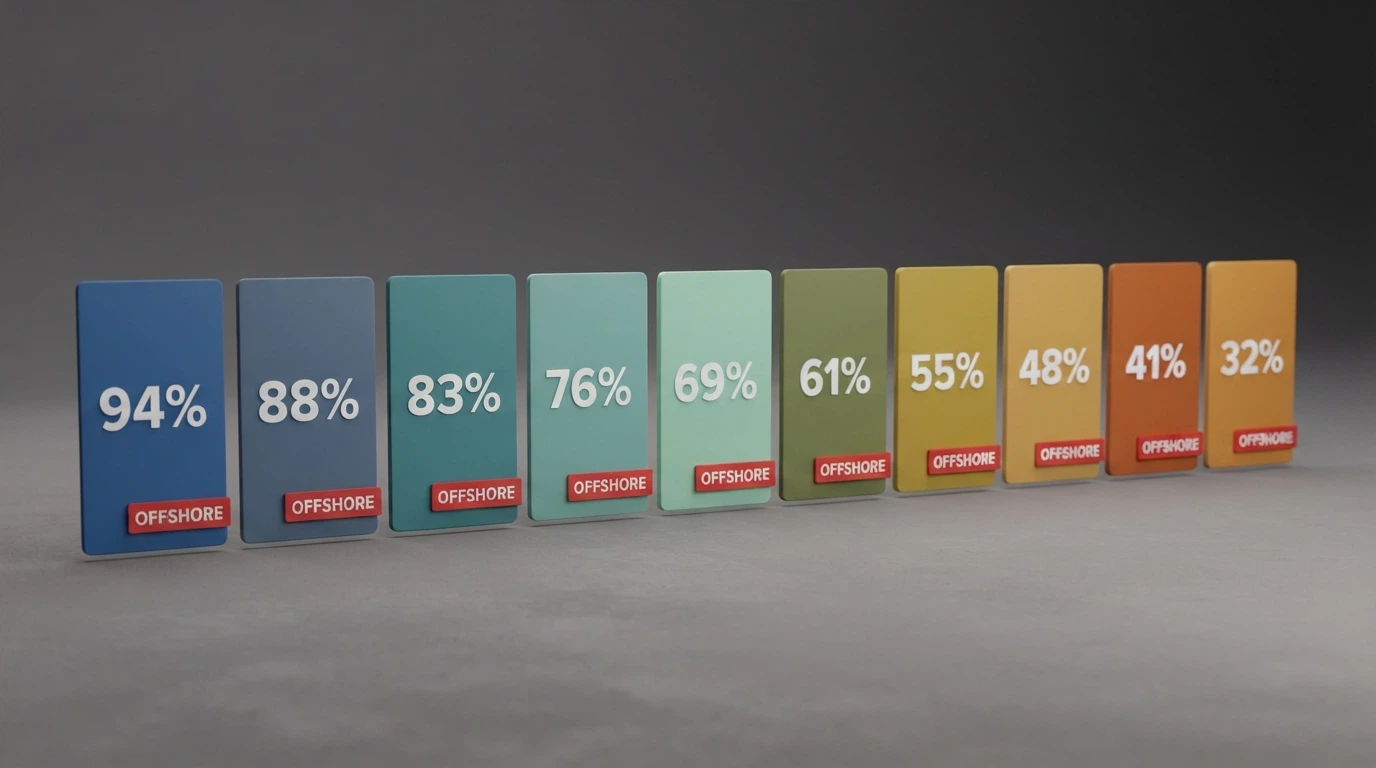
| Operator | Market share in AU | AU legal status |
|---|---|---|
| Rocket Play | 9.4% (#3) | Offshore — no AU licence |
| Skycrown | 8.55% (#4) | Offshore — no AU licence |
| Royal Reels | 2.51% (#9) | Offshore — no AU licence |
| WinSpirit | 1.55% (#11) | Offshore — no AU licence |
| Stake | 1.28% (#12) | Offshore — no AU licence |
| Rainbet | 1.28% (#13) | Offshore — no AU licence |
| Scream Casino | 0.99% (#14) | Offshore — no AU licence |
| FairGO | 0.8% (#16) | Offshore — no AU licence |
| Bizzo Casino | 0.57% (#19) | Offshore — no AU licence |
| Rocket Casino | 0.57% (#20) | Offshore — no AU licence |
The bonus terms for nine of the ten operators were not confirmed in research. Royal Reels is the one operator whose deposit welcome bonus terms surfaced from public affiliate listings: 30× to 40× wagering on the bonus, an A$200 maximum cashout, and a 7-to-14-day expiry. Those terms apply to Royal Reels’ deposit welcome bonus, not to a no-deposit free-spins offer, and the no-deposit terms for Royal Reels were not confirmed. The other nine operators have no confirmed bonus terms in this research. The next ten sections work through each operator and explain what was and was not confirmed about its offering.
Rocket Play
Rocket Play ranks third locally with 9.4% traffic. It operates as an offshore casino without Australian licensing, offering products prohibited under the Interactive Gambling Act 2001. We found no confirmed bonus structure; please check the operator’s current terms directly. No welcome bonus terms surfaced, no no-deposit free-spins terms surfaced, no wagering multiplier, no cashout cap, no validity window. The reader looking at Rocket Play should check the operator’s current terms directly on the site before registering, and should treat any headline number — fifty spins, a hundred spins — as a starting point for the small print, not a summary of the offer. The product is real. The consumer protection around the product is not.
Skycrown
Skycrown holds the fourth position with 8.55% of local traffic. This offshore operator lacks an Australian licence. We identified no confirmed welcome packages or specific free-spin details—consult their terms directly. A reader evaluating Skycrown should plan to read the operator’s terms page directly, because the marketing copy and the terms page are not the same document, and the terms page is the one that governs what happens to any winnings. The high traffic share means Skycrown is a known name in the offshore-Australian market. It does not mean the offer is generous.
Royal Reels
Royal Reels ranks ninth with 2.51% of traffic. Unlike its peers, we found data for its deposit welcome bonus: 30–40× wagering, A$200 max cashout, and 7–14 days expiry, sourced from public listings. Note that these figures do not apply to no-deposit spins, which remain unconfirmed. The deposit welcome bonus is one of the more generous cashout caps in the featured set — A$200 against a typical A$50 to A$100 — and the wagering multiplier sits at the low end of the typical 30× to 60× range. The generosity of the deposit bonus is not, on its own, a reason to assume the no-deposit offer will follow the same shape.
WinSpirit
WinSpirit (1.55% share) is the eleventh-most visited site here. It provides casino games from abroad without local authorization. Bonus information is unpublished; please verify promotional rules on-site. WinSpirit’s position is established by traffic rather than by published bonus data, and a reader encountering WinSpirit in an affiliate listing should plan to verify the current terms on the operator’s own site before treating any headline number as final. The traffic share places WinSpirit in the upper half of the featured set, but traffic is not generosity, and an operator with a high traffic share can still run tight bonus terms.
Stake
Stake (1.28% share) is a global brand operating offshore for Australian users. It falls under the general prohibition. No Australian-focused no-deposit terms were verified. Review the platform directly. A reader evaluating Stake should note that the brand operates in a different regulatory space in other jurisdictions, where it has product offerings Stake cannot legally bring to Australia. The Australian-facing bonus page is a separate question, and it is one the research did not confirm. Confirm terms on the brand’s site before treating any number as final.
Rainbet
Rainbet (1.28% share) operates outside Australian licensing reach. No wagering rules or bonus packages surfaced during review. Traffic volume is not a proxy for offer quality. A reader looking at Rainbet should consult their own terms page. The fact that Rainbet sits in the same traffic band as Stake is not a comparison of offers — it is a comparison of how many Australian players reach the cashier. The offers themselves were not confirmed for either operator.
Scream Casino
Scream Casino (0.99% share) maintains operations without local licensing. No bonus data was verified. Operators in this traffic band often run thin margins; check official sites for bonus conditions. A reader looking at Scream Casino should review their internal policies, and should note that operators in this traffic band tend to operate on thinner margins, which can translate into tighter bonus terms rather than looser ones. The brand name is loud; the bonus data is not on the page.
FairGO
FairGO (0.8% share) is an offshore entity without local licensing. We could not verify welcome or free-spin offers. Verify all terms on their site, keeping in mind local branding does not imply regulatory compliance. A reader looking at FairGO should consult their own terms page. The name is not the regulator. The product is the same product the IGA prohibits.
Bizzo Casino
Bizzo Casino (0.57% share) provides offshore casino services. Our research turned up no validated bonus terms. Potential players should visit the official site for full disclosure on wagering and limits before assuming the headline numbers are representative.
Rocket Casino
Rocket Casino (0.57% share) is distinct from Rocket Play; it is an offshore provider without local licensing. As with its namesake, bonus terms for free spins were not verified. Treat promotional offers as a starting point and read the full terms page before creating an account.
How You Pay (and Get Paid) at Offshore Pokies Sites
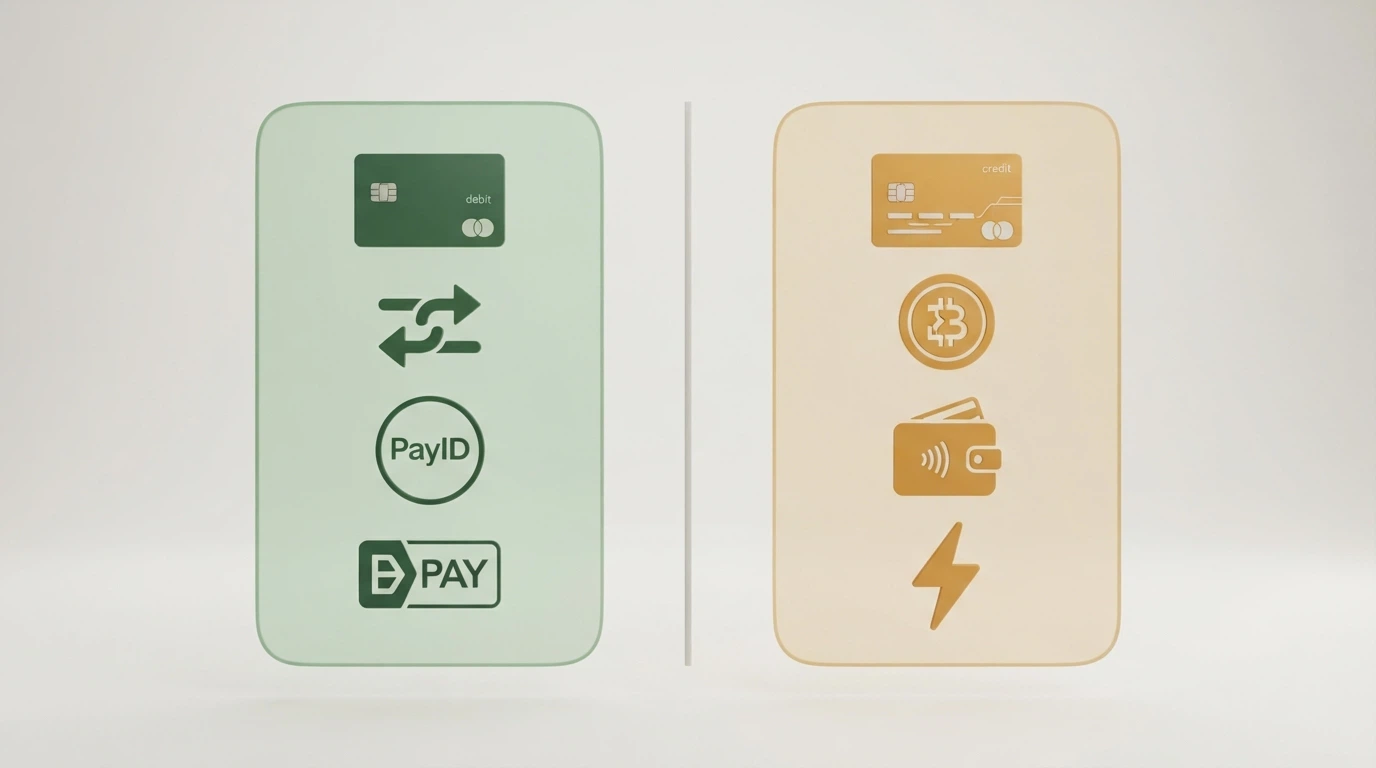
The payment methods an operator accepts are one of the clearest signals of whether it is licensed in Australia. The licensed Australian wagering market accepts debit cards, bank transfers, PayID/Osko and BPAY. It does not accept credit cards, credit-related products or cryptocurrencies — those payment methods have been banned for online wagering since 11 June 2024. Offshore casinos that target Australian players accept credit cards, e-wallets like Skrill and Neteller, bank transfers and cryptocurrencies including Bitcoin, Ethereum and Litecoin. The difference in payment rails is not a preference choice; it is a regulatory tell.
Deposit methods: what offshore sites accept from Australian players
The offshore mix runs through Visa and Mastercard, Skrill and Neteller, bank transfer and cryptocurrencies including Bitcoin, Ethereum and Litecoin. The licensed Australian mix runs through debit cards, bank transfers, PayID/Osko and BPAY. Credit cards and cryptocurrencies are banned for online wagering under the Interactive Gambling Amendment (Credit and Other Measures) Act 2023, and the ban took effect on 11 June 2024. A site accepting a credit card or a crypto wallet from an Australian player is operating outside Australian rules. The site may still accept the deposit — the player is not prosecuted under the IGA — but the acceptance is itself the regulatory tell.
Payout speed and withdrawal methods
KYC verification is the first friction point on withdrawal. The operator asks for a driver’s licence or passport, a recent utility bill and sometimes a selfie. The verification window runs from 24 hours to 5 business days. Once verification is cleared, the withdrawal method is typically limited to bank transfer or the e-wallet used for deposit — crypto withdrawals can be faster, but they are also the withdrawal method the licensed market has banned. The practical gap between clearing wagering and receiving the cash can run several days, and no Australian complaints body exists to escalate a refused withdrawal. The ACMA cannot recover money from an offshore operator, and the offshore operator’s own terms govern what happens next.
PayID, crypto and the payment rules that signal an unlicensed operator
PayID and Osko are legal Australian instant-payment rails. They are available to licensed wagering operators. BPAY is a licensed-AU-only rail as well. Their presence on a site’s cashier page is a positive signal — the operator is connected to the Australian banking system in a regulated way. Their absence is a softer signal — the operator may still be licensed but may simply not have integrated the rails. The harder signals are credit card acceptance and crypto acceptance. Both are banned for licensed Australian wagering. From 1 January 2027, banks and payment providers gain express authority to block transactions to illegal gambling operators, which will tighten the friction further. The practical litmus test today is the payment page: a site accepting a credit card or a crypto wallet from an Australian player is operating outside Australian rules.
How We Evaluated These Operators
The operator set on this page was drawn from independent traffic and market-share data for Australian-facing offshore casinos. Each operator’s market position was confirmed against that data. Each operator’s legal status was checked against the ACMA register and against state and territory licensing databases, and the result of that check is the same for every operator in the set: offshore, no Australian licence. The product the operators offer is prohibited to provide in Australia under the Interactive Gambling Act 2001, and no licence exists at any level of Australian government for an online casino.

The bonus terms came from publicly available affiliate listings and, where accessible, from the operators’ own sites. The research confirmed bonus terms for one operator in the set — Royal Reels, whose deposit welcome bonus at 30× to 40× wagering with an A$200 maximum cashout and a 7-to-14-day expiry was published in public affiliate listings. The other nine operators’ bonus terms were not confirmed in this research. The methodology does not apply a proprietary scoring weight or ranking system to the operators. The ranking is by market share. The market share is traffic data. The legal status is regulatory data. The bonus terms, where confirmed, are affiliate-listing data. The reader looking for a no-deposit free-spins offer at any operator in this set should treat the operator’s own terms page as the governing document and should verify the current terms directly before registering.
What You Should Actually Do About No-Deposit Free Spins
The mechanics, the law and the numbers all point the same way. A no-deposit free-spins offer is free to claim. The wagering multiplier, the cashout cap and the validity window are what decide what survives to withdrawal, and they are written to keep the survivor count low. The worked example the page carried earlier — fifty spins at A$0.20 per spin, an A$8 win, an A$280 turnover target at 35× wagering, an expected loss of approximately A$9.21 across the wagering at 96.71% RTP — is the offer’s cost in expected terms. The cashout cap voids anything above A$50 to A$100 on most no-deposit offers. The combination is what the marketing copy is not designed to surface.

The honest trade-off is that a no-deposit free-spins offer costs nothing to claim and is unlikely to return anything material to withdraw. A player who treats it as a free chance to study how a platform handles promotions has read the offer correctly. A player who treats it as a path to a real-money win has not. The practical checklist before claiming is short: read the wagering multiplier, check the cashout cap, note the validity window, confirm the eligible games. If any of those four numbers is missing from the terms page, the offer is not ready to evaluate. A player should never deposit to chase a bonus balance. The licensed-AU alternative does not exist for online pokies — that is the central fact the page opened with, and it is the fact that closes it.
Why the “free” in no-deposit free spins is misleading
The word “free” describes the entry price, not the exit cost. The worked example on this page made the gap concrete. Fifty spins at A$0.20 each carry a A$10 starting face value, and a typical A$8 win on the round requires A$280 of wagering at a 35× multiplier. The expected loss across that wagering at 96.71% RTP is approximately A$9.21 — a statistical estimate across many spins, not a guaranteed outcome. The A$50 to A$100 cashout cap voids anything above it, so a player who wins A$500 on the spins but clears only enough wagering to qualify for withdrawal walks away with A$50. The combination of a high wagering multiplier, a low cashout cap and a short validity window means the offer is designed so few players withdraw anything. That design is what the marketing copy does not surface.
What to do instead: approaching pokies with your eyes open
If a player wants to gamble online in Australia, the licensed alternative is races and sport, pre-event only, with BetStop coverage, deposit limits and an Australian complaints body. Online pokies are not available inside the licensed Australian system, and every offshore operator carries the risks this page has catalogued. A player who chooses to play offshore should set a hard limit on what they deposit before they deposit it, should read the bonus terms before they claim any bonus, and should know that the ACMA cannot recover money from an offshore operator and the operator’s own terms page is the only governing document.
The responsible-play reminder is the page’s closing note, and it is the part the marketing never prints. The National Gambling Helpline is 1800 858 858 — free, confidential and staffed 24/7. Gambling Help Online runs live chat and email counselling. Gambler’s Help runs a Youthline at 1800 262 376 for younger players and the people around them. BetStop lets a person exclude themselves from every licensed Australian wagering service with a single registration. More than 3.32 million Australians are experiencing some form of gambling harm. The number is not theoretical. The page opened with the prohibition on online pokies in Australia. The prohibition is a fact, and the support services are a fact, and the two facts together are the context every no-deposit free-spins offer sits inside.
Frequently Asked Questions
Do I need a bonus code to claim free spins no deposit in Australia?
No-deposit free-spin offers at offshore casinos targeting Australian players typically credit automatically once registration and verification are complete, though some operators route the bonus through a support request or a designated cashier tab. The marketing page and the operator’s terms page are the two places to check, and if a code is mentioned anywhere on the page it is published openly rather than handed out via affiliate channels.
Can I win real money from free spins without making a deposit?
Real money is what the cashout section of a no-deposit offer can produce, after the wagering requirement is cleared and within the cashout cap. The cap typically runs from A$50 to A$100 on most offers, and any amount above the cap is voided regardless of what the spins produced. A handful of players clear the wagering; most do not.
What happens if an online casino is not licensed in Australia?
The site is operating outside Australian law under the Interactive Gambling Act 2001. The ACMA can direct Australian ISPs to block it, and the ACMA has blocked 1,564 illegal gambling and affiliate websites since November 2019. The player is not prosecuted, but the player has no Australian complaints body to escalate a refused withdrawal, no BetStop coverage, and no recourse if the operator voids a win or closes the account.
Which online pokies can I play with free spins in Australia?
No-deposit offers name a short roster of eligible titles, and the eligible-game list is published in the bonus terms. Big Bass Bonanza by Pragmatic Play, at 96.71% RTP, and Wolf Gold by Pragmatic Play, at 96.01% RTP, are the two titles with confirmed specifications in research. Most other titles in the typical free-spin roster do not surface with per-title data.
How much can I withdraw from no deposit free spins winnings?
A typical no-deposit bonus carries a maximum cashout of A$50 to A$100. Some operators cap at A$20, and a small number of VIP programmes push the cap to A$200. A common rule is five times the bonus value, which puts a A$10 credit at a A$50 maximum. The cap is fixed in the terms the player agreed to at registration.