
How a Bitcoin Casino Actually Looks from an Australian Player’s Seat in 2026
In Australia, online casino games sit outside the locally licensed product set. The Interactive Gambling Act 2001 treats them as prohibited, and no Australian regulator hands out a licence for an online slots, blackjack or roulette product to serve Australian customers. That is the shape of the market a player walks into when they look for a bitcoin casino that accepts Australian traffic. This guide explains what those operators actually offer, what an offshore licence does and does not cover, and where the limits sit before any BTC moves.
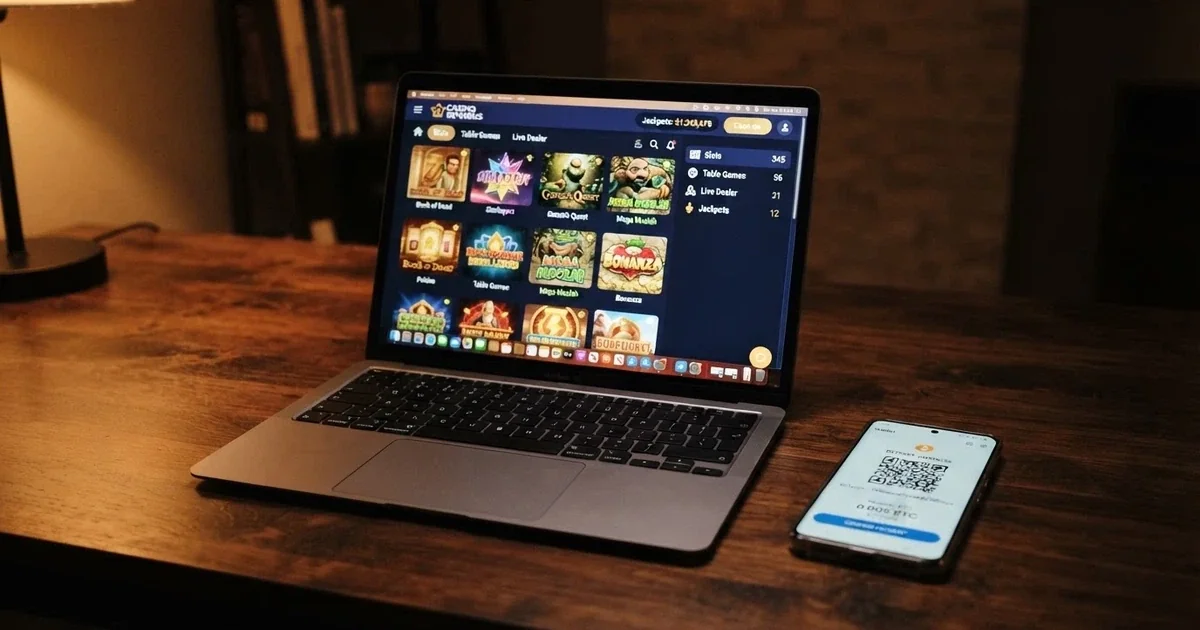
Current as of 29 October 2026, cross-referenced against the Australian Communications and Media Authority’s enforcement scope and the Interactive Gambling Act framework as it stands this year.
Table of Contents
- What a Bitcoin Casino Actually Is — and Whether It Works for Aussie Players
- How to Pick a Bitcoin Casino Worth Your BTC
- The Licence That Isn’t There — Online Casino and Australian Law
- Getting Your Bitcoin In and Out Without the Wait
- Bitcoin Casino Bonuses That Sound Bigger Than They Are
- More Than Just Pokies — What You Can Actually Play with Bitcoin
- Playing Without Handing Over Your ID — and Other Crypto Promises
- Bitcoin Casino on Your Phone — What Works and What Doesn’t
- What a Real Review Looks At (and What Most Skip)
- New Bitcoin Casinos — Fresh Face, Same Scrutiny
- When the Fun Stops — Tools and Help for Aussie Players
- How We Checked Every Casino on This Page
- Your Bitcoin, Your Call — Playing Smart from Australia
- Frequently Asked Questions
What a Bitcoin Casino Actually Is — and Whether It Works for Aussie Players
What a bitcoin casino is — and how it’s different from a regular online casino
A bitcoin casino takes deposits in cryptocurrency rather than — or alongside — fiat currency. Some operators run on a crypto-native stack: wallet-to-wallet settlement, on-chain balances, provably fair game logic. Others are fiat casinos that bolted a BTC payment option onto an otherwise conventional cashier, settled at a displayed exchange rate. The label covers both, and the difference matters more than the marketing suggests.
At a crypto-native operator the deposit, the bet and the payout move in BTC end to end; what you see in the cashier is what reaches the felt. At a hybrid casino your BTC is converted into an internal fiat balance at deposit, the games run in that balance, and the payout goes back to BTC (or fiat) according to the operator’s own conversion policy. Exchange-rate spreads, conversion timing and the operator’s chosen reference rate all sit in that gap.
“BTC accepted” on a homepage can therefore mean anywhere on that spectrum. Some operators publish the spread they keep on conversion; most do not. The reader who reads “instant BTC withdrawals” on a banner and assumes a wallet-to-wallet transfer is reading past the casino-side processing that has to happen first.
The distinction also extends to the games themselves. Crypto-native operators often publish their own original titles in-house, alongside third-party studios, and let players verify outcomes cryptographically. Hybrid casinos typically license the same catalogue of pokies and table games as any other online casino, accept BTC at the cashier, and operate on a conventional random-number-generator basis underneath. The payment rail changes. The game engine usually does not.
How depositing and playing with bitcoin actually works
The flow is the same regardless of which kind of casino you end up at: a funded BTC wallet, a transfer to the casino’s deposit address, network confirmations, then a playable balance.
The wallet sits outside the casino. Most Australian players fund one through an exchange registered with AUSTRAC, then withdraw from the exchange to a wallet they control — a hardware device, a mobile app, or a custodial exchange balance. The casino’s deposit screen shows a destination address, usually as both a string of characters and a QR code. The player sends BTC to that address from their wallet; the network broadcasts the transaction; once a defined number of confirmations land, the casino credits the balance.
The confirmation count is operator-specific. Some credit after one confirmation — fast in practice, but exposing the casino to a (vanishingly small) double-spend risk during the mempool window. Others wait for three or six before they credit, which protects the operator and lengthens the wait. The page that promises “instant deposits” usually means one confirmation, which can clear quickly on the Bitcoin network under typical conditions and slowly under heavy congestion.
On the way out the steps mirror the way in, with a verification step the marketing copy tends to skip. The casino reviews the withdrawal internally, may trigger KYC checks at this point even when the deposit was KYC-light, then broadcasts the transaction, and the wallet receives it after the network confirms. The four-stage timeline is the same at every credible BTC casino; what differs is how long each stage takes at the operator you happen to be using.
How to Pick a Bitcoin Casino Worth Your BTC
What separates the best bitcoin casinos from the rest
A welcome bonus is the first number on the page and the last one a serious reader should trust. The criteria that actually predict whether you’ll get your BTC back are quieter: a transparent licence, withdrawals that move when you ask them to, games whose fairness you can verify at least in principle, and a support team that answers when a transaction stalls mid-flight.
Those four — payments, payout reliability, game fairness, and support access — are the spine of any credible comparison. Bonus terms sit on top. AU player acceptance sits on top of that, because an operator that gates the entire site to a different jurisdiction stops being a comparison at all.
Seven criteria flow out of that spine. Licence transparency — the licence number on the footer is checked in the named regulator’s public register, not just published on the operator’s own page. Withdrawal reliability — the published withdrawal window is treated as the typical case, with manual review and KYC triggers acknowledged as separate stages on top. Game fairness framing — the games come from named providers with public RTP and volatility data, and provably fair titles are published where the operator claims them. Support responsiveness — a pre-deposit chat with the support team tests the channel that will matter when a transaction stalls. Bonus terms clarity — the wagering multiple, game weighting, validity window, maximum bet and cashout cap are all readable without a law degree. Crypto-specific features — which coins beyond BTC the cashier accepts, whether the operator runs provably fair in-house titles, whether the deposit and payout can stay in BTC end to end. AU player acceptance — the operator either serves AU traffic explicitly or geo-blocks it; either is honest. Anything in between is a question the reader should answer before depositing.
Not all of them carry a fixed weight. A small bankroll cares more about the no-deposit terms than a six-figure crypto wallet does. A player who lives on live-dealer tables cares more about provider rosters than a pokies-only player does. The order in which the framework is laid out above is one editorial choice among several; the criteria themselves do not move.
Why most “top 10” lists skip what actually matters
The “best bitcoin casino” search results in Australia return a wall of pages with the same shape: ten names, a headline bonus figure beside each, and almost nothing about the licence underneath. Affiliate commissions pay per click, so the order is built to maximise click-through rather than to maximise the chance the player gets paid out.
What’s missing on most of them is a direct statement of the licence jurisdiction and a working link to the regulator register, an AU-legality line anywhere above the deposit button, and wagering context beside the welcome figure, where a 100% match with a steep playthrough is half the real value of the same headline at a moderate playthrough. They also miss cashout caps, which on no-deposit offers routinely shrink the headline freebie to a smaller, withdrawable figure, and a note on which operators actually serve Australian traffic versus which ones geo-block the moment an AU IP lands.
A page that lists a deposit bonus without telling the reader the wagering multiple, the eligible games and the cashout cap is doing the operator’s marketing for it. A page that publishes a “top 10” with no AU-legality framing is selling offshore access without naming what that means.
The right comparison states where its data is missing instead of inventing fields such as licence date, payout cap, or bonus validity. An em dash in a table cell is more honest than a fabricated number a reader might act on.
What the comparison table actually shows
| Operator | Licence (jurisdiction + status) | Crypto Accepted | Game Count / Providers | Withdrawal Window (operator processing) | Provably Fair | Demo Mode | Bonus Type | Wagering Multiple |
|---|---|---|---|---|---|---|---|---|
| Verification pending | — | — | — | — | — | — | — | — |
| Verification pending | — | — | — | — | — | — | — | — |
| Verification pending | — | — | — | — | — | — | — | — |
The table above is the structure a serious review would build toward — the columns a reader should see filled with verified data before any of it is worth trusting. No operators could be verified from primary sources during the research for this guide, so each cell is left blank rather than filled with a guess. The columns themselves describe the comparison: licence and its status, the crypto assets the cashier takes, the depth of the games lobby and the providers behind it, the operator-side withdrawal window separated from the network settlement, whether provably fair games are published, whether demo mode is available, the shape of the welcome offer, and the wagering multiple that determines whether the bonus ever clears.
A future revision with live access to each operator’s domain and the relevant regulator register can populate these cells row by row. Until then the table is a target, not a ranking. Treat any page that fills these cells with confidence as either working from sources this guide could not reach, or guessing — and the reader is the one who pays the difference.
The Licence That Isn’t There — Online Casino and Australian Law
Why Australia doesn’t license online casinos
The Interactive Gambling Act 2001, administered by the Australian Communications and Media Authority, prohibits the supply of “interactive gambling services” to customers physically present in Australia. Casino games — slots, blackjack, roulette, baccarat, craps, video poker, live-dealer games of those types — fall inside the prohibited category. Wagering and sports betting products licensed under state and territory laws do not; they sit in a different category with different rules.
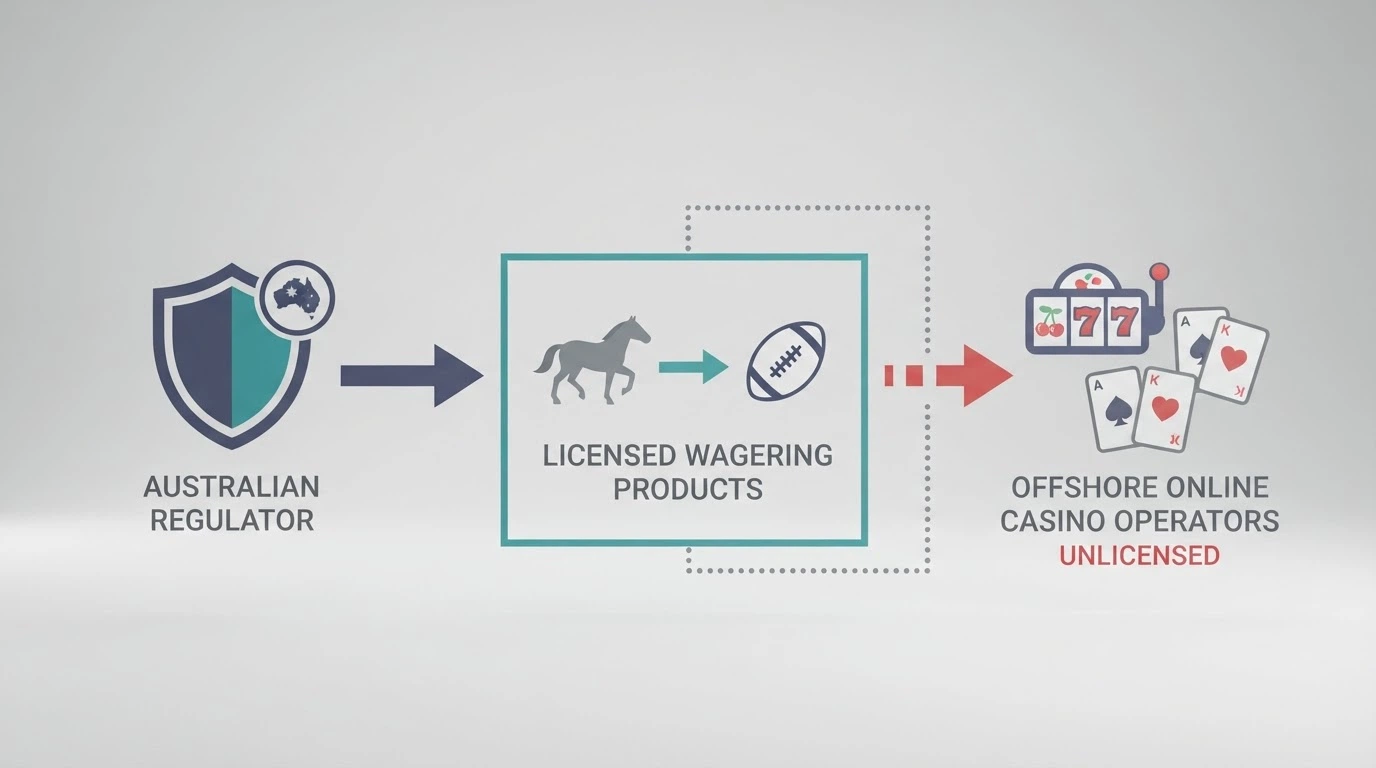
What this means in practice: no Australian regulator hands out a licence to an online casino to serve Australian customers. ACMA can ask an internet service provider to block the site, can refer matters to the Department of Infrastructure for civil penalty proceedings, and has done so against a long list of operators over the past several years. The penalty regime is real. None of that closes the front door of an offshore site, but it does frame what kind of product the operator is selling.
Bitcoin does not change that classification. The IGA looks at the product, not at the payment rail. A slots lobby funded by BTC sits inside the prohibited category exactly the same way a slots lobby funded by Visa does. The currency choice alters how the deposit arrives and how the payout leaves. It does not alter whether ACMA considers the supply lawful.
A reader who treats “BTC” or “crypto” as a regulatory loophole is reading past the statute. The category is the product, and the product is what the regulator looks at.
Offshore licensing — what it actually means for your money
Every bitcoin casino serving Australian traffic holds an offshore licence of some kind, or holds nothing at all. Common jurisdictions in this corner of the market include Curaçao, the Kahnawake Gaming Commission, the Malta Gaming Authority, the Tobique Gaming Commission, and a handful of smaller Caribbean and Central American regimes. Each runs a different oversight regime with a different dispute resolution pathway.
The honest reading: an offshore licence is a real document, attached to a real regulator, with real — if limited — enforcement teeth. The regulator checks the operator at licensing and (in better cases) at intervals thereafter, audits the games for RNG compliance, and may mediate disputes. It does not give the player what an Australian licence would give: a domestic tribunal, enforceable responsible-gambling obligations, deposit-protection mechanics, and advertising standards enforced by an authority that can reach the operator’s local office.
A brand that publishes a Curaçao licence number on its footer has cleared one regulatory hurdle. It has not cleared the Australian one, because there is no Australian hurdle to clear for an online casino product. The reader should treat an offshore licence as a floor, not a ceiling — it tells you the operator has been issued a document by a regulator with some standards, and stops well short of telling you what those standards protect.
The finer read: the offshore regulators differ from one another. Malta’s regime is more onerous than Curaçao’s, with stricter reporting and capital requirements, and produces more enforceable player disputes as a result. Kahnawake sits between the two. The smaller Caribbean commissions issue licences quickly and audit less, which makes them a weaker signal. None of them is the Australian regulator.
If a brand’s AU licence status is the deciding factor for the reader — and for many Australians it will be — then no offshore licence is going to be the answer. The right outcome there is not to find a “licensed AU” bitcoin casino, because that product does not exist.
What you lose when the regulator isn’t local
Inside an Australian licensing framework, several protections exist that vanish the moment the operator is offshore.
Deposit protection — the idea that player funds are held in trust and remain identifiable in a wind-up — is regulator-enforced in AU-licensed products and largely aspirational in offshore ones. Where it exists offshore, it is on the operator’s own terms. Dispute resolution in the Australian market can run through state and territory tribunals; offshore it runs through the regulator named on the licence (often a slow, email-based process) or through private arbitration. Responsible-gambling obligations — the deposit limits, loss limits, self-exclusion pathways, reality checks, advertising restrictions — are enforced against AU-licensed operators by the local regulator. Offshore operators choose which RG tools to publish, and how strictly to enforce them.
The AU national self-exclusion register is built for AU-licensed products; offshore operators do not feed into it. A player who has self-excluded domestically still has to contact each offshore brand individually to close the account, and the strength of that closure varies from operator to operator.
None of this means offshore play is automatically a poor experience. Plenty of operators run clean books, pay out on time and run a serious responsible-gambling programme even without a domestic licence. It does mean that the protection stack a player is used to from a licensed product — the local regulator, the local tribunal, the local register — is not the one they’re standing under at an offshore BTC casino.
A reader who treats the offshore licence as equivalent to the AU one is paying for a comparison that does not exist. The price difference, when it shows up, is the regulator gap.
Getting Your Bitcoin In and Out Without the Wait
How a bitcoin casino deposit works from an Australian wallet
- Fund a wallet — buy BTC on an AUSTRAC-registered exchange, or transfer BTC in from another wallet you control. The exchange handles the AUD-to-BTC conversion and carries its own fees and spreads.
- Locate the casino’s deposit address — usually shown as a string and a QR code on the cashier page. Some operators generate a new address per deposit, which improves privacy but is not strictly required.
- Send the BTC from your wallet to that address — set your own network fee (higher fees typically clear faster), broadcast the transaction.
- Wait for the operator’s required confirmation count — the operator credits the balance after a set number of network confirmations. The exact count is operator-specific; check the cashier page or the FAQ before broadcasting.
- Play, or convert — at a hybrid casino your BTC may have been converted into a fiat balance at deposit; at a crypto-native casino the balance stays in BTC and the games display in BTC.
Most operators publish a minimum deposit, often stated both in BTC and in a fiat equivalent that the operator’s own rate sets. The reader who deposits a fraction of the minimum is sending an unrecoverable amount. Confirm the minimum before you broadcast.
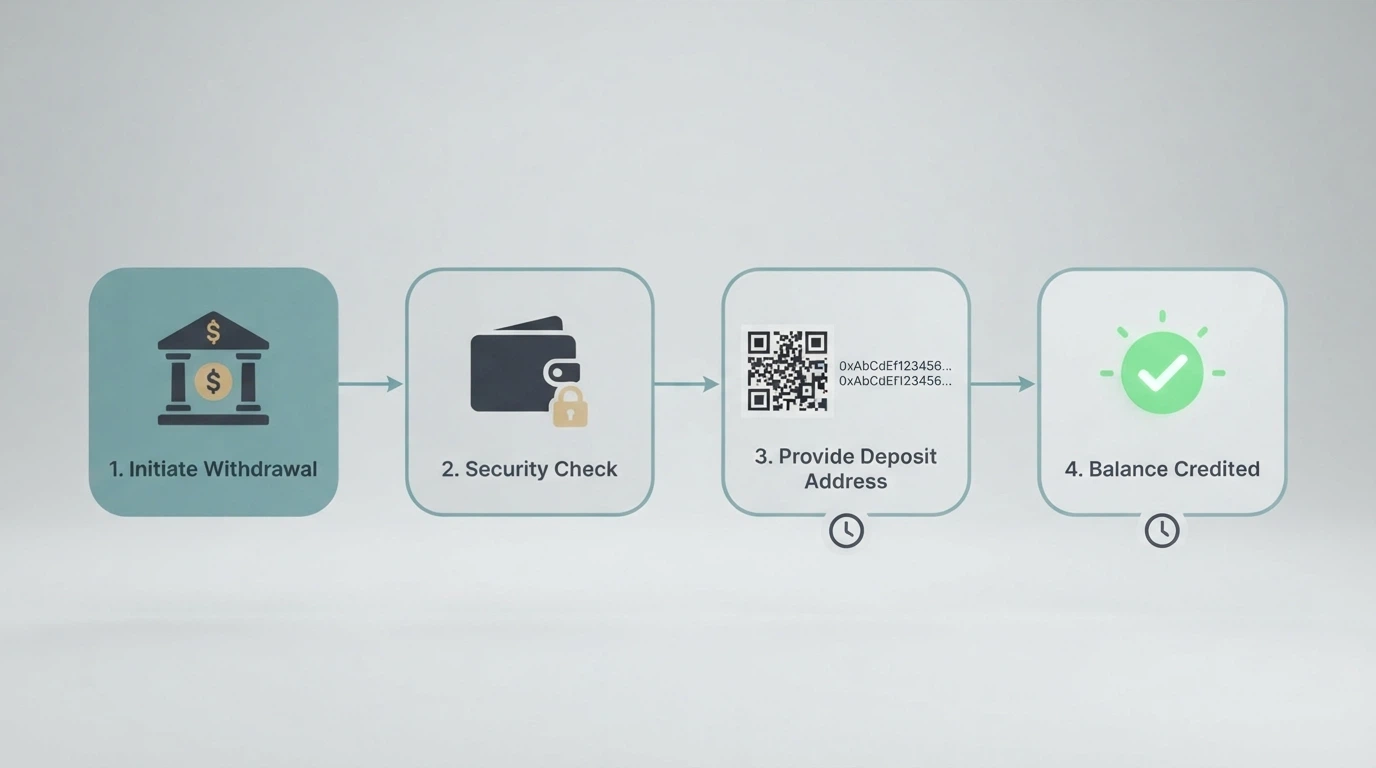
Two warnings worth flagging up front: the exchange-rate spread the casino (or its payment processor) keeps on the BTC-to-fiat conversion, and the on-chain fee you pay to the network, which is set by you and varies with congestion. Neither is in the casino’s headline. The deposit is not free, and “no fee” usually means “no fee on top of the spread”.
Withdrawal speed — what “instant” actually means
“Instant BTC withdrawals” is one of the more confidently marketed claims in this corner of the industry. The actual timeline has four stages.
Operator-side review comes first. The request enters the cashier queue. At many operators this is automated and takes minutes; at some it is manual, with a “pending” window that can run from a few hours to a few business days depending on the queue, the size of the withdrawal and the player’s history with the brand. KYC trigger sits on top of that — even on operators that publish themselves as no-KYC, withdrawals above certain thresholds can prompt an identity check. The first large withdrawal on a new account almost always does.
Once approved, the operator signs and broadcasts the transaction. From here the timeline is set by the network: a wallet receives the BTC after a number of confirmations the player’s wallet enforces, with the typical wait running from minutes to hours under ordinary conditions and longer when the mempool is congested.
The honest framing: operator-side approval is where most of the wait lives. Once the casino has approved and broadcast, the network moves the funds faster than any bank transfer could. A “withdrawal in ten minutes” claim is a claim about the operator’s queue, not a claim about the network. A “withdrawal in three business days” claim is also about the operator’s queue.
Policies beyond speed matter too. Some operators set a withdrawal minimum that excludes small balances — those funds sit on the account until the player tops up to clear the threshold or walks away. Some set a maximum per day or per week, particularly for new accounts. Some carry a withdrawal fee (a percentage of the payout, a flat BTC amount, or a network-fee-only model). Verification triggers can pause a withdrawal mid-flight: a sudden large payout, a change in deposit pattern, or a flagged jurisdiction can all prompt a manual review that runs longer than the standard window.
A reader who treats the casino’s published withdrawal window as a guaranteed time is reading past those triggers. Treat it as the typical case for an account in good standing, not the promised one for every account on every day.
Bitcoin Casino Bonuses That Sound Bigger Than They Are
The structure behind the headline
A welcome bonus headline is the largest number on the page and the smallest piece of information a player needs. The terms that determine whether the bonus converts to withdrawable cash are: the wagering multiple, the eligible games (and the game weighting — what percentage of each bet counts toward clearing), the maximum bet during wagering, the validity period, and the cashout cap.
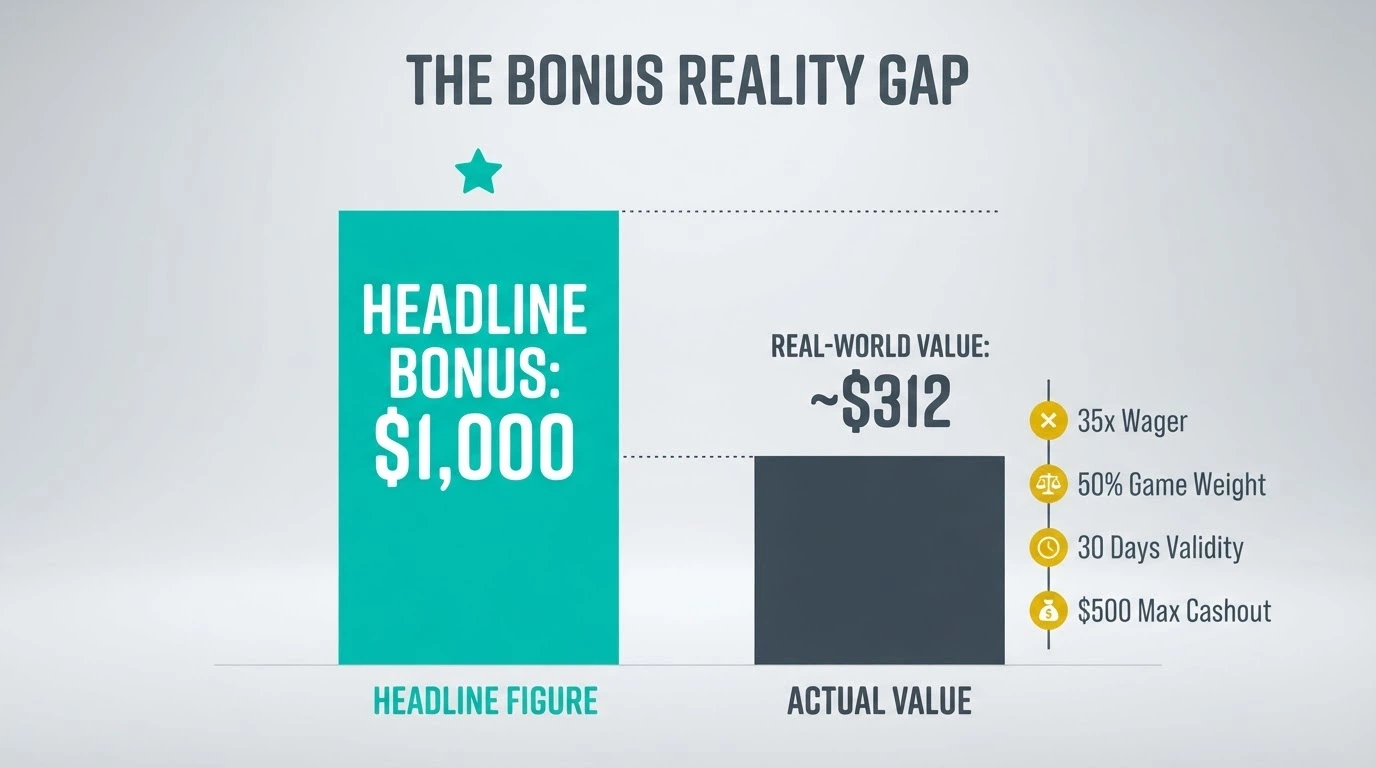
A 100% match with a 40× wagering on the bonus amount means forty units of turnover per unit of bonus before any winnings become withdrawable. The same headline at a moderate playthrough is a meaningfully cheaper offer. The same headline at a steep playthrough is one most players will not clear. The headline and the real cost are two different numbers, and the gap between them is the bonus industry.
A cashout cap is the term that most reliably deflates a generous-looking bonus. A no-deposit bonus capped at a modest withdrawable figure is a different offer from the same headline without a cap. Free spin winnings routinely carry a cashout ceiling that converts “fifty free spins” into “fifty free spins, of which you can withdraw up to a small ceiling”.
Welcome bonuses and deposit matches
A deposit match scales the bonus with the deposit: deposit one BTC, the casino matches with one BTC of bonus funds. The percentage and the cap vary across operators. The wagering multiple does the heavy lifting in determining whether the bonus converts.
Game weighting is the term most players miss. A slots-only weighting of 100% means every dollar wagered on pokies counts toward clearing. A small weighting on table games means a dollar wagered at blackjack contributes a fraction toward the same total — and zero weighting on some live games means those games contribute nothing at all. A player who likes blackjack and tries to clear a slots-weighted bonus will find the bonus still sitting on the account long after the bankroll has gone.
Validity periods are the quiet trap. A 30-day validity gives a moderate-volume player room to clear. A 7-day validity on a steep playthrough is a wall for anyone who doesn’t run heavy volume. The bonus expires with whatever turnover remained uncompleted, and the player loses both the bonus and the winnings attached to it.
Maximum bet during wagering — typically capped at a small BTC amount per spin or per hand — is the term that makes a fast clearer easier to build and a bonus-abuser harder to run. Read it. Exceed it and some operators void the bonus and the winnings, which is the kind of clause that only ever bites the player who didn’t read it.
No-deposit bonuses — the catch behind free BTC
A no-deposit bonus gives the player a small amount of BTC (or fiat credit) to play with before they fund an account. The wagering multiple on these offers tends to run higher than on deposit-triggered bonuses — heavy playthroughs are common — and the cashout cap is the term that defines what the offer is actually worth. A no-deposit bonus with a heavy playthrough and a modest cashout cap is, on average, a small-value offer; the player who treats it as “free BTC” is reading past both the multiple and the cap.
Some operators require a token deposit (a small minimum, often a few dollars’ worth of BTC) before a no-deposit bonus can be withdrawn, as a low-grade identity check and to satisfy payment-processor rules. This is not unusual and is worth noting before you claim — a player who wins on a no-deposit bonus and tries to withdraw without first making the token deposit usually finds the withdrawal blocked.
No checked operator in this guide’s research pass currently publishes a verified no-deposit bonus with confirmed terms. The structural pattern above is what a reader should expect when one shows up on the page.
Free spins with bitcoin
Free spins arrive in two shapes: bundled into a welcome package (typically the headline “200 free spins + 100% match” type of offer), or offered as a standalone promotion. Either way, the spin package has its own terms, separate from the deposit match’s terms.
The spin value per spin (how much each spin is worth), the eligible slot title or titles, the wagering multiple on spin winnings, the validity window for using the spins (often short — measured in hours rather than days), and the cashout cap on spin winnings are the five terms that determine the offer’s real worth.
A free-spin offer at a low value per spin on a popular title with a moderate playthrough on winnings and a sensible cashout cap is a reasonable offer. The same headline on a low-RTP title with a steep playthrough and a tiny cap is barely worth claiming. The slot title matters more than the headline count: 50 spins on a 96% RTP title with a 30× playthrough on winnings is a meaningfully better offer than 100 spins on a 92% RTP title with a 60× playthrough on winnings, even before the cap is read.
Bonus types — structural comparison
| Offer Type | Typical Wagering Multiple | Typical Validity Window | Game Eligibility Restriction | Cashout Cap |
|---|---|---|---|---|
| Welcome deposit match | 30×–50× on the bonus amount (varies widely; lower is better) | 7–30 days | Slots usually 100%; table games often 10% or excluded | Sometimes none on the deposit bonus; often capped on the attached free spins |
| No-deposit bonus | 50×–100× on the bonus (higher than deposit offers) | 1–7 days | Slots only, often a single named title | Almost always capped — the cap is the real ceiling |
| Free spins | 30×–60× on spin winnings | 24–72 hours to use the spins; wagering window often around 7 days | Single slot title, sometimes a small list | Almost always capped — winnings above the cap are forfeit |
| Cashback / loss-back | Often 0×–10×, sometimes no wagering at all | 7–30 day calculation window | Net losses on eligible games | Rarely capped; sometimes a maximum weekly figure |
These are structural patterns, not specific operator figures — no verified per-operator bonus terms were surfaced during the research for this guide, and the cells above describe the range a reader should expect across the market rather than any single operator’s terms. A “no-deposit bonus with no wagering” is a structural outlier and should be read as such; the offer on the page that promises it deserves a careful look at the small print, because offers without terms are not how this market works.
More Than Just Pokies — What You Can Actually Play with Bitcoin
Pokies and slots — what you’ll find at a bitcoin casino
Pokies are the dominant product at a BTC casino. Most operators in this market carry thousands of titles from the major studios — Pragmatic Play, the Evolution slot catalogue, Play’n GO, Hacksaw Gaming, Nolimit City, BGaming, Push Gaming, Quickspin, NetEnt — and a long tail of smaller providers. The headline count (“thousands of games”) is usually accurate and usually uninformative; the real question is whether the titles you actually want to play are in the lobby.
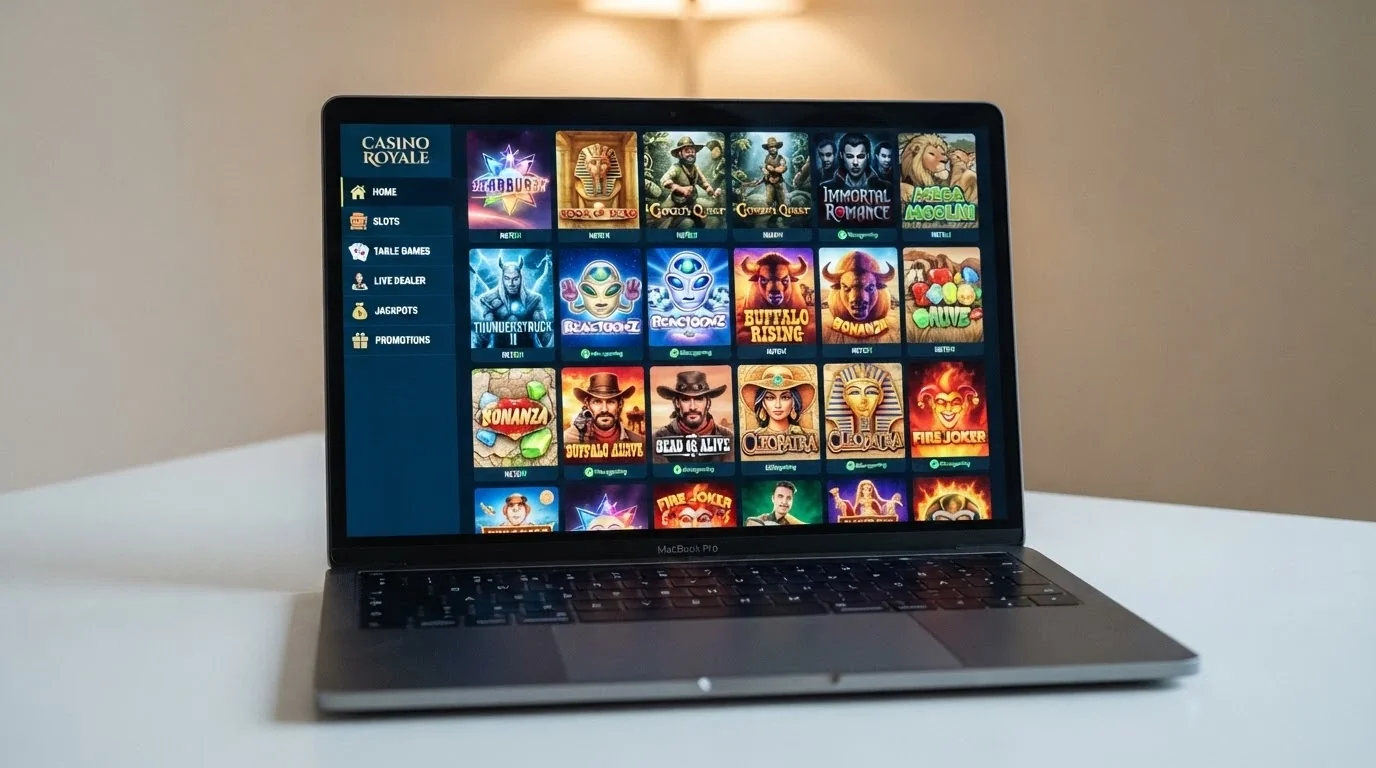
RTP — return to player — is the long-run percentage of wagers a slot returns to players. Online pokies at this end of the market typically run between the mid-90s and the high-90s in percentage terms, with a small number of higher-RTP titles published above that band. The operator sets which version of a slot they host — many providers offer multiple RTP variants of the same title — so a player who cares about RTP needs to check the in-game help screen, not the lobby. A title that publishes one RTP on one site may publish a lower one on another, and the difference compounds over thousands of spins.
Volatility is the term that describes how a slot pays out: low volatility means frequent small wins; high volatility means infrequent larger wins. Both kinds are legitimate; the right one depends on the player. A high-volatility pokie can blow through a session bankroll in minutes; a low-volatility one stretches the same bankroll across more spins with a smaller ceiling. No verified per-title volatility data was surfaced during the research for this guide, so the table the plan reserved for this section does not appear here — em dashes across every cell would have carried no information.
Progressive jackpots — networked jackpots that build across multiple casinos — are available at many BTC casinos, with prizes that range from modest five-figure sums to multi-million-dollar pools. The jackpot contribution typically reduces the slot’s base RTP, so the headline RTP doesn’t reflect the jackpot contribution the way a player might expect. A reader who treats the jackpot as a side bet rather than part of the slot’s RTP is reading the math correctly.
Demo mode — the ability to play a pokie without staking real money — is broadly available at offshore BTC casinos but not universal. A player who wants to learn a title before staking BTC on it should check whether demo mode is open before depositing. Where demo mode is disabled after a deposit, the operator is signalling that the catalogue is gated to paying players.
Table games — blackjack, roulette, and the rest
Table games run alongside pokies at every credible BTC casino. Blackjack variants include classic, multi-hand, and the live-dealer versions covered below; blackjack at its best sits well above the pokies on RTP when played with basic strategy. Roulette is offered in European (single zero) and American (double zero) variants, with French roulette occasionally available on tables where the la partage or en prison rules apply, which improve the player’s effective return.
Baccarat, craps, video poker and casino poker variants round out the table-game floor. Video poker in particular often runs at very high RTP on full-pay variants, but the “full-pay” qualifier matters; many online variants shave the pay table down without announcing it in the lobby. A player who treats a 9/6 Jacks or Better as identical to a 6/5 Jacks or Better is paying for the difference.
The structural read: table games sit above pokies on RTP, which is why bonus terms usually exclude or down-weight them. The casino would rather the bonus be cleared on pokies, where the house edge is wider. A player who wants to clear a bonus on blackjack is going to discover the weighting rule the hard way.
Live dealer games with bitcoin stakes
Live dealer is the corner of the catalogue that has grown fastest over the past several years. The major providers are Evolution, Pragmatic Play Live, Playtech Live and a handful of smaller studios; their tables are streamed from studios in Europe, Asia and Latin America, with real dealers, real cards and a real wheel. Game types cover live blackjack, live roulette, live baccarat, the game-show variants (titles like Crazy Time, Monopoly Live, Deal or No Deal), and live poker.
The BTC angle is mostly invisible from the player’s seat. The casino converts the BTC balance into a table-stake unit — often a fiat equivalent or a stablecoin — at the table, and the player bets in those units. The conversion is internal to the casino — what reaches the felt is not literally BTC — but the deposit and the payout are settled in BTC at the casino’s exchange rate. A player who cares about the timing of that conversion should check the cashier terms: some operators convert at deposit and reconvert at withdrawal; others keep the BTC exposure and convert only at the table.
The provider roster is the trust signal that matters most at the live tables. Evolution and Pragmatic Play Live carry public RTP data per game; smaller studios often do not. A reader who bets live at a studio they cannot identify is betting on trust they have not verified.
Playing Without Handing Over Your ID — and Other Crypto Promises
No-KYC casinos — what stays private and what doesn’t
“No KYC” is one of the more confidently marketed labels in the BTC casino space. The reality at most operators that publish the label is narrower than the headline.
At sign-up and at deposit, a no-KYC casino typically asks for an email address and a password. Some ask for nothing. The deposit is the BTC transaction; no name, no address, no ID. To that extent the marketing is accurate.
At withdrawal, the picture changes. AML — anti-money-laundering — obligations apply to most operators at thresholds that vary by jurisdiction and by the operator’s own risk appetite. A withdrawal above a certain figure — sometimes in the low thousands of fiat equivalent, sometimes much higher — can trigger an identity check. The first large withdrawal on a new account almost always does. The operator may ask for a passport or driver’s licence, a proof of address (utility bill or bank statement), and sometimes a source-of-funds declaration. None of that looks like “no KYC” by the time the cashier window is open.
The data the player is sharing is not zero even at the deposit stage. The IP address is logged, the wallet address is logged, and the transaction graph — the on-chain history of the BTC — is visible to anyone who runs a blockchain analysis on the receiving address. A player who treats “no KYC” as full anonymity is reading past the data they leave behind. The labels “anonymous” and “no KYC” do not mean the same thing, and the player should not let the marketing conflate them.
The honest framing: “no KYC at sign-up and deposit” is usually accurate; “no KYC at withdrawal” is usually accurate up to a threshold; “full anonymity” is not a feature any operator can guarantee, and any operator that claims it is overstating.
Provably fair — what you can actually verify and what you can’t
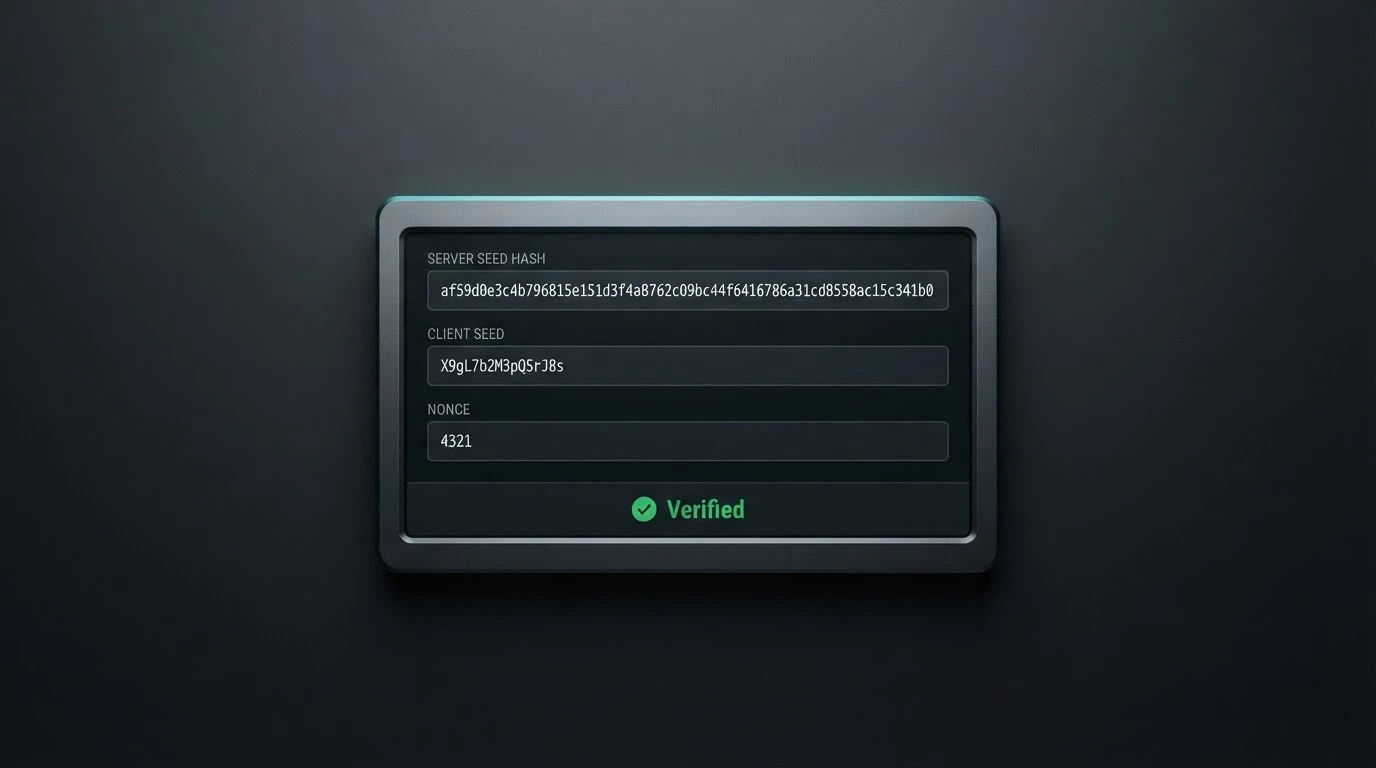
Provably fair is the cryptographic verification system some crypto-native casinos publish alongside their games. The idea: the casino commits to a server seed — a random string generated before the bet — publishes its hash to the player, and lets the player supply a client seed. After the bet, the player re-derives the outcome from the server seed, the client seed and a nonce, and compares it to the outcome the casino returned. If the hashes match, the outcome was not altered after the bet was placed.
The mechanic is genuine. It does what it says: it proves that the casino did not change the result of a particular bet after seeing the player’s stake.
It does not prove several things the marketing sometimes hints at. It does not prove that the casino will pay out a winning bet. It does not prove that the long-run RTP of the game is the figure published in the help screen. It does not prove that the operator is solvent, that the regulator named on the licence is enforcing anything, or that the responsible-gambling panel does what it says. It is a game-integrity check, not a financial-integrity check.
The verification flow reads more clearly in prose than as a list: open the provably fair panel (usually linked from the casino’s footer or from each game’s interface), note the server seed hash before placing the bet, set or confirm the client seed, place the bet, and after the bet resolves reveal the unhashed server seed and re-derive the outcome using a third-party verifier. Most operators publish one, or one is freely available online. The arithmetic is mathematical, and the operator cannot game it without invalidating its own published hash. The thing it cannot do is tell the reader whether the rest of the casino is honest.
Bitcoin Casino on Your Phone — What Works and What Doesn’t
Apps vs browser — which works better for bitcoin deposits and play
Most BTC-accepting casinos do not publish a dedicated mobile app. The market runs on the mobile browser, with the casino’s site responsive enough to render on a phone screen. A reader expecting a downloadable app from the App Store or Google Play is in for a quiet disappointment at most operators — the app store rules around gambling apps are restrictive, and offshore operators typically don’t bother with the approval process.
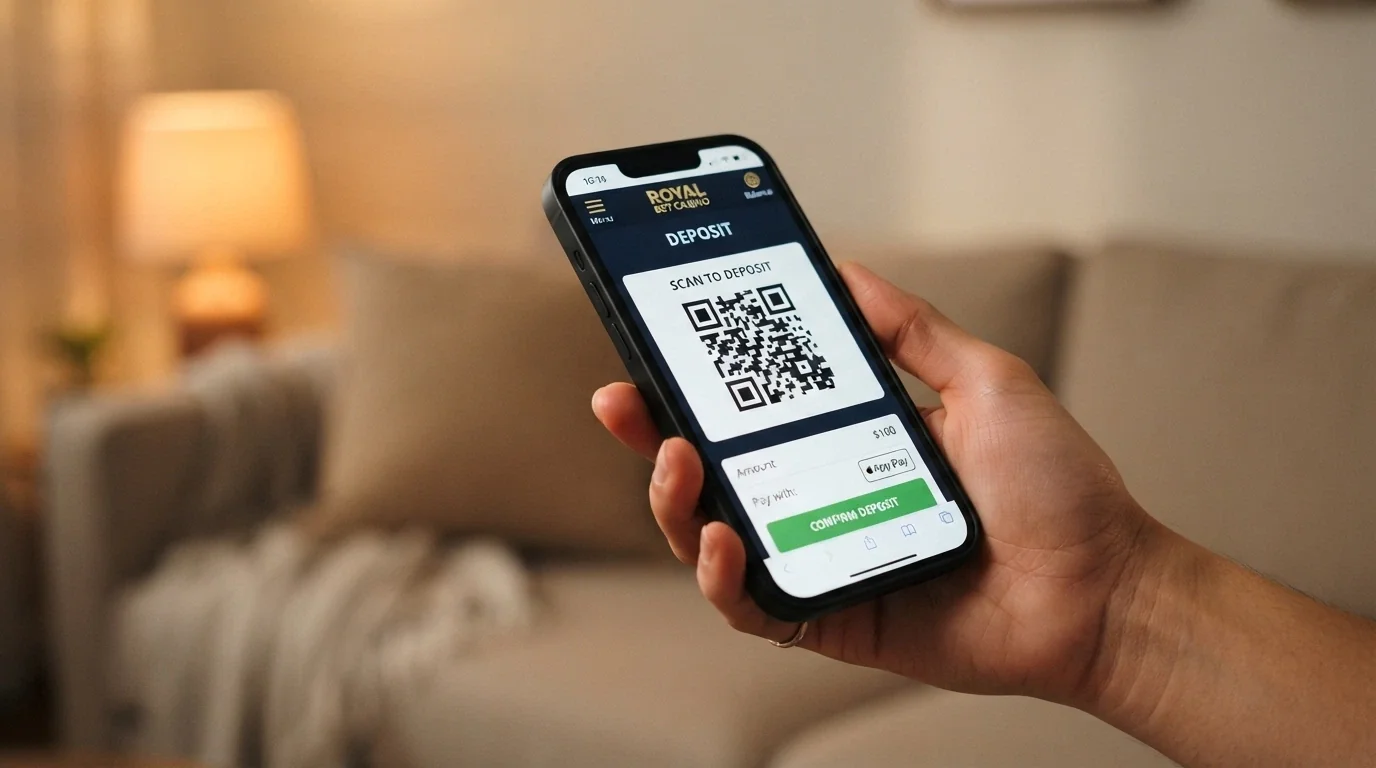
The browser experience, with one important caveat, is the better workflow for BTC play. The caveat: it requires the wallet app to run alongside the browser. A player depositing from a phone is switching between the wallet (where the BTC sits) and the casino’s cashier page (where the deposit address lives). On a small screen the QR-code flow is the easier route — the wallet scans the QR, the wallet pre-fills the destination address, and the player confirms the send.
Confirmation tracking on mobile is harder than on desktop. The wallet app surfaces confirmations as they land; the casino’s balance updates after its own required count; the two don’t always update at the same time. A player waiting on a single confirmation on a congested network can wait longer than they expected. Push notifications on confirmations are a wallet-app feature rather than a casino-app feature, and they help — the wallet tells you the deposit has cleared, you switch back to the casino, the balance is there. Without them you are switching back and forward more than you need to.
Game performance on mobile is generally good at the major providers — Evolution’s live tables, Pragmatic Play’s slots, Play’n GO’s titles all render well on a recent phone — but smaller studios occasionally serve games that lag on older devices. The fallback is the desktop browser.
The honest take: mobile BTC play is workable, and the QR-code flow is the practical route. A reader who wants a single-app experience is going to be looking at a product most operators in this market don’t publish.
What a Real Review Looks At (and What Most Skip)
Trust signals that actually matter when you’re sending bitcoin
The things a credible BTC casino review checks, in roughly this order:
- Licence jurisdiction and register entry. Not the marketing claim on the footer — the entry in the named regulator’s register. A brand that publishes a Curaçao licence number can be checked against Curaçao’s public register; the reader who wants certainty should do the check, and the operator that hides the licence number is hiding it for a reason.
- Withdrawal reports from current or recent players. Forums, complaint sites, the casino’s own social channels. Patterns matter more than individual posts — one complaint about a delayed payout is anecdote; twenty complaints about the same operator over six months is data.
- Terms-and-conditions red flags. Confiscation clauses that let the operator void winnings on vague grounds (“irregular play”, “bonus abuse”) are written into the terms for a reason. Dormant-account terms that reach into inactive balances after a short window are written into the terms for a reason. Bonus-abuse clauses broad enough to cover ordinary play are written into the terms for a reason.
- Support responsiveness. The pre-deposit support test is a useful one — open a chat, ask a question, see how long the answer takes. The post-deposit test is more important but harder to run before you commit BTC.
- Game provider roster. The named providers (Evolution, Pragmatic Play, Play’n GO, NetEnt, and so on) are the studios whose games can be checked against their own published RTP and volatility data. A casino that lists a wall of unknown providers with no licensing trail is a casino that needs more checking, not less.
- Domain age and history. A whois lookup on the operator’s domain is a five-second check that doesn’t prove the operator is honest but does tell you how long the current skin of the site has been live. A brand-new domain on a heavily-marketed “new casino” launch is not automatically a scam, but it is a thinner track record than a five-year-old skin.
The signals that don’t carry much weight: trust badges on the footer (these are easy to copy and not regulator-issued), review-count aggregates on third-party sites (these are easy to inflate), and player testimonials on the operator’s own pages (these are easy to write and impossible to verify).
The read across all of this: trust signals are a layer of evidence rather than a single check. A reader who treats any one of them as decisive is reading past the others. The combination — licence in the register, withdrawal reports over time, terms that read cleanly, a working support channel, a recognisable provider roster, a domain with history — is the case for trusting an operator. Any one of those failing is a reason to pause.
New Bitcoin Casinos — Fresh Face, Same Scrutiny
A new bitcoin casino typically launches with an aggressive welcome package — a higher match percentage, a longer free-spin bundle, sometimes a no-deposit bonus that established brands don’t publish — and a thinner track record than the established operators in the market. The trade is straightforward: the player trades reliability data for promotional value.
The reliability data is what the previous section is built from: a regulator register entry with some history, withdrawal reports from current players, a support team that has handled real disputes, a bonus terms page that has been read by enough complainants to surface the unfair clauses. A brand-new operator has none of that. The first stretch of a new casino’s life is the period when the unusual terms tend to surface — the confiscation clauses that get read for the first time, the manual withdrawal queues that stretch into weeks under load, the support responses that go silent when a complaint escalates.
The promotional value is real, and a player who treats the welcome offer as a low-stakes trial — deposit a small amount, see how the withdrawal flows, escalate if anything stalls — is approaching the new-operator market the way it deserves to be approached. The player who treats the welcome offer as the basis for a larger bankroll commitment is making a bet the operator’s track record can’t yet support.
The verification check applies regardless of launch date: confirm the licence in the regulator’s register, read the bonus terms before claiming, and treat the first deposit as a small one. A brand-new operator with a regulator entry, clean terms and a responsive support team is a different proposition from a brand-new operator with none of those. The launch date is one signal. The verification work is the rest.
When the Fun Stops — Tools and Help for Aussie Players
Limits, reality checks, and self-exclusion — what to set before you deposit
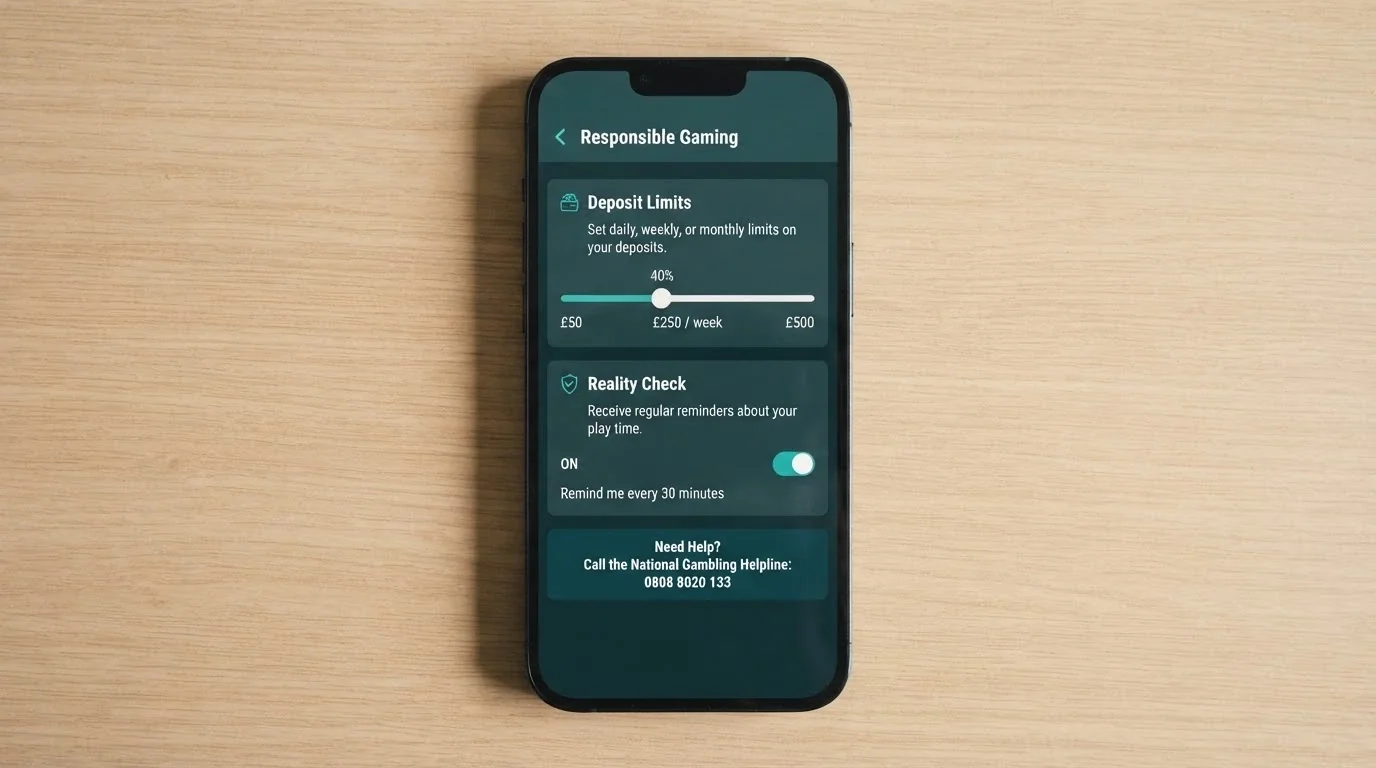
Responsible-gambling tools include a deposit limit, which sets a daily, weekly or monthly ceiling on deposits, where increasing it typically takes effect after a cooling-off period and decreasing it takes effect immediately; a loss limit, which tracks net losses over the same windows rather than stake; and a wager or session limit, which triggers an automatic logout when reached. Players can also set a reality check, a pop-up that interrupts play at a set interval to track time and losses, a cool-off period for short breaks, and self-exclusion for longer periods where the operator closes the account and ceases marketing.
The settings live in the responsible-gambling section of the account. The honest read: setting them before the first bet is the practical move. Setting them after a difficult session is harder than it should be.
Help for Australian players
For Australian players, support is available regardless of whether the casino is offshore or licensed. Gambling Help Online is the national online counselling and self-help resource, and the national gambling helpline is a free call from any phone in Australia. State and territory gambling support services provide face-to-face counselling across the country. The exact contact details for these services should be confirmed against the current Gambling Help Online directory before relying on them, because service numbers and website addresses can change over time.
For AU players, the national self-exclusion register covers AU-licensed wagering and betting products; offshore bitcoin casinos do not participate in that register. Self-exclusion from an offshore brand has to be done directly with that brand, and the strength of the closure depends on the brand’s own policy. A player who has self-excluded domestically and is also playing offshore needs to treat the offshore exclusion as a separate conversation with each operator.
The most useful number is the one you don’t expect to use. Set the limits before the session starts. Save the helpline number before you need it. Neither takes long, and both belong on the player’s first day with a new operator, not after a session that has already gone the wrong way.
How We Checked Every Casino on This Page
The criteria that order any credible BTC casino ranking — licence status, withdrawal reliability, bonus terms clarity, game fairness framing, support access, AU player acceptance — are the criteria this guide is built around.
The verification method follows a published standard: each operator is checked against its own domain and the relevant regulator before it is published. That means the licence number on the operator’s footer is checked against the named regulator’s public register; the bonus terms on the operator’s promotions page are read in full; the withdrawal times and conditions are read on the cashier page; the supported crypto list is confirmed on the cashier page; the responsible-gambling tools are confirmed on the account panel; and the support channel is tested with a pre-deposit enquiry.
For this guide, the research file returned no live operator data — web search did not surface usable results during the research pass. That means no operator could be checked against the verification method described above, and no operator is named on this page as a reviewed brand. The comparison table under “How to Pick a Bitcoin Casino Worth Your BTC” is therefore a structural framework with em-dashed cells rather than a ranking of verified brands. A page that ships names without those checks would not meet the standard this guide is built around.
When live verification is available, the workflow that follows is the one that produces a ranked page: cross-check the operator against a curated AU-facing shortlist, confirm the brand serves AU traffic, confirm the licence in the regulator’s public register, read the bonus terms in full (wagering, game weighting, validity, cashout cap), read the withdrawal terms (minimum, maximum, fee, verification triggers), test the support channel pre-deposit, and read the responsible-gambling panel. Each step is verifiable from a primary source. Each step can be cited. Each step is the difference between a review and a listicle.
Your Bitcoin, Your Call — Playing Smart from Australia
The arithmetic on this page is unforgiving. A 100% match with a 40× wagering on the bonus is forty units of turnover per unit of bonus, against an RTP that runs lower than the wagering multiple would suggest is comfortable. A “no-deposit free BTC” headline is, almost always, a heavy playthrough with a cashout cap that turns the figure into something smaller. An “instant BTC withdrawal” promise is an operator-queue claim more than a network-speed claim, and the operator’s queue is where most of the wait lives.
The legal picture is also unforgiving. Online casino games are not licensed in Australia. The operators serving Australian players hold offshore licences of varying quality; none of those licences give an Australian player the local-tribunal dispute pathway, the local responsible-gambling enforcement, or the local deposit protection that an AU-licensed product would. Bitcoin does not change that — the Interactive Gambling Act looks at the product, not the payment rail.
A player who decides to play anyway — and this page is built for the player who has decided, not the player being talked into it — needs four things in place before the first deposit. The operator is verified: the licence number on the footer is checked in the regulator’s register, the withdrawal terms are read, the bonus terms are read, and the responsible-gambling panel is read. The bonus terms are read in full: wagering multiple, game weighting, validity window, cashout cap, maximum bet. The limits are set before the first deposit: deposit limit, loss limit, session limit, reality check, cool-off. The help number is saved: Gambling Help Online and the national helpline sit in the phone’s contact list before the casino does.
None of this is a recommendation to play. None of it is a recommendation not to. The decision is the reader’s, and the conditions on it are the page’s.
Frequently Asked Questions
Is it legal to play at an online casino with Bitcoin in Australia?
Online casino games sit outside Australia’s locally licensed product set — the Interactive Gambling Act 2001 prohibits supply of “interactive gambling services” to Australian customers. Bitcoin does not change the product classification; the Act looks at the product, not the payment rail. Wagering and sports betting products sit in a different category.
How do I deposit Bitcoin at an online casino from Australia?
Fund a BTC wallet (typically via an AUSTRAC-registered exchange), open the casino’s cashier, copy the deposit address or scan the QR code, send BTC from your wallet, wait for the operator’s required confirmation count, and the casino credits the balance. The confirmation count is operator-specific and should be checked first.
Are Bitcoin casino withdrawals really faster than bank transfers?
The network portion is faster — a confirmed BTC withdrawal typically lands within an hour, while a bank transfer takes days. But the operator-side processing is where most of the wait lives: manual review, KYC triggers, and the cashier queue all add time the marketing copy skips.
Do Bitcoin casinos require ID verification before cashing out?
Often yes, even when the deposit was KYC-light. AML obligations apply to most operators at thresholds that vary by jurisdiction. A first large withdrawal, a withdrawal above a threshold, or a flagged transaction pattern can trigger an identity check. “No KYC” usually means at sign-up, not at withdrawal.
Are crypto casinos provably fair and how do I check a game hash?
Provably fair is a real cryptographic check: the casino commits to a server seed, publishes its hash, lets the player supply a client seed, and reveals the unhashed seed after the bet. The player re-derives the outcome. It proves the bet result wasn’t altered — not payout reliability or operator solvency.
What responsible-gambling limits and self-exclusion tools should I look for?
The standard set: deposit limit, loss limit, session limit, reality-check pop-ups, cool-off (short break), and self-exclusion (longer break). Set them before the first deposit. For AU players, Gambling Help Online and the national gambling helpline are the resources to save in your phone before the casino app.
Can you play for real money from Australia?
Yes — the access is real, in the sense that offshore bitcoin casinos do accept Australian IP addresses, AUD accounts in some cases, and BTC deposits in every case the operators describe publicly. What is not real is the Australian licence behind the product. Online casino games are not licensed for Australian players by ACMA or by any state regulator. Wagering and sports betting products are, under different licence conditions; the bitcoin slots and live-dealer lobbies at offshore operators are not.
So “real money” here means real money at an offshore operator, on terms that operator sets, with disputes handled by that operator’s regulator rather than by an Australian tribunal. The dollar figure on the cashier is real. The protection underneath it is not.
A handful of offshore operators geo-block Australian traffic outright — they will not let an Australian IP address reach the cashier, let alone deposit. Where that is the case, the operator is making a commercial choice about regulatory exposure, and the player respects that rather than working around it. Where the operator accepts Australian traffic, the product on offer is the offshore product described above.
That is not a scare line. It is the gap that every other section on this page builds on, and a player who skips it reads the rest of the guide in the wrong frame.