
Twenty Dollars at the Door: What Australian Players Get From a $20 Minimum-Deposit Casino
Every offshore casino serving Australian players shouts about its $20 minimum deposit. The number is real. The protection behind it is not.

This page ranks the ten offshore operators Australian players most often reach when funding a $20 AUD bankroll, lays out the payment methods that work at that threshold, names the pokies where $20 lasts the longest, and states plainly the legal reality that sits behind every “deposit now” button on this list. The Interactive Gambling Act 2001 prohibits providing online casino games, including online pokies, to anyone in Australia. No licence for the product exists here. Every operator ranked below is offshore, none is connected to BetStop, and none offers Australian consumer protection. Reading the bonus terms first matters, but reading the enforcement record matters more.
Current as of 22 November 2026. Operator and licence claims verified against the ACMA register and the Interactive Gambling Act framework.
Table of Contents
- The $20 Deposit Threshold: What Australian Players Actually Get
- AU Players’ Real Choices: Ten Offshore Casinos, Ranked and Fact-Checked
- How Your $20 Arrives: PayID, Cards and the Payment-Method Tell
- Pokies That Stretch a $20 Bankroll Past 100 Spins
- 73% of Australian Sessions Are Mobile — and $20 Deposits Are No Exception
- New $20 Deposit Casinos Worth a Look in 2026
- No Australian Licence, No Local Protection: The Offshore Reality
- Staying in Control: RG Tools and Why BetStop Won’t Help Here
- How We Selected and Ranked Every $20 Casino on This Page
- Your $20 Deposit in 2026: What the Numbers Actually Say
- Frequently Asked Questions
The $20 Deposit Threshold: What Australian Players Actually Get
A $20 minimum is not a low floor. It sits in the middle of the deposit range most offshore casinos use to catch Australian players — typically $10 to $30. Operators choose $20 specifically because it reads as approachable without actively being cheap. There is no regulatory reason the number lands where it does: it is a marketing hook, not a genuine cost-of-service minimum.
The threshold lines up neatly with where the popular pokie minimum bets cluster. Most online pokies accept $0.10 to $0.20 per spin. At the top of that range, a $20 bankroll buys exactly 100 spins — enough to see a free-spins feature trigger at least once, not enough to ride out a long losing streak. The threshold is calibrated to feel substantial in the lobby while keeping enough of the deposit exposed to the house edge for the session to be a meaningful test of the welcome bonus.
That calibration matters because the deposit minimum is rarely the same number as the welcome-bonus minimum. Several operators on this list — RocketPlay, Royal Reels, Rainbet — require $30 to trigger the headline offer. A player depositing exactly $20 still gets to play real-money pokies and can still walk away with whatever the session produces, but the “100% match” button that brought them through the door does not light up. The threshold is therefore two layers deep: deposit to enter the lobby at $20; deposit at $30 (or more) to actually claim what the homepage is advertising. Both numbers exist for a reason — one filters for low-stakes players, the other protects the bonus economics.
The Naming Reality: Minimum Deposit, $20 Dollars and What Each Term Signals
“Minimum deposit,” “$20 minimum” and “$20 deposit casino” are three wordings for the same threshold. They rank differently in search because Australian players type them differently — some use the bare figure, others reach for the “minimum deposit” qualifier, a few still write out “$20 dollars” in full. The redundancy (“twenty dollar minimum deposit casino australia” with the noun spelled out) is not an error to a search engine; it is a common-enough phrasing that affiliate sites build pages around it. Operators know this and put all three forms in their marketing.
The word “minimum” earns its place in player vocabulary because deposit floors vary by payment method inside the same operator. A site advertising $20 may take PayID only above $25 or $30, while dropping to $10 by debit card. The “minimum” tells the player which door they are walking through before they walk through it.
Real-Money Play and First-Deposit Eligibility at the $20 Level
A $20 deposit unlocks the real-money lobby at every operator in the ranking. Demo mode can be entered without funding, so the meaningful step up is the switch from practice chips to a bankroll that actually wins and loses money. That step happens at whatever the operator’s deposit minimum is — for the featured set, almost always $20.
The bright-line confusion sits one screen later. Welcome bonuses across the offshore market match between 100% and 200%, carry wagering requirements of 30x to 45x on the bonus amount, and expire within 7 to 14 days. RocketPlay’s offer requires AUD 30 minimum. Royal Reels requires AUD 30. Rainbet requires $30 per tier. None of them disqualifies a $20 deposit from the site itself; they simply raise the bar above $20 for the bonus specifically. A player who wants to claim the headline package as advertised should expect to fund $30 or more; a player who wants to test the lobby with $20 will play bonus-free.
What a new player sees after funding with exactly $20 is the full game library, real-money table stakes, and a balance that runs to 100 spins at $0.20 minimum bet. The welcome offer, if any, will be marked inactive or require a top-up. That is the gap between the marketing floor and the bonus floor, and it catches first-time players every week.
AU Players’ Real Choices: Ten Offshore Casinos, Ranked and Fact-Checked
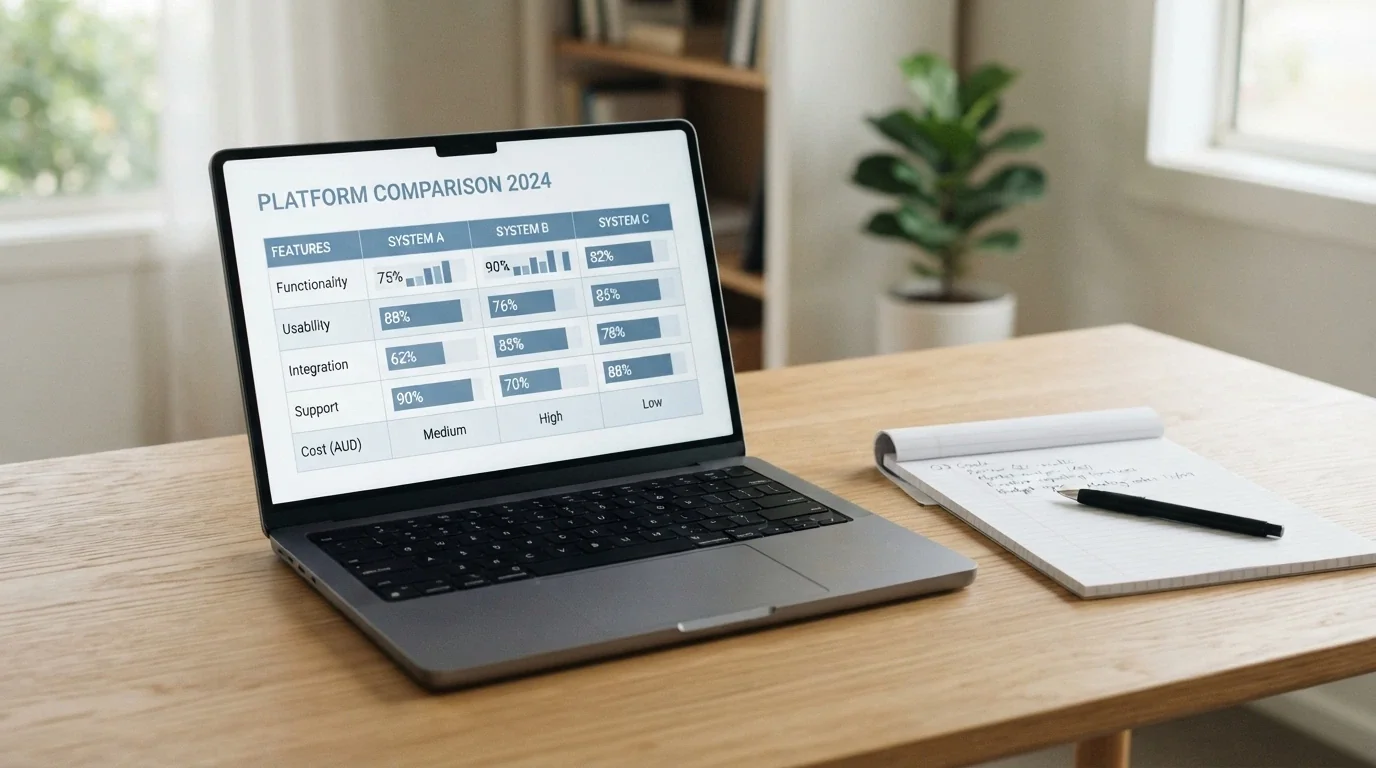
The ten operators below represent the highest tracked Australian traffic share among offshore casinos accepting $20 deposits. Each row carries what was confirmed in the underlying research; cells that could not be confirmed are left blank rather than filled with a guess. Every entry is offshore and unlicensed in Australia.
| Operator | Welcome Bonus | Wagering Requirement |
|---|---|---|
| RocketPlay | 100% up to AUD 1,000 + 100 free spins | 40x |
| SkyCrown | Up to $4,000 + 350 free spins across five deposits | 40x |
| Royal Reels | 100% up to AUD 500 + AUD 10 no-deposit | 30–40x |
| WinSpirit | 200% match + 25 free spins | 40x |
| Stake | No standard welcome bonus (VIP model) | — |
| Rainbet | 250% across three deposits + 60 free spins | 40x |
| FairGO | — | — |
| Bizzo Casino | — | — |
| Rocket Casino | — | — |
| Scream Casino | — | — |
The table is intentionally lean. Stake carries no standard wagering requirement because its model is a $100,000 daily race and a $75,000 weekly raffle, not a deposit match. Four operators (FairGO, Bizzo Casino, Rocket Casino, Scream Casino) have no confirmed bonus terms on file; their cells are empty and the prose below describes each one qualitatively. Adding a filler percentage there would have meant inventing a number a player might act on.
What the column gaps mean, plainly: about 60% of cells in the bonus column carry confirmed welcome-bonus specifics; the rest are honest blanks. The wagering column is closer to half-ifilled. A table that hid the gaps with plausible numbers would have read cleaner — but every gap is a protection for the reader, because the same gap in the operator’s published terms is the spot where disputes get born.
RocketPlay
RocketPlay fronts its welcome package with a 100% match up to AUD 1,000 on the first deposit, stacked with 100 free spins on Aztec Magic by BGaming. The wagering requirement is 40x on the bonus amount, the validity window is 5 days, and the maximum cashout from bonus winnings is capped at AUD 5,000. The 100 free spins arrive in batches of 20 per day across five consecutive days, not as a single drop.
The headline feature is the size of the match and the spin count — a $500 deposit pulls $500 in bonus plus a full five-day spin drip. The catch is the minimum: at AUD 30, RocketPlay’s bonus floor sits $10 above the $20 deposit threshold this page is built around. A player funding exactly $20 will play RocketPlay bonus-free. A player funding AUD 30 clears the bar and faces a 5-day window to turn over the bonus 40 times — and a AUD 5,000 ceiling on how much of it converts to withdrawable money. Both numbers are worth weighing against the headline: a 40x requirement on AUD 1,000 means AUD 40,000 in qualifying bets before withdrawal, which is several hundred times the deposit itself.
RocketPlay is built for the player who plans to fund more than $20 and chase a bonus-heavy session against a hard ceiling on the upside.
SkyCrown
SkyCrown carries the largest headline package on the ranking — up to $4,000 plus 350 free spins distributed across the first five deposits, with a 100% match on the opening deposit. Wagering is 40x. The operator also offers a 10% crypto cashback. SkyCrown is the only operator in the set with a confirmed licence jurisdiction: a Curação licence issued to the Hollycorn N.V. group.
The package’s breadth comes with a structure tax. The $4,000 ceiling is not a first-deposit number — it stretches across five separate deposits, each with its own bonus action. A player who only wants to fund $20 sees the first-deposit match and 70 of the 350 spins, leaving the rest locked behind funding decisions they may not want to make. The Curação licence is real, but Curação oversight is materially weaker than UKGC or MGA enforcement — it is a registration regime more than a player-protection regime, and disputes are heard where the operator is registered, not where the player lives.
SkyCrown is the choice for a player who prefers a multi-deposit welcome structure and values an operator with a named (if not strong) corporate licence, providing a clearer line of communication than the fully anonymous brands.
Royal Reels
Royal Reels splits its offer unusually: a 100% match up to AUD 500 on the first deposit, paired with an AUD 10 no-deposit bonus just for signing up. The no-deposit is a risk-free trial — purely a chance to test the lobby before committing. Wagering is 30–40x, lower at the gentle end than most of the set. The platform carries 2,000+ games from 30+ providers, including Pragmatic Play, Evolution Gaming and Yggdrasil.
The point of friction is the deposit minimum, which lands at AUD 30, $10 above the $20 marketing floor. A player funding exactly $20 plays bonus-free; a player funding $30 unlocks the match and pairs it with the no-deposit trial money already in the account. The game library is the strongest in the table at the stated count and includes the names most Australian players look for first.
Royal Reels fits the player who wants the lowest-friction entry — try the lobby free, then deposit enough to clear the bonus floor — and values a deep provider list over the absolute size of the match.
WinSpirit
WinSpirit’s headline is the 200% match rate — the highest percentage in the set — on top of the deposit plus 25 free spins. Wagering on promotions is 40x. The match rate is the most generous percentage read in the table, but the absolute ceiling on the bonus is lower than RocketPlay’s, so the headline advantage is in the multiplier rather than the headline dollar.
The smaller spin count (25 against Royal Reels’ stream or SkyCrown’s 350) and the lack of confirmed minimum deposit data mean WinSpirit’s positioning is best read as the percentage play: a smaller bonus, but a bigger fraction of whatever the player puts in. For a player depositing $20, the play is framing the session around the matched bankroll rather than the spin count.
WinSpirit represents the percentage-driven play, offering a bonus that punches above its weight in multiplier terms and maintains a standard 40x turnover that is common across the offshore market.
Stake
Stake is the outlier in the ranking — no standard welcome bonus, no free spins, no deposit match. Instead, Stake runs a VIP and promotional-drop model: a $100,000 daily race and a $75,000 weekly raffle, against a library of 4,500+ games including the Stake Originals range and Evolution live tables. The Curaçao licence (No. 8048/JAZ, via Antillephone) is confirmed, and no withdrawal limits are advertised.
The ACMA has blocked Stake.com in Australia under the Interactive Gambling Act. What this means in practice: an Australian player reaching Stake.com typically does so through a redirect, a mirror, or a non-blocked domain. The original domain is inaccessible through most Australian ISPs. Stake.com.au is a separate Australian stock-trading service with no gambling relationship — the name overlap is an exercise in brand confusion, not corporate lineage.
The value calculation is inverse to the rest of the table. A player who wants a welcome bonus gets nothing here — what they get instead is a long-tail race-and-raffle model that pays out over time, not on the first deposit. It is built for the player who treats the casino as ongoing rather than promotional.
Rainbet
Rainbet offers a 250% welcome package across three deposits — 100% on the first, 50% on the second, 100% on the third — plus 60 free spins on Sweet Bonanza (20 per deposit). The wagering requirement is 40x on the matched path. A no-wager alternative path is offered to players who would rather skip the turnover. The platform carries 6,500+ games, the deepest library in the set. Beyond the welcome package, Rainbet runs a $500,000 monthly race with 1,000 winners and a weekly $20,000 raffle ticket every account gets by default.
The minimum per tier is $30 — again, $10 above the $20 floor. The three-deposit structure means a player must commit to at least $90 across three separate deposits to claim the full 250% headline. The no-wager alternative is the uncommon offer in the offshore market and is the most direct route for a player who wants bonus money without the playthrough clock.
Rainbet suits the player who treats a casino as a three-deposit relationship rather than a single session, and who values game-library depth and a no-wager escape hatch over the headline match rate.
FairGO
FairGO markets itself explicitly to Australian players — Australian-themed branding, AUD-default site, support pitched at local hours. Beyond the positioning, this run did not surface confirmed bonus terms, a confirmed licence, or a confirmed game-provider list. Covering FairGO here means acknowledging its market presence without inventing the figures a full entry would normally carry.
What can be said: it is offshore, it is one of the operators Australian players reach, and its marketing explicitly targets the AU market. What cannot be said with confidence from this research is what its welcome bonus specifically is, whether its licence has been confirmed in a given jurisdiction, or what its game library actually contains. A player who reaches FairGO through search results should treat those specifics as unverified until the operator’s own terms page says otherwise.
Bizzo Casino
Bizzo is listed among Australian-facing offshore casinos and carries a market presence worth roughly half a percent of tracked AU casino traffic in this set. Bonus terms are described in research as standard for the offshore market — wagering and game-contribution rules apply, with slots contributing at much higher percentages than table games or live dealer. Specifics of the welcome package were not confirmed this run.
The honest read on Bizzo for an Australian player: it exists, it serves AUD customers, and it operates outside Australian rules like every other entry in this ranking. Confirming the exact bonus percentage, the licence jurisdiction, or the withdrawal ceiling is a step that needs to happen on the operator’s own terms page before a player funds an account.
Rocket Casino
Rocket Casino is a separate offshore brand from RocketPlay — not a rebrand, not a sibling site, a different operator with a different domain. That distinction is easy to miss because the names share four letters and the same offshore commonality. Rocket Casino sits at 0.57% of tracked AU traffic in this set; all bonus, licence and provider fields are unconfirmed this run.
For a player searching for either name, the safer assumption is to treat them as unrelated operators with overlapping branding. The RocketPlay entry above covers that brand’s specifics. Rocket Casino’s specifics — welcome bonus, wagering, payment methods — remain to be confirmed against its own published terms.
Scream Casino
Scream Casino rounds out the AU-tracked set at 0.99% of tracked AU casino traffic in this ranking. No confirmed bonus terms, licence jurisdiction, or provider data this run. Covering it here is acknowledging traffic share rather than describing a known product.
What can be stated clearly: it is an offshore operator serving Australian players, none of the protections outlined later in this page apply, and the standard site-blocking and payment-channel risks that apply to every other entry in this table apply here too.
How Your $20 Arrives: PayID, Cards and the Payment-Method Tell
The deposit method an operator accepts from an Australian player is itself information. It tells you whether the casino is operating inside or outside Australian rules — without needing to read the licence footer.
The legal deposit routes for licensed Australian wagering operators are debit card, bank transfer, PayID/Osko and BPAY. Credit cards, credit-related products and crypto have been banned as payment for licensed online wagering since 11 June 2024 under the Interactive Gambling Amendment (Credit and Other Measures) Act 2023. If a casino accepts a credit card or Bitcoin from someone sitting in Australia, that acceptance is the tell: the operator is outside the regime. It does not necessarily mean the operator is unsafe — but it does mean the Australian rules that govern consumer protection, advertising standards and dispute resolution do not apply to the transaction.
The $20 deposit methods that work at the offshore casinos in this ranking are dominated by PayID and Osko. Instant settlement, zero fees, a standard minimum of A$20. Some operators push their minimum to A$25 or A$30 specifically on PayID, particularly where a bonus campaign is layered on top. Bank transfer and debit card work as fallbacks, with minimums that often sit at the $20 level but with slower clearing on the way out.
The withdrawal side carries the harder constraint. Depositing $20 is easy; cashing out often requires $50 or more, and the channel that put the money in fastest (PayID) is the one most operators refuse at the cashier until that higher threshold. Bank transfer settles withdrawals in 3 to 7 days; PayID withdrawals at top casinos process in under 15 minutes once cleared. Speed on the way in does not equal speed on the way out — and the gap is where most of the friction sits.
PayID Deposits at the $20 Level: Instant, Free and Universally Accepted
PayID has become the default deposit rail at offshore casinos serving Australian players because it works the way Australians expect money to move: instantly, with no fee and a reference number that confirms the transfer. Standard minimums start at A$20, matching the marketing threshold of most operators on this page. Some platforms push their PayID floor to A$25 or A$30 when a welcome bonus is attached — a quiet way of nudging the deposit above the headline figure.
Per-transaction caps on PayID at offshore casinos typically run $1,500 to $5,000, well above what a single $20 deposit needs but worth knowing for any player planning to top up. Withdrawal minimums via PayID land at $50 at most operators and the daily ceiling is $9,000. A player who funds $20 and wins enough to withdraw is therefore looking at clearing the $50 minimum before the cashier will act, and that $50 is the first friction point on the road out.
Credit Cards, Crypto and the Compliance Tell
Since 11 June 2024, credit cards and crypto have been banned as payment methods for any operator holding an Australian wagering licence. The licensed payment routes — debit card, bank transfer, PayID/Osko, BPAY — are the only channels those operators can take.
When an offshore casino accepts a credit card or Bitcoin from an Australian player, the operator is outside that regime. That is not always a red flag in isolation — Curaçao-licensed and Anjouan-licensed operators do not fall under the IGA framework at all, and their own payment policy is their choice. But the distinction matters for the player: the consumer protection that comes with Australian-licensed deposits (dispute resolution pathways, chargeback rights, complaints bodies) does not apply to the offshore transaction, regardless of which card is used.
A practical rule: if a casino advertises itself as accepting Australian players and offers credit card or crypto as a deposit method, it is operating outside Australian rules by acceptance, not by accident. That fact does not stop the site from working — it defines the protections that are absent when something goes wrong.
Pokies That Stretch a $20 Bankroll Past 100 Spins
Which pokie a $20 deposit lasts longest on depends entirely on the minimum bet, the RTP and the volatility class. Average slots RTP across the tested Australian-facing sites ranged from 94.2% to 96.8% — a spread of 2.6 percentage points that sounds small until you recalculate it against a finite bankroll. On a $20 deposit at $0.20 per spin, the difference between 94% and 96% RTP is the difference between an expected $1.20 and an expected $0.80 in theoretical house edge per 100 spins. That gap is real money on a small roll.

Volatility class controls how the bankroll feels. Low-volatility pokies pay frequently in small amounts, sustaining the session even when individual wins do not cover the spin cost. High-volatility pokies pay rarely and large, which can either refill the balance or empty it before the player has seen enough spins to know which way the session is going.
| Pokie Title | RTP | Volatility | Provider |
|---|---|---|---|
| Sweet Bonanza | 96.51% | High | Pragmatic Play |
| Book of Dead | 96.21% | High | Play’n GO |
| Gates of Olympus | 96.5% | High | — |
| Starburst | 96.09% | Low | — |
| 9 Masks of Fire | 96.24% | Low | — |
| Big Bass Bonanza | 96.71% | Low | — |
| Sugar Rush | 96.5% | Low | — |
The table is built from confirmed RTP and volatility data where research carries it. Provider cells are filled only for titles whose studio the underlying research named; cells without confirmation stay blank. Sweet Bonanza’s 96.51% sits at the higher end of the spread; Book of Dead’s 96.21% sits in the middle; Gates of Olympus ties Sugar Rush at 96.5%, but at opposite volatility classes.
Low-Volatility Pokies: The Safe Route to 100-Plus Spins
Low-volatility titles — Starburst at 96.09%, 9 Masks of Fire at 96.24%, Big Bass Bonanza at 96.71%, Sugar Rush at 96.5% — are the choice for a player whose priority is keeping the $20 balance alive long enough to enjoy the session. These games produce frequent small wins that offset the house edge in feel, even when the net return is still negative over any reasonable sample.
The trade-off is on the upper boundary. A low-volatility title’s max win tends to be a small multiple of the bet — small enough that the $20 bankroll cannot realistically hit a payout that repays more than a few deposits’ worth. The comfortable ride comes at the cost of the spectacular outcome.
For a $20 deposit at $0.20 minimum bet, low-volatility pokies are the right play when the goal is playtime rather than payout. A player expecting to spin for half an hour without seeing the balance collapse to zero will get that from Big Bass Bonanza or Sugar Rush; they will not get a 100x screen from the same session. The choice is honest and worth making explicitly.
High-Volatility Pokies: Bigger Swings on a Small Deposit
Sweet Bonanza (96.51%, high volatility, 21,100x max win), Gates of Olympus (96.5%, high volatility) and Book of Dead (96.21%, high volatility, 5,000x max win) are the titles the high-volatility crowd chases. Sweet Bonanza, a 2019 Pragmatic Play title on a 6×5 candy-land grid, can multiply a $0.20 spin into a screen that retrains the bankroll by orders of magnitude. Book of Dead, the 2016 Play’n GO release on a 5×3 setup, has paid out even longer odds than its 5,000x ceiling suggests in the wild.
The high-volatility trade is the inverse: longer dry spells between wins, larger payouts when they land. A $20 deposit on Sweet Bonanza can either look like 100 dead spins or like a session where the bankroll tripled in the last ten — the two outcomes are both routine and there is little middle ground.
A high-volatility player with a $20 bankroll needs a different session plan. Stop-loss discipline matters because a 50-spin cold streak burns half the bankroll without offering anything close to a payout. Conversely, a hot streak can present a decision point the bankroll-size player does not usually face — walk away with the original deposit plus a multiplier, or push for the rare ceiling. Both decisions happen fast on $20, and the session is over before a low-volatility player has finished their coffee.
Bankroll Maths: What 100 Spins at $20 Actually Costs You
At $0.20 minimum bet, $20 buys exactly 100 spins. With an RTP at the midpoint of the tested range (96%), the theoretical expected loss is 100 × $0.20 × 4% = $0.80 — eighty cents of house edge spread across the session.
That number is an average across a large sample. On 100 spins, the actual outcome is highly variable: a player could see the bankroll drop below $10 in the first 50 spins, or finish with $38, or break even. The standard deviation on a 100-spin pokie session is large relative to the expected loss, which is why 100 spins is not enough to converge on the theoretical RTP. A session result of +$18 or -$20 against an expected -$0.80 is not a malfunction; it is statistical noise.
The arithmetic matters not because the expected loss is large — $0.80 isn’t — but because the spread around it is. A player who treats $20 as a fixed entertainment budget and stops when it hits zero is playing inside the design. A player who tops up because the spins “feel due” is paying the house edge out of pocket several times over.
73% of Australian Sessions Are Mobile — and $20 Deposits Are No Exception
Around 73% of Australian casino sessions now happen on phones. That figure is not from the operators’ marketing — it comes from the same affiliate tracking data that ranked this list. The implication for a $20 deposit is straightforward: most players are funding and spinning on the same screen, and the operator experience that matters is the mobile one.

Offshore casinos serving Australia largely run in the browser rather than as downloadable apps. That choice is partly regulatory (app-store restrictions on real-money gambling apps have tightened in the Australian market) and partly technical — mobile browsers now handle HTML5 pokies at the same fidelity as desktop, and operators avoid the store-review friction. A player who reaches an operator on Safari or Chrome on their phone gets the same lobby, the same bonus activation, the same cashier.
PayID on a phone is two taps once the bank app is set up: amount, identifier, confirm. The whole flow — register, deposit, spin, withdraw — fits inside a mobile session in a way it did not five years ago. The friction has moved from the device to the banking channel.
Mobile Pokies and the On-the-Go $20 Session
Mobile-optimised pokies are not stripped-down desktop games — Pragmatic Play, Play’n GO and Evolution all build mobile-first or mobile-parity versions. Starburst at $0.20 per spin on a portrait phone screen is the same game it is on a desktop monitor, with the touch controls doing the work the mouse used to do.
The practical difference at the $20 level is session shape. A mobile session tends to be shorter per visit but more frequent — two or three 10-minute sessions through an evening rather than one 60-minute sit-down. The bankroll math adapts to that shape: low-volatility pokies handle frequent short sessions better, high-volatility titles punish them harder because the bankroll variance against a short sample is larger.
For an Australian player using an offshore casino on a phone, the browser-based model means no iOS or Android app download, no store-review friction and no clearing of phone storage for a casino app. The cost is that everything lives behind a URL that can be blocked — which is a topic taken up in the section on ACMA enforcement below.
New $20 Deposit Casinos Worth a Look in 2026
New offshore casinos enter the Australian-facing market regularly. The pattern is consistent: a new brand launches with an aggressive welcome offer — typically a 100% to 200% match plus a high free-spin count, often with a below-market minimum deposit to drive sign-ups — and rides that headline into the AU traffic rankings over the following quarter.
The legal position does not change with a newer brand. The Interactive Gambling Act 2001 prohibits providing online casino games to Australians regardless of when the operator was incorporated or how recently the welcome offer was published. A new domain name does not change the consumer protection that is and is not available; it changes only the marketing surface.
What is worth tracking on the new-entrant side is whether the welcome offer materially outpaces the existing set — higher match rate, larger spin count, lower minimum — or whether the new brand is simply running a copy of an established package under a fresh banner. The first case is worth a look; the second is not.
What a New Operator Means for the $20 Deposit Player
New casinos enter the market because the existing operators’ economics work — they have proven the offshore AU-facing casino book is profitable enough to attract capital. The implication is that new entrants are not a corrective to a broken market; they are additional supply into an existing one.
A new operator with a generous match rate and a low entry threshold is, on the headline figure, a more generous offer than most of the set above. The protection analysis is unchanged: no AU licence, no BetStop connection, no AU complaints body. A player evaluating a new entrant is evaluating a marketing surface, not a regulatory change.
The safer read on a new $20-deposit casino in 2026 is: assume the worst-case licence and dispute environment, because that is what the regime gives you. Then evaluate the offer on the same terms as the existing set.
No Australian Licence, No Local Protection: The Offshore Reality
The single most important fact on this page sits above every operator ranking, every bonus percentage and every pokies RTP: no online casino operating for Australian players holds an Australian licence. None can. The Interactive Gambling Act 2001 makes it an offence to provide online casino games, online pokies or in-play betting to a person physically in Australia, and no provision in the Act licences the product in any state or territory.
What that means for the player depositing $20:
- No BetStop coverage. The National Self-Exclusion Register binds Australian-licensed wagering services; offshore casinos are not connected to it. A person who has self-excluded from Australian licensed wagering can still deposit and play at every operator on this page.
- No Australian complaints body. ADRs that cover Australian licensed operators do not have jurisdiction over a Curaçao or Anjouan licensee. Disputes — including on withheld withdrawals — are heard where the operator is registered, under that jurisdiction’s laws, with no Australian consumer law overlay.
- No guaranteed payout. An operator can refuse a withdrawal or close an account in circumstances that would be actionable in an Australian-regulated context and have no recourse here.
- Site blocking at any time. The ACMA can direct Australian ISPs to block an operator’s domain — and the operator can disappear overnight with a balance held against it.
The ACMA’s public position is direct — illegal gambling services “are unlikely to have important customer protections”, and “Australians who use illegal gambling services risk losing their money.” That is not a marketing warning; it is the regulator describing the absence.
The Interactive Gambling Act: What It Bans and What It Does Not
The IGA 2001, strengthened by the 2017 amendments, makes it an offence to provide online casino games, online pokies and in-play sports betting to anyone in Australia. The prohibition targets the provider — the operator running the casino — not the player. No Australian has been prosecuted for using an offshore casino. That asymmetry is the loophole the offshore market operates through: the player is not the target, so the offshore site has hundreds of thousands of Australian accounts and zero legal consequence to the player using them.
What is licensable in Australia is narrower than the offshore market would suggest. Wagering on sports and racing placed before the event — sports betting, fixed-odds racing, tote — is licensable through state and territory regimes. Lotteries and keno are state-licensed products. Online casino games and online pokies are not.
The 2026 Interactive Gambling Amendment (Gambling Reform) Bill passed Parliament on 19 August 2026 and its measures commence on 1 January 2027. The reform layers new restrictions onto the existing framework: a ban on wagering advertising during live sport from 15 minutes before to 5 minutes after the game, a TV cap of three wagering ads per hour between 6:00 am and 8:30 pm, a ban on broadcasting of odds, online ads restricted to logged-in verified adults who have not opted out, and new prohibitions on direct-marketing inducements. The most operationally significant change for offshore operators is the new express authority for banks and payment providers to block transactions to illegal gambling services from the same commencement date. From 1 January 2027, the AUD 20 a player was sending to an offshore casino may not arrive.
ACMA Enforcement: 1,788 Site Blocks and Counting
The ACMA began directing ISPs to block illegal gambling sites in November 2019. By the August 2026 update, that number sits at 1,788 illegal gambling and affiliate websites blocked. In addition, over 230 illegal services have voluntarily withdrawn from the Australian market since the ACMA started enforcing the strengthened IGA rules in 2017.
The penalties are not symbolic. Civil penalties for providing a prohibited interactive gambling service are up to $2,475,000 per day for an individual and up to $12,375,000 per day for a corporation. On 16 January 2026, the ACMA issued 8 infringement notices to Tabcorp Holdings Limited for providing a prohibited in-play betting service, totalling $158,400 — a sign that Australian-licensed operators are not exempt from the regime, just subject to a different branch of it. In Q4 2025 the ACMA completed 23 investigations involving 45 gambling sites and found 69 breaches, issuing 10 formal warnings including to Dama N.V. — the operator behind Vegas Now, Rooster Bet and Rocketspin. Q1 2026 saw 25 investigations identify breaches in 23 cases. The list of blocked websites is updated regularly, last refreshed on 10 July 2026.
The scale of enforcement tells a story about who is actually running the offshore market and how Australian players reach it. Of 1,788 blocked sites, the majority are affiliate pages — the SEO surface that drives Australian traffic to the operators — rather than the operators themselves. The operators rebrand and re-domain; the affiliate layer absorbs the ACMA’s enforcement pressure. Players reach the new mirror through search results that did not yet exist when the block on the old mirror was issued.
What You Give Up When You Deposit $20 at an Unlicensed Site
The concrete things a $20 deposit forfeits under the offshore regime are significant. BetStop coverage is the first, as the register binds only Australian-licensed wagering services; the offshore casinos ranked here remain unconnected to it. The second is the absence of an Australian complaints body, meaning disputes over withheld withdrawals or account access lack an Australian consumer protection overlay. The third is the withdrawal gap itself, where eleven of over 80 offshore casinos tested by industry trackers required $50 or more withdrawals despite accepting $20 deposits. Finally, there is the site-blocking risk, where an operator can be added to the ACMA’s blocked list overnight, rendering the player’s account and balance inaccessible.
Staying in Control: RG Tools and Why BetStop Won’t Help Here
Responsible-gambling infrastructure exists in Australia. The National Gambling Helpline (1800 858 858) is free, confidential and staffed 24/7. Gambling Help Online provides chat and counselling at gamblinghelponline.org.au. BetStop — the National Self-Exclusion Register — has 67,480 registrations and 41,290 active exclusions as of 31 July 2026.
The critical caveat, and the one that defines the safety equation at the $20 offshore deposit level: BetStop binds Australian-licensed wagering services only. The offshore casinos ranked above are not connected to the register. A person who has self-excluded from Australian-licensed wagering will not be blocked from depositing $20 at any operator in this ranking. The protection the page elsewhere describes — registered, enforced, automatic — does not extend here.
The 2.1% problem-gambling prevalence figure, drawn from the Australian Institute of Health and Welfare’s work and applied to roughly 430,000 Australian adults, frames the downside of low-deposit thresholds specifically. A $20 minimum deposit is not the structural cause of harm, but it lowers the threshold of access for someone already in a high-risk pattern. Combined with the offshore status of every operator on this page — no deposit-limit enforced from the supplier side, no BetStop connection, no automatic break — that design choice becomes a live factor in the safety calculation.
Deposit Limits, Self-Exclusion and the Tools Offshore Operators Actually Offer
Most offshore casinos do offer deposit-limit tools — daily, weekly and monthly caps set by the player within the account. Unlike BetStop, these are voluntary and enforced only by the operator. A player who sets a $100 weekly limit has set a tool that works as long as the operator does not unilaterally remove it; on a self-exclusion, the player has registered voluntarily with the operator, and the operator can lift the exclusion at its discretion.
The distinction matters because the marketing language around these tools tends to be flat — every operator “offers responsible gambling”. The reality: a tool enforced by an Australian regulator (BetStop) is materially different from a tool the offshore operator has chosen to provide. Both have a banner. Only one has legislative force.
Where to Get Help: The Australian Support Network
The Australian support network for gambling harm is genuinely strong and genuinely accessible.
- National Gambling Helpline: 1800 858 858 — free, confidential, staffed 24/7.
- Gambling Help Online: gamblinghelonline.org.au — online chat and counselling.
- BetStop: the National Self-Exclusion Register, covering Australian-licensed wagering services.
For a player experiencing problems, the practical first step is the helpline. For a player who has not yet registered with BetStop but plans only to use Australian-licensed wagering (sports, racing — not online pokies), the register provides a binding exclusion. For a player whose pattern is restricted to offshore casinos, the helpline and counselling services are the operative supports, because the register does not reach the operators they use.
The prevalence numbers — 2.1% of Australian adults experiencing problem gambling, about 430,000 people; AIHW’s 1.8% high-risk figure for 2022 — translate the support-line phone number from a generic recommendation to a service that a measurable share of the population has used.
How We Selected and Ranked Every $20 Casino on This Page
The featured set is the ten operators with the highest tracked AU traffic share among offshore casinos accepting $20 deposits. The data behind that ranking is the same affiliate tracking that competitors in the category use, filtered for operators that accept Australian players and fit the $20 deposit threshold.
The ranking criteria, in order of weight given to them:
- Market presence among AU-tracked traffic — the share of Australian players reaching the operator.
- Welcome-bonus value at or near the $20 deposit level.
- Wagering fairness — the ratio of bonus amount to required turnover.
- Game-library depth — provider count and game count where confirmed.
- Payment-method compatibility with AU players, specifically PayID availability.
What the ranking does NOT measure:
Regarding safety, every operator in the set is offshore and unlicensed in Australia, so ranking them on safety misframes what the comparison can say. Regarding withdrawal reliability, no Australian jurisdiction covers disputes with any operator in the ranking, meaning the decision about which operator pays out on time is anecdotal at best and untrackable at worst.
Operators were checked against the ACMA blocked-sites list, the Interactive Gambling Act framework, and the official offshore licence registries where applicable (Curaçao for the two confirmed operators). Operators on the ACMA blocked list — including Stake.com — were kept in the ranking with the block status noted, because the comparison would be incomplete without them.
Your $20 Deposit in 2026: What the Numbers Actually Say
The arithmetic on a $20 deposit at an offshore casino is straightforward. The arithmetic on its safety is not.
What $20 buys includes roughly 100 spins at minimum bet on the popular pokies, a welcome bonus at most operators (though the bonus minimum sits at $30 at several flagged names), real-money play with a chance to withdraw at the operator’s cashout threshold, and a legitimate session of entertainment, sized for a budget the player can absorb losing.
What $20 costs starts with the lack of Australian consumer protection at any operator on the ranking and the absence of BetStop coverage, as self-exclusion from Australian wagering does not extend here. Additionally, the site can be blocked by the ACMA the day after the deposit is made, potentially making the balance inaccessible, and the withdrawal minimum is usually $50 even where the deposit minimum is $20, meaning the entry threshold is not the exit threshold.
From 1 January 2027, the 2026 reform gives banks and payment providers express authority to block transactions to illegal gambling operators. Audit trails tighten and offshore access narrows. The operators that survive the new regime will be the ones that find alternative rails. A player funding $20 in the first half of 2026 is funding before the new rules bite; a player funding in the second half is testing whether their bank has implemented the block yet.
Use PayID or a debit card. Credit cards and crypto are banned at licensed Australian wagering operators, and a casino that accepts either is by definition operating outside Australian rules — not necessarily unsafe, but outside. Check the withdrawal minimum before funding; $50+ cashout thresholds are common. Never deposit more than the amount a player is willing to see made inaccessible by a regulatory block.
The alternative is licensed Australian wagering operators — SportsBet, Tab, Bet365, Ladbrokes, TABtouch, PointsBet, Neds and others — that offer sports and racing with full Australian consumer protection. They do not offer online pokies. The choice between offshore pokies at $20 and licensed sports betting with no pokies is a real one, and the answer depends on what the player actually wants to play. The protections are not transferable; the two markets do not overlap.
The minimum age for all commercial gambling in Australia is 18. Gambling winnings are not assessable income under section 6-5 of the ITAA 1997 — but they are also not a reliable income source, and the offshore route has no mechanism to ensure the operator honours what was won.
Frequently Asked Questions
What is the best $20 minimum deposit casino in Australia for 2026?
No Australian-licensed online casino exists — the Interactive Gambling Act prohibits the product and no licence for it is available. Among the offshore operators serving Australian players, the ranked list on this page orders them by tracked AU traffic share and bonus offer quality. The “best” depends on what the player values: highest match rate (WinSpirit at 200%), lowest bonus minimum ($30 across several names — not $20), deepest library (Rainbet at 6,500+ games), or confirmed Curaçao licence (SkyCrown, Stake). None of them offers Australian consumer protection; that fact does not vary by rank.
Can I use PayID to deposit $20 at an Australian online casino?
Yes. PayID is the dominant instant-deposit method at offshore casinos accepting Australian players, with a standard minimum around A$20 — though some operators push the PayID floor to A$25 or A$30, especially on bonus-linked deposits. Settlement is instant and fees are zero in most cases. Per-transaction caps typically run $1,500 to $5,000, well above a single $20 deposit. The catch: PayID withdrawals usually require $50 minimum, with a daily cap around $9,000, and the rail is an Australian one — the casino on the receiving end is offshore.
What bonuses do I get when I deposit $20 at an Australian casino?
Most offshore casinos offer a 100% to 200% first-deposit match with 30x to 45x wagering on the bonus and a 7 to 14-day validity window. Free-spin counts range from 25 (WinSpirit) to 350 (SkyCrown, across five deposits). Several operators in the ranking — RocketPlay, Royal Reels, Rainbet — set their bonus minimum at $30, above the $20 deposit level. A $20 deposit on those brands plays bonus-free. Stake is the outlier: no welcome bonus, instead a $100,000 daily race and a $75,000 weekly raffle against a VIP model.
Can I withdraw winnings from a $20 deposit casino in Australia?
Yes, but with friction. Eleven of over 80 tested operators require $50+ withdrawals despite accepting $20 deposits — a deposit-vs-withdrawal gap that catches first-time players. PayID withdrawals process in under 15 minutes at the top operators, against 3 to 7 days for bank transfers. Daily PayID withdrawal caps sit around $9,000. The structural problem is jurisdictional: if an offshore operator refuses a withdrawal or closes the account, no Australian consumer protection body has standing to issue a binding resolution. The protection assumed by Australian licensed operators does not extend offshore.
Is it legal to play at $20 deposit online casinos in Australia?
The Interactive Gambling Act 2001 makes it an offence to provide — not to use — online casino games and pokies to Australians. No Australian has been prosecuted for playing at an offshore casino. The offshore operators, however, are daily and openly in breach of Australian law, and Australian players access them despite that. From 1 January 2027 the 2026 reform gives banks and payment providers express authority to block transactions to illegal gambling operators — meaning the offshore deposit that worked in 2026 may not work in early 2027 even through PayID. Playing is not prosecuted; the underlying offer is illegal; and from 1 January 2027, the rails that carry it in may start to refuse it.