
The Real Cost and Reality of a $2 Minimum Deposit Casino in Australia
A $2 minimum deposit casino in Australia is a very specific thing. It is not a generous gift from an operator looking to give players a bargain, and it is not a sign of an unusually player-friendly site. It is a side-effect of payment-method economics: a tier that exists only because three deposit methods — prepaid vouchers and cryptocurrency — bypass the processing minimums that make the rest of Australian banking reject the small amounts the rest of the country treats as rounding errors. Casinos don’t set the $2 floor; the prepaid networks do. Once you understand that, almost every confusing thing about the $2 tier falls into place.
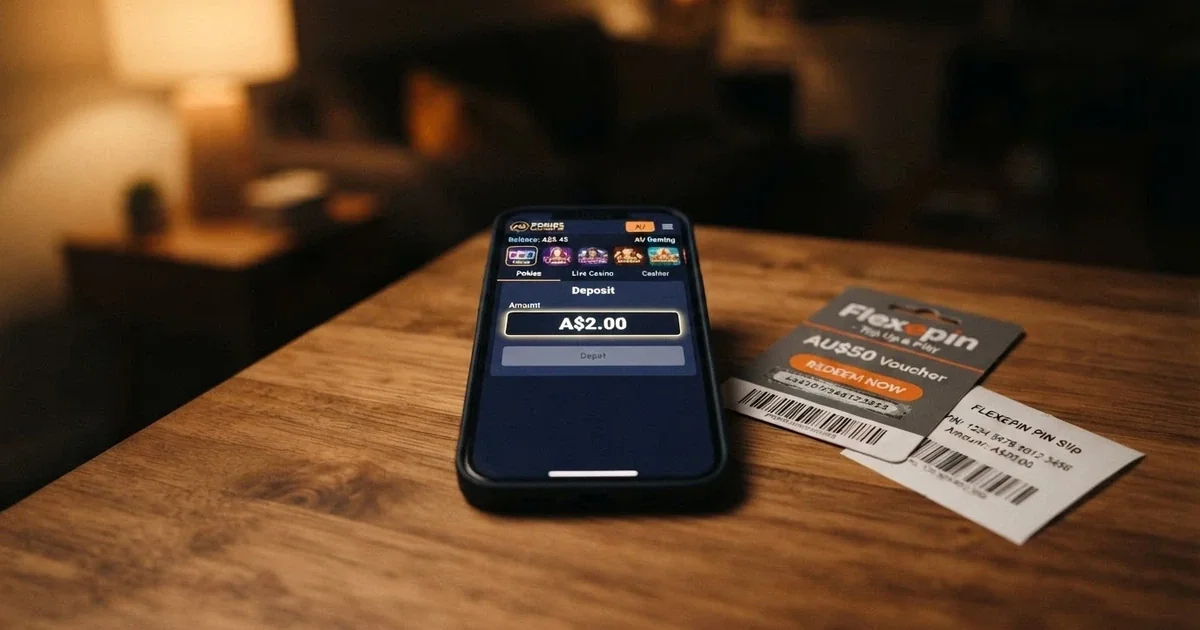
This page ranks the offshore casinos that genuinely accept $2 from Australian players in 2026, names the payment methods that work, explains what $2 actually buys you once it lands, and — because the honest version of this subject is shorter without the Australian legal context — sets out what the law actually does. The short version: there is no licensed online casino in Australia. Every site on this page operates from offshore. That is a trade-off the player takes on, not a marketing footnote, and it shapes everything that follows.
Currency and licence data current as of 3 November 2026 and cross-checked against the Australian Communications and Media Authority (ACMA) register and the Curaçao Gaming Control Board public licence search.
Table of Contents
- Why a $2 Deposit Casino Exists at All in 2026
- The Top Offshore Casinos Accepting a $2 Deposit From Australian Players in 2026
- The Offshore Reality: Why Every $2 Deposit Casino Is Unlicensed in Australia
- What a $2 Deposit Actually Buys You: The Bonus Reality Check
- The Three Payment Methods That Actually Work at $2 (and the Ones That Don’t)
- Playing on Your Phone: Mobile $2 Deposit Casinos
- Crypto Deposits From $2: Working Around the Australian Ban
- The Best Pokies to Play With a $2 Bankroll
- How to Pick a $2 Deposit Casino That Won’t Disappear Overnight
- Responsible Gambling: Why a Low Deposit Doesn’t Mean Low Risk
- How We Evaluated Every $2 Deposit Casino on This Page
- Is a $2 Deposit Casino Worth Your Time in 2026?
- Frequently Asked Questions About $2 Deposit Casinos in Australia
Why a $2 Deposit Casino Exists at All in 2026
The $2 tier is a story about the rails, not the destination. Standard credit cards and bank transfers carry processing minimums that make a $2 deposit unworkable in practice — the floor is A$10 to A$20 depending on the rail. A casino that only accepts those two methods is physically incapable of letting a $2 deposit through. Prepaid vouchers and crypto break the floor because they don’t sit on a card network or a standard bank transfer: a Neosurf voucher can be sold at any denomination the buyer wants, a Paysafecard PIN carries whatever value is printed on it, and a crypto transfer has a network fee and nothing else. The casino can then set its own minimum, and the $2 tier becomes possible.
That’s why a $2 deposit casino page looks so different from a $10 or $20 page. The payment method is the gatekeeper. A site advertising “deposits from A$2” but only listing Visa, Mastercard, POLi and PayID is either misreading its own cashier or advertising a floor its own banking rails can’t honour. The three payment methods that genuinely deliver a $2 deposit in 2026 are Neosurf, Paysafecard, and cryptocurrency. Every other method on a typical Australian-facing cashier floors at A$10 or higher.
This isn’t a quirk of Australian-facing operators. Offshore casinos pitched at European and Latin American players often run from €10 or €20, and the same logic applies — when cards and bank transfers are the only methods, the minimum tracks the rail. The $2 tier is unique to prepaid and crypto because those rails are the only ones a casino can set below the card-network minimums.
What a $2 Minimum Deposit Actually Means at an Online Casino
A $2 deposit, once it lands, buys almost exactly what you would expect. At a pokie minimum bet of A$0.20, the bankroll funds roughly ten spins. The “spin” framing matters: a casino doesn’t charge you $2 to play, it credits $2 to your account, and the rate at which that credit disappears is the minimum bet multiplied by the number of spins until you stop or run out. Ten spins is not a session. It is a brief look at the game.
What you can do with those ten spins is real but narrow. Pokies with a minimum bet of A$0.20 are accessible — most of the Pragmatic Play and Reel Kingdom titles in the featured set start at that level — and the A$0.20 bet is the practical floor for the bulk of the catalogue. Table games and live-dealer tables typically have higher minimums (A$1 to A$5 for most blackjack and roulette variants), which is a more efficient way to spend $2 if your goal is to test the platform rather than stretch the bankroll. A $2 bankroll disappears in one hand of blackjack at a $1 minimum, and the game plays out in seconds.
A $2 deposit almost never qualifies for a welcome bonus. The minimum deposit to claim a welcome offer is set by the casino and almost always sits between A$10 and A$30. A $2 deposit lands in your account, but it doesn’t unlock the bonus. The promotions a $2 bankroll might trigger are narrower — small free-spin drops, a loyalty-point top-up, or no promotion at all. Sites that pitch “$2 minimum” are not pitching a path to a bonus; they are pitching a path to the games without one.
There is also a distinction worth holding onto: depositing $2 and playing with $2 are the same event, but depositing $2 and playing with the $2 you deposited, then a bonus, then winnings is a different proposition entirely. The $2 tier is a play-with-your-own-money tier. The bonus tier starts at A$10 and runs higher.
How a Low-Minimum Deposit Casino Works: The Payment-Method Key
A low-minimum deposit casino is a structural artefact, not a marketing choice. The mechanics are these: a card network (Visa, Mastercard) charges the merchant a per-transaction fee plus a percentage; the merchant sets a minimum to make small transactions economically viable. Banks do the same on the wire and direct-debit rails. A casino accepting only cards and bank transfers will, on its own initiative or because the processor insists, enforce a floor that matches the rail — most commonly A$10 to A$20.
Prepaid vouchers sit outside the card and bank networks. Neosurf and Paysafecard both run on their own closed-loop systems: a customer buys a voucher at a retail outlet for a chosen value, enters a 16-digit code at the casino cashier, and the credit is applied without a bank or card being involved. The casino pays the voucher processor its own fee, which is generally lower than card processing, and the floor the casino sets is its own choice. A casino that wants to advertise a $2 minimum sets its Neosurf minimum to A$2 and the rail cooperates.
Cryptocurrency operates on a different principle entirely. The transaction cost is the network fee, which on chains like Solana and Litecoin is a fraction of a cent. A casino accepting Bitcoin, Ethereum or stablecoins can accept any amount above the network fee because the fee itself is the rail’s minimum, not a percentage-based processor charge. That is why crypto minimums at offshore casinos can be as low as $5 to $15 (the casino adds a small buffer above the network fee), and why some sites accept deposits of a few dollars’ worth of crypto without friction.
The structural point: a $2 deposit casino is a casino that has wired up a payment method whose minimum is below A$2 and has chosen not to add its own floor. The $2 tier is the intersection of a permissive rail and a permissive operator. A site that lists only cards, bank transfer, and PayID is not a $2 deposit casino, no matter what the marketing banner says.
The Top Offshore Casinos Accepting a $2 Deposit From Australian Players in 2026
Every operator on this page operates outside Australia. Online casino is prohibited under the Interactive Gambling Act 2001 — no Australian licence exists, not federally, not in any state or territory. The table below ranks the ten featured operators by what they actually offer at the $2 deposit tier. The first thing to notice is that the operator set is uniformly offshore: every brand sits in Curaçao (unconfirmed in some cases), none is connected to BetStop, and none is answerable to an Australian regulator.
| Operator | Offshore Licence | Game Providers |
|---|---|---|
| SkyCrown | Curaçao (offshore, unconfirmed) | 7,000+ games across a large provider list |
| Rocket Play | Curaçao (offshore, unconfirmed) | Contemporary slot grid, mobile-first design |
| Royal Reels | Curaçao (offshore, unconfirmed) | — |
| WinSpirit | Curaçao (offshore, unconfirmed) | Wide slots and live-dealer catalogue |
| Stake | Curaçao (offshore, unconfirmed) | 24+ cryptocurrencies, crypto-native |
| Fair Go Casino | Curaçao (offshore, unconfirmed) | RTG (RealTime Gaming) exclusive |
| Bizzo Casino | Curaçao (offshore, unconfirmed) | Yggdrasil, BGaming; 4,000+ titles |
| Rainbet | Curaçao (offshore, unconfirmed) | 24+ crypto tokens |
| Scream Casino | Curaçao (offshore, unconfirmed) | — |
| Rocket Casino | Curaçao (offshore, unconfirmed) | — |
What the table is honest about: the three operators without verified provider specifics (Royal Reels, Scream Casino, Rocket Casino) are the ones research could not pin down at the per-operator level. A dash in the providers column means the information was not in the materials available this round, not that the operator has no catalogue. The point of the table is to set the offshore baseline — every brand is in the same regulatory position — and to give the reader a sense of catalogue size where the data carries it.
Differentiating at the $2 tier comes down to three things: which payment methods the cashier actually lists (Neosurf, Paysafecard, and crypto are the only ones that work), what the minimum is on each of those methods, and whether the operator’s bonus terms reward small deposits (almost universally, no). Operators that stake their reputation on game variety, payout speed, or crypto depth differentiate themselves above the $2 floor; the $2 deposit itself doesn’t.
Rocket Play: Mobile-First Slots With a Low-Deposit Entry Point
Rocket Play is built for the phone first. The site is laid out in a way that assumes you’re playing on a portrait screen, and the contemporary slot grid is the catalogue’s centre of gravity. There is no Australian regulatory cover, no BetStop connection, and the Curaçao licence is the only one the operator carries. For a player who wants to drop $2 in via Neosurf and run ten spins on a phone during a commute, Rocket Play is built for the use case. For a player who wants an Australian complaints body on the other end of a dispute, it isn’t.
SkyCrown: 7,000+ Games and a Fast Cashout Promise
SkyCrown is the catalogue leader of the featured set, with 7,000+ real-money games and a welcome package pitched at A$8,000 plus 400 free spins. The wagering on the offer is described as between 30x and 40x — typical for the market. The headline claim is an average cashout time of 10 minutes, which is fast by any standard and would be the strongest payout claim in the featured set if research had pinned it to a specific payment method. As with every other operator here, the licence is offshore Curaçao (unconfirmed this run) and there is no Australian regulatory cover. The sheer size of the catalogue is SkyCrown’s distinguishing feature; the rest of the offer is comparable to several other sites in the ranking.
Royal Reels: An Offshore Brand With Australian Brand Recognition
Royal Reels sits third in this ranking partly because of its 2.51% share of the offshore casino market among Australian-facing brands — a real, measurable presence — and partly because research did not turn up the per-operator specifics (welcome offer, wagering, payment-method minimums) it did for the better-documented operators. The Curaçao licence (unconfirmed) is the same offshore baseline as the rest of the set. For a player who has already encountered the brand in Australian-facing advertising, Royal Reels is the established-name option; for a player comparing offers feature by feature, the comparison stops at “this is a Curaçao-licensed operator with AU market share.” What it actually delivers at the $2 tier is not what the page can tell you.
WinSpirit: PayID-Advertised Offshore Casino With a Wide Catalogue
WinSpirit is one of the Australian-facing offshore brands that markets PayID in its ads, which is worth flagging: PayID is a perfectly workable Australian deposit method, but it does not enable a $2 deposit. PayID minimums at offshore casinos run from A$10 to A$30, so the PayID route to WinSpirit is a $10 deposit at minimum, not $2. The $2 route at WinSpirit runs through Neosurf, Paysafecard, or crypto. The catalogue is wide on both the slots and live-dealer side, which is the operator’s distinguishing feature above the floor. As everywhere else on this page: offshore Curaçao (unconfirmed), no BetStop, no Australian cover.
Stake: Crypto-Forward Operator With 24+ Tokens and No Australian Licence
Stake is the only operator in the featured set that is built crypto-first, with 24+ cryptocurrencies accepted and a platform designed around wallet-to-wallet deposits. For an Australian player with a crypto wallet already set up, Stake is the most frictionless $2 deposit experience on the page — a $2 transfer of Solana, for example, is a few cents above the network fee and clears in seconds. The flipside is that credit cards and crypto for licensed wagering have been banned in Australia since 11 June 2024, with penalties up to A$247,500 for operators that breach the ban. That ban applies to licensed operators; Stake is offshore and is not covered by the ACMA’s enforcement, but the legal status of the player is unchanged. There is no Australian licence and no BetStop connection.
Fair Go Casino: RTG-Powered With a Named Welcome Bonus and a $20 Minimum
Fair Go is the only RTG-exclusive operator in the set, and the most clearly documented welcome offer: a 300% match up to A$3,000 plus 50 free spins on Cash Bandits 2, with 30x wagering on the deposit plus bonus for deposit bonuses, 60x for free bonuses, and no maximum cashout on the welcome bonus. The number to notice, though, is the deposit minimum: A$20. That puts Fair Go above the $2 tier entirely. It is on this page because it is one of the most-named Australian-facing offshore brands and the bonus terms are clear enough to be worth a reader’s time, but the $2 deposit route to Fair Go doesn’t exist — the realistic deposit is A$20 via Neosurf or crypto, and the $2-tier reasoning doesn’t apply.
Bizzo Casino: 4,000+ Titles at a $10 Deposit Floor
Bizzo runs a 150% match up to A$5,000 plus 250 free spins across the first three deposits, with a minimum deposit of A$10 across the cashier. Yggdrasil and BGaming sit among the providers, and the 4,000+ title catalogue is the second-largest in the featured set. Neosurf at Bizzo carries an A$10 minimum, so the $2 tier is closed off at this operator — the $2 deposit simply doesn’t make it through. The honest read of Bizzo is as a $10 deposit casino with a strong catalogue and a generous welcome structure, not as a $2 deposit casino. The minimum deposit number is the single thing the reader needs to know.
Rainbet: Crypto-Only Operator With a $30 Bonus Minimum and a No-Wager Option
Rainbet is the only operator in the set offering both a standard wager-locked track and a no-wager gradual-release path. The welcome package is 250% up to $1,750 across three deposits plus 60 free spins, with 40x wagering on the locked track and a 7-day bonus validity from activation. The bonus minimum is $30, which closes the $2 path to the welcome offer the same way Bizzo’s A$10 floor does. The deposit minimums on Rainbet’s crypto side are $5 for Solana, Litecoin, Dogecoin, Tron, Stellar, Cardano, and XRP, and $15 for Bitcoin, Ethereum, and USDT — so a $2 deposit of Bitcoin doesn’t clear the rail. A $2 deposit of Solana clears in theory, but the $30 bonus floor still applies if the goal is the welcome package. Withdrawal minimums are $15 with minutes-to-hours processing on crypto once Level 1 KYC is complete. Rainbet is the operator in the set where the no-wager path is the genuinely different feature; everything else is at the standard offshore baseline.
Scream Casino: A Curaçao Brand With Thin Research Coverage
Scream Casino is on this page because it is part of the Australian-facing offshore set, not because research surfaced much in the way of welcome offer, wagering, or per-method minimums. The Curaçao licence (unconfirmed this run) is the same baseline as the rest, and there is no BetStop connection. The honest read is: the operator exists, Australian players can access it, and what the $2 deposit tier looks like in practice is not something the materials available this round let this page specify. A reader who knows the brand and trusts it is in the same position they would be at any other offshore site; a reader comparing specifics is on thinner ground here than at SkyCrown, Rainbet, or Fair Go.
Rocket Casino: Second Curaçao Brand With Sparse Research Data
Rocket Casino shares the “Rocket” prefix with Rocket Play and, like Scream, is on this page as a known brand in the offshore casino space without the per-operator detail research could pin down this round. The Curaçao baseline (unconfirmed) applies, and the lack of BetStop connection applies. The most useful thing to say about an operator this thin on specifics is the same as the one above: the regulatory position is uniform across the set, the catalogue is unknown, and the $2 deposit experience is what the operator’s own cashier shows on the day. Research did not turn up enough to make a more specific claim.
The Offshore Reality: Why Every $2 Deposit Casino Is Unlicensed in Australia
The offshore reality is the first thing the page should have told you, so it gets its own section. Online casino games, online pokies, and in-play betting on a sporting event are prohibited under the Interactive Gambling Act 2001. There is no licence for online casino anywhere in Australia — not federally, not in any state or territory. A page describing “the best licensed Australian online casinos” is describing something that does not exist.
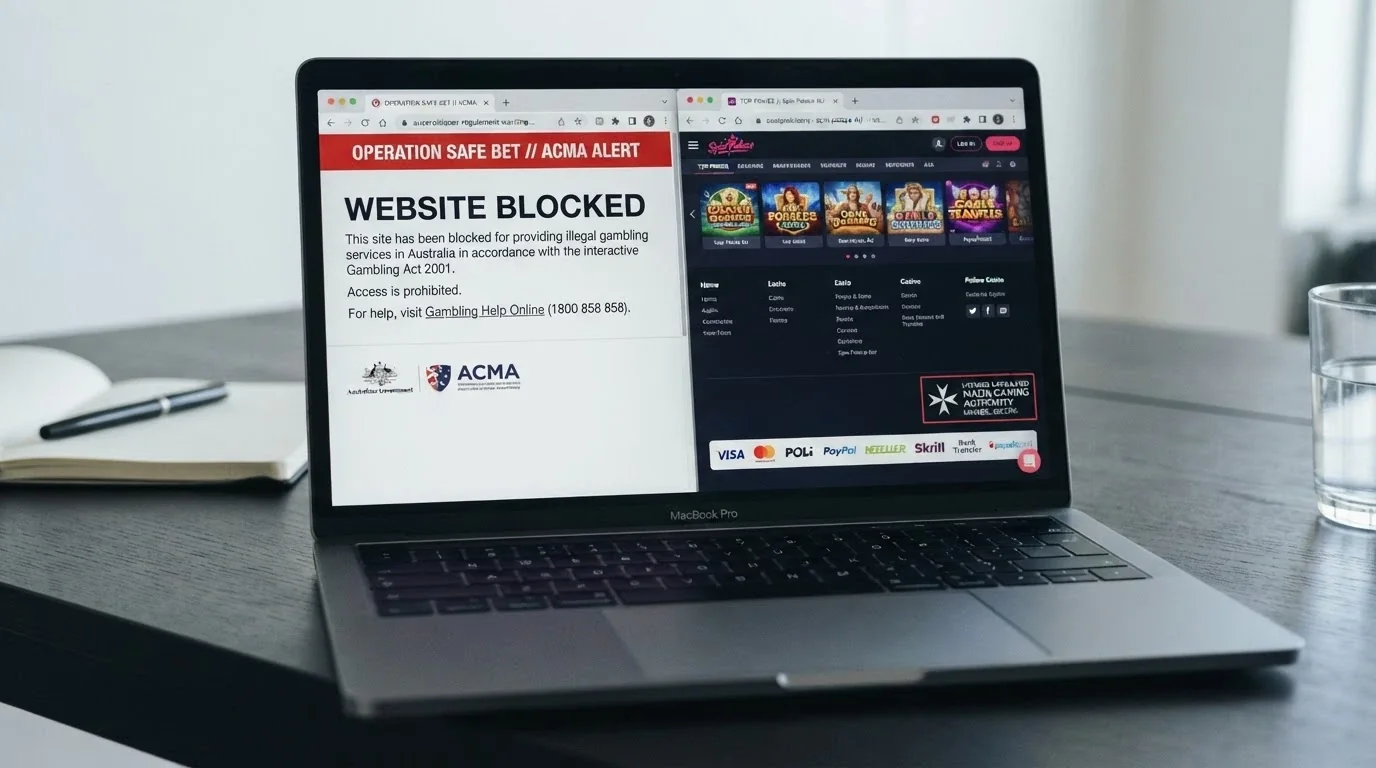
The IGA 2001 prohibits the provider of the service. The individual player is not prosecuted. What that means in practice is that a person in Australia can technically access an offshore casino without criminal consequence, but the casino itself is operating illegally in this market, and the Australian Communications and Media Authority has the power to direct internet service providers to block it. The ACMA has had 1,564 illegal gambling and affiliate websites blocked since its first blocking request in November 2019, and more than 225 illegal services have withdrawn from the Australian market since the 2017 amendments strengthened enforcement. The state of play in 2026 is a steady attrition: sites are blocked, the operators behind them rotate to new domains, and the cycle continues.
The 2026 reform layer sits on top of this. The Interactive Gambling Amendment (Gambling Reform) Bill 2026 passed Parliament on 19 August 2026 and its measures commence on 1 January 2027. The headline changes for offshore funding: from that date, banks and payment providers gain express authority to block transactions to illegal gambling operators. The implication for a $2 Neosurf deposit is small; the implication for a PayID or card transaction to an offshore site is direct. Banks will be able to refuse the payment. The reform also tightens advertising: no more than three wagering ads per hour between 6:00 am and 8:30 pm, a live-sport blackout, and an inducement-marketing ban that runs 14 days after sign-up, three months after BetStop deregistration, and indefinitely for at-risk customers. These are wagering-operator rules, not casino rules, but they change the funding and the marketing environment offshore operators sell into.
The Interactive Gambling Act 2001: Why Online Casino Has No Australian Licence
The IGA 2001 prohibits online casino games, online pokies, and in-play betting on a sporting event once it has started. The list of what is permitted is short: wagering on races and sport placed before the event, lotteries and keno, through operators licensed by a state or territory. The “online casino” category doesn’t have a licensed variant in Australia, and the ACMA is the federal regulator responsible for enforcing the prohibition. The 2017 amendments closed the loopholes offshore operators had used and gave the ACMA its blocking powers. The 2023 amendments added the credit-card and crypto ban. The 2026 reform adds the bank-blocking power and the advertising restrictions, effective from 1 January 2027. The structure of the regime is: prohibit the product, enforce at the provider, and tighten the funding rails over time.
What Players Actually Risk Using an Offshore $2 Deposit Casino
The list of what an Australian player gives up by playing at an offshore casino is concrete. There is no BetStop coverage — BetStop binds Australian-licensed wagering services only, and an offshore casino will keep taking a self-excluded person’s money. There is no Australian complaints body to escalate a dispute to, no Australian consumer protection, and no recourse if the operator refuses a withdrawal or voids a win. The site can be blocked at any time, including with a balance on it. From 1 January 2027, banks will be able to block transactions to illegal operators at the rail, meaning a deposit that works in March 2027 might not work in April 2027.
The risk profile is the trade-off for the $2 deposit. A player who treats a $2 deposit as a low-cost test of an offshore site’s interface and game catalogue is making a rational allocation of a small sum to a low-information first impression. A player who treats a $2 deposit as the start of a regular offshore gambling habit is taking on the full offshore risk profile, and the smallness of the entry point makes the risk harder to notice. The two are not the same activity, even though both start with the same $2.
What a $2 Deposit Actually Buys You: The Bonus Reality Check
A $2 deposit almost never qualifies for a welcome bonus. The minimum deposit to claim a welcome offer is set by the casino and almost always sits between A$10 and A$30 — Bizzo at A$10, Fair Go at A$20, Rainbet at $30 for the welcome package. A $2 deposit lands in the account, but it doesn’t unlock the bonus. The closest the $2 tier comes to a promotion is small free-spin drops, loyalty-point top-ups, or the absence of any promotion at all.
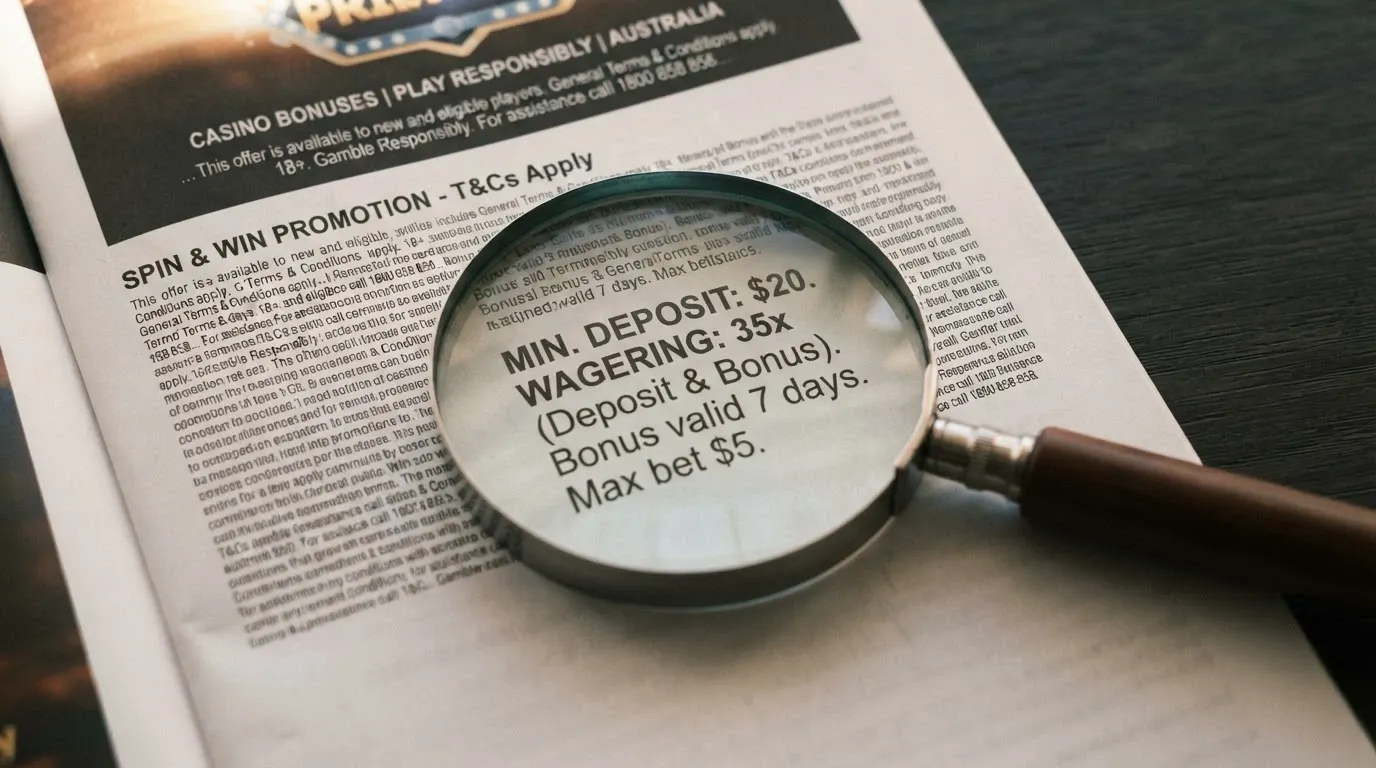
The bonus reality is worth stating plainly because the $2-tier marketing hides it. A welcome bonus with 30x to 40x wagering on a $10 deposit is a real workload — $300 to $400 of turnover before withdrawal — and even then the math on a small bonus often doesn’t favour the player once the expected loss during turnover is netted against the bonus value. On a $2 deposit, the bonus isn’t even on the table. The “bonus” at the $2 tier is the games themselves: $2 of bankroll to spend, with no wagering requirement, no max-cashout cap, and no bonus terms to read. That is the offer.
For a player who wants to test an offshore site’s games and cashier without committing more than the cost of a coffee, the absence of a bonus is a feature. The wagering workload on a $2 bankroll would be impossible to clear at standard 30x to 40x requirements anyway — there isn’t enough money in the account. The $2 tier is a clean, no-bonus entry point to the games, and reading it that way is the honest read.
Free Spins vs Deposit Match: What a $2 Bankroll Can Actually Claim
The two realistic promotions at the $2 tier are free spins (often a small drop tied to a specific pokie) and a no-deposit freebie that surfaces on signup. The deposit-match gate closes at A$10 and up, so the $2 deposit doesn’t trigger it. Free spins, when they appear, carry their own terms: the wagering on free-spin winnings is often higher than on cash bonuses (60x at Fair Go on free bonuses, for example), and many no-deposit and free-spin promotions cap the cashout at a low figure (Fair Go’s free-money promotions cap withdrawals at A$180). For a $2 bankroll, a free-spin offer is the realistic way to extend play, but the cap and the wagering both bite if the offer is triggered.
The honest summary: at the $2 tier, the realistic promotion is “play with the $2 you deposited.” A free-spin drop is a bonus, not a baseline, and any terms attached to it should be read carefully because the cap is often the part that decides whether the offer is worth the wagering. A reader who came looking for a welcome bonus at the $2 tier is looking for something the $2 tier doesn’t offer.
The Three Payment Methods That Actually Work at $2 (and the Ones That Don’t)
The payment-method table is the most useful single piece of information on this page. The reason a $2 deposit casino exists at all is the payment method, and the reason a particular casino is or isn’t a $2 deposit casino is whether its cashier lists the methods that work at that floor.
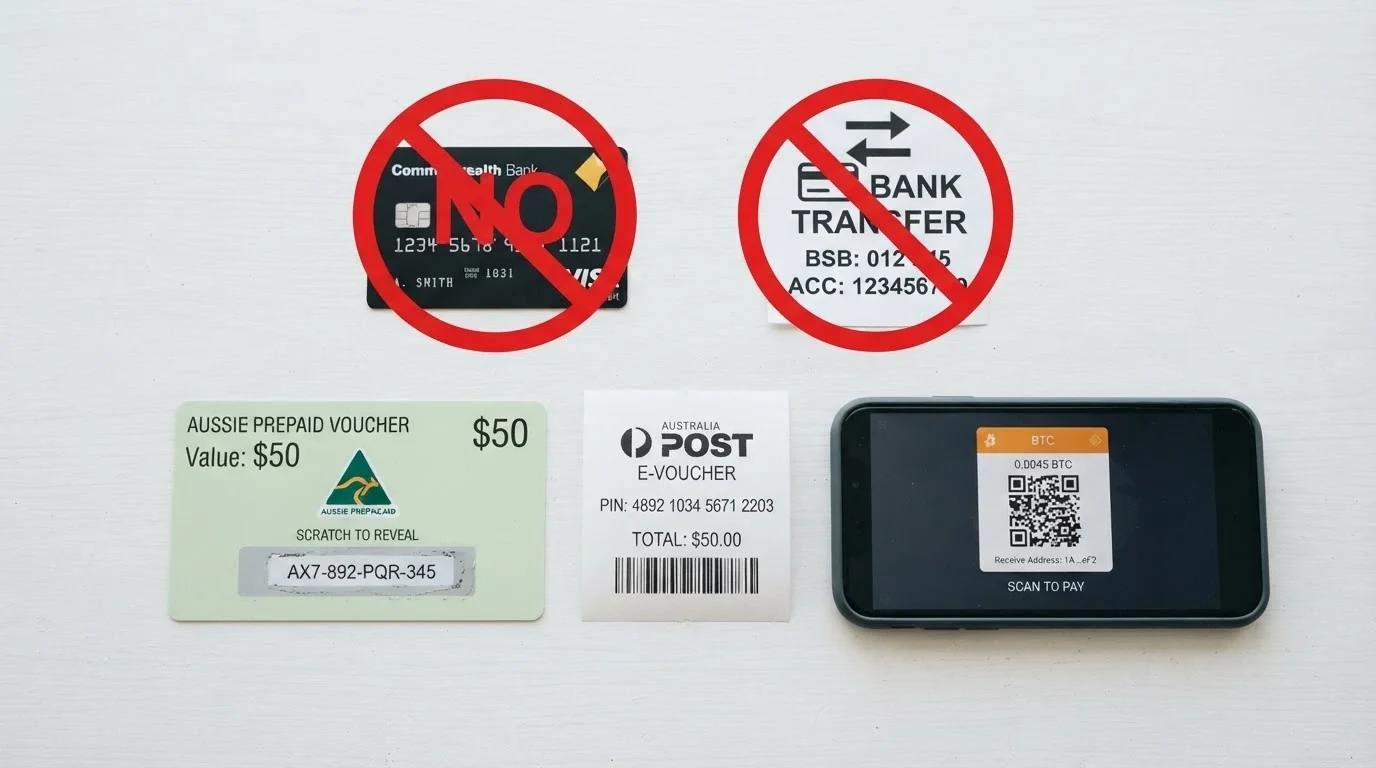
| Payment Method | Works at $2? | Actual Minimum Deposit | Notes |
|---|---|---|---|
| Neosurf | Yes | A$2 | Prepaid voucher; no bank details; instant credit |
| Paysafecard | Yes | A$2 | Prepaid 16-digit PIN; widely accepted |
| Cryptocurrency | Yes | $5–$15 (varies by token) | Near-zero network floor; minimums set by casino |
| PayID | No | A$10–A$30 | NPP rail; bypasses gambling MCC; doesn’t enable $2 |
| POLi | No | A$10+ | Bank-linked; A$10 floor typical |
| Credit card | No | A$10+ | Banned for licensed wagering since 11 June 2024 |
| Bank transfer | No | A$10–A$20 | Processing floor on the rail |
The credit-card and crypto row needs a second reading. The credit-card ban is for licensed Australian wagering, in force since 11 June 2024 with penalties up to A$247,500 for operators that breach it. Offshore casinos accepting Australian players are not bound by it and continue to accept cards. But the practical minimum on a card is still A$10 to A$20 because that’s the rail’s processing minimum — the ban and the rail floor are two different things, and both close the $2 door on a card. Crypto is similar: banned for licensed wagering since 11 June 2024, but offshore sites still accept it, and on the offshore side crypto minimums of $5 to $15 are common (Rainbet sets $5 for several tokens and $15 for Bitcoin, Ethereum, and USDT).
PayID and POLi are worth pausing on. PayID is a favourite of Australian-facing offshore casinos because the NPP rail bypasses the gambling merchant category code (MCC) blocks that the major banks apply to debit card transactions at offshore sites. A PayID deposit often goes through where a card deposit is declined. The catch is the minimum: A$10 at Goldenbet, A$20 at DragonSlots, A$25 at Bizzo, A$25 at National Casino, A$30 at Ricky Casino. PayID gets around the bank’s gambling block but not the casino’s deposit minimum. A $2 PayID deposit is not a thing.
Neosurf and Paysafecard: The Prepaid Vouchers That Make $2 Deposits Possible
Neosurf and Paysafecard are the workhorses of the $2 deposit tier. Both are prepaid voucher systems that operate outside the card and bank networks: a customer buys a voucher at a retail outlet for a chosen value (Neosurf) or loads a PIN for a chosen amount (Paysafecard), then enters the 16-digit code at the casino cashier. The credit is applied without a bank or card being involved, which is why the $2 minimum works — the rail doesn’t enforce its own floor.
The trade-off is the absence of chargeback rights and bank-level fraud protection. A Neosurf or Paysafecard deposit is final once the code is entered, and a dispute over a credit or a refund goes to the voucher issuer, not to the player’s bank. For a $2 deposit that’s a reasonable trade — the amount is small enough that the loss of chargeback protection is not material. For larger deposits, the same absence is more of a consideration. The voucher route also closes the door on credit-card and crypto acceptance as a tell: a site that accepts Neosurf alongside credit cards and crypto is signalling, by the mix of methods, that it is offshore and unlicensed. Licensed Australian wagering operators can’t accept cards or crypto for wagering under the June 2024 ban; a site that accepts all three is offshore.
Why PayID and POLi Can’t Deliver a $2 Deposit
PayID and POLi are the bank-linked rails most Australian players reach for first, and both are common on the cashier pages of Australian-facing offshore casinos. The reason they can’t deliver a $2 deposit is the floor the casino sets, not the rail itself. The NPP (New Payments Platform) that PayID runs on can technically transfer any amount above one cent; the A$10 to A$30 minimum is a casino policy, not a PayID policy. Banks support PayID across the board — ANZ, Commonwealth Bank, Westpac, NAB, and more than 80 smaller institutions — with default daily limits of A$10,000 (CommBank) to A$25,000 (the others), adjustable through the banking app.
The reason PayID matters despite the floor is the MCC bypass. Card transactions at offshore casinos are declined by the major banks because the merchant carries a gambling MCC; PayID transactions process as standard bank transfers on the NPP and don’t carry that code, so they get through where cards are blocked. The result is that PayID is a useful deposit method for offshore players, just not a $2 deposit method. The minimum tracks the casino’s policy, and the casino’s policy is set above the NPP’s technical floor to match the rail’s competitors and to keep the cashier economically sensible.
POLi runs on a similar principle — bank-linked, no card, no MCC — with a similar A$10+ minimum. The two methods are functionally equivalent for a player who wants a clean Australian bank transfer to an offshore site; neither one is a $2 deposit method.
Withdrawing From a $2 Deposit Casino: Minimums, Times, and Traps
The withdrawal side of a $2 deposit is where the small amount reveals its limits. Withdrawal minimums at offshore casinos are typically higher than deposit minimums — Rainbet’s $15 minimum withdrawal is a typical example, and a $2 deposit that has grown by a few dollars still doesn’t clear a $15 withdrawal floor. The pattern is: a player deposits $2 via Neosurf, plays, ends with a $5 or $10 balance, and finds the withdrawal minimum is $15 or $20. The remaining balance has to be played through or it sits in the account.
Crypto is the fastest withdrawal route. Rainbet processes crypto withdrawals in minutes to a few hours once Level 1 KYC is complete, which is a faster turnaround than a card or bank-transfer withdrawal at any operator in the set. The catch is the KYC — even a $2 deposit and a $20 withdrawal triggers identity verification on most offshore sites, and a delayed KYC submission holds the withdrawal.
The trap that doesn’t have a payment-method solution is the site being blocked. The ACMA has had 1,564 sites blocked since 2019, and a blocked site is inaccessible from Australia — including for an existing customer with a balance. The block is one-sided from the player’s perspective: the operator keeps whatever is in the account, and the player has no Australian complaints body to escalate to. The risk is small for a $2 deposit, but it isn’t zero.
Playing on Your Phone: Mobile $2 Deposit Casinos
Every operator in the featured set is mobile-accessible through the browser, and none of them require an app-store download. Offshore casinos do not distribute through the Australian Apple App Store or Google Play storefronts — Google Play blocks real-money gambling apps in Australia, and the App Store treats gambling apps with a country-by-country approach that does not list offshore casino brands. The browser is the access point, and the experience is functionally identical to a desktop session on a modern phone.

The friction on mobile is at the payment step. Entering a 16-digit Neosurf or Paysafecard code on a phone is fine. Scanning a crypto wallet QR code is faster on mobile than desktop. The steps where mobile is genuinely worse than desktop are KYC (a mobile camera is better for ID photos, but the upload flow on smaller screens is rougher), and the cashier page on a portrait screen, which compresses the method list and forces more scrolling. The mobile-first design that some operators (Rocket Play, prominently) invest in is a real differentiator at the cashier step.
The $2 mobile experience is, on the whole, the same as the $2 desktop experience. The same payment methods work, the same games run, and the same minimums apply. A player who wants to make a $2 deposit on the phone can do it the same way they’d do it on a laptop. The difference is the screen, not the rail.
Crypto Deposits From $2: Working Around the Australian Ban
Cryptocurrency is the only deposit method with a near-zero floor. A $2 transfer of Solana or Litecoin is a few cents above the network fee and clears in seconds. The reason that matters is the same reason it matters everywhere else on this page: the rail doesn’t enforce a minimum that the casino has to inherit. The casino sets its own minimum, and crypto-friendly operators set it low.
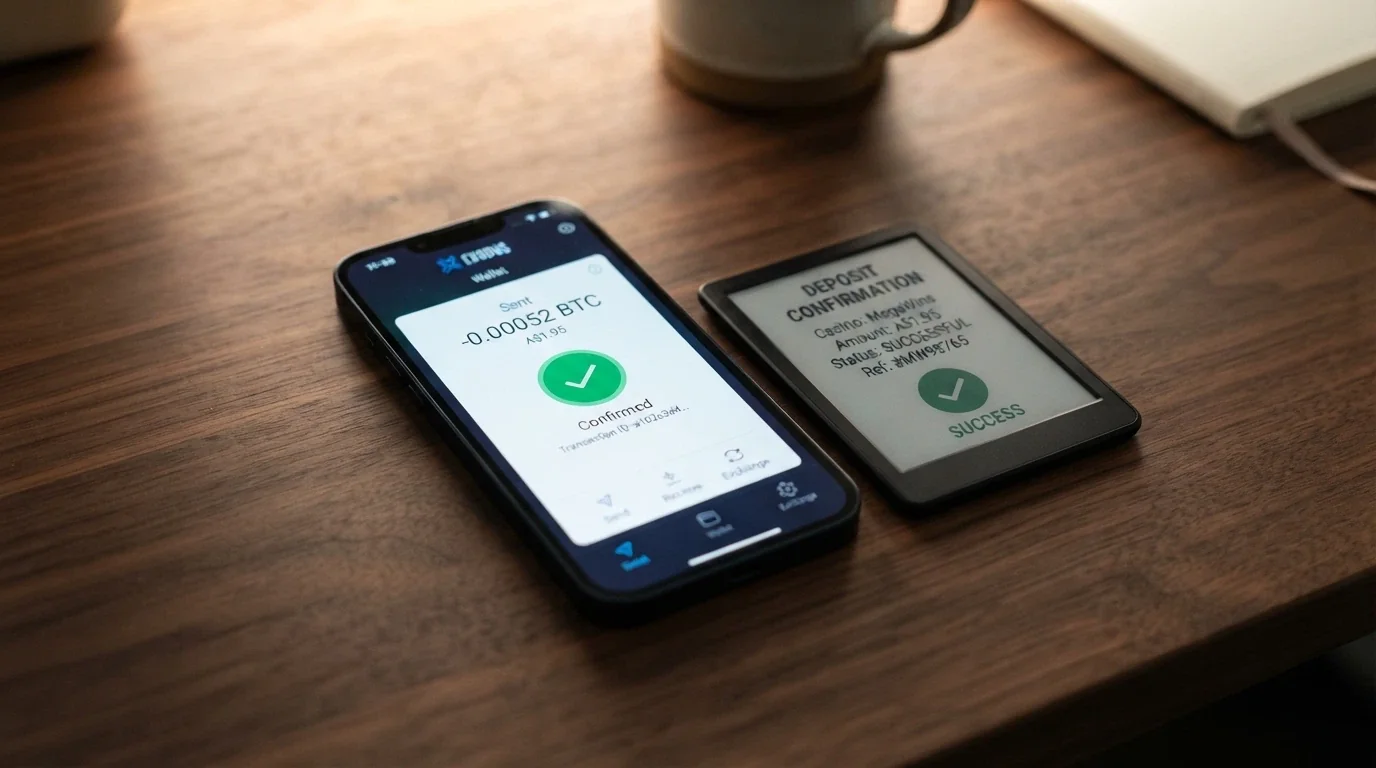
The Australian context is the part that has changed. Credit cards and cryptocurrency are banned for licensed Australian wagering since 11 June 2024, with penalties up to A$247,500 for operators that breach the ban. The ban applies to licensed operators; offshore casinos are not licensed in Australia and are outside the ACMA’s enforcement jurisdiction. An Australian player depositing crypto at an offshore casino is using a method that, at the licensed end of the market, no longer exists. The legal status of the player is unchanged from any other offshore deposit (the IGA targets the provider, not the player), but the funding environment is tightening at both ends.
The 2026 reform adds the bank-blocking power. From 1 January 2027, banks and payment providers will be able to block transactions to illegal gambling operators. The mechanism is a real concern for fiat funding (a PayID or card transfer to a blacklisted operator can be refused at the rail) but is less direct for crypto, which doesn’t pass through a bank in the same way. A bank can block a fiat on-ramp (the AUD-to-crypto exchange transfer), and the major Australian exchanges already operate under AUSTRAC’s AML/CTF regime, which has been tightened as of 31 March 2026. The 2027 reform doesn’t make crypto deposits to offshore casinos illegal, but it narrows the on-ramps that get there.
For an Australian player with a crypto wallet, the $2 deposit at an offshore casino still works in 2026. The deposit minimums on the casino side are $5 at Rainbet for several tokens and $15 for the larger ones; a $2 deposit clears the rail but not necessarily the casino’s minimum on the larger tokens. The play is the same: a near-zero floor on a rail that doesn’t go through a bank, used at an operator outside Australian jurisdiction.
The Best Pokies to Play With a $2 Bankroll
A $2 bankroll is small enough that the pokie you pick determines how far it goes. At A$0.20 per spin, $2 buys roughly ten spins, and the only lever the player has to stretch the bankroll is the RTP — the long-run return the game pays back to players as a percentage of the wager. A 96% pokie returns, on average, A$0.96 for every A$1 wagered; a 98% pokie returns A$0.98. The 2 percentage points are the difference between $2 lasting a touch longer or a touch shorter, and over ten spins the difference is small in absolute terms but is the only edge the player can actually choose.

| Pokie Title | RTP | Provider | Volatility |
|---|---|---|---|
| Blood Suckers | 98.00% | NetEnt | Low |
| Big Bass Bonanza | 96.71% | Reel Kingdom / Pragmatic Play | High |
| Sweet Bonanza 1000 | 96.53% | Pragmatic Play | High |
| Razor Returns | 96.55% | Push Gaming | High |
| Gates of Olympus | 96.50% | Pragmatic Play | High |
| Gates of Olympus 1000 | 96.50% | Pragmatic Play | High |
| Wanted Dead or A Wild | 96.38% | Hacksaw Gaming | High |
| Money Train 4 | 96.10% | Relax Gaming | High |
| Serial | 96.07% | Nolimit City | High |
| Wolf Treasure | 96.00% | IGTech | Medium–High |
| Cash Bandits 3 | 96.00% | RTG | High |
| Elvis Frog in Vegas | 96.00% | BGaming | Medium–High |
| Munchies | 96.00% | Nolimit City | Extreme |
| Lucky Penny | 96.10% | — | Medium |
| Links of Flame | 96.05% | — | High |
| San Quentin xWays | 96.03% | Nolimit City | Extreme |
| Plentiful Treasures | 95.00% | RTG | High |
| Luxor Gold | 95.76% | Playson | High |
The numbers to read the table by: 96% RTP is the floor the Australian-facing reviews recommend, and 97%+ is considered high. The titles above 96.5% are the genuine stretch-the-bankroll picks for a $2 deposit. Below 96% the bankroll is at the mercy of variance; above 97% the bankroll lasts a touch longer on average, though the sample of ten spins is too small for the average to mean much in practice.
Volatility is the other axis the table is honest about. A high-volatility pokie pays out less often but in larger chunks when it does; a low-volatility pokie pays out more often in smaller amounts. For a $2 bankroll, low volatility is the rational pick: ten spins at a low-volatility game produces more small wins (and therefore more spins) than ten spins at a high-volatility game. Blood Suckers at 98% RTP and low volatility is the table’s best fit for the brief. The high-volatility titles (Gates of Olympus, Big Bass Bonanza, Razor Returns, the Nolimit City games) are playable on a $2 bankroll, but the bankroll will evaporate faster on a cold streak.
High-RTP Pokies That Stretch a $2 Bankroll
The titles above 96.5% RTP are the picks that, on the long-run average, give the player the most play for $2. Blood Suckers at 98.0% is the standout: a NetEnt pokie with a 44.9% hit frequency, which means nearly half of all spins produce a win of some kind. On a $2 bankroll, that hit frequency is the difference between ten spins producing four or five payouts versus one or two. Big Bass Bonanza at 96.71% is the second-strongest RTP in the table and the popular pick across the featured set; Razor Returns (96.55%), Sweet Bonanza 1000 (96.53%), and both Gates of Olympus variants (96.50%) round out the high-RTP cluster.
The reason RTP matters more at low deposit levels is the same reason a small bankroll is more vulnerable to variance. A $200 bankroll can absorb a 50-spin losing streak; a $2 bankroll cannot. A higher RTP is a slightly better expected return, and at a small bankroll the slightly better return is the only edge the player can lock in before the spin. The titles in the 96.5%+ cluster are the rational picks, and the titles below 96% are the picks that cost the player a percentage point or two of return on every spin.
Real-Money Pokies at Minimum Bet: What $2 Actually Plays
At A$0.20 minimum bet, $2 is roughly ten spins. That is the practical experience of a $2 bankroll: a short session, mostly quiet, with the occasional small payout that extends the spin count by one or two. Gates of Olympus (Pragmatic Play) has a bet range of A$0.20 to A$300, which puts the $2 deposit at the very bottom of the betting scale. Most Pragmatic Play and Reel Kingdom titles in the featured set start at A$0.20. The minimum is the floor the bankroll sits at.
The volatility effect at this scale is more visible than at a $200 bankroll. A high-volatility pokie (Munchies, with a 9.95% hit frequency, is the extreme) will produce long dry stretches punctuated by larger wins. A $2 bankroll on a 9.95% hit frequency game is, on average, ten dry spins; a $200 bankroll on the same game is 1,000 dry spins and the average smooths out. The hidden factor is hit frequency: the percentage of spins that produce a payout of any size. Blood Suckers at 44.9% produces a payout on nearly every other spin; Munchies at 9.95% produces one roughly every ten spins. For a $2 bankroll, hit frequency matters more than the size of the maximum win.
The session is what it is. Ten spins at A$0.20, on a high-RTP pokie, with a 4-out-of-10 chance of a small payout on each spin. The $2 deposit is a look at the game, not a run at a jackpot. Treating it as a look is the only framing that makes the experience what it actually is.
How to Pick a $2 Deposit Casino That Won’t Disappear Overnight
The honest way to pick an offshore $2 deposit casino is to look at five things: the licence claim, the payment-method mix, the withdrawal terms, the operator’s complaint history, and the ACMA block list. Each one is a check the player can run in ten minutes; together they cut the worst operators out of the running.
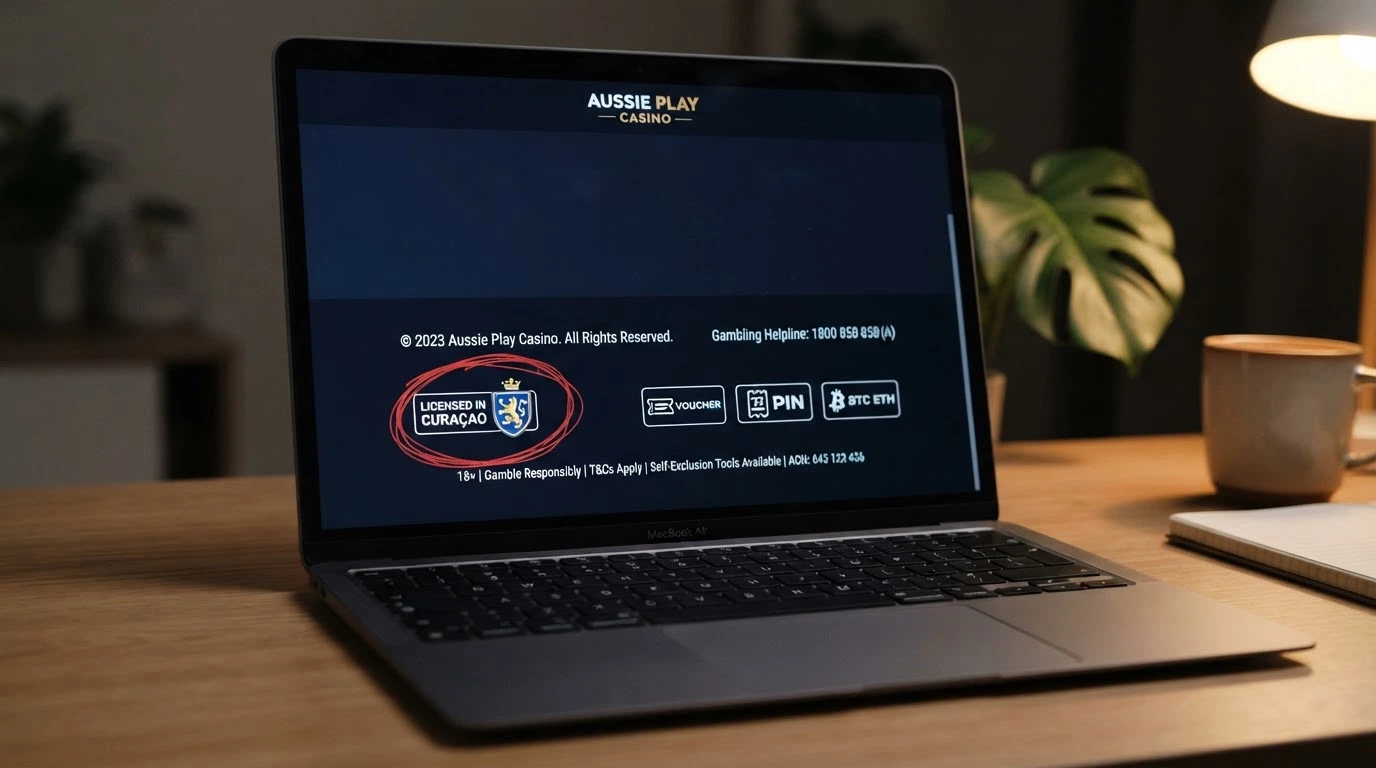
The licence claim is the first filter. Any operator claiming an Australian licence is lying, because no such licence exists. A Curaçao claim is the realistic baseline for the offshore set, and the licence should be verifiable on the Curaçao Gaming Control Board’s public register (operator pages often link to it; if the licence badge in the footer is decorative only, that is a signal). The licence doesn’t make the operator safe, but an unverifiable licence is the operator telling the player not to check.
The payment-method mix is the second filter. A $2 deposit casino lists Neosurf, Paysafecard, or crypto in its cashier, and at least one of those should be the deposit method actually used. A site that advertises a $2 minimum but only lists PayID and cards in the cashier is misrepresenting its own floor. A site that accepts credit cards and crypto for wagering alongside Neosurf is signalling, by the mix, that it is offshore and unlicensed — licensed Australian wagering operators can’t accept cards or crypto under the June 2024 ban.
The withdrawal terms are the third filter, and the one that catches the worst operators before they cost the player anything. A site whose withdrawal minimums are not clearly stated in the cashier, whose KYC requirements are vague, or whose processing times are not specified is one that has decided to keep those terms flexible — for the operator, not the player. Rainbet’s $15 minimum withdrawal and minutes-to-hours crypto processing is a clear example of a withdrawal policy the player can read in advance; a site that doesn’t publish its withdrawal policy is a site the player should not deposit into.
The operator’s complaint history is the fourth filter, and the one with the fewest tools. There is no Australian complaints body to escalate to; the player is left with affiliate review sites, player forums, and the operator’s own dispute process. A search for the operator’s name alongside “withheld withdrawal” or “won’t pay” is the practical test. A pattern of complaints is a signal; a single complaint is noise.
The ACMA block list is the fifth filter, and the one with the cleanest source. The ACMA publishes its list of blocked sites, and a check of the operator’s domain against the list is a five-second lookup. A blocked site is, by definition, one the ACMA has determined is offering a prohibited service to Australians. The site may still be accessible through a workaround, but the block is the regulator’s view of the operator.
The Five Things to Check Before Depositing $2 at Any Casino
The five-checklist is the practical version of the above:
- Verify the licence claim. Any claim of an Australian licence is false. A Curaçao claim should be verifiable on the regulator’s register. An unverifiable licence is a red flag.
- Check the payment methods against the $2 reality. Neosurf, Paysafecard, and crypto are the only methods that work at $2. If the cashier only lists PayID, POLi, and cards, the $2 minimum is marketing, not policy.
- Read the withdrawal terms before depositing. Withdrawal minimums, KYC requirements, processing times, and max-cashout caps should be in the cashier or the bonus terms. If they aren’t, the operator is choosing not to publish them, which is itself a signal.
- Search for player complaints about withheld withdrawals. A pattern of complaints is a real signal; a single complaint is noise. The Australian reader has no complaints body to escalate to, so the forum-and-affiliate search is what there is.
- Check the ACMA block list. The ACMA publishes its blocked-sites list. A check takes seconds. A site on the list is one the regulator has acted against.
The point of the list is to put the decision in the player’s hands with information that is publicly available. A $2 deposit is small, but the offshore reality is large: every operator on this page is outside Australian jurisdiction, and the player is the only one running the checks. The list is the minimum due diligence.
Responsible Gambling: Why a Low Deposit Doesn’t Mean Low Risk
A $2 deposit is a small financial commitment. The math is small, the time is short, and the bankroll disappears in a few minutes. The framing matters because it is the part of the experience that makes offshore gambling feel low-stakes. The framing is also the part that hides the actual risk profile, which has nothing to do with the size of the deposit and everything to do with the operator behind it.
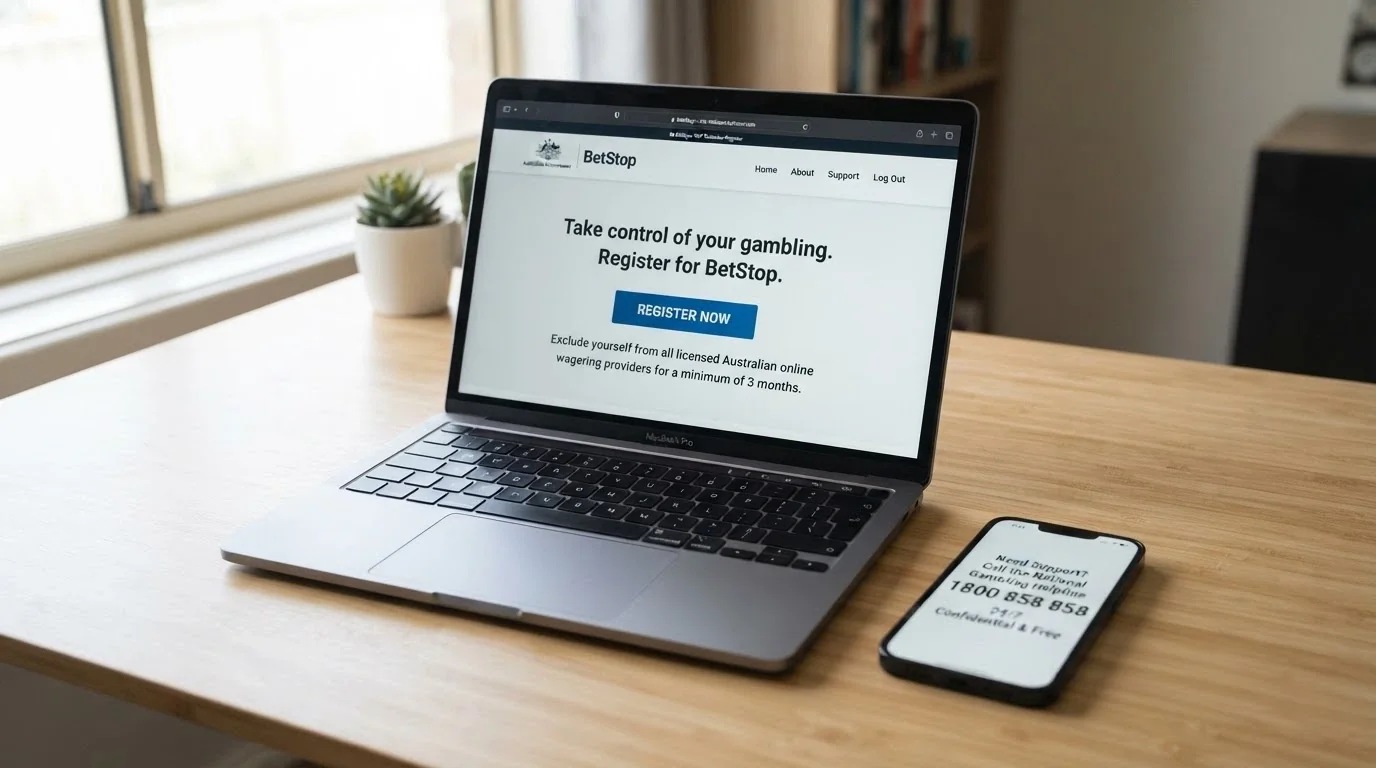
The Australian harm-minimisation infrastructure is real and effective. BetStop, the National Self-Exclusion Register, has been live since August 2023. As at 31 July 2026, 67,480 Australians had registered, with 41,290 exclusions still active — more than 60% of registrants still excluded at any given time. 78% of registrants are under 40, and 38% chose lifetime exclusion. One BetStop registration excludes a person from every Australian-licensed online and phone wagering service in a single step, for a period of three months, six months, one year, five years, or lifetime. The mechanism works because the licensed operators are required to honour it.
The mechanism does not reach an offshore casino. BetStop binds Australian-licensed wagering services only. An offshore casino is not licensed in Australia, is not connected to BetStop, and will keep taking a self-excluded person’s money. The deposit minimum doesn’t change this — a $2 deposit to an offshore casino by a BetStop-registered Australian is still a deposit the offshore operator will accept, and BetStop cannot prevent it. The National Gambling Helpline (1800 858 858) is free, confidential, and staffed 24/7, with online counselling through Gambling Help Online. The helpline is the right call for someone who is self-excluding and finding that the offshore sites are still accessible.
About 2.1% of Australian adults — roughly 430,000 people — experience problem gambling, with the Australian Institute of Health and Welfare putting high-risk gambling at 1.8% in 2022. The minimum age for any commercial gambling in Australia is 18. The numbers are not large by population standards, but they are large by individual standards for the people in them, and the offshore casino environment is the one that sits outside every Australian safeguard designed to help them.
BetStop, the Helpline, and Why Offshore Casinos Sit Outside Every Safeguard
BetStop works at the licensed end of the market, and the licensed end of the market doesn’t include online casino. The wagering operators covered by BetStop are the licensed bookmakers (Sportsbet, bet365, Ladbrokes, the TABs, and about fifty others); the offshore casinos on this page are not on the list. A self-excluded Australian who wants to play online casino has to find a way to do it that BetStop doesn’t see, and the offshore sites are that way.
The 2026 reform tightens parts of this. From 1 January 2027, direct marketing of inducements is prohibited for 14 days after a customer signs up, for three months after a person deregisters from BetStop, and indefinitely for customers identified as at risk of gambling-related harm. The marketing side closes; the offshore casino side does not, because the marketing restrictions are aimed at licensed wagering operators and the offshore casinos are not on that list. The bank-blocking power from the same date gives banks the authority to refuse transactions to illegal operators, which is a friction at the funding end but not a block on the offshore site itself.
The honest framing for a reader who is at risk: a $2 deposit is not a low-risk activity because the deposit is small. The offshore site is outside every safeguard, and the safeguards themselves are the only thing that makes the licensed end of the market manageable for people who need to be excluded from it. The helpline (1800 858 858) and Gambling Help Online (gamblinghelponline.org.au) are free, confidential, and 24/7. The BetStop register is the right call for someone who is trying to stop.
How We Evaluated Every $2 Deposit Casino on This Page
The ranking on this page is built from publicly available information. The ACMA’s blocked-sites list is the cross-check on whether an operator has been acted against; the operator’s own terms page is the source for the welcome offer, wagering, and payment-method minimums; the Curaçao Gaming Control Board’s public licence search is the source for the licence claim. Affiliate review pages (Auspokies.com, Slotozilla.com, Aussiescasinos.com, Gamblinginsider.com, Batmangothamcity.net, Godisageek.com, Casinoshub.com, Clearcasinos.com, pokertube.com, jayisgames.com) provided the per-operator specifics where the operator’s own page did not, and were used as a cross-check rather than a primary source.
The ranking criteria, in order of weight: licence transparency (is the licence claim verifiable?), payment-method honesty at the $2 tier (does the cashier list Neosurf, Paysafecard, or crypto at a $2 minimum?), game-provider catalogue size and variety, bonus-term clarity (is the wagering and the max cashout stated?), and qualitative signals of operator longevity. The market-share figure used to position Royal Reels is the operators skill’s Australian market data, where Rocket Play at 9.4% and SkyCrown at 8.55% are the highest-ranked offshore casino brands among the featured set, and Royal Reels at 2.51% is the third.
The verification gap is worth stating. The Curaçao licence for several operators (Scream Casino, Rocket Casino, Royal Reels, WinSpirit, Stake) is “unconfirmed this run” because the specific licence number and issuing authority were not verified against the Curaçao register in this round; only the affiliate review pages’ claims were available. The offshore status of every operator is confirmed (every brand is offshore; none is Australian-licensed), but the specific licence number for several operators is not. A reader who wants to verify a specific operator’s licence should check the Curaçao Gaming Control Board’s public register directly.
Is a $2 Deposit Casino Worth Your Time in 2026?
A $2 deposit casino is a real thing, and the $2 deposit itself works. Neosurf, Paysafecard, and crypto all clear the rail; a player with one of those three payment methods can land $2 in an offshore casino account in minutes, run ten spins at minimum bet, and walk away. The casino is real, the games are real, and the bankroll behaves the way ten spins at A$0.20 behave — mostly quiet, occasionally a small win, and then it’s done.
The reason the $2 deposit is worth doing and the reason it isn’t are the same reason. The $2 deposit is the cheapest possible test of an offshore casino’s interface, game catalogue, and cashier, and as a test it is hard to fault. A player who is curious about an offshore site and wants to see what the lobby looks like, what the games play like, and what the deposit-and-withdrawal flow actually is can find out for A$2 with a Neosurf voucher, and the financial exposure is small enough that the cost of being wrong is also small. As a test, the $2 deposit is rational.
The reason the $2 deposit isn’t worth doing, in the framing a reader should hold onto, is what the test is testing. The offshore casino is outside every Australian safeguard. There is no BetStop coverage, no Australian complaints body, no consumer protection, and no recourse if the operator refuses a withdrawal. The site can be blocked with a balance on it. From 1 January 2027, banks will be able to refuse transactions to illegal operators at the rail. The $2 deposit is small, but the operator is not a small operator — it is a Curaçao-licensed brand outside Australian law, and the player is the only one running the checks.
The honest verdict: a $2 deposit is a low-cost way to test an offshore casino’s interface and game catalogue, and for a player who treats it that way, the trade-off is reasonable. For a player who treats the $2 deposit as the start of a regular offshore gambling habit, the smallness of the entry point is the trap — the offshore site is the same site whether the first deposit is $2 or $200, and the safeguards that the Australian regulatory system was built to provide are absent either way. The $2 deposit is worth the two dollars if it stays a test. It is worth considerably less if it doesn’t.
Frequently Asked Questions About $2 Deposit Casinos in Australia
Why do most Australian online casinos have a $10 or $20 minimum deposit instead of $2?
The minimum is set by the payment method, not by the casino. Card networks and bank transfers carry processing minimums of A$10 to A$20, and any casino that relies on those rails inherits the floor. The $2 tier exists only where the payment method bypasses the card and bank networks — Neosurf, Paysafecard, and cryptocurrency all clear the rail, and the $2 minimum becomes possible. The $10 and $20 floors at most Australian-facing casinos are a reflection of the payment methods they accept, not a policy choice about how much players should deposit.
Can I use PayID to deposit $2 at an Australian online casino?
No. PayID minimums at Australian-facing offshore casinos run from A$10 to A$30 — Goldenbet at A$10, DragonSlots at A$20, Bizzo at A$25, National Casino at A$25, Ricky Casino at A$30. The NPP rail that PayID runs on doesn’t impose the floor; the casino does. PayID is useful for offshore players because it bypasses the gambling merchant category code (MCC) blocks that the major banks apply to debit card transactions at offshore sites, but it does not enable a $2 deposit at any of the featured operators.
What is the difference between a $2 deposit casino and a $5 or $10 deposit casino?
The deposit tier determines which payment methods work, which bonuses are accessible, and how many spins the bankroll buys. A $2 deposit runs through Neosurf, Paysafecard, or crypto, qualifies for no welcome bonus, and buys roughly ten spins at the A$0.20 minimum bet. A $5 deposit runs through the same methods and still doesn’t unlock most welcome offers. A $10 deposit opens up PayID, POLi, and cards, makes welcome bonuses accessible (Bizzo’s A$10 floor, for example), and buys roughly fifty spins at minimum bet. The tier is the payment-method floor, and the floor is what changes between $2, $5, and $10.
How do I know if a $2 deposit casino is a scam?
Four signals cover most of the scam risk. First, any operator claiming an Australian licence is lying — no such licence exists. Second, a site that accepts credit cards or crypto for wagering alongside Neosurf is signalling, by the payment-method mix, that it is offshore and unlicensed. Third, withdrawal terms that are vague or absent are a red flag — a legitimate operator publishes its withdrawal minimums, KYC requirements, and processing times. Fourth, the ACMA’s blocked-sites list is a five-second check, and a site on the list is one the regulator has acted against. An unlicensed offshore operator offering a $2 minimum deposit is a scam risk, not a bargain — the small deposit doesn’t make the operator safer, it just lowers the cost of finding out.
What games can I play with a $2 deposit at an Australian online casino?
Pokies dominate the $2 tier because they have the lowest minimum bet. Most Pragmatic Play and Reel Kingdom titles in the featured set start at A$0.20, and at that level $2 buys roughly ten spins. The highest-RTP pick for a $2 bankroll is Blood Suckers at 98.0% — a NetEnt pokie with a 44.9% hit frequency, which means nearly half of all spins produce a payout. Table games typically carry higher minimums (A$1 to A$5 for most blackjack and roulette variants), which is a more efficient way to spend $2 if the goal is to test the platform rather than stretch the bankroll. Live-dealer games are accessible but impractical at a $2 bankroll, since the minimums on most live tables start at A$1 and run to A$5 or more. The best use of $2 is on a high-RTP pokie at minimum bet, where the bankroll lasts the longest and the game plays out as intended.