What an A$1 deposit really gets you at offshore pokies sites
 Available in AU
The phrase “$1 minimum deposit pokies” promises something it cannot deliver through most payment methods in 2026. Australians searching for it land on offshore casinos whose marketing pages advertise a dollar floor — and then find, at the deposit screen, that the floor the cashier actually enforces is A$10, A$20, or higher. The gap between the search term and the cashier is the entire story this page tells.
Data current as of 18 October 2026 and verified against the ACMA register and operator terms pages.
Table of Contents
- Why a $1 Deposit on Australian Pokies Is Harder Than It Looks
- The Legal Reality Every Australian $1 Pokies Player Needs to Know
- 10 Pokies Sites That Accept Low Deposits From Australia — Ranked
- Why Your $1 Bonus Won’t Go as Far as the Advertised Figure
- Which Payment Methods Actually Let You Deposit $1 — and Which Don’t
- Playing $1 Deposit Pokies on Your Phone — What Changes
- How We Selected and Evaluated These $1 Deposit Pokies Sites
- Your $1 Deposit Strategy — What To Actually Do Next
- Frequently Asked Questions
Why a $1 Deposit on Australian Pokies Is Harder Than It Looks
A genuine A$1 deposit at an Australian-facing pokies site is real, but it lives in a narrow lane. Cryptocurrency is the only payment method that reliably clears a true A$1, and even then only on the cheapest networks. Everything else — debit cards, e-wallets, prepaid vouchers, PayID — runs into a minimum that the casino, the payment processor, or both, have set above the dollar that brought the player here. The processing-fee economics behind that gap explain why the marketing claim survives. A card processor typically charges the casino between A$0.30 and A$0.50 per transaction, which means a one-dollar deposit leaves the operator with fifty to seventy cents of revenue before any game has been played. Set the floor at A$10 and the same fee takes three to five per cent; set it at A$1 and the operator hands most of the deposit back to the bank. That is not a pricing decision an operator makes twice.
The honest alternative, for a player who wants the pokies experience without the deposit friction, is demo mode. Most offshore pokies sites and their software providers let visitors play every game in their catalogue with a fake balance and no registration. There is no processing fee, no minimum deposit, no offshore risk and no chance of being blocked from a balance that exists. The experience is identical to real-money play down to the random-number generator, and a player who wants to know whether a dollar would be enough to enjoy a particular pokies can find out without spending it.
What “$1 Minimum Deposit” Actually Means at Online Pokies Sites
The marketing floor and the deposit-form floor are different numbers, and the difference matters. Five of the fifteen casinos on one review site’s roster accept a A$10 minimum. None of the fifteen accept a A$1 minimum across all payment methods. The advertised dollar lives in a banner; the cashier lives in code, and the code has been set against the cost of doing business in cents.
A casino that advertises a dollar floor while only offering Visa and Mastercard at the cashier is making a misleading claim, and a player who arrives at that cashier will learn the difference. The deposit-form minimum is what binds; the homepage copy is what recruits. The gap is rarely closed after the player’s first failed deposit attempt, which suggests the gap is the point. That barrier filters casual curiosity from real commitment.
The Processing-Fee Trap — Why Your Card Won’t Process a $1 Deposit
Card processing is the most familiar deposit route and the least likely to clear a dollar. Visa and Mastercard transactions carry per-transaction fees that operators pay on top of interchange, and those fees do not scale with the deposit amount. A A$100 deposit through the same rail costs the casino the same thirty to fifty cents in processing as a A$1 deposit — but the operator keeps A$99.50 of the hundred. Drop the deposit to A$1 and the operator keeps fifty to seventy cents. The economics are not subtle.
The standard minimum at most Australian-facing offshore casinos sits at A$10 for cards, and that number is not arbitrary. It is the floor at which processing fees stop eating a meaningful share of the deposit. Below A$10, the operator is subsidising the player to use the rail; below A$5, the operator is paying the player to deposit. Most operators decline to do either.
The credit-card ban in force since 11 June 2024 narrows the card option further for any site that claims to operate under Australian rules. A gambling site that requests a credit card from an Australian player is, by that request alone, signalling that it sits outside the Australian regime — because no Australian-licensed wagering operator is permitted to accept one.
What Your Dollar Actually Buys — Spin Count and Session Length at $1
The dollar that lands at the cashier buys a number of spins, and the number depends on the minimum stake the operator enforces on the chosen game. A pokies with a one-cent minimum line bet, twenty paylines and a one-credit-per-line bet runs at a twenty-cent minimum spin — which gives a dollar five spins before the balance hits zero. A pokies with a twenty-five-cent minimum spin gives a dollar four spins. The session length runs in single-digit minutes, and the variance matters more than the average from that point.
Volatility reshapes what a dollar does inside those few spins. A low-volatility pokies pays small prizes often; a high-volatility pokies pays rarely and heavily. Big Bass Bonanza, one of the most-played pokies in the Australian-facing market, runs at an RTP of 96.71 per cent with medium-high volatility — meaning a dollar’s worth of spins returns, on average, ninety-six cents, with a wide spread around that mean. The same dollar on a low-volatility title returns more spins and fewer surprises; on a high-volatility title, the dollar either evaporates in a flurry of dead spins or triples on a bonus round the player will never see at this budget.
A dollar is a trial, not a session. A player who wants to feel a pokies across enough spins to know whether they enjoy it has a budget mismatch — five spins is not a feel. Demo mode delivers the same game at the same random-number generator with unlimited spins and no money on the line.
Demo Mode vs Real-Money Play — Where the $1 Holds Value
Demo mode is the underused honest answer to the $1 deposit question. The free-play version of every Pragmatic Play, Hacksaw Gaming and Relax Gaming title listed in the high-RTP table later on this page is available without an account, an email address or a deposit. The game runs against the same random-number generator as the real-money version; the only difference is that the balance resets and the wins do not pay out.
The case for demo mode is not that real money at A$1 is bad value. It is that the dollar buys so little real-money play that the player learns less from the dollar than they would from ten minutes of free spins. Five real-money spins on a twenty-cent-minimum game returns roughly ninety-six cents in expected value, with a confidence interval that swallows the whole dollar more often than not. Five hundred demo spins on the same game returns roughly A$96 in expected play-time-equivalent, for free, with no offshore exposure and no risk of a blocked withdrawal.
The case for the A$1 real deposit, where one exists, is that the player wants the offshore experience as the experience — the cashier, the bonus terms, the customer-service response time, the withdrawal flow. A dollar is the cheapest way to test those. It is not the cheapest way to test the games.
The Legal Reality Every Australian $1 Pokies Player Needs to Know
Online casino games and online pokies are prohibited in Australia under the Interactive Gambling Act 2001 — no licence exists anywhere in the country, federally or in any state or territory. The 2017 Amendment Act closed the loopholes offshore operators had used and gave the Australian Communications and Media Authority (ACMA) the enforcement and blocking powers it now exercises. Every site on the ranking later in this article is offshore. None holds an Australian licence, because none can.
This is not a grey area. The product the player is depositing a dollar to play is illegal to provide to a person in Australia. The IGA targets the provider, not the player — no Australian has been prosecuted for placing a bet — but the player carries every protection they would have had under Australian rules when they hand that dollar to an offshore operator. The 2026 Reform, which passed Parliament on 19 August 2026 and commences on 1 January 2027, narrows the offshore route further. Banks and payment providers gain express authority to block transactions to illegal gambling operators from that date. Direct marketing of inducements is prohibited for fourteen days after sign-up and three months after BetStop deregistration. The reform is the largest tightening of Australian online-gambling rules in two decades, and it does not legalise what was illegal — it makes the existing prohibition harder to operate around.

No Australian Casino Licence Exists — The IGA 2001 and What It Prohibits
The Interactive Gambling Act 2001 makes it an offence to provide an online casino, online pokies or in-play sports betting to a person physically in Australia. The 2017 Amendment Act closed the “click-to-cancel” loophole that offshore operators had used to argue they were not actively targeting Australians. The ACMA has directed Australian ISPs to block 1,564 illegal gambling and affiliate websites since November 2019, and more than 225 illegal services have voluntarily withdrawn from the Australian market since 2017.
What is licensed under Australian rules is narrower than most players realise. Wagering on races and sporting events placed before the event begins is licensed through state and territory regulators — the Northern Territory Racing and Wagering Commission is the de facto national licensor for online wagering, with state point-of-consumption tax running between ten and fifteen per cent of net wagering revenue. Lotteries and keno are licensed. Online casino games, online pokies and in-play sports betting are not. The credit-card and crypto ban of 11 June 2024 closed the payment-route loophole, and the 2026 Reform closes the advertising and bank-blocking loopholes from January 2027.
A player who sees a casino advertising an Australian toll-free phone number, an Australian dollar balance or a PayID logo is looking at an offshore operator using surface Australian signals. None of those signals mean the operator holds an Australian licence, because no such licence exists for the product being sold.
Offshore Operators — The Protections You Give Up When You Deposit
Playing at an offshore casino is not a crime for the Australian player. The IGA targets the provider. But the player loses every Australian consumer protection the moment the dollar leaves their account. A refused withdrawal is not appealable to an Australian tribunal. A voided win is not reviewable under Australian consumer law. A balance left on an account when the ACMA directs ISPs to block the site is not recoverable through any Australian process.
BetStop does not bind offshore operators. BetStop, the National Self-Exclusion Register, had 67,480 registrations as at 31 July 2026, with 41,290 exclusions still active. One registration excludes the person from every Australian-licensed online and phone wagering service. It does not bind offshore casinos — they will keep taking a self-excluded Australian’s money. The signal a self-excluded player should look for is whether the offshore casino checks BetStop at all. None of the operators on the ranking later in this page do.
The credit-card and crypto request is the cleanest tell. Credit cards, credit-related products and digital currency are banned as payment for licensed online wagering since 11 June 2024, with a penalty of up to A$247,500 for any operator that fails to enforce the ban. An Australian who is asked for a credit card or a crypto deposit by a gambling site is being served by someone outside the Australian rules — and that fact alone tells the player where their dollar is going.
The Payment Ban and the 2026 Reform — What Changes on 1 January 2027
The credit-card and crypto ban has been law since 11 June 2024. The 2026 Reform layers three further restrictions on top, all commencing on 1 January 2027. Banks and payment providers gain express authority to block transactions to illegal gambling operators — meaning a A$1 Litecoin deposit from an Australian bank account may be refused at the bank level, not the casino level, once the reforms take effect. Direct marketing of inducements is prohibited for fourteen days after a customer signs up and for three months after a person deregisters from BetStop.
The advertising crackdown that ships with the reform is the largest in Australian gambling history. No more than three wagering advertisements per hour are permitted between 6:00 am and 8:30 pm. A live-sport blackout runs from fifteen minutes before to five minutes after a live event. Radio ads are barred during school hours. Broadcasting sporting odds is banned outright. Online ads may only target logged-in, confirmed-over-eighteen users who have not opted out. Athletes, celebrities and influencers are barred from promoting wagering. None of these changes legalise offshore pokies; they make the marketing of licensed wagering less aggressive.
The practical effect on a A$1 deposit today is small. The practical effect on a A$1 deposit in 2027 is that the bank that holds the player’s AUD balance may refuse to send it to an illegal-operator wallet — and the player learns this when the transaction fails, not when the casino declines to credit it.
Responsible Gambling — Where to Get Help and What BetStop Covers
About 2.1 per cent of Australian adults — roughly 430,000 people — experience problem gambling. High-risk gambling was measured at 1.8 per cent in the Australian Institute of Health and Welfare’s 2022 survey. The numbers predate the offshore shift, and they almost certainly understate the population now playing on unlicensed sites, where no activity statement is generated and no problem-gambling pop-up appears.
The National Gambling Helpline is 1800 858 858 — free, confidential and staffed twenty-four hours a day. Online chat is available through Gambling Help Online. BetStop, the National Self-Exclusion Register, excludes a person from every Australian-licensed online and phone wagering service with one registration. As at 31 July 2026, 67,480 people had registered and 41,290 exclusions were still active. Seventy-eight per cent of registrants were under forty; thirty-eight per cent chose lifetime exclusion.
BetStop does not bind offshore casinos. A self-excluded Australian who opens an account at an offshore operator on the ranking later in this page will not be asked for a BetStop registration and will not be flagged as self-excluded. The minimum age for all commercial gambling in Australia is eighteen, and offshore operators enforce that age inconsistently. A player who needs the help line is one phone call away; a player who needs BetStop should register before they deposit, because the offshore route will not ask them to.
10 Pokies Sites That Accept Low Deposits From Australia — Ranked
The table below ranks ten offshore pokies sites by low-deposit accessibility and bonus value. Every operator listed is offshore-licensed, none holds an Australian casino licence, and every one offers a product that is prohibited to provide to Australians under the Interactive Gambling Act 2001. The ranking is not an endorsement. The Welcome Bonus and Wagering columns are the specifications a player most needs to evaluate; the Licence column repeats the same offshore status in every row because no Australian licence exists for the product.

| Operator | Licence | Welcome Bonus | Wagering | Free Spins | Game Providers |
|---|---|---|---|---|---|
| RocketPlay | Offshore (Curaçao, Dama N.V.) — no AU licence | 100% up to A$500 + 100 FS (1st dep) | 40× bonus | 100 FS (in batches) | Pragmatic Play, multiple providers |
| Skycrown | Offshore (Curaçao) — no AU licence | 100% up to A$200 | 30× bonus | Spread over first 3 deposits | Multiple providers |
| FairGo | Offshore — no AU licence | 100% up to A$200 | 30× bonus | 30 FS no-deposit (Fu Long Treasures) | RTG-focused |
| KatsuBet | Offshore (Curaçao, Dama N.V.) — no AU licence | Up to A$1,500 over 4 deposits + 100 FS | 40× pkg / 50× FS winnings | 50 FS on Scroll of Adventure (A$1 dep) | Multiple providers |
| Stake | Offshore (Curaçao) — no AU licence | 200% first deposit | — | — | Pragmatic Play, Hacksaw, others |
| WinSpirit | Offshore — no AU licence | 100% up to A$300 + 100 FS | 40× bonus | 100 FS | 4,500+ slots, multiple providers |
| Royal Reels | Offshore — no AU licence | — | — | — | — |
| BC.Game | Offshore (Curaçao) — no AU licence | 360% over 4 deposits | — | — | Multiple providers |
| Bizzo Casino | Offshore (Curaçao) — no AU licence | — | — | — | Multiple providers |
| Rocket Casino | Offshore (Curaçao) — no AU licence | — | 45×–50× (varies by deposit) | — | Multiple providers |
The blanks in the table are information gaps, not refusals to print. Royal Reels and Bizzo Casino have bonus terms, wagering multiples and game-provider lists that were not surfaced during this review. The Wagering column for Stake is similarly undisclosed; the 200 per cent match requires a minimum A$100 deposit that takes the operator out of the dollar-floor conversation entirely. Rocket Casino discloses wagering in a forty-five-to-fifty-times range that varies with deposit size but does not pin a fixed number to a A$1 deposit. A player who values certainty over headline bonus size should read these gaps as signals.
RocketPlay
RocketPlay runs on a Curaçao licence held by Dama N.V., one of the more common operators of offshore brands in the Australian-facing market. The welcome package is split into tiers — the first deposit triggers a 100 per cent match up to A$500 with 100 free spins credited in batches across the first few days. The minimum deposit for the bonus is A$20, which puts a A$1 deposit outside the welcome package entirely but inside the casino’s general cashier, where the same bonus terms do not apply.
The wagering multiple on the bonus is 40×, applied to the bonus amount, and the max bet during active wagering is capped at A$5. Crypto deposits clear almost instantly and withdrawals take about two hours — among the faster offshore payout times in the market. The game library is broad, with Pragmatic Play and a roster of secondary providers, so the A$1 floor finds plenty of low-stake pokies to spend itself on.
RocketPlay is a brand to consider for the cashier speed and the game library, not for the welcome bonus. The A$20 minimum puts the headline offer out of reach of a dollar deposit, and the 40× wagering on the bonus means a matched bonus takes serious volume of pokies turnover to clear. It is a solid choice for crypto users seeking fast payouts and a large selection of providers.
Skycrown
Skycrown is Curaçao-licensed and splits its welcome package across the first three deposits, with a 100 per cent match up to A$200 on the first and free spins on the subsequent two. The wagering is 30× the bonus amount, which sits at the lower end of the Australian-facing offshore range and is friendlier than the 40× to 50× most competitors charge. Bonuses expire seven days after credit.
The minimum deposit for the bonus sits at A$20 to A$30 across the three tiers, again out of reach of a dollar deposit. Skycrown is a strong fit for the player who can stretch to A$30 and wants the wagering multiple to be the lowest in this ranking — a 30× requirement turns a A$100 bonus into A$3,000 in required turnover rather than the A$4,000 to A$5,000 a 40× to 50× deal would.
Skycrown sits below KatsuBet in the dollar-floor conversation because it does not have a bonus that fires at A$1. The brand is the wagering-multiple leader for a player who can stretch the deposit.
FairGo
FairGo is an offshore brand focused on Realtime Gaming titles, which gives the game library a different feel from the Pragmatic Play-heavy sites above it. The welcome package is a 100 per cent match up to A$200 at 30× wagering, and there is a separate no-deposit offer of 30 free spins on Fu Long Treasures with an A$180 maximum cashout from the spin winnings. The no-deposit free spins are the entry point that genuinely costs the player zero dollars — and the A$180 ceiling on winnings caps the upside.
FairGo is the only featured brand where a player can start without depositing, which makes it the lowest-friction entry to real-money offshore pokies in this ranking. The catch is that 30 free spins on a Realtime Gaming title is a smaller experience than 50 free spins on a Pragmatic Play title, and the A$180 cashout ceiling caps the upside well below what a matched deposit bonus can theoretically return.
FairGo is the right pick for a player who wants to test offshore pokies without committing a dollar and accepts the A$180 ceiling on no-deposit winnings. Its library is more focused on Realtime Gaming titles than the wider-ranging alternatives, offering a classic experience for those who prefer specific providers.
KatsuBet
KatsuBet is the brand in this ranking that comes closest to the dollar-floor promise. A A$1 deposit triggers 50 free spins on Scroll of Adventure, with 50× wagering on the spin winnings. The full welcome package, over four deposits, runs to A$1,500 plus 100 free spins at 40× wagering on the package — but the headline for the dollar-floor reader is the 50 free spins for A$1. No other featured brand in this article has a bonus that fires at the dollar.
The 50× wagering on the A$1 free spins is steep against the rest of the market, but the player is wagering the winnings rather than a deposit-plus-bonus amount, so the absolute dollar turnover is much smaller than a matched bonus would require. Ten dollars in free-spin winnings, for example, requires A$500 in turnover — comparable to a 50× matched bonus on a A$10 deposit but with no deposit of the player’s own money on the line after the initial dollar.
KatsuBet is the dollar-floor pick of this ranking, and a player who specifically wants to test offshore pokies for A$1 with a bonus attached should start here. The 50× wagering is the cost of that entry, and the free-spin winnings are what the player actually has to clear — not a matched bonus on a larger deposit they cannot afford.
Stake
Stake takes the opposite approach to the dollar floor: there is no technical minimum deposit, and the AU$0.10 BTC-equivalent floor is the absolute lowest minimum in the offshore market. Network fees make deposits under A$10 impractical — a Bitcoin transaction fee in May 2026 averaged A$1.50 to A$3.00, which means a A$1 deposit paid in Bitcoin costs more in fees than the deposit itself. Litecoin or USDT-TRC20 is the only sensible rail for the dollar-floor player at Stake.
The welcome bonus requires a minimum A$100 deposit and offers a 200 per cent match, which takes the brand out of the dollar-floor conversation entirely. The game library runs Pragmatic Play and Hacksaw Gaming titles — the two providers most associated with the high-RTP, high-volatility pokies discussed later in this page. Stake operates on a rakeback model rather than a traditional bonus model, and the wagering terms on the rakeback differ from a matched-bonus wagering multiple.
Stake is the right pick for a crypto-native player who already holds Litecoin or USDT-TRC20 and wants the lowest possible deposit floor. Its rakeback-focused model serves users who value transparency over the complex wagering requirements of a traditional matched bonus.
WinSpirit
WinSpirit runs a broader game library than most of the brands in this ranking — over 4,500 slots, a live dealer suite and a sportsbook under the same account. The welcome package is 100 per cent up to A$1,300 over the welcome package with 100 free spins, 40× wagering on the bonus amount, a A$5 maximum bet during wagering and a seven-day expiry. The first-deposit match caps at A$300, with the remainder spread across subsequent deposits.
The A$30 minimum deposit for the bonus puts a dollar deposit well outside the welcome package. The 4,500-slot library means the dollar floor still finds plenty to play, but the player who deposits A$1 is paying for the breadth of the catalogue rather than the matched bonus. The Curaçao licence is held by an operator that does not surface the specific licence number publicly, which is a transparency gap a player should weigh.
WinSpirit suits a player who values 4,500 slots over matched-bonus size and can stretch to A$30 to claim the welcome package. Anyone below that floor will find the catalogue but not the bonus.
Royal Reels
Royal Reels is an Australian-facing offshore brand whose bonus terms, wagering multiples, game-provider list and specific Curaçao licence details were not surfaced during this review. The operator is offshore and holds no Australian licence — the Interactive Gambling Act 2001 makes that clear by definition — but the publicly visible information does not extend to the specifications a player needs to evaluate an offer.
The data gap is itself a signal. Operators that disclose their bonus terms, their wagering multiples and their licence numbers are giving the player something to evaluate. Operators that do not surface that information are asking the player to deposit without it. A player who arrives at Royal Reels through a banner ad promising A$1 deposits should verify the bonus terms on the operator’s own site, in the cashier’s terms-and-conditions panel, before committing any money.
Royal Reels does not surface enough information publicly for this page to recommend. This lack of transparency is a significant hurdle for any user looking to evaluate the operator’s bonus terms and wagering commitments.
BC.Game
BC.Game is a crypto-first platform with a 0.0001 BTC minimum deposit, roughly equivalent to a A$1 USDT-TRC20 transfer. The welcome package is 360 per cent over four deposits, which is among the larger headline bonus percentages in the offshore market — but the headline conceals a wagering regime that requires the player to read the bonus terms carefully before claiming.
The Curaçao licence is held by an operator that runs multiple game providers across slots, live dealer and the BC.Game originals. The deposit floor is genuinely dollar-friendly for crypto players, particularly those using USDT-TRC20, where transaction fees run about A$1.00 flat per transfer. For a A$1 USDT deposit, the player loses the dollar to the network fee and starts with zero balance — which means BC.Game’s dollar-floor advantage over its competitors is largely theoretical on the smallest deposits.
BC.Game’s 360 per cent welcome package is the largest headline number in this ranking; in practice, USDT-TRC20’s A$1 flat fee eats the smallest deposits, and the dollar-floor player gets nothing for nothing.
Bizzo Casino
Bizzo Casino is Curaçao-licensed and runs a multi-provider game library, but the bonus terms, wagering multiples and specific welcome offer were not surfaced during this review. The publicly visible information does not extend to the specifications a player needs to compare Bizzo against the other brands in this ranking.
The same caveat that applies to Royal Reels applies here. Operators that do not surface their bonus terms are asking the player to deposit without the information that protects them. A player who arrives at Bizzo through a search result should open the cashier terms-and-conditions panel and read the wagering multiple, the maximum bet cap, the bonus expiry and the eligible games list before committing any money.
Bizzo Casino may be competitive behind the scenes, but the absence of clear bonus terms on the public site is a risk a dollar-floor player should not have to take.
Rocket Casino
Rocket Casino is a Dama N.V. brand — the same operator group as RocketPlay and KatsuBet in this ranking — with Curaçao licensing and a tiered wagering structure that ranges from 45× to 50× depending on deposit size. The minimum deposit for the bonus sits at A$20 or higher, again putting a dollar deposit outside the welcome package.
The 45× to 50× wagering multiple is at the high end of the Australian-facing offshore market and unfavourable compared with Skycrown’s 30× or FairGo’s 30×. The multi-provider game library is comparable to the other Dama N.V. brands, which means the dollar-floor player finds a similar catalogue of pokies to play but pays for it through a steeper wagering requirement if they claim a bonus.
Rocket Casino is the steepest-wagering brand in this ranking, and the dollar-floor player has no welcome-bonus reason to choose it over the lower-wagering brands above.
Why Your $1 Bonus Won’t Go as Far as the Advertised Figure
The dollar-floored bonus is real, but the math behind it is unforgiving. A typical welcome bonus at an Australian-facing offshore casino carries a wagering multiple of 30× to 50× the bonus amount, with most $1-deposit bonuses sitting in that range as free spins or a small match capped at A$10 to A$20. The advertised dollar becomes, in the player’s hands, a fraction of that headline — and the fraction is set by the wagering multiple, the max-bet cap, the bonus expiry and the eligible-games list.
A worked example using the calculation’s own inputs: a A$10 bonus at a 40× wagering multiple — the midpoint of the 30× to 50× range typical for this market — requires A$400 in turnover before the player can withdraw. At a representative RTP of 96.71 per cent, the rate published for Big Bass Bonanza, one of the most-played Pragmatic Play pokies in the offshore market, the expected loss on that A$400 turnover is about A$13.16. The bonus pays the player A$10 and costs them A$13.16 in expected return. The arithmetic is a net loss of A$3.16, before the player accounts for the A$5 maximum bet cap, the seven-day bonus expiry and the variance that will see most players either win nothing or win less than the bonus value during their session.
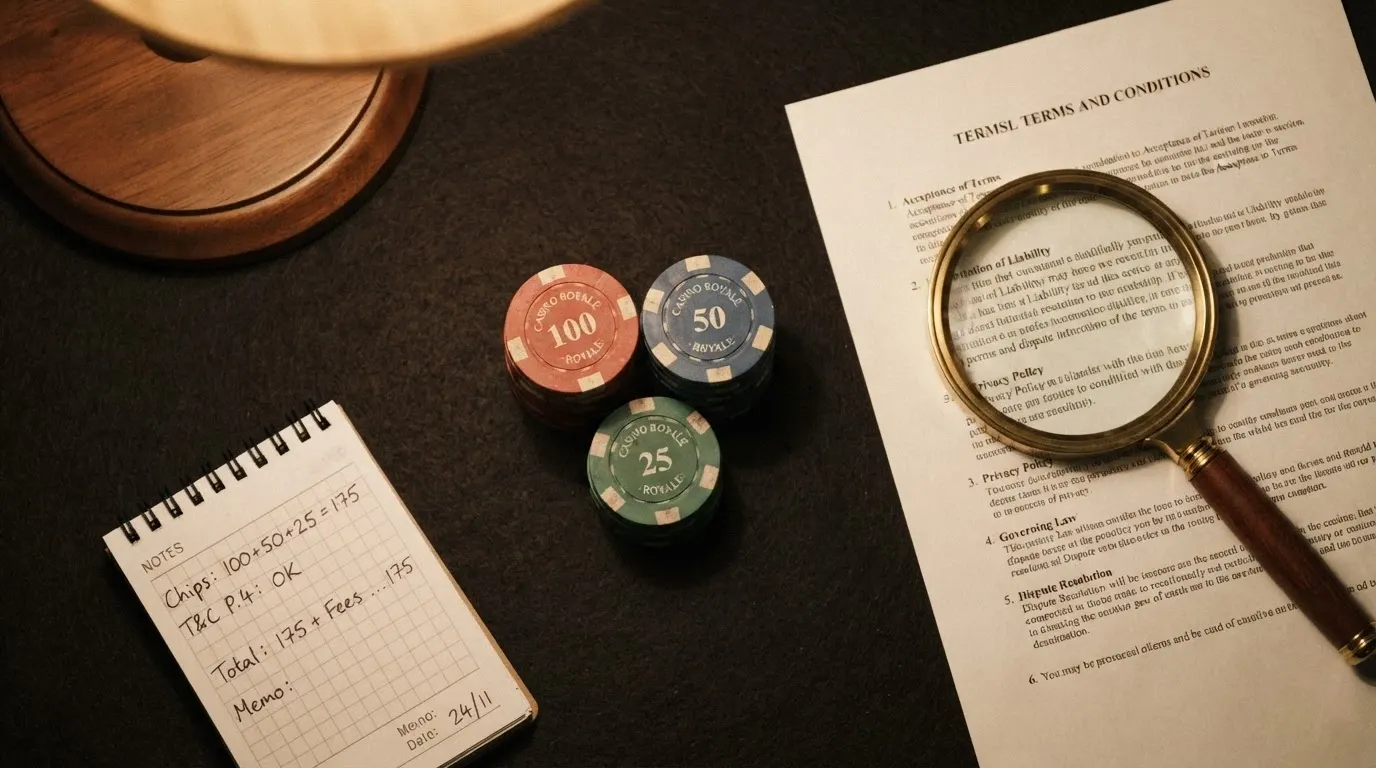
That arithmetic is not a hidden term. It is the average over many spins at the stated assumptions — assuming only the bonus amount is wagered — and it is why every bonus on this page is worth reading the wagering multiple before claiming. The bonus is the marketing; the wagering is the price.
What Bonuses Actually Trigger at a $1 Deposit
Most $1 deposit bonuses at Australian-facing offshore casinos are free spins, not matched deposits. A matched welcome bonus with a A$20 minimum deposit leaves the dollar-floor player outside the bonus entirely, claiming none of the headline percentage match and seeing only the cashier’s general terms. The free-spin path is the one that fires at a dollar, and it is the one most commonly offered.
KatsuBet is the only featured brand in this ranking with a bonus that triggers at A$1: 50 free spins on Scroll of Adventure. RocketPlay, Skycrown, FairGo, WinSpirit and Rocket Casino all set their welcome-bonus minimums at A$20 or higher. Stake requires a minimum A$100 deposit for its 200 per cent welcome match. BC.Game’s 360 per cent package requires four deposits at amounts that exceed the dollar floor.
A player who specifically wants to test offshore pokies for a dollar with a bonus attached has, in this ranking, one option: KatsuBet. A player who wants a matched welcome bonus will need to deposit at least A$20 at every brand in this ranking. The marketing banners that promise “$1 deposit bonuses” are most often promising free spins at that floor; the matched welcome bonus sits behind a higher minimum at every brand reviewed.
Wagering Requirements — How 30× Turns a $10 Bonus into a $300 Hurdle
A wagering multiple is the dollar value the player must wager before any bonus-derived winnings can be withdrawn. A 30× requirement on a A$100 bonus means A$3,000 in turnover; a 40× requirement on a A$10 bonus means A$400 in turnover; a 50× requirement on free-spin winnings of A$10 means A$500 in turnover on the winnings alone. The multiplier compounds with the bonus size, and the player is always on the wrong side of the compound.
The wagering contribution percentage — the share of each bet that counts toward clearing the requirement — matters as much as the multiple. Pokies typically count 100 per cent toward wagering; table games count 10 to 20 per cent; some games are excluded entirely. A player who clears their A$400 turnover on pokies has cleared the bonus; a player who clears the same A$400 on a low-contribution table game has cleared only A$40 to A$80 of it, and the rest carries over until expiry.
The max-bet cap compounds the friction. Most Australian-facing offshore casinos cap bets at A$5 during active bonus wagering. A player who bets higher — either by misreading the terms or by playing a higher-stake game — risks the bonus being voided and the winnings confiscated. The cap is the operator’s protection against a player turning the bonus into arbitrage with a single large spin, and it is the player’s reminder that the bonus is a constrained product.
Free Spins at $1 — What 50 Spins on Scroll of Adventure Are Really Worth
KatsuBet’s 50 free spins on Scroll of Adventure, triggered by a A$1 deposit, are the closest any featured operator comes to a genuine dollar-floor bonus. The spins are credited at the game’s minimum stake, which is typically one cent per line on a twenty-line game — a twenty-cent spin. Fifty spins at that stake is A$10 in nominal spin value, before any win multiplier from the game’s paytable.
The wagering on the spin winnings is 50×. A player who wins A$10 from the free spins must wager A$500 before withdrawing. The expected loss on that A$500 turnover at a representative 96.71 per cent RTP is about A$16.45, against a maximum possible withdrawable of A$10 plus any residual bonus. The math is the same shape as the matched-bonus math, but the absolute dollar amounts are smaller because the free-spin ceiling is smaller.
Free-spin cashout caps sharpen the arithmetic further where operators impose them. FairGo’s no-deposit free spins cap cashout at A$180, which limits the upside on a zero-dollar entry. Seven days is the typical expiry across the market; the spin value is set by the operator and rarely exceeds a few cents per spin. A player who triggers fifty free spins at a dollar deposit should know, before claiming, what the maximum cashout is and what the eligible games are.
| Slot Title | Provider | RTP | Volatility | Max Win |
|---|---|---|---|---|
| Big Bass Bonanza | Pragmatic Play | 96.71% | Medium-High (4/5) | 2,100x |
| Gates of Olympus | Pragmatic Play | 96.50% | High (5/5) | — |
| Sweet Bonanza | — | 96.51% | High | 21,100x |
| Sugar Rush 1000 | Pragmatic Play | 96.53% | High (5/5) | 25,000x |
| Gates of Olympus 1000 | Pragmatic Play | 96.50% | High | 15,000x |
| Marching Legions | Relax Gaming | 98.12% | Medium | 25,000x |
| White Rabbit | Big Time Gaming | 97.77% | — | — |
| Burning Reels | — | 96.63% | — | 5,000x |
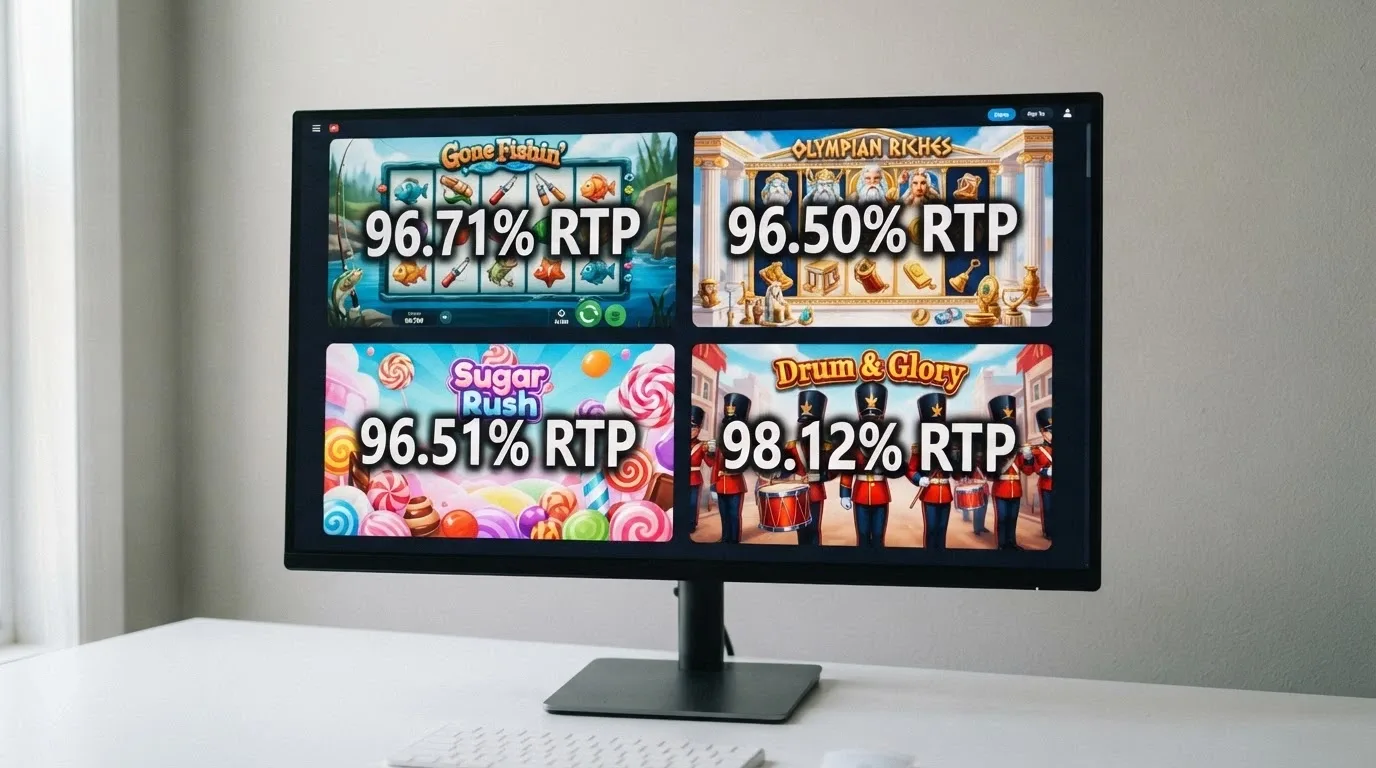
Marching Legions leads the table on RTP, and White Rabbit follows — both above the 97 per cent line. Big Bass Bonanza, Sugar Rush 1000, Gates of Olympus 1000 and Burning Reels cluster between 96.5 and 96.7 per cent. The blanks in the Provider, Volatility and Max Win columns reflect titles where this review did not surface those specific figures; a player who values certainty over headline RTP should default to the Pragmatic Play cluster where the data set is denser.
Which Payment Methods Actually Let You Deposit $1 — and Which Don’t
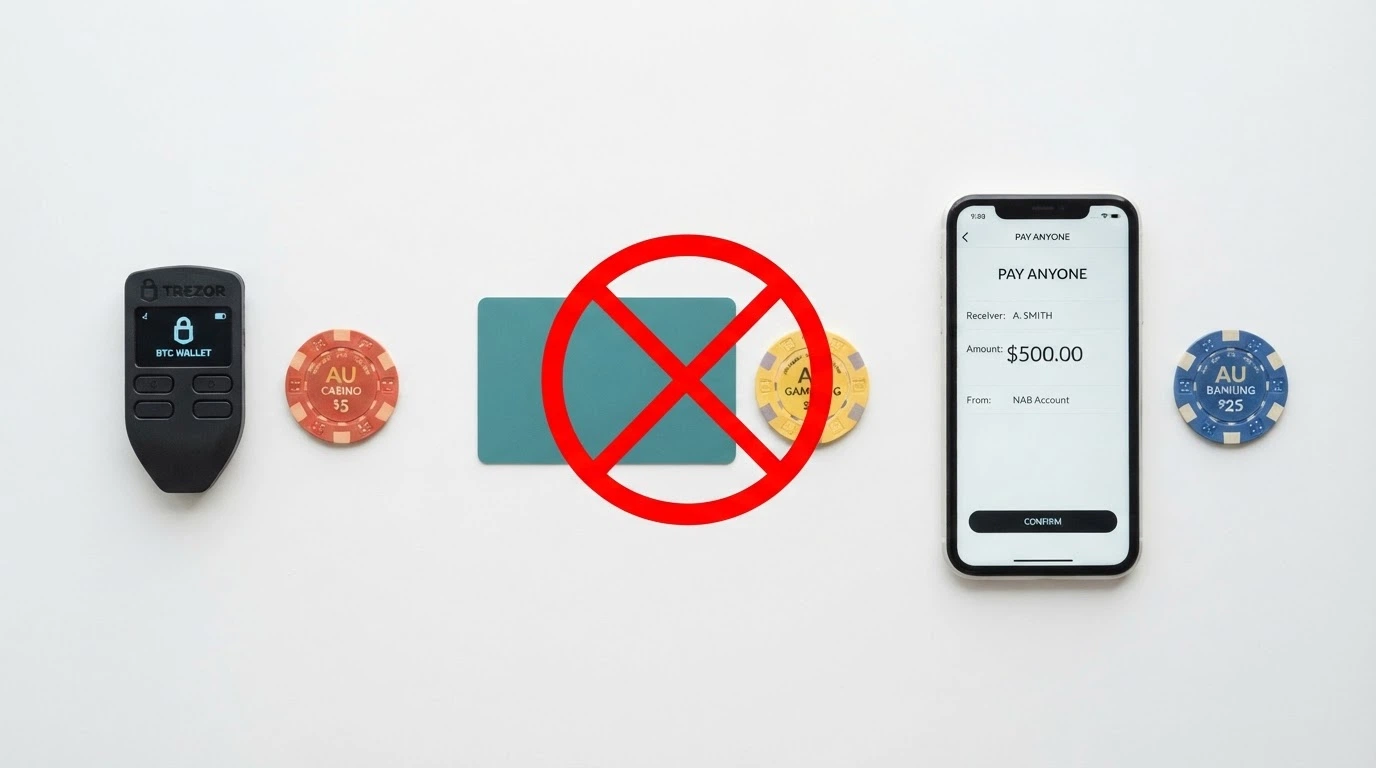
The payment method is the gatekeeper of the dollar floor. Cryptocurrency clears it; cards and e-wallets block the transfer at A$5 to A$10 or higher; prepaid vouchers start at A$10 denominations; PayID is constrained by the casino’s own minimum deposit rather than the payment rail’s capability. The honest answer to “can I deposit A$1?” is “yes, with crypto, and only at certain operators.”
The fees tell the story. A A$1 card deposit costs the casino A$0.30 to A$0.50 in processing alone, which is why the cashier enforces a floor above that fee. A A$1 Litecoin deposit costs the casino a fraction of a cent in network fees, which is why Litecoin is the only rail that lets the dollar land as a dollar. The choice of payment method is not a preference question — it is the question that determines whether the dollar deposit happens at all.
Credit and Debit Cards — The Minimum Deposit Reality
Cards are the most familiar deposit route and the least likely to clear a dollar. Visa and Mastercard transactions carry per-transaction processing fees of A$0.30 to A$0.50, which makes a A$1 deposit uneconomical for the operator and triggers a minimum deposit floor of A$10 at most Australian-facing offshore casinos. The cashier enforces that floor before the card is charged.
The credit-card ban of 11 June 2024 narrows the card option further for any operator that claims to operate under Australian rules. Credit cards, credit-related products and digital currency are banned as payment for licensed online wagering, with a penalty of up to A$247,500 for operators that fail to enforce the ban. A gambling site that requests a credit card from an Australian player is, by that request, signalling that it sits outside the Australian regime.
The remaining card route is the debit card, which is not banned but is still subject to the A$10 floor most operators enforce. A casino that advertises A$1 deposits while offering only Visa and Mastercard at the cashier is making a misleading claim — the marketing promise is contradicted by the cashier’s terms, and the player who arrives with a dollar in hand will find the cashier refuses the transfer. The honest version of the dollar-floor promise lives on the crypto rail, not the card rail.
AUD-Native Methods — Bank Transfer and BPAY at the $1 Tier
Bank transfer and BPAY are legal payment methods under Australian rules and are accepted by most licensed wagering operators for deposit. For an offshore casino accepting Australian players, the picture is mixed — bank transfer is sometimes accepted, BPAY rarely, and the minimums sit at the casino’s own floor rather than the payment rail’s.
Bank transfer settles in one to three business days through the standard banking system, which makes it a poor fit for a player who wants the dollar in their account in time for a session that evening. The settlement speed of PayID and Osko is the reason those rails dominate the instant-deposit conversation; the standard bank transfer is the rail of last resort for players who have exhausted the others.
BPAY bills payments through the player’s bank account but is rarely accepted by offshore casinos, which prefer the instant-deposit rails. Where BPAY is accepted, the minimum is set by the casino at A$10 or higher, and the settlement takes a business day. The dollar-floor player who chooses BPAY is choosing slow settlement and a floor above a dollar; the dollar-floor player who chooses bank transfer is choosing slower settlement still and the same floor.
Cryptocurrency — The Only Reliable $1 Deposit Path
Cryptocurrency is the only payment method where a dollar reliably clears at a dollar. Litecoin’s transaction fees run under A$0.05 per transfer, which means a A$1 Litecoin deposit lands as approximately A$1 in the casino’s balance. USDT on the Tron network runs about A$1.00 flat per transfer, which means a A$1 USDT-TRC20 deposit costs the player the entire dollar in fees — but the operator’s balance reflects a dollar of value.
Bitcoin’s fee structure is the cautionary tale. A Bitcoin transaction fee in May 2026 averaged A$1.50 to A$3.00, which means a A$1 Bitcoin deposit costs the player two to four dollars in total — more than the deposit itself. A player who sends A$1 in BTC to an offshore casino has paid a A$1.50 to A$3.00 fee on top, and the casino credits a dollar. The casino wins either way; the player learns that BTC is the wrong rail for the dollar floor.
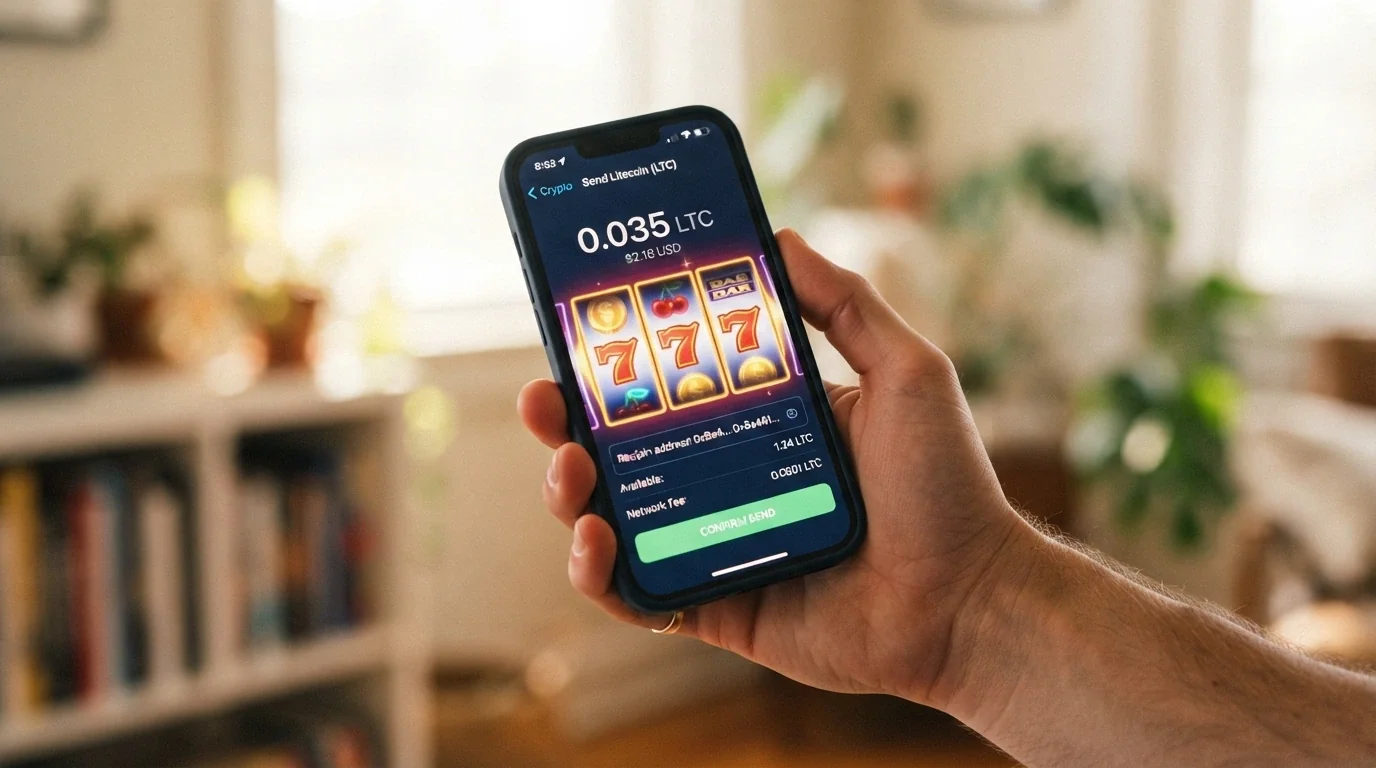
The crypto payment ban of 11 June 2024 applies to licensed wagering operators in Australia — meaning any A$1 crypto deposit the player makes at an offshore casino is, by definition, going to an unlicensed operator. The ban does not make the deposit illegal for the player; it makes the casino’s acceptance of the deposit illegal under Australian rules. An Australian who is asked for a credit card or a crypto deposit by a gambling site is being served by someone outside the Australian rules.
E-Wallets and Prepaid Vouchers — Neosurf, MiFinity and eZeeWallet Limits
E-wallets and prepaid vouchers sit between the player and the casino as a third-party intermediary, and the intermediary is often the bottleneck. MiFinity and eZeeWallet enforce their own minimum transfer amounts of A$5 to A$10 — which means a player who tries to send a dollar from a MiFinity wallet to an offshore casino has the transfer blocked at the wallet before the casino ever sees it. The casino may accept a dollar, but the wallet will not release one.
Neosurf vouchers come in fixed denominations starting at A$10, which means there is no voucher to buy for a dollar. A player who wants to deposit A$1 through Neosurf cannot — the smallest denomination the system offers is A$10. The same floor applies to most prepaid voucher systems in the Australian-facing market.
The wallet or voucher as a bottleneck is a useful tell for the player. If the intermediary enforces a minimum, the casino’s advertised dollar floor is not the binding constraint — the intermediary’s floor is. A player who can stretch to A$10 in their MiFinity wallet or to a A$10 Neosurf voucher has crossed the first gate; the casino’s dollar floor, where it exists, applies on top.
Playing $1 Deposit Pokies on Your Phone — What Changes
Mobile play at the dollar floor works through a browser, not a native app, and the deposit flow is nearly identical to the desktop experience. The same payment-method minimums apply; the same crypto rails clear; the same bonuses trigger at the same deposit thresholds. The screen is smaller; the cashier is the same.
The exception is the rare offshore casino that distributes a native iOS or Android app through the App Store or Google Play. Most do not, because both stores restrict real-money gambling apps by jurisdiction and the Australian App Store does not carry offshore pokies apps. The mobile experience is the mobile-web experience at every operator in this ranking, with no separate download and no separate bonus terms.

Mobile Browser vs Native App — Where $1 Deposits Actually Work
Almost no offshore casino targeting Australian players distributes a native iOS or Android app. The Australian App Store restricts real-money gambling apps, and Google Play follows a similar policy for unlicensed operators. The result is that the dollar-floor player who wants to play on their phone is playing through Safari or Chrome, on the operator’s mobile-responsive site, with no download required.
The mobile-web experience at most offshore operators is functional and consistent with the desktop site. The same pokies, the same cashier, the same bonus terms. The screen layout adapts; the underlying product does not change. A player who tries to find an Australian-facing offshore casino in the App Store will find affiliate apps, news apps and odds-tracker apps but rarely the casino itself.
The rare exception is an operator that distributes an Android APK directly from its own site, bypassing Google Play. The player who wants the app experience must enable sideloading on their device and accept the security trade-off. The dollar-floor player who values convenience over app presence will find the mobile browser indistinguishable from a native app for the dollar-deposit use case.
Deposit Flows on Mobile — What’s Different From Desktop
The deposit screen on mobile is the same cashier on a smaller surface. The same payment-method minimums apply — A$10 for cards, A$5 to A$10 for e-wallets, A$10 for Neosurf vouchers, network-fee-dependent for crypto. The crypto rails clear in the same way; the bonuses trigger at the same thresholds. A player who has read the payment-methods section earlier in this page has read everything that matters about the mobile deposit flow.
The mobile-specific friction is the keyboard. Crypto wallet addresses are long strings of alphanumeric characters that are easy to mistype on a mobile keyboard, and a single mistyped character sends the deposit to an unrecoverable address. The player who deposits crypto on mobile should copy the deposit address from the casino’s cashier rather than typing it, paste it into their wallet’s send screen, and verify the first and last four characters before sending. The dollar deposit is too small to risk on a typo.
PayID on mobile uses the phone’s native keyboard, which is forgiving. Card deposits on mobile use Apple Pay or Google Pay autofill, which is more reliable than typing the card number manually. The deposit flow that benefits most from the mobile form factor is PayID; the deposit flow that benefits least is crypto.
How We Selected and Evaluated These $1 Deposit Pokies Sites
The ten operators in the ranking were drawn from Australian-facing review sites and the offshore operators actively accepting Australian players in 2026. Each was checked against the ACMA’s register of blocked illegal gambling services and against the Australian Communications and Media Authority’s enforcement list. None holds an Australian casino licence — none can, because no such licence exists for the product being offered.
The evaluation criteria were: low-deposit accessibility (does the cashier accept A$1, and through which method), bonus terms at the dollar tier (is there a bonus that fires at A$1, and what is the wagering multiple), payment-method support (which methods are accepted, and at what minimum), game-provider quality (which providers supply the pokies library), and licence transparency (is the Curaçao or other offshore licence number surfaced publicly). The ranking orders by low-deposit viability and bonus value, not by a proprietary score; a player who values game-library breadth over bonus size may rank WinSpirit above KatsuBet.
The data gaps in the ranking — Royal Reels’ unspecified bonus terms, Bizzo Casino’s unspecified wagering — are surfaced as gaps, not papered over with a guess. A player who reads this page and arrives at Royal Reels or Bizzo should verify the bonus terms independently on the operator’s site before depositing. The page’s job is to give the player what the public information supports, and to mark what it does not.
Your $1 Deposit Strategy — What To Actually Do Next
The honest A$1 deposit playbook is short. Use Litecoin or USDT-TRC20 to clear the dollar floor; the network fees are under five cents for Litecoin and about A$1.00 flat for USDT-TRC20. Choose the operator whose bonus fires at or near A$1 — KatsuBet is the only featured brand with a 50-free-spin welcome at that floor. Read the wagering multiple before claiming any bonus: the A$10 bonus at 40× wagering is a A$400 turnover requirement, with an expected loss of about A$13.16 at a representative 96.71 per cent RTP.
Know which protections are being left behind — the Offshore Operators section earlier in this page lists them in full. There is no BetStop coverage at any operator in this ranking. There is no Australian consumer-law recourse for a refused withdrawal or a voided win. The ACMA can direct Australian ISPs to block the site at any time, and a balance left on the account at that moment is not recoverable through any Australian process. The credit-card and crypto request the operator makes is the cleanest tell that the operator sits outside Australian rules.
The verdict on the A$1 deposit itself: it is a low-cost trial of an unregulated product, not a loophole. The dollar buys a few spins at a real-money offshore casino; it does not buy an Australian licence, an Australian consumer protection, or an Australian dispute-resolution pathway. A player who treats the A$1 deposit as a five-minute test of the cashier, the bonus terms and the withdrawal flow is using the dollar well. A player who treats it as a cheap way to win real money at an offshore site is using the dollar as it was designed to be used — by the operator.
Frequently Asked Questions
Can I actually deposit A$1 and play pokies online in Australia?
Yes, but only with cryptocurrency and only at certain operators. Litecoin clears with under five cents in network fees; USDT-TRC20 costs about A$1.00 flat per transfer. Card, e-wallet and voucher minimums all sit at A$5 or higher. KatsuBet is the only featured operator with a bonus that triggers at A$1.
Are $1 deposit pokies bonuses worth claiming given the wagering requirements?
Rarely in dollar terms. A A$10 bonus at 40× wagering requires A$400 in turnover, with an expected loss of about A$13.16 at a representative 96.71 per cent RTP. The math is a net loss of A$3.16 before the A$5 max-bet cap and the seven-day expiry. The bonus is worth claiming as a low-cost trial, not as a profit opportunity.
What are the best high-RTP pokies I can play with a $1 deposit?
The table earlier in this page lists eight high-RTP pokies with their providers, volatility and max win. Marching Legions (Relax Gaming) leads at 98.12 per cent RTP, with White Rabbit (Big Time Gaming) at 97.77 per cent. Big Bass Bonanza, Sugar Rush 1000, Gates of Olympus 1000 and Burning Reels cluster between 96.5 and 96.7 per cent. All are playable at minimum stakes that fit inside a dollar deposit.
What happens if an offshore casino blocks my withdrawal after a $1 deposit?
The player has no Australian consumer-law recourse. The IGA 2001 targets the provider, not the player, but strips the player of every Australian protection they would otherwise have. Disputes must be taken up with the offshore operator directly and escalated to the Curaçao licensing authority if needed. The dollar deposit is small enough that pursuing a dispute often costs more than the disputed amount.
Do $1 deposit casinos accept PayID in Australia?
Some do, at minimums that vary by operator. The PayID rail is technically capable of moving a dollar instantly, but most offshore casinos set PayID minimums at A$10 or higher. A player who arrives with a dollar will, in most cases, see the cashier refuse the transfer for falling below the floor. PayID is fast; it is rarely a dollar-floor rail.
Can I use Bitcoin or crypto to deposit $1 at Australian pokies sites?
Yes, though Bitcoin is the wrong rail at that size — a Bitcoin fee in May 2026 averaged A$1.50 to A$3.00, which exceeds the deposit. Litecoin at under five cents and USDT-TRC20 at about A$1.00 flat are the practical choices. The crypto payment ban of 11 June 2024 means any Australian-facing crypto deposit goes to an unlicensed operator, as is the case for every site on this page.
PayID and Osko — Do They Support a $1 Pokies Deposit?
PayID and Osko are Australia’s instant bank-transfer rails. A PayID transfer linked to a phone number or email clears in seconds through the New Payments Platform; an Osko transfer is the underlying message that makes PayID instant. The rail is technically capable of moving a dollar — there is no minimum at the network level.
The minimum lives at the casino, not the rail. Australian-facing offshore casinos that accept PayID set their own minimum deposit, and that minimum is set against the same processing-economics logic that drives card minimums. A A$10 minimum is common; a A$1 minimum is rare. The player who arrives at a PayID cashier with a dollar in hand will, in most cases, see the cashier refuse the transfer for falling below the floor.
A handful of offshore operators set PayID minimums lower — some at A$5, some at A$1 — but these are exceptions. The rule for the dollar-floor player is that PayID is fast, widely available and almost always floored above a dollar. The rail is not the bottleneck; the cashier is.
Written by the editors at Microgaming Casinos AU.