
What a No-Deposit Bonus Actually Costs an Australian Player
A “no-deposit” bonus is the casino industry’s most successful advertising phrase in Australia, and it is also the least precise one. The bonus is real. The deposit is real — in the sense that the wagering on it is real. What is missing is the qualifier: the money, when you finally see it, was never yours to keep, never yours to bet the way you wanted, and almost never yours to withdraw without conditions that re-price the whole offer.
This page looks at what an Australian player is actually claiming when they sign up for a no-deposit bonus in 2026 — the offshore-only reality behind every offer, the terms that turn “free” into a cost, and the protection you forfeit by accepting one. It also ranks the ten offshore casinos most active with Australian players, by market presence, and explains exactly what that ranking does and does not measure.
Verified against the Australian Communications and Media Authority (ACMA) licence and enforcement register as of 18 October 2026; operator market-share figures cross-checked against the operators industry dataset for the same period.
Table of Contents
- A No-Deposit Bonus Is Never Actually Free — Here’s Why
- The No-Deposit Offers Australians Can Actually Claim in 2026
- Top 10 No-Deposit Bonus Casinos for Australian Players
- Rocket Play
- Skycrown
- Royal Reels
- WinSpirit
- Stake
- Rainbet
- Scream Casino
- FairGO
- Bizzo Casino
- Rocket Casino
- The Pokies You’ll Play With a No-Deposit Bonus — and the RTP You’re Not Told
- New Casinos Are Launching, but the Same Offshore Rules Apply
- Your Deposit Method Is the First Thing That Tells You Where the Casino Sits
- No Australian Casino Licence Exists — Here’s What That Actually Means
- Playing Safely When the Safety Net Wasn’t Built for This
- How We Selected and Ranked These No-Deposit Casinos
- Your Move: What to Do When a No-Deposit Bonus Lands in Your Inbox
- Frequently Asked Questions
A No-Deposit Bonus Is Never Actually Free — Here’s Why
“Free” is the operative word in every no-deposit offer, and “free” is the word that does the most work. A no-deposit bonus is a small credit — a chip, a bundle of free spins, a token balance — that the casino adds to a new account without the player first transferring money in. The chip is genuine money inside the casino’s software: it spins reels, it lands on paylines, sometimes it pays out. None of that is the trick.
The trick sits in three numbers that arrive after the win: a wagering multiple that says how many times the bonus must be replayed before it converts to withdrawable cash, a maximum cashout cap that limits what you can ever take out, and a validity window that expires the whole arrangement if the clock runs out first. Every offshore no-deposit offer carries all three. Few carry them favourably.
The Interactive Gambling Act 2001 — the federal statute that governs online gambling in Australia — prohibits online casino games, online pokies and in-play sports betting to people in Australia. Australia licenses no online casino at all. Every casino offering a no-deposit bonus to Australians is doing so from somewhere else. The operator is breaking Australian law. The player, by section 15 of the same Act, is not prosecuted for playing. The player gains none of the protection an Australian licence would have brought with it.
That is the shape of the deal. It is worth keeping in view before any ranking of operators or list of bonuses makes the offer sound like an ordinary consumer transaction.
The Mechanics: How a Bonus With No Deposit Actually Works
The claim-to-cashout chain is the same across the offshore market, because the format was standardised by the operators selling it. A new player registers an account — usually with an email address, sometimes with nothing more than a username and a wallet. The casino credits the bonus automatically, or it appears once a code is entered at the cashier. The credit lands in a separate balance, visually distinct from any real-money balance the player might later add.
The player then plays. Spins on eligible pokies count; almost everything else counts partly or not at all. Table games are routinely weighted at a fraction of their stake toward wagering — a blackjack hand contributes only part of its value to the requirement, the rest silently excluded. Slots, almost universally, count in full. That weighting is not a quirk. It is the mechanism that lets the casino offer a “real money” feel without ever exposing its high-edge games to the same volume of bonus turnover.
Wagering is the real cost. The chip’s price is not its face value; it is the turnover the wagering requirement asks for. Multiply the bonus by the wagering multiple and the product is the eligible stake volume the player must generate before any winnings become withdrawable. A modest bonus carries an outsized turnover target, and the volume has to be generated at the games the casino allows, at stakes the bonus terms usually cap low, within a window the bonus terms set short. The cap on cashable winnings — typically a few times the bonus amount — sits at the end of that runway, and it is the second mechanism that re-prices the offer.
The withdrawal gate is where most offers finally collapse. By the time a player has cleared the wagering, the cashout cap and any game-specific exclusions have usually cut the winnings down to a small amount, and the verification process that follows can itself take days. Some operators void winnings entirely if the player deposited using a method the bonus terms excluded. The “no deposit” tag fades fast under that arithmetic.
None of these mechanics are specific to any operator named in this article. No specific bonus terms were confirmed during research — no wagering multiples, no cashout caps, no spin counts — and the absence is itself the point: when an offer is structured to be opaque, the only honest description is structural.
Where No-Deposit Bonuses Actually Come From
Every no-deposit bonus an Australian player can claim is funded by an operator based outside Australia. There is no Australian online casino to host one. Crown Melbourne and The Star Sydney are state-licensed land-based casinos, and that state licence covers a physical building, not a website. No online casino anywhere in the world holds an Australian licence for online pokies, online table games or online casino play generally.
The Interactive Gambling Act 2001 prohibits the providing of those services to people in Australia. The 2017 amendment to that Act closed several loopholes that offshore operators had used to reach Australian customers and gave the Australian Communications and Media Authority (ACMA) the power to issue formal warnings, refer matters for civil penalty proceedings and request that Australian internet service providers block offending sites. Since its first blocking request in November 2019, the ACMA has had 1,564 illegal gambling and affiliate websites blocked at the DNS level — a list that grows by the month and which the ACMA publishes in updates throughout the year.
The same enforcement tightening has produced a quieter exit. More than 225 illegal services have withdrawn from the Australian market entirely since 2017, choosing to stop accepting Australian players rather than absorb the risk of a blocking notice. Neither figure — the blocks nor the withdrawals — represents enforcement against players. The individual player is not prosecuted. The pressure sits on the operator and on the affiliate sites that funnel Australian traffic toward them.
“Accessible from Australia” is therefore a statement about reach, not legality. An offshore casino is reachable through a virtual private network, through a payment method that hides the destination, or simply through an Australian IP address if the operator has not yet been added to the ACMA’s blocking list. Reach is not a right. It is an enforcement gap, and the gap closes whenever the ACMA closes it.
The No-Deposit Offers Australians Can Actually Claim in 2026
The offers an Australian player sees at an offshore casino in 2026 fall into a small number of structural types, and the type determines the cost shape. Two formats dominate: free-cash (also called free-chip) credits and free-spin bundles. Around them sits a wider bonus economy of sign-up offers, reload offers, loyalty bonuses and codes — the machinery that delivers the same two formats under different names at different times in the player’s life with the casino.
What follows describes that architecture. No specific bonus amounts, spin counts or wagering multiples are quoted here, because none were confirmed during research. What is described is what each type does to a player’s bankroll and which reader profile it suits.
Free Cash vs Free Spins: The Two Shapes of a No-Deposit Bonus
Free-cash bonuses are the more straightforward offer: a fixed dollar amount credited to a new account, playable across the games the bonus terms permit, with the wagering multiple and cashout cap attached. Free-spin bundles are different in kind — a fixed number of spins at a fixed stake value, often locked to a single pokie or to a small shortlist of titles. The dollar value of a free-spin bundle is the stake multiplied by the spin count, and that value is usually smaller than a free-cash offer. What the spin bundle offers instead is a known game, a known stake and a known edge.
The two formats price out differently against the same wagering multiple. A free-spin bundle generates turnover at one stake on one type of game; the player’s only meaningful decisions are whether to keep spinning once the bundle has been used and whether the winnings convert to a withdrawable balance under the bonus terms. A free-cash credit is more flexible — the player chooses the stake, the game and the rhythm — but flexibility costs. A higher stake burns through wagering faster, which can be useful against a tight validity window and ruinous if the player has not understood the game-contribution weighting that will quietly strip part of the turnover away.
Free-cash offers tend to carry tighter cashout caps relative to the bonus amount; free-spin offers sometimes clear wagering requirements more easily but cap winnings per spin or per bundle, which deflates the value of any “win”. The rare third format — the wager-free no-deposit bonus — exists in the offshore market but is uncommon. Its existence is what keeps the word “free” attached to the rest.
For a player with a small bankroll who wants to extend a session, free spins are usually the more economical format. The stake is fixed, the variance is bounded by the spin count and the maximum cashable win is stated up front. For a player who wants the experience of choosing games and stakes against a real bonus balance, free cash is the closer match — and the one with the more punishing terms hidden underneath.
Welcome Offers, Reloads and the Bonus-Code Economy
The bonus economy around a no-deposit offer runs on four entry points, and reading them as one continuous marketing scheme is closer to the truth than reading them as separate promotions.
- Sign-up no-deposit bonus — the acquisition tool. A free chip or spin bundle delivered on registration, designed to put a new player inside the casino’s software with money that is not theirs. The player who redeems it once is the player who may deposit later.
- Bonus codes — the distribution layer. The same offer can be wrapped under different codes and routed through different affiliate sites, each with its own tracking and revenue share. The code itself is plumbing; what matters is the offer the code unlocks.
- Reload no-deposit offers — the retention tool. Returning players receive free spins or chips to mark a deposit anniversary, a slow week or a re-engagement campaign. The mechanics are identical to a sign-up bonus; only the targeting is different.
- Loyalty-tied no-deposit bonuses — the high-value retention tool. Players who have deposited and played regularly are credited bonuses at a higher value, usually as part of a tiered VIP programme. The terms at this level are sometimes softer, because the player has already been qualified by their deposit history.
A code unlocks a specific offer; the offer’s terms are what cost the player. Codes change, codes expire and codes are tied to affiliate partnerships. The shape of the offer does not.
This matters in Australia because wagering inducements — sign-up offers, referral bonuses and similar promotions — are prohibited or tightly limited by several state regulators. From 1 January 2027, the Interactive Gambling Amendment (Gambling Reform) Bill 2026 imposes a federal 14-day post-signup blackout on direct marketing of inducements and a three-month blackout after BetStop deregistration. These rules bind licensed Australian wagering operators. The offshore casino offering an Australian player a code by email is operating outside that regime — the rules describe what licensed operators cannot do, not what offshore operators will refrain from doing.
What the Terms Actually Mean: Wagering, Caps and the Clock
Three numbers turn a “free” bonus into a cost, and a fourth — game contribution weighting — is the one most players miss.
Wagering, or playthrough, is the multiplier applied to the bonus (or sometimes to the bonus plus the deposit, in offers that require a deposit) to determine the volume of betting required before winnings become withdrawable. A higher multiple means a larger turnover target; the lower the multiple, the cheaper the bonus is to clear, all else equal.
Maximum cashout caps limit how much of the post-wagering balance can actually be withdrawn. A cap turns a generous-looking effective return into a much smaller ceiling before the player has played a single spin. Caps are the mechanism that prevents the bonus from becoming a guaranteed profit; they are also the mechanism that re-prices the offer downward the moment a player wins enough to bump against them.
Validity windows are the clock. A short window at a high wagering multiple requires a pace of play that fits only a player who treats the bonus as a session of work. A longer window at the same multiple leaves room to play at low stakes, with more control over variance.
Game contribution weightings are where the bonus quietly shrinks. Pokies almost always count in full toward wagering; table games often count at a fraction. The same turnover target looks different if it has to be generated at the slots alone versus if a player can mix in a few hands of blackjack. The bonus terms specify the weighting. The marketing does not.
The combination of these four numbers — wagering, cashout cap, validity window and contribution weighting — is what the offer actually costs. A player who reads the marketing copy and not the terms page is reading the price tag and not the invoice.
Top 10 No-Deposit Bonus Casinos for Australian Players
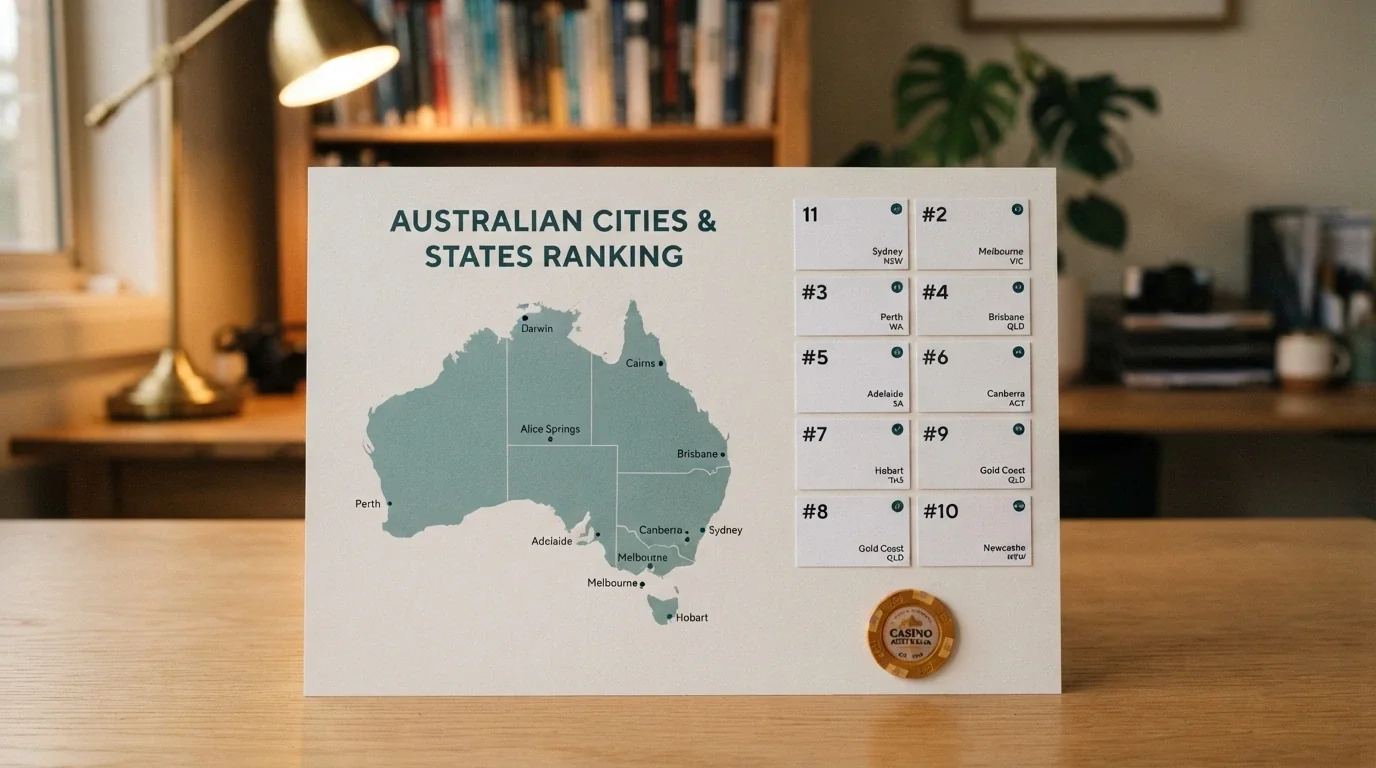
The ranking below covers the ten offshore casinos with the largest share of Australian-player revenue, as measured by independent industry tracking. The ranking reflects market presence, not quality and not a licence. There is no Australian licence to reflect, because none of these operators holds one.
| Operator | Market Share | Australian Legal Status |
|---|---|---|
| Rocket Play | 9.4% | Offshore — unlicensed (no AU online casino licence exists) |
| Skycrown | 8.55% | Offshore — unlicensed |
| Royal Reels | 2.51% | Offshore — unlicensed |
| WinSpirit | 1.55% | Offshore — unlicensed |
| Stake | 1.28% | Offshore — unlicensed |
| Rainbet | 1.28% | Offshore — unlicensed |
| Scream Casino | 0.99% | Offshore — unlicensed |
| FairGO | 0.8% | Offshore — unlicensed |
| Bizzo Casino | 0.57% | Offshore — unlicensed |
| Rocket Casino | 0.57% | Offshore — unlicensed |
Read this table as a measure of how many Australians are already playing at each operator. Not as a measure of which one to choose.
How We Ranked These Casinos
The ranking is ordered by Australian-player market share — the share of casino revenue that an operator captures from customers physically located in Australia. It is the only metric that survives the data gap honestly. Per-operator bonus terms could not be confirmed during research, so any ranking that relied on “best bonus” would have been a ranking by guessed figures. Market share is at least a known quantity: it says how many Australians have already voted with their money.
“Best” is a word that needs careful handling on a page like this. The usual sense of “best” — best bonus, best terms, best game library — depends on specifics that are not in this research. In the sense that survives, “best” means the operator most Australians are already using, which is at most an indicator of accessibility and brand recognition. Never of safety or value.
Australia licenses no online casino at all, which means “best licensed” describes a category that does not exist. The Interactive Gambling Act 2001 prohibits the provision of online casino games to Australians. The 2017 amendment closed loopholes and gave the ACMA enforcement powers. The 2026 reform, passed 19 August 2026 and commencing 1 January 2027, adds payment-blocking authority for banks and tighter inducement rules for licensed wagering — none of which touches the offshore casinos in this ranking. The ranking cannot, therefore, rank on licence. It ranks on reach.
The honest limits of that ranking are these. No specific bonus terms were verified for any operator named below; no withdrawal times were verified; no game libraries were verified; no dispute-resolution records were verified. Each operator write-up that follows covers what research could establish — market position, regulatory status, product type — and notes where the data stops.
What the Comparison Table Actually Shows
The table above tells you how the offshore market is shared, not how to spend your money. That distinction matters because of what market share does and does not measure in a category where no operator is licensed.
Market share, in a regulated market, is the output of a competition governed by consumer protection, advertising standards and licensing conditions that constrain what an operator can offer and how it can advertise it. In an offshore market reaching Australians — which is what this ranking is — market share is the output of a competition governed almost entirely by who is still reachable. The ACMA has had 1,564 illegal gambling and affiliate sites blocked since November 2019; more than 225 services have withdrawn from the Australian market entirely since 2017. The operators still taking Australian players in 2026 are the operators who have not been blocked and who have not chosen to withdraw. The ranking is, in part, a snapshot of who is left standing after that cull.
“Offshore — unlicensed” is the column that does the actual work. It means the operator is not licensed in Australia, is not subject to Australian consumer law, is not bound by BetStop, has no obligation to verify identity or to honour a dispute raised by an Australian customer, and may be added to the ACMA’s blocking list at any time. A player whose account is closed by the operator with a balance still on it has no Australian ombudsman to contact. A player whose winnings are voided for “irregular play” has no Australian regulator to complain to. None of this is hypothetical. It is the everyday operation of an offshore casino, and it is the trade-off the table is asking a reader to weigh against the bonus amount on offer.
The table cannot show the things a player would actually want to compare — bonus terms, payout speed, the experience of a withdrawal request under stress — because none of those figures were verified this round. The gap is the table’s most important column.
Rocket Play
Rocket Play is the largest offshore casino operator serving Australian players by revenue, capturing 9.4% of the market revenue That scale makes it the brand an Australian player is most likely to encounter when looking for a no-deposit offer. It also makes the absence of a verifiable bonus terms page the more conspicuous: at this volume, the offer terms are doing a lot of work, and the only honest description of them right now is structural.
The brand sits at the top of the offshore segment because it has invested in what offshore operators have to invest in — payment flexibility, a wide game library and an affiliate network that routes Australian traffic efficiently. None of that investment buys an Australian licence, because no Australian online casino licence exists. Rocket Play’s legal status is the same as every other entry in this ranking: offshore, unlicensed, prohibited under the Interactive Gambling Act 2001.
Market position means Rocket Play is unlikely to vanish overnight. That is the practical value of size in an unregulated market — operational continuity, not safety.
Skycrown
Skycrown is the second-largest offshore operator serving Australian players, with 8.55% of the market and A$436.07 million in Australian-player revenue. The brand sits within striking distance of the leader. The gap is more about traffic routing than product differentiation.
The same legal frame applies. Skycrown is an offshore online casino offering a prohibited service to Australian customers under the Interactive Gambling Act 2001. The brand’s reach into Australia is not protected by any arrangement an Australian consumer can enforce, and its continued accessibility depends on the ACMA’s blocking decisions, which are issued independently of brand size.
A player picking Skycrown for its market position is picking it for the same reason a player might choose the largest bank in a country with weak deposit insurance — the operator’s continued existence is a near-term operational fact, not a long-term guarantee.
Royal Reels
Royal Reels is a mid-tier offshore casino, with 2.51% of Australian-player market share. The brand name itself signals the Australian target market — “Royal Reels” pitches a local-flavour product without making any jurisdictional claim an Australian regulator could enforce.
Mid-tier in the offshore segment means the same regulatory posture as the leaders, just with less revenue. The bonus terms on offer at Royal Reels will follow the same structural shape as those at the larger names, because the product — a no-deposit bonus with wagering, a cap and a window — is the product every offshore operator sells. The brand is small enough that the data gap on its terms is harder to fill externally: thinner public commentary, fewer affiliate reviews, a smaller presence in independent tracking.
Royal Reels offers the same gamble as the larger names, with a thinner track record and a smaller balance sheet behind the operation.
WinSpirit
WinSpirit is a smaller offshore operator, with 1.55% of Australian-player market share. The brand competes on the same acquisition play as every other entry in this ranking — a no-deposit offer to bring a new player through the door, with a deposit incentive waiting once the player is inside.
Smaller operators in the offshore segment carry a sharper version of every risk that applies to the leaders. A thinner balance sheet means a faster closure if the ACMA adds the brand to its blocking list or if the brand’s payment processors withdraw service. A smaller player base means a smaller margin for error on withdrawal disputes — the operator that delays or denies a payout faces less reputational consequence at a small scale than at a large one.
The honest pitch for WinSpirit is that it exists, that Australians play there, and that any terms a player encounters at the site should be read in light of the same offshore-only legal frame that applies to every other operator in this ranking.
Stake
Stake is a globally recognised offshore brand with 1.28% of Australian-player market share and a heavy crypto identity. The brand built its reputation around Bitcoin deposits, instant withdrawals and a sponsorship footprint that includes major sporting events — features that position Stake as a crypto-native operator first and a casino second.
The crypto identity has a particular meaning under Australian law. Since 11 June 2024, credit cards, credit-related products and digital currency have been banned as payment for online wagering in Australia under the Interactive Gambling Amendment (Credit and Other Measures) Act 2023. An Australian player who funds a Stake account with crypto is therefore using a payment method that licensed Australian wagering operators are barred from accepting — a clear signal that the operator sits outside the Australian framework.
The penalty for accepting such a payment is up to A$247,500 per breach, levied on the licensed operator. Offshore operators do not face that penalty, because they are not licensed and are not subject to Australian enforcement. The ban is one more layer of the regulatory wall that pushes Australian players toward offshore brands and offshore brands toward crypto.
Stake is the most established crypto-native option in this ranking. Its legal frame is unchanged.
Rainbet
Rainbet is a niche offshore operator with 1.28% of Australian-player market share — the same as Stake, distributed across a different product mix. The brand’s footprint is small but established.
Niche operators in the offshore segment carry the standard risks of the segment plus a thinner safety margin. Rainbet is reachable by Australian players today, which is the only present-tense claim the research supports. Whether Rainbet remains reachable in a year’s time depends on the ACMA’s enforcement decisions, on the brand’s payment-processor relationships and on the brand’s own commercial position.
Rainbet is one of ten offshore options — not better, not worse, operating under the same legal frame as every other entry in this ranking.
Scream Casino
Scream Casino is a sub-1% offshore operator, with 0.99% of Australian-player market share. The brand sits in the long tail of the offshore segment — present, accessible and operating under the same legal frame as the larger brands.
A sub-1% operator in this segment has a thinner public profile than the leaders, which means thinner external commentary, fewer independent reviews and a less documented track record on withdrawal disputes. The bonus terms Scream Casino offers are structurally similar to those at the larger names — a no-deposit credit, a wagering multiple, a cashout cap, a validity window — because the product is the same product, not because the brand has copied it from a specific competitor.
None of the names at this scale can tell a player with certainty whether they will still be accepting Australian players next month.
FairGO
FairGO is an offshore casino whose brand name pitches fairness to Australian players, with 0.8% of Australian-player market share. The “GO” and the spelling are calibrated to Australian English usage, a positioning choice that signals the target market without making any jurisdictional claim.
The fairness pitch is not the licence an Australian player might assume it represents. No offshore casino holds an Australian licence, and no brand name changes that. FairGO is governed by whatever jurisdiction its actual operating licence sits in — typically Curaçao, Malta or another offshore regulatory regime — and the consumer protection that jurisdiction offers is the consumer protection a player gets. An Australian player who experiences a dispute with FairGO has access to the dispute mechanisms of that offshore regulator, not to an Australian ombudsman.
FairGO is one of the smaller names in this ranking. The size of the brand does not change the legal frame around it.
Bizzo Casino
Bizzo Casino is a small offshore operator with 0.57% of Australian-player market share, sitting at the lower end of the featured set. The brand rounds out the ranking alongside Rocket Casino, with the same structural product and the same legal frame.
A small offshore operator’s bonus terms page is the player’s only source of truth, and at this scale the terms tend to be the standard offshore template — a no-deposit credit, a wagering requirement, a cashout cap and a validity window, applied uniformly across eligible games. The marketing copy in this segment is louder than the terms page; reading the terms page is the only way to know what is actually on offer.
The practical advice for any player at this scale is to read the bonus terms carefully, to verify the withdrawal conditions before claiming and to understand that “no deposit” describes only the entry point, not the offer as a whole.
Rocket Casino
Rocket Casino is the smallest operator in the featured set, with 0.57% of Australian-player market share — the same figure as Bizzo Casino. The brand name is the easy point of confusion with Rocket Play, the largest operator in this ranking. The two are not the same operator, share no Australian regulatory status (because neither holds an Australian licence) and are separate brands.
The size of the confusion is itself a useful marker. Two offshore casinos can market under similar names to Australian players, both reach Australians through affiliate networks, and neither has any obligation to disambiguate itself from the other under Australian law. There is no Australian law under which either holds a licence. An Australian player searching for “Rocket” is choosing between at least two offshore brands on the basis of which one a search engine surfaces first, not on the basis of any regulated comparison.
The research supports no preference between the two Rockets. Both are small offshore operators. Both are unlicensed in Australia. The decision between them is a coin flip unless the player has a specific reason to favour one, and that reason has to come from outside the data in this ranking.
The Pokies You’ll Play With a No-Deposit Bonus — and the RTP You’re Not Told
A no-deposit bonus is most often spent on online pokies, because pokies are the game the bonus terms almost always allow in full. Slots contribute all of each stake toward wagering; table games contribute a fraction; live dealer games are routinely excluded. The bonus terms page makes this clear; the marketing copy does not.
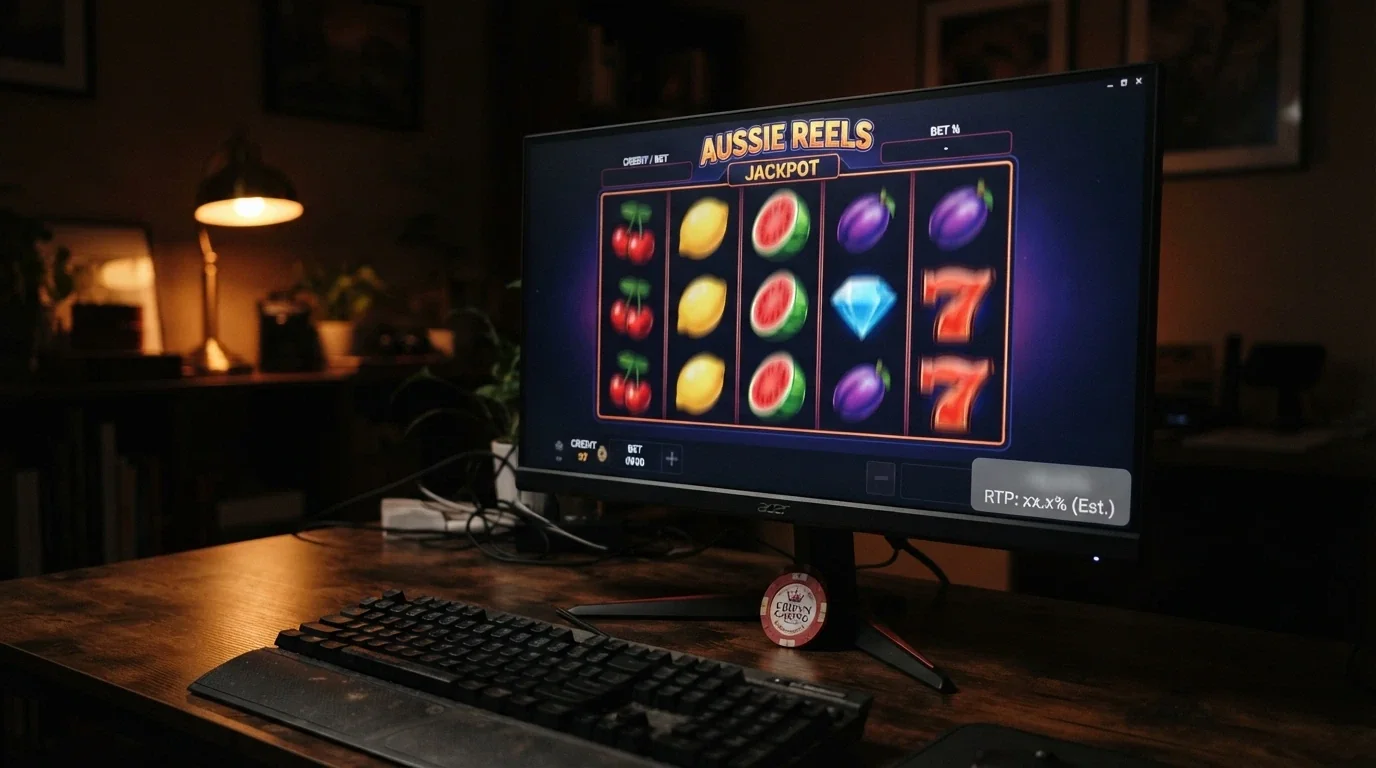
The pokie format is also where the bonus’s real cost gets decided. Return to player (RTP) is the percentage of stake that a slot returns to players over a very large number of spins — a long-run average that smooths the variance but does not eliminate it for any single session. A higher-RTP pokie gives back a larger share of each wager as winnings on average; a lower-RTP pokie keeps a larger share for the house. The percentage-point gap between two pokies is the difference in edge on every spin of the bonus balance.
Most offshore casinos do not display the RTP for individual games in a consistent way. The information is sometimes on a help page, sometimes buried in a game’s information panel, sometimes missing entirely. The licensed Australian wagering operators that do offer online products — wagering-only, no casino — display RTP where applicable as a condition of their licence. The offshore casino has no such obligation, and the player’s ability to check the RTP before playing a no-deposit bonus is therefore weaker than it should be.
Aussie Pokies Online: What a No-Deposit Bonus Unlocks
The pokie landscape an Australian player sees at an offshore casino is the global online slots market with a local accent. Established studio providers whose catalogues populate the libraries at most offshore operators are the same names an Australian player will see across the segment. The marketing term “Aussie pokies” — pokie formats styled around Australian themes, with familiar iconography and Australian wildlife or outback imagery — is a positioning label rather than a regulatory category. The games are produced offshore, hosted offshore and licensed by the offshore regulator that governs the casino. The Australian flavour is a marketing layer, not a guarantee of any kind.
Real-money pokies with a no-deposit bonus are a different product from demo or free-play pokies. Demo mode lets a player spin the reels without risking real money, with no bonus mechanics attached; it is a useful way to learn a game’s features but generates no withdrawable winnings. A real-money no-deposit bonus spins the same reels with bonus money that, if the wagering and the cashout cap cooperate, can convert into a small withdrawable balance. The two are not interchangeable, and a player who finds themselves in demo mode when they expected a bonus has not yet triggered the real-money offer.
Why the RTP Matters Twice as Much on a No-Deposit Bonus
RTP matters on every real-money spin, but it matters twice on a bonus spin — because the wagering requirement sits on top of the house edge. A player clearing a high wagering requirement on a small bonus has to generate a large volume of eligible turnover before the balance converts. On a higher-RTP pokie, a larger share of that turnover returns to the player as winnings. On a lower-RTP pokie, the house keeps more of it. The compounding of low RTP against high wagering is the arithmetic the bonus terms hide, and the only move the bonus structure rewards is picking the highest-RTP eligible game.
The absence of mandated RTP disclosure at offshore casinos means the player has to look. A licensed Australian wagering operator would have to show RTP. An offshore operator does not. The Interactive Gambling Act 2001 prohibits the offering, which means none of the responsible-disclosure rules that govern licensed products apply here. An Australian player who wants the RTP for a specific game is asking the offshore operator to volunteer information it is not obliged to share.
New Casinos Are Launching, but the Same Offshore Rules Apply
The offshore casino market keeps adding entrants. New brands appear every month with new no-deposit offers, new affiliate partnerships and the same acquisition play the established names have been running for years. The branding changes. The regulatory reality does not.
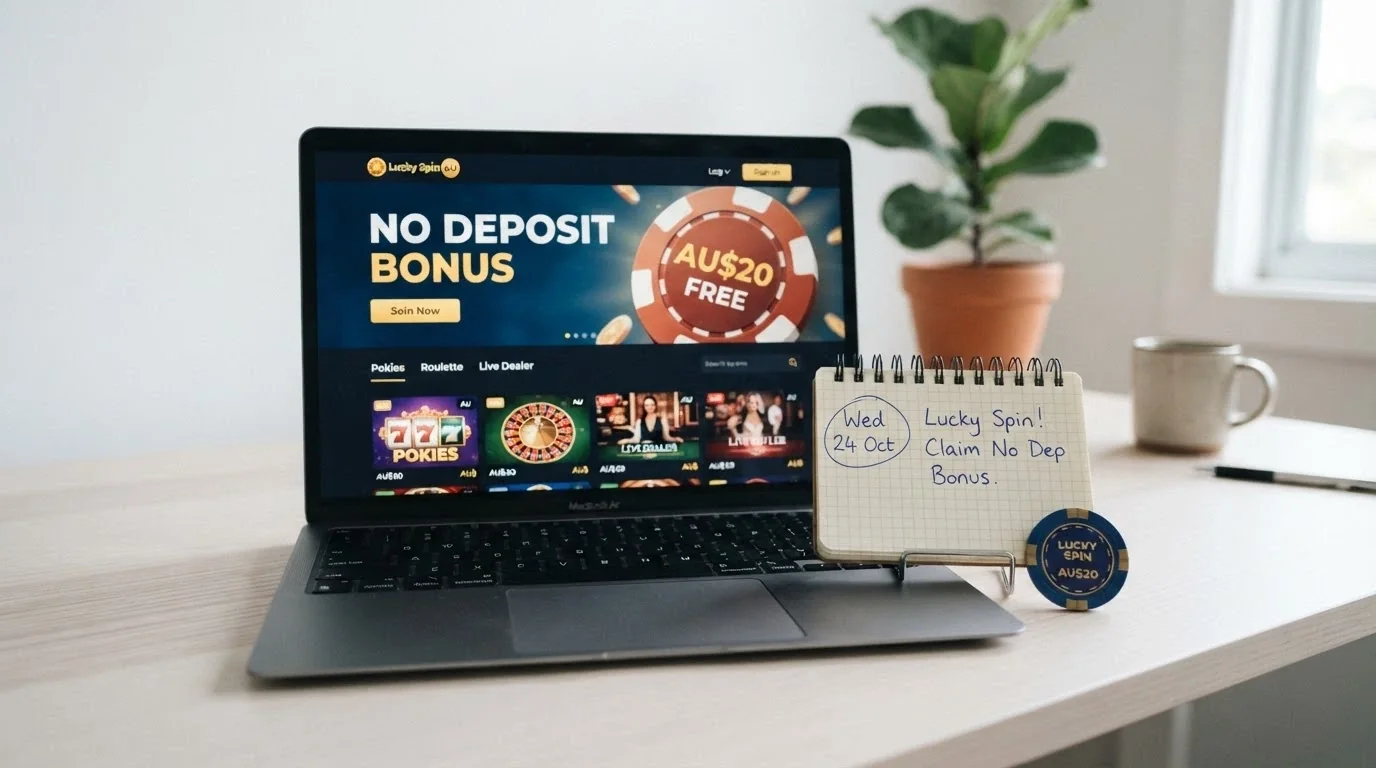
The Interactive Gambling Act 2001, strengthened in 2017 and amended again in 2026, applies to every operator that offers an interactive gambling service to a person in Australia — regardless of when the operator launched. A new entrant is not grandfathered. A new entrant is not exempt. The 1,564 sites the ACMA has had blocked since November 2019 include many that launched after the 2017 amendment was already in force. Newness is not a defence against an enforcement request.
The launch date tells a player something about the brand’s commercial position — a new entrant is competing for share against established names — but it tells the player nothing about the brand’s regulatory position. A new casino is, if anything, more exposed to ACMA action, because the operator has not yet built the affiliate networks or payment-processor relationships that older brands rely on to stay reachable.
What a New Casino’s No-Deposit Offer Tells You That an Established One’s Won’t
A new entrant’s no-deposit bonus is a marketing investment — the offer has to be good enough to draw a player through the door when the brand has no reputation and no player base. Generous terms at this stage can be a genuine acquisition play by an operator planning to be around in five years. They can also be a short-lived grab by an operator planning to be around only long enough to collect deposits from the players the offer attracts.
The reading depends on signals no bonus terms page will confirm: the operator’s licensing jurisdiction, the operator’s payment-processor relationships, the operator’s history with the ACMA’s blocking list, the operator’s age in months. None of these are obvious from the offer itself.
The established brand’s no-deposit offer tells a different story. It is rarely the most generous offer in the market. It does not have to be, because the brand is being chosen for its name and its track record, not for its bonus. The established brand competes on familiarity and on the fact that it is still here. For a player who values that, the offer does not have to be the best to be the right one.
More than 225 services have withdrawn from the Australian market since 2017. Some of those were new entrants that did not survive the ACMA’s first enforcement pass; some were established names that decided the Australian market was no longer worth the risk. The next entrant to launch and the next established name to withdraw are both possibilities on the same page.
Your Deposit Method Is the First Thing That Tells You Where the Casino Sits
The payment screen is a compliance test. The deposit methods an offshore casino accepts say, before any terms are read, whether the operator sits inside or outside the Australian framework.
PayID, Osko and BPAY are Australian payment rails — instant bank transfers via PayID and Osko, the slower bill-payment system BPAY. They are legal deposit methods for licensed Australian wagering operators. An offshore casino that displays a PayID logo is displaying an Australian payment option that an Australian bank is processing. It is not displaying an Australian licence.
Crypto is the clearest signal of an offshore operator. Since 11 June 2024, credit cards, credit-related products and digital currency have been banned as payment for online wagering in Australia under the Interactive Gambling Amendment (Credit and Other Measures) Act 2023. The penalty for an Australian-licensed operator that fails to enforce the ban is up to A$247,500 per breach. The offshore casino is not subject to that penalty, because the offshore casino is not licensed. The crypto deposit option is therefore a tell that the operator sits outside the Australian framework, not a feature the operator offers despite the rules.
E-wallets sit in the middle. They are not banned, because they are not on the banned list; they are also not specifically authorised by name in the Australian wagering framework, which means the operator’s relationship with a particular e-wallet is a commercial decision, not a regulatory one. For the player, an e-wallet deposit offers some privacy from the bank statement and some friction from the bank’s transaction-monitoring systems — useful for a player who wants the offshore channel to look like something else on their statements.
PayID, Osko and BPAY: The Australian Payment Layer Offshore Casinos Exploit
PayID is the near-instant bank-transfer system built on Australia’s New Payments Platform; Osko is the brand most retail banks use to deliver it. Both move money between Australian bank accounts in seconds, including to a merchant account. For a licensed Australian wagering operator, PayID and Osko are legitimate deposit rails — fast, cheap and traceable.
For an offshore casino, accepting PayID is a different proposition. The PayID payment still moves between Australian bank accounts; the destination account may sit at an Australian bank that has commercial arrangements with an offshore operator, or at a payments processor that aggregates multiple merchants under one Australian presence. Either way, the payment method is Australian; the operator is not. The Australian player who pays an offshore casino by PayID is making an Australian payment to a non-Australian business, and the consumer protection that comes with an Australian-licensed wagering transaction does not follow the money.
BPAY is the older bill-payment rail, slower and less convenient, but still Australian. It carries the same implication: a BPAY deposit to an offshore casino lands in an Australian bank account that is not an Australian-licensed wagering operator. The deposit succeeds. The protection does not.
The implication for a player is that the deposit method tells you the rail the money travels on, not the licence the destination holds. The casino can be Australian in how it takes your money and offshore in how it operates. The two are not the same thing.
Crypto and E-Wallets: Convenience vs the Australian Payment Ban
Crypto’s appeal to an offshore casino is structural. It moves across borders without an Australian bank intermediating, settles in minutes and leaves a thinner audit trail than a bank transfer. For a player who wants to fund an offshore account without an Australian bank’s transaction-monitoring system flagging the payment, crypto is the cleanest available option.
The trade-off is regulatory. Since 11 June 2024, an Australian-licensed wagering operator cannot accept a crypto deposit; the ban is in the Interactive Gambling Amendment (Credit and Other Measures) Act 2023. The offshore casino that does accept it is not licensed, is not subject to the ban and is not subject to the A$247,500 per-breach penalty. The crypto deposit is therefore a confirmation of what the player already knows: this is an offshore operator, on a different regulatory footing from a SportsBet or a Ladbrokes.
From 1 January 2027, the picture gets sharper. The Interactive Gambling Amendment (Gambling Reform) Bill 2026, passed on 19 August 2026, gives Australian banks and payment providers express authority to block transactions to illegal gambling operators. The blocking is at the bank’s discretion, not mandatory, but the direction of travel is clear — the Australian payment system is being given the tools to refuse to process offshore-gambling transactions, and the player funding an offshore account through an Australian bank is the player most exposed to a sudden block.
E-wallets sit alongside crypto in convenience, with different regulatory exposure. They are not on the banned list and are not specifically authorised by name; the relationship between the e-wallet provider, the offshore casino and the player’s bank is a commercial chain, not a regulatory one. The anonymity trade-off is smaller than with crypto and larger than with PayID. The withdrawal reality depends on the e-wallet’s own policies and on whether the offshore casino will release funds to that wallet at all.
No Australian Casino Licence Exists — Here’s What That Actually Means
The Interactive Gambling Act 2001 is the federal statute that governs online gambling in Australia, and its central provision is a prohibition: it is illegal to provide online casino games, online pokies or in-play sports betting to a person physically in Australia. The 2017 amendment closed several loopholes that offshore operators had used to reach Australian customers and gave the Australian Communications and Media Authority (ACMA) formal enforcement powers — civil penalty proceedings, formal warnings and the authority to request that Australian internet service providers block offending websites at the DNS level.
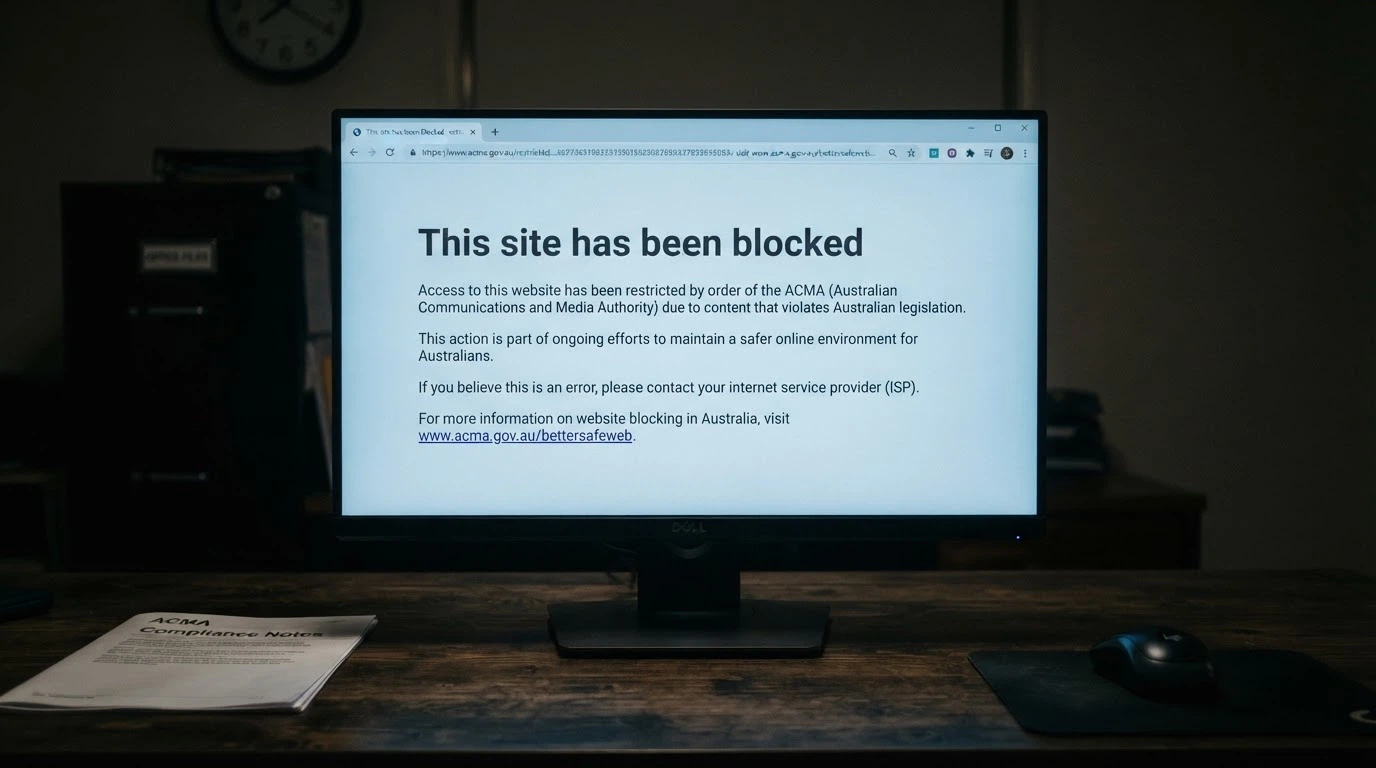
The 2026 reform — the Interactive Gambling Amendment (Gambling Reform) Bill 2026 — passed Parliament on 19 August 2026 and commences on 1 January 2027. It adds the payment-blocking authority discussed above, caps wagering advertising to no more than three ads per hour between 6:00 am and 8:30 pm, imposes a live-sport blackout (no wagering advertising from 15 minutes before a live event until 5 minutes after it ends), bans direct marketing of inducements for 14 days after a customer signs up and for three months after a person deregisters from BetStop, and bars athletes, celebrities and influencers from promoting wagering products.
None of these changes legalises online casino. The licensable products under Australian law remain pre-event wagering on races and sport, lotteries and keno — through operators licensed by a state or territory. The de facto national licensor for online wagering is the Northern Territory Racing and Wagering Commission (NTRWC), administered through Licensing NT; large online bookmakers hold NT licences with terms of up to 20 years.
Crown Melbourne and The Star Sydney are state-licensed land-based casinos. They are not the licence under which any online casino operates, and an Australian player who confuses the two is misreading the regulatory picture.
What the IGA Bans, What It Allows and What Happens in 2026
The table below compares what an Australian player gets from a licensed wagering operator and what they give up by playing at an offshore casino instead.
| Protection or Safeguard | Licensed Wagering (AU) | Offshore Casino |
|---|---|---|
| Australian consumer protection | Yes — AU consumer law applies | None — overseas regulator only |
| BetStop self-exclusion coverage | Yes — one registration excludes from every AU-licensed service | No — offshore operator not connected |
| Identity verification | Required at account opening | Often skipped (“no KYC”) |
| Deposit method restrictions | Credit cards and crypto banned; PayID, Osko, BPAY, debit card | Accepts any method, including credit cards and crypto |
| Site blocking risk | None | ACMA may block at any time; 1,564 sites blocked since 2019 |
| Dispute resolution | Australian ombudsman / regulator available | Offshore regulator only; no AU recourse |
| Responsible gambling tools (limits, time-out) | Mandatory under licence conditions | At operator’s discretion |
| Advertising rules | Capped from 1 January 2027 | No AU advertising rules apply |
| Age verification | 18+ verified at account opening | Varies; often nominal |
The licensed wagering column is what an Australian player gives up when they move offshore. The offshore casino column is what replaces it. The exchange is not equivalent.
No KYC, No Protection: What Playing Without ID Verification Actually Costs You
Identity verification — KYC, “know your customer” — is a condition of holding an Australian-licensed wagering account. A SportsBet or a Ladbrokes customer has their identity verified at account opening; the verification is part of the licence, not a feature the operator can opt out of.
The offshore casino that markets “no KYC” is marketing the absence of that check as a convenience. It is not. The absence of KYC means the operator does not know who its customer is, which means the operator cannot distinguish a self-excluded player from a non-excluded one. BetStop, the National Self-Exclusion Register, binds Australian-licensed wagering services only. An offshore casino is not licensed here, is not connected to the register and will keep taking a self-excluded person’s money. No KYC is the mechanism that lets it happen.
The same absence is what allows an offshore casino to vanish with a balance still on it. The 1,564 sites the ACMA has had blocked since November 2019 did not give their players notice before going dark. A no-KYC casino that disappears overnight owes nothing to a player whose name it never recorded. Identity verification is the legal mechanism that gives an Australian player standing to enforce a claim. Its absence is what removes that standing.
The trade the no-KYC casino offers is real speed at registration against no recourse at withdrawal. The marketing presents that trade as a feature. The reality is closer to a warning label.
Playing Safely When the Safety Net Wasn’t Built for This
Australia’s responsible-gambling infrastructure is among the most developed in the world. BetStop, the National Self-Exclusion Register, has been live since August 2023; a single registration excludes a person from every Australian-licensed online and phone wagering service. As at 31 July 2026, the register had recorded 67,480 registrations, of which 41,290 exclusions were still active. Seventy-eight per cent of registrants were under 40, and 38% chose a lifetime exclusion — the strongest option available.
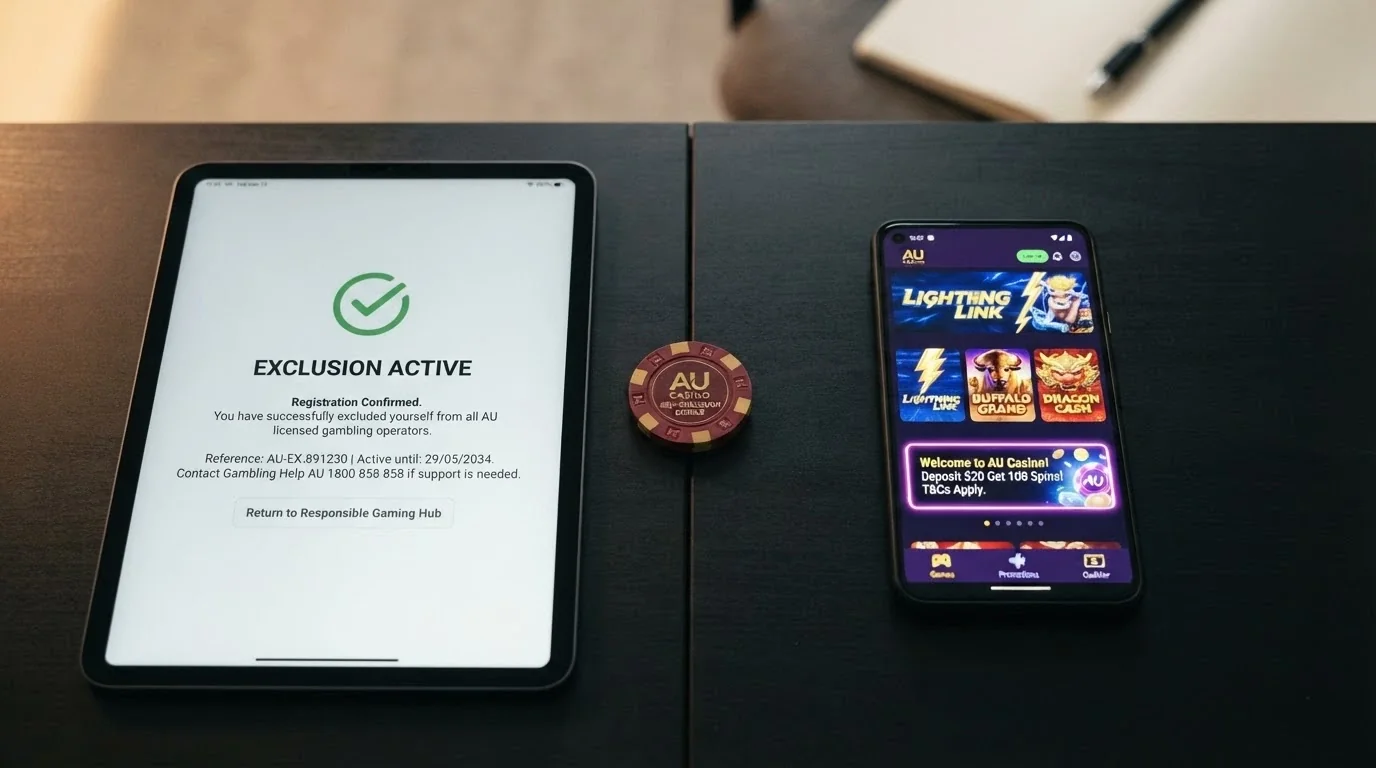
The register works because it is connected to every Australian-licensed wagering operator at the technical and contractual level. A registration propagates to every licensed service in a single step. The system is the cleanest expression of the Australian model: a player who has decided to stop can stop, with no operator-by-operator chase.
The same system does not reach the offshore casinos in this ranking. BetStop does not bind offshore operators, because offshore operators are not Australian-licensed. A player who has registered with BetStop and then accesses an offshore casino is starting over. There is no record of the exclusion at the offshore operator, and no obligation on the operator to honour one.
The Help That Actually Exists: Helpline, BetStop and Where to Go
The support an Australian player can reach today is concrete and free.
- National Gambling Helpline — 1800 858 858. Free, confidential, available 24 hours a day, 7 days a week. The helpline is the single point of first contact for any Australian who is concerned about their own gambling or someone else’s.
- Gambling Help Online. Online chat and professional counselling, with web-based resources for self-assessment and for family members affected by someone else’s gambling. The online service complements the phone line and is the right first step for someone who is not ready to speak on the phone.
- BetStop — the National Self-Exclusion Register. A single online registration excludes the person from every Australian-licensed online and phone wagering service. Registration is confidential. Exclusion periods range from a minimum term up to a lifetime exclusion.
- State and territory gambling support services. Each state runs its own face-to-face counselling, financial counselling and peer support programmes, typically funded through the relevant casino or wagering licence. The helpline can refer into the right state service.
The minimum age for any commercial gambling activity in Australia is 18. That includes offshore casinos accessed from Australia, even though the offshore operator does not enforce the rule the way a licensed operator would.
How Big the Problem Actually Is: Gambling Harm in Australia by the Numbers
The Australian Institute of Health and Welfare estimated, in 2022, that approximately 2.1% of Australian adults — roughly 430,000 people — experience problem gambling. A further 1.8% of adults fall into the high-risk gambling category. The figures are the most-cited prevalence estimates in Australian gambling policy and the baseline against which every safeguard is measured.
The BetStop data sharpens the picture. Seventy-eight per cent of registrants are under 40, which means the population choosing to exclude itself from licensed wagering is concentrated in the age groups that have grown up with online gambling as a normal consumer product. Thirty-eight per cent chose lifetime exclusion, which means more than a third of the people who reached for the strongest available safeguard decided that any future access was too much risk. The offshore casino channel sits directly across that decision: it is the place where the safeguards do not reach, and the people who most need the safeguards are the people most likely to know how to find it.
The offshore route is not a neutral product choice. It is a route that increases the harm gradient for the population the safeguards exist to protect. The arithmetic of the segment — generous bonuses on the way in, opaque terms in the middle, blocked sites and vanished balances on the way out — is the same arithmetic the responsible-gambling infrastructure was built to interrupt.
How We Selected and Ranked These No-Deposit Casinos
The ranking in this article is built from three inputs. The first is the Australian regulatory framework, which sets the outer boundary: every online casino offering a no-deposit bonus to Australians is doing so from outside Australia, because no Australian online casino licence exists. The second is the operators industry dataset, which records Australian-player revenue share by brand and is the basis for the ranking order. The third is the ACMA enforcement record, which establishes which operators have been blocked, which have withdrawn and which continue to accept Australian players.
Within those inputs, the ranking criteria were: market presence as measured by Australian-player revenue share, product fit for no-deposit-bonus acquisition (which all ten operators share), and accessibility — the operator is currently accepting Australian players, which is a present-tense claim that the ACMA’s blocking list can invalidate at any time.
The honest limits of the ranking are these. No per-operator bonus terms were verified during research — no wagering multiples, no cashout caps, no spin counts, no validity windows. The ranking cannot therefore rank on “best bonus”, because the figures are not available. The ranking ranks on market presence, which is at least measurable. No withdrawal times were verified, no dispute-resolution records were verified, and no game libraries were catalogued. Each operator write-up describes what research could establish — market position, regulatory status, product type — and stops where the data stops.
The sources used are the Australian Communications and Media Authority (regulator and enforcement record), the Interactive Gambling Act 2001 and its 2017 and 2026 amendments (statutory framework), the Australian Institute of Health and Welfare (harm prevalence) and the operators industry dataset (market share). No operator-provided marketing materials were used as a source for any claim in the body of this article.
Your Move: What to Do When a No-Deposit Bonus Lands in Your Inbox
The decision this page has built toward is the one a player makes when an offer arrives — by email, by affiliate banner or by a text from a friend. The offer is genuine. The bonus will credit if the terms are met. The bonus’s real cost is the wagering, the cap and the clock described earlier in this article, and those three numbers re-price every “free” offer.
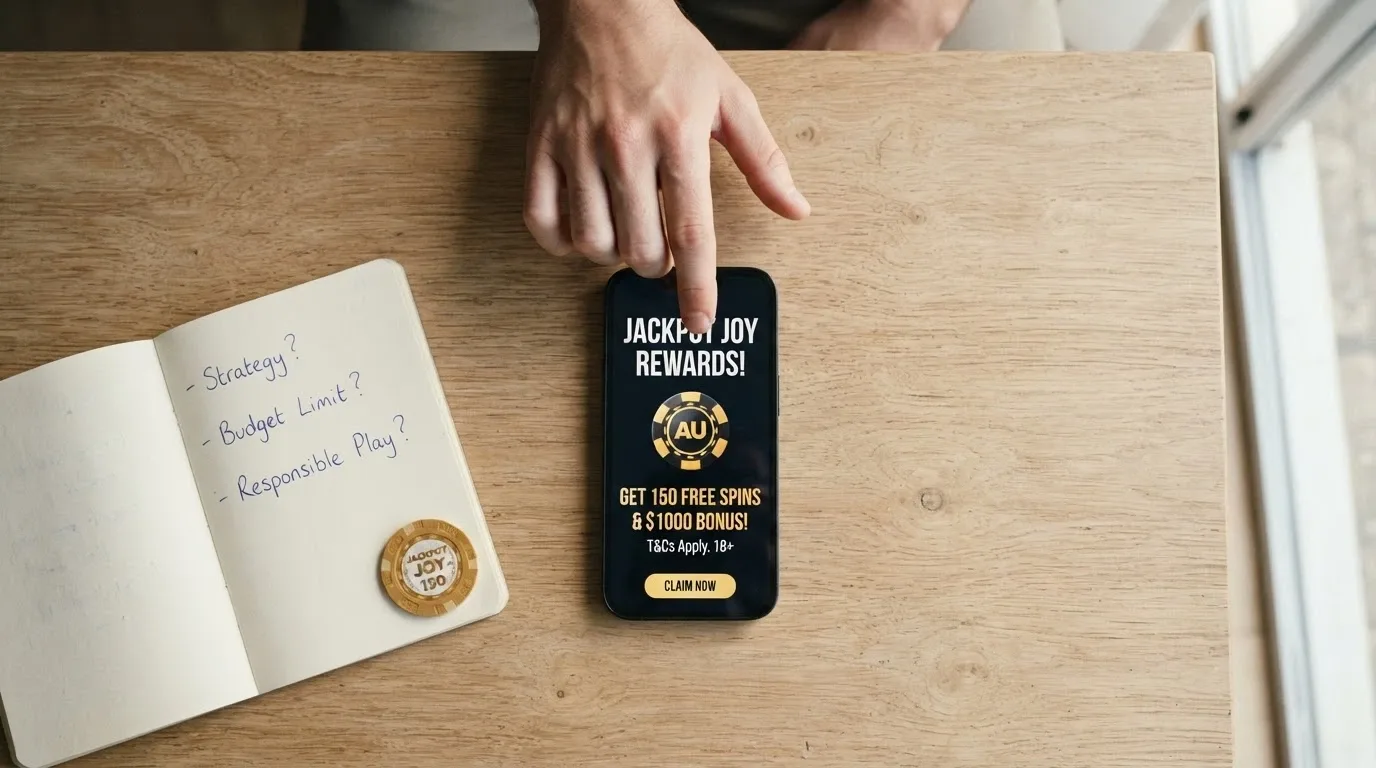
The licensed alternative is real, even if it is not casino. Wagering on races and sport placed before the event begins, lotteries and keno are the products the Interactive Gambling Act 2001 makes licensable, and the operators licensed by state and territory regulators — the Northern Territory Racing and Wagering Commission (NTRWC), administered through Licensing NT, being the de facto national licensor — are the operators an Australian player can deal with under Australian consumer protection. The product is not the same as an offshore online casino. The protection is.
Three questions to read on the bonus terms page before any claim.
What is the wagering multiple — and is it applied to the bonus only or to the bonus plus any deposit that follows? The number, multiplied by the bonus, is the turnover the player has to generate.
What is the maximum cashout cap, and is it expressed as a multiple of the bonus, a fixed dollar amount or a per-spin limit? The cap is the ceiling on what the offer can ever pay out, regardless of how the wagering goes.
Where is the operator licensed, and what regulator’s complaint mechanism applies if a withdrawal is delayed or denied? The answer determines whether the player has any recourse beyond the casino’s own support team.
If those three numbers are unfavourable, the bonus is not free. If they cannot be found on the terms page at all, the bonus is not free and the operator has decided the player should not be able to tell. The National Gambling Helpline (1800 858 858) is free, confidential and available 24 hours a day, and is the right next call for any player who is unsure whether the next click is one they want to make.
Frequently Asked Questions
Are no deposit bonuses legal in Australia?
No-deposit bonuses are offered by offshore casinos that operate outside Australian law. The Interactive Gambling Act 2001 prohibits providing online casino games to people in Australia. The player is not prosecuted under section 15, but the offshore operator is breaking the law by offering the service, and the player receives no Australian consumer protection in return.
Can I win real money with a no deposit bonus at an Australian online casino?
Yes, in principle — the winnings generated by a no-deposit bonus are real money inside the casino’s software. Whether those winnings become money a player can withdraw depends on the wagering requirement, the maximum cashout cap and the validity window. Most players who clear wagering find the cashout cap has re-priced the offer downward.
Do I need a bonus code for no deposit offers in Australia?
Some offshore casinos credit a no-deposit bonus automatically on registration; others require a code. The code is a distribution mechanism — the offer’s terms (wagering, cashout cap, validity) determine its value. Codes change frequently because they are tied to affiliate partnerships, and an expired code is a common reason a bonus fails to credit.
What happens if I win and the casino won’t pay out — do I have any protection?
An Australian player dealing with an offshore casino has access only to the dispute mechanisms of the casino’s offshore regulator. There is no Australian ombudsman, no Australian consumer law to invoke and no ACMA complaints process that applies to a private withdrawal dispute. The 1,564 sites the ACMA has blocked since November 2019 are enforcement against the operator, not against an unpaid balance.
Does BetStop cover offshore casinos?
No. BetStop, the National Self-Exclusion Register, is connected to every Australian-licensed online and phone wagering service and excludes a registered person in a single step. Offshore casinos are not connected to the register, are not bound by it and will continue to accept a self-excluded person’s deposits. The offshore gap is the most concrete harm of the offshore channel.
What payment methods can I use at an Australian no deposit casino — is PayID accepted?
PayID is legal for Australian-licensed wagering operators, and some offshore casinos display it — but a PayID deposit does not make the operator licensed. Credit cards and digital currency have been banned for online wagering since 11 June 2024, so an offshore casino accepting them is confirming its offshore status. From 1 January 2027, Australian banks may block transactions to illegal gambling operators.