
200 Free Spins No Deposit in Australia: A$20 of Play, 50x Wagering, Offshore Casinos
A “200 free spins no deposit” offer is the kind of headline that does its own selling. The fine print does its own unselling. Behind the spin count sits a small pile of bonus credit, a long path of wagering, and a hard ceiling on what survives the cashout. The arithmetic runs in three steps, and each step shrinks the offer the headline built up.

Current as of 18 October 2026; verified against ACMA enforcement records and the operators’ published terms.
Table of Contents
- Why Your 2026 200 Free Spin Bonus Is Smaller Than It Looks
- No Deposit Doesn’t Mean No Strings: How Free Spins Really Work
- Offshore Casinos Australians Actually Use — and What They Really Offer
- Pokies You Can Actually Play With Your Free Spins
- New Casinos Chase the 200 Free Spins Headline — But the Offer Stays the Same
- Claiming Free Spins on Mobile: The Same Offer, a Smaller Screen
- The Legal Reality: Online Casinos Are Illegal in Australia
- Responsible Gambling Tools Every Australian Player Should Know
- How We Evaluated These Casinos
- Should You Chase 200 Free Spins? Our Verdict
- Frequently Asked Questions
Why Your 2026 200 Free Spin Bonus Is Smaller Than It Looks
The number on the marketing banner is a count of spins, not a count of dollars. That is where the gap opens.
The A$20 Truth Behind the Headline
“200 free spins” reads as $200 of value. It rarely is. Operators tie free-spin bundles to a fixed minimum stake per spin, and that minimum is almost always the lowest the chosen pokie allows — typically ten cents a spin. Two hundred spins at A$0.10 each works out to A$20 of play, not A$200. The spin count is the marketing hook because it sounds generous. The per-spin stake is the qualifier because it sounds technical.
A punter who reads only the headline sees a $200 bonus. A punter who reads the eligible pokie’s minimum stake sees the truth. And there is still value in those A$20, but only if the wagering and cashout caps behind them do not eat every cent first — which, on a typical no-deposit offer, they usually do.
This is not a trick. It is the standard mechanic across the offshore market. The spin count is loud on purpose. The dollar value is quiet on purpose.
The Real Ceiling: Why $50–$100 Is the Practical Limit
A standalone no-deposit bonus in Australia above A$100 is effectively mythical. The market has settled on a working ceiling of A$50 to A$100 for any genuine no-deposit offer — and within that band the strings stay just workable. Above the band, the wagering multiples stretch into territory that makes withdrawal statistically improbable: 50x to 80x on a small bonus base means turning over five to eight times the headline value in bets before a cent becomes withdrawable.
The reason is arithmetic, not malice. A no-deposit bonus costs the operator whatever the player wins, plus the cost of running the wagering path. The bigger the bonus, the heavier the wagering has to be to keep the offer from bleeding the operator dry. So either the bonus stays small and the strings stay reasonable, or the bonus looks enormous and the strings become a mathematical wall. The A$200 no-deposit bonus that does appear almost always carries the wall.
The honest starting point for evaluating any no-deposit offer is the working ceiling, not the headline. An offer above A$100 in headline value is marketing by another name.
No Deposit Doesn’t Mean No Strings: How Free Spins Really Work
Every free-spin offer is a contract. The contract is shorter than the marketing page suggests.
What No Deposit Actually Means (and What It Doesn’t)
“No deposit” is one fact: the casino does not require you to load your own money to claim the offer. It is not a fact about the offer itself. Once the spins land in your account, every other term a normal bonus carries still applies — wagering, max cashout, eligible games, expiry. The word “no deposit” describes the entry point, not the experience.
This trips up more players than any other clause. A punter sees the offer, sees the words “no deposit”, and assumes the rest of the terms are equally friendly. They are not. They are usually stricter than a standard welcome bonus, because the casino is taking the risk of giving away free play.
The typical no-deposit bonus in the Australian-facing market runs 40x to 60x wagering on whatever the spins win, capped at A$50 to A$100 of withdrawable cash. That is the standard shape. Anything looser is a flier. Anything tighter sits at the heavy end of the same distribution.
Wagering Requirements: The 50x–80x Hurdle
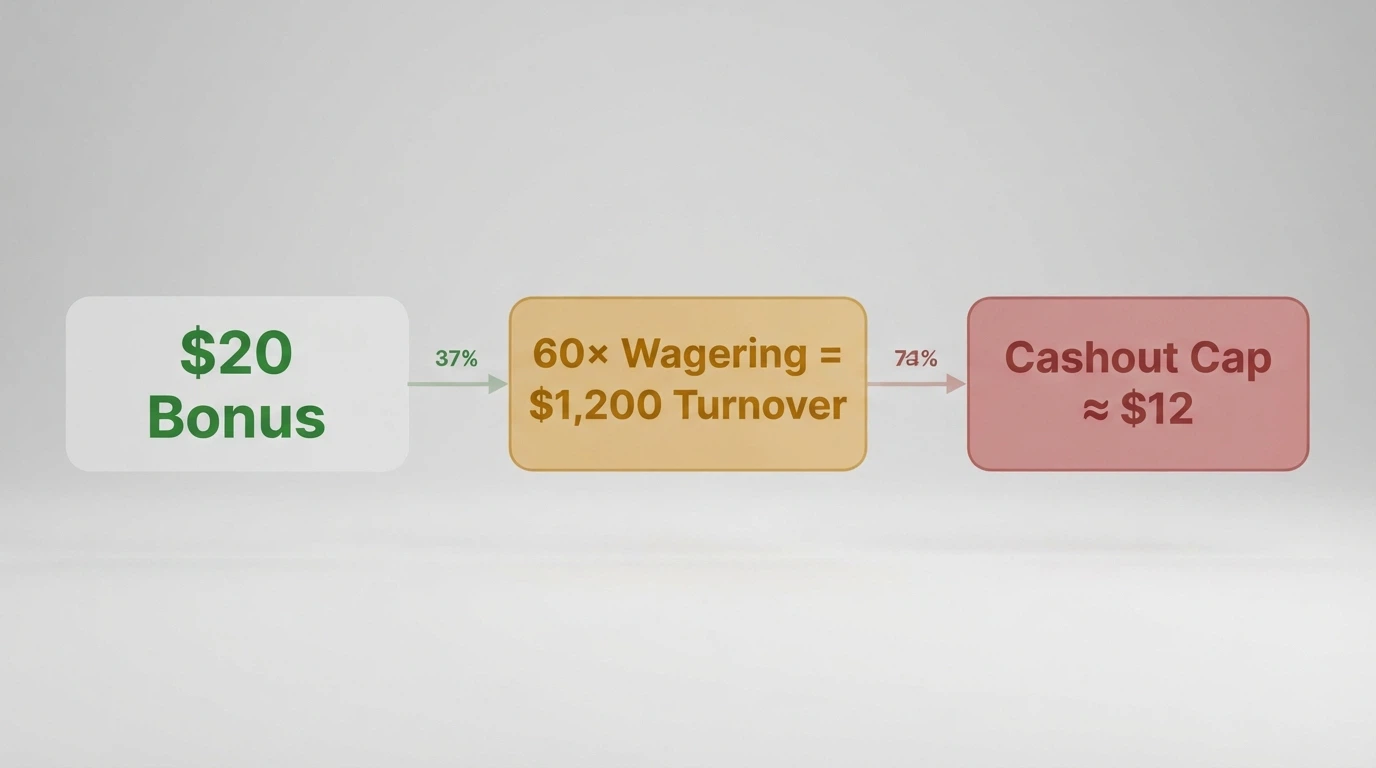
The maths on a no-deposit bonus looks straightforward until you run it. Suppose your 200 free spins land, you play them through at the minimum stake, and the result is A$20 of bonus credit sitting in your account. At a 60x wagering requirement — the upper end of what the Australian-facing offshore market typically charges — the operator wants A$1,200 in bets placed before the A$20 converts to withdrawable cash.
At A$0.10 per spin, that is 12,000 more spins. Each spin takes roughly five seconds to play, which puts the clearance path at around 16 to 17 hours of continuous play. A punter who sits down for “a quick bonus” is signing up for a second work-shift at the pokies to clear it. That estimate is a statistical average across many spins under the stated assumptions, not a guaranteed outcome for any single session. House edge, variance and the choice of pokie all change the path. Some sessions clear in less, some never clear at all.
The order of magnitude is the honest reading. The 200 free spins become a 17-hour stint to turn A$20 of bonus into whatever survives the cashout cap.
The table below shows how the different bonus types stack up against the same 200-spin claim.
| Bonus Type | Typical Wagering Multiple | Typical Max Cashout | Real Cash Value of a 200-Spin Claim |
|---|---|---|---|
| No-deposit free spins | 40x–60x | A$50–A$100 | A$20 of bonus play, capped at the cashout ceiling |
| No-deposit free cash (small) | 30x–40x | A$50–A$100 | A$10–A$20 typically; the closest the featured set gets to a real no-deposit path |
| Deposit-match + free spins | 40x | No fixed cap, capped only by the bonus itself | 100 free spins added to a deposit match; the deposit side determines the real ceiling |
| Wager-free spins | None | Varies | The 200-spin claim converts 1:1 into cash, no turnover, but the offer is exceptionally rare |
Max Cashout Caps: Your Winnings Have a Ceiling
The wagering requirement decides whether you can withdraw. The max-cashout cap decides how much of what you win survives the withdrawal. On a typical no-deposit bonus the cap sits between A$50 and A$100 — a hard ceiling on what the casino will pay out, regardless of how lucky you got during the spins.
This is the part that shocks players most. A 200-spin run can theoretically pay thousands on a high-volatility pokie. The cap turns that into the maximum the operator has pre-set, which is usually close to the size of the bonus itself. Anything above the cap disappears.
The interaction is the trap. A bonus with 40x wagering and no cap would still be heavy. A bonus with 60x wagering and a A$50 cap is a mathematical wall: most players clear it or do not clear it at all, and those who clear it walk away with at most the cap. The marketing word “bonus” hides both clauses at once.
Claiming Your Spins: Codes, Registration and Verification
The claim path runs in three steps: code, register, verify. Each one kills the bonus if missed.
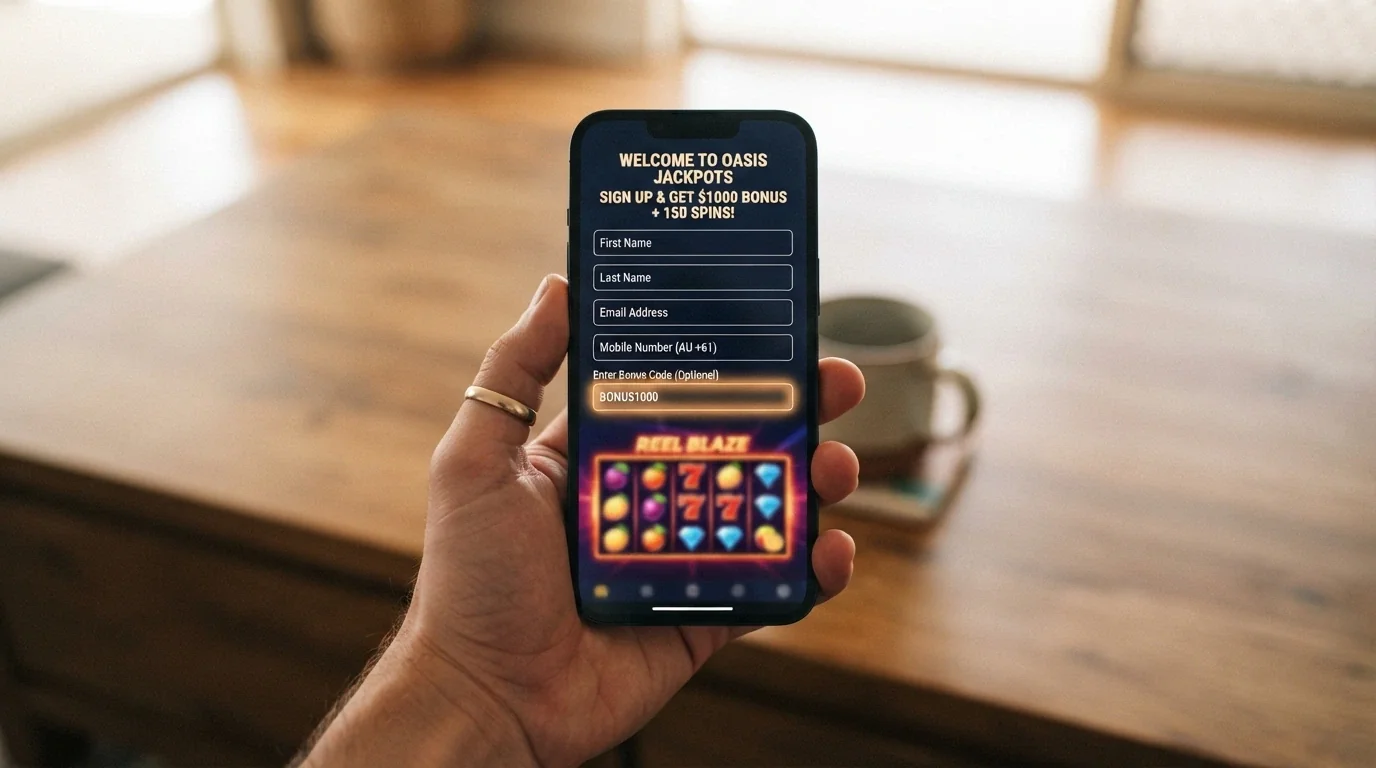
Most no-deposit free-spin offers arrive through a bonus code — either one an affiliate page displays or one the casino itself distributes by email after registration. The code is typed into a field during sign-up, or after sign-up in a “bonuses” tab. Without the code, the spins do not appear. Codes expire, sometimes within hours.
Registration is the second gate. The form collects the usual identifying fields: name, email, date of birth, address. Country restrictions vary across operators, but Australia is rarely on the restricted list at offshore casinos, since those operators exist primarily to serve players in jurisdictions like Australia’s.
Verification is the third gate, and the one that catches most players by surprise. The casino will ask for documents before the first withdrawal: a photo ID, proof of address, sometimes proof of payment method even though no deposit was made. Offshore casinos apply this strictly because they do not trust their own customer base. Verification is the longest delay between “I cleared the bonus” and “I have the money in my account” — and a player without the documents ready can lose the bonus to a 7-day or 14-day expiry clock.
Wager-Free Spins: The Holy Grail (and Why They’re Rare)
A wager-free spin pays cash, not bonus credit. Whatever the spin wins is yours, immediately, with no turnover requirement and no cap beyond what the operator sets for itself. The 200-spin claim becomes, in dollar terms, a 200-ticket lottery where the prizes go straight into the withdrawable balance.
Operators hate this product. Free spins are a marketing expense; wager-free free spins are an open-ended expense, because a single big win on a high-volatility pokie can cost the operator more than the marketing value of the spin bundle. They appear occasionally — as a “come back to us” reward on a dormant account, as a one-off promotional push, or as part of a VIP tier. They do not appear as the headline no-deposit welcome offer, because that offer is built to attract volume, and volume on wager-free terms is ruinous.
For an Australian-facing player, the practical upshot is this: assume the standard 200-free-spins headline is not wager-free until the terms page proves otherwise. The terms page is where this lives. Read it.
Crypto Casinos and Free Spins
Crypto-denominated casinos have spent several years marketing aggressively to Australian players. They pitch the same 200-free-spin offers, denominated in Bitcoin or Tether, with the standard claim that crypto lets you “stay anonymous” and “skip the bank”.
Both pitches run into Australian reality. The Interactive Gambling Act prohibits online casinos, which means the crypto casino is operating outside the law regardless of the payment method. And since 11 June 2024, credit cards and crypto have been banned as a payment method for online wagering in Australia — a ban that targets Australian payment processors rather than individual players, but one that means an Australian who buys crypto specifically to fund an offshore casino is paying a premium for a product that carries the same legal exposure as any other offshore casino visit.
The marketing pitch is convenience. The product is the same offshore casino in different packaging.
Offshore Casinos Australians Actually Use — and What They Really Offer
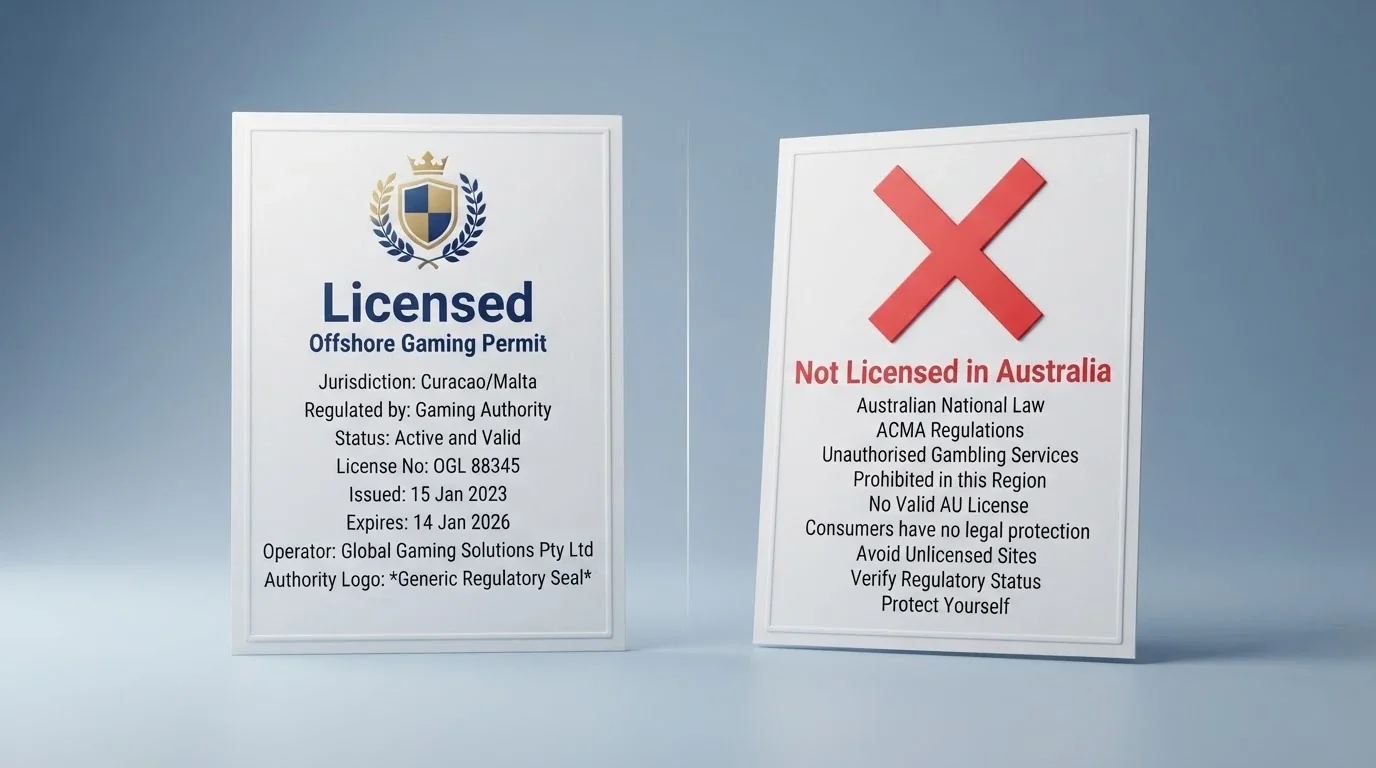
No operator featured here holds an Australian licence. Each is accessible from an Australian IP, accepts AUD or its crypto equivalent, and runs on a Curacao-issued interactive gaming permit — a regulator with a long history of licensing but a much shorter history of enforcement.
| Operator | Licence Status in Australia | Offshore Regulator | Accepts Australian Players |
|---|---|---|---|
| Rocket Play | None — not licensed in Australia | Curacao | Yes |
| Skycrown | None — not licensed in Australia | Curacao | Yes |
| Royal Reels | None — not licensed in Australia | Curacao | Yes |
| WinSpirit | None — not licensed in Australia | Curacao | Yes |
| Stake | None — not licensed in Australia | Curacao | Yes |
| Rainbet | None — not licensed in Australia | Curacao | Yes |
| Scream Casino | None — not licensed in Australia | Curacao | Yes |
| FairGO | None — not licensed in Australia | Curacao | Yes |
| Bizzo Casino | None — not licensed in Australia | Curacao | Yes |
| Rocket Casino | None — not licensed in Australia | Curacao | Yes |
None of the ten operators checked here runs a standalone 200-free-spins no-deposit welcome offer at the time of writing. The closest match is Royal Reels’ A$10 free-cash on registration, which is no-deposit but at one twentieth of the spin count the headline asks for. The other nine operators gate their welcome packages behind a deposit.
Rocket Play
Rocket Play runs a deposit-gated welcome package: up to A$2,000 across the first deposits, plus 100 free spins on a pokie the operator selects. Wagering sits at 40x — standard for this segment, not the lightest end of it. The licence is Curacao; there is no Australian regulatory standing.
The 200-spin headline does not appear. The closest the package comes is the 100 free spins layered onto the deposit match — half the headline count, gated behind a deposit. For a player with the budget to fund the qualifying deposit, it is a reasonable welcome offer. For a player hunting the literal “200 free spins no deposit” promise, it is the wrong product.
Skycrown
Skycrown offers 100% up to €100 plus 100 free spins on a 40x wagering multiple. Same shape as Rocket Play, slightly smaller match ceiling, same offshore licence. The free spins are not no-deposit; they attach to the first deposit.
The euro denomination is the practical wrinkle — an Australian player paying in AUD sees the conversion at the cashier, and the €100 ceiling becomes a smaller AUD figure depending on the day’s rate. Whether that matters depends on whether the punter is comparing offers in matched currency or simply ranking by spin count. For someone weighing 100 free spins against 200 free spins across brands, Skycrown delivers half the headline count but otherwise looks ordinary.
Royal Reels
Royal Reels is the closest the featured set gets to the no-deposit promise — A$10 in free cash on registration, with 30x to 40x wagering. It is not 200 free spins. It is not a $200 bonus. It is a small, no-deposit, real-money offer, and for the reader whose search is the literal “200 free spins no deposit”, it is the one operator here that satisfies the “no deposit” half of the brief.
The A$10 cash is small, but it converts to real money under wagering that is lighter than most of the no-deposit free-spin offers in the wider market. A punter prepared to accept one twentieth of the headline’s dollar value in exchange for a real no-deposit path will find this the most honest entry on the list.
WinSpirit
WinSpirit runs a 200% deposit match with 25 free spins — the highest percentage match in the featured set, but a small spin count and deposit-gated. Wagering is 40x. The 200% headline is the marketing lever; the 25 spins are the sweetener.
The trade-off is familiar. A high-percentage match on a small first deposit returns a healthy bankroll boost, but the wagering path scales with both the deposit and the bonus. A punter depositing A$100 sees A$300 to wager, with 40x turnover applied to the bonus portion. The free spins here are not the main course. They are the garnish.
Stake
Stake is a major offshore brand with strong penetration in the Australian-facing market — known for crypto-friendly banking, sports and casino under one roof, and a customer base that values brand depth over bonus generosity. It holds a Curacao interactive gaming licence, accepts Australian players, and offers a product closer to a sportsbook-plus-casino hybrid than a pure pokie site.
The brand’s welcome-offer terms are not publicly fixed at the time of this review. Stake runs regular promotions rather than a static welcome package — deposit matches, race-style leaderboards, prize drops on selected games. For a player whose search is a single fixed welcome bonus, Stake is the wrong shape. For a player whose search is brand reliability and ongoing promotional value, it is one of the heavier names in the offshore space.
Rainbet
Rainbet is a Curacao-licensed offshore casino accessible to Australian players. The brand sits in the smaller-operator segment of the offshore market — less marketing reach than the bigger names, fewer published welcome terms, and a product that is closer to a casual crypto casino than a polished mainstream brand.
Welcome-offer specifics could not be confirmed for this review. A punter considering Rainbet should treat the lack of published terms as a flag rather than a feature. A smaller offshore operator with no published welcome package is harder to evaluate, and the absence of a clear offer is not the same thing as the presence of a generous one.
Scream Casino
Scream Casino is a Curacao-licensed offshore operator in the Australian-facing market. Like several of the smaller names on this list, the brand relies on the offshore product — a few thousand pokies, a sportsbook, a crypto cashier — rather than on a differentiated welcome offer. The marketing pitch is volume of games, not generosity of bonus.
Welcome terms are not confirmed for this review. A player who arrives via an affiliate link rather than direct search should assume the standard offshore welcome shape: a deposit match with attached free spins, 40x wagering, no Australian licence. Verify before depositing.
FairGO
FairGO is positioned as an Australia-themed offshore brand — the name leans on it — running under a Curacao licence. The brand targets Australian-facing players explicitly, which is unusual in this segment where most operators use generic international branding.
Welcome-offer specifics were not confirmed for this review. The Australia-themed positioning does not change the licence reality: no Australian regulator licenses FairGO, no Australian consumer-protection regime covers it, and any funds on deposit are subject to the operator’s discretion and the ACMA’s blocking powers.
Bizzo Casino
Bizzo Casino is a Curacao-licensed offshore operator with a wide pokie catalogue and a deposit-gated welcome package typical of the segment. The brand has more published affiliate coverage than some of the smaller names on this list, though the specifics vary across aggregators and are not stable enough to summarise here.
A player approaching Bizzo should expect the standard offshore welcome shape. The brand is accessible to Australian players, but no Australian licence covers it, and the ACMA enforcement regime treats it as an illegal service the same as every other brand on this list.
Rocket Casino
Rocket Casino is a Curacao-licensed offshore operator, distinct from Rocket Play — different brand, different operator, different bonus structure. The shared name is a marketing accident rather than a corporate relationship; an Australian player who confuses the two will find themselves at the wrong cashier.
Welcome-offer specifics for Rocket Casino were not confirmed for this review. A punter who arrives at one Rocket brand while expecting another should treat the discovery as a verification moment. Confirm which licence holder is actually behind the URL before depositing.
Pokies You Can Actually Play With Your Free Spins
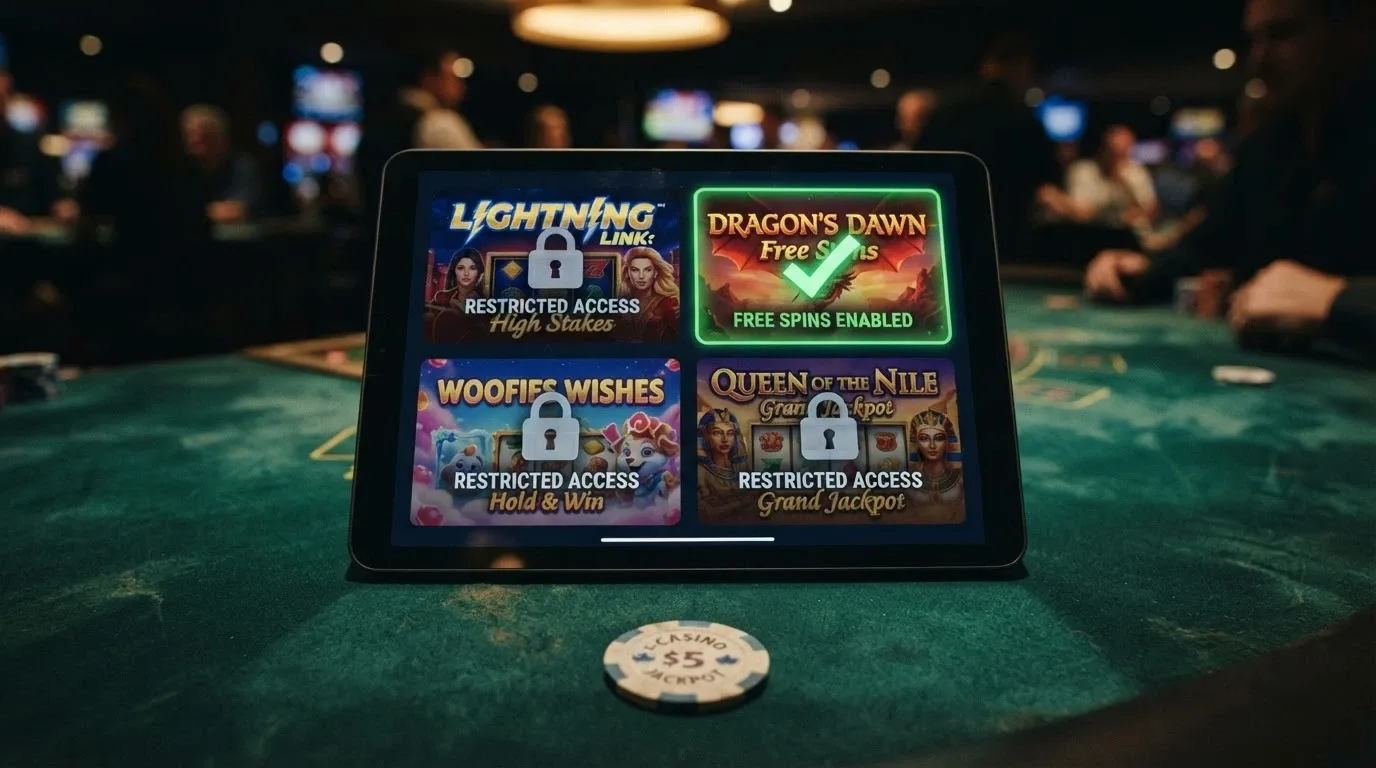
Free-spin offers are not “play any pokie in the casino”. They are tied to a specific game or a short list of games — almost always chosen by the operator rather than the player.
Provider Restrictions on Free Spin Pokies
The free-spin bundle is locked to a handful of mainstream providers, with Pragmatic Play the most common, BGaming, Wazdan and a few others filling the gaps. The player cannot substitute the assigned pokie for one they would have chosen with their own money.
The reason is structural. The operator buys free spins from the provider at a wholesale rate, then gives them away as a marketing expense. The provider sets the terms — which game, what RTP configuration, what volatility — and the operator’s flexibility is limited to the games the provider is willing to sell at the agreed rate. The free-spin pokie is rarely the highest-RTP title in the casino. It is almost never the one the punter would have picked.
This is one of the quieter reasons free-spin value is lower than it looks. The headline spins are spent on a pokie the operator chose for marketing reasons, not for return-to-player reasons. And pokies are not a low-stakes product either — pokies account for 51% to 57% of gambling-related harm in Australia, which is why the choice of which title the bonus is locked to matters more than the marketing page suggests.
Which Pokies Give You the Best RTP
RTP — return to player — is the percentage of every dollar wagered that a pokie returns, on average, over millions of spins. A 96% RTP pokie returns A$96 for every A$100 wagered across its lifetime; the house keeps the other A$4. The number is a long-run average, not a session guarantee, but it is the closest thing a player has to an apples-to-apples comparison across games.
Free-spin pokies do not always publish their RTP openly. Some providers offer the same title in multiple RTP configurations — 94%, 95%, 96% — and the operator picks the version that runs on their site. The figure a player sees in a review may not match the figure on the pokie they are actually playing.
The practical answer is to open the pokie’s information panel inside the casino lobby before spending the spins. The RTP is usually listed at the bottom of the paytable or in a “help” tab. If it is not, that is itself information — a pokie that hides its RTP is the wrong pokie to spend a free-spin bundle on.
New Casinos Chase the 200 Free Spins Headline — But the Offer Stays the Same
New offshore casinos enter the Australian-facing market every month, and almost all of them lean on the same hook: 200 free spins, no deposit, sign up now.
Claiming Free Spins on Mobile: The Same Offer, a Smaller Screen
The offer does not change on mobile. The screen does.
Mobile Browsers vs Casino Apps for Free Spins
Most Australian-facing offshore casinos do not appear in the Australian App Store or Google Play storefront — Apple and Google have tightened restrictions on real-money gambling apps, and the offshore operators do not meet the criteria. The claim flow runs through the mobile browser instead, on the casino’s own responsive site. The experience is functionally the same as desktop; the layout compresses, the buttons get larger, and the verification step becomes more fiddly because the document-upload flow is built for a bigger screen.
Mobile-exclusive free-spin offers do exist but are rare in the Australian-facing offshore market. Most operators run one bonus catalogue across desktop and mobile; the claim is identical whichever screen the player uses. A punter who sees a “mobile-only” offer on a smaller brand’s affiliate page should treat it as a marketing distinction, not a fundamentally different deal. The terms behind the spins are the same.
The Legal Reality: Online Casinos Are Illegal in Australia
Online casino games and online pokies are prohibited under the Interactive Gambling Act 2001. There is no Australian licence for online casino anywhere in the country.
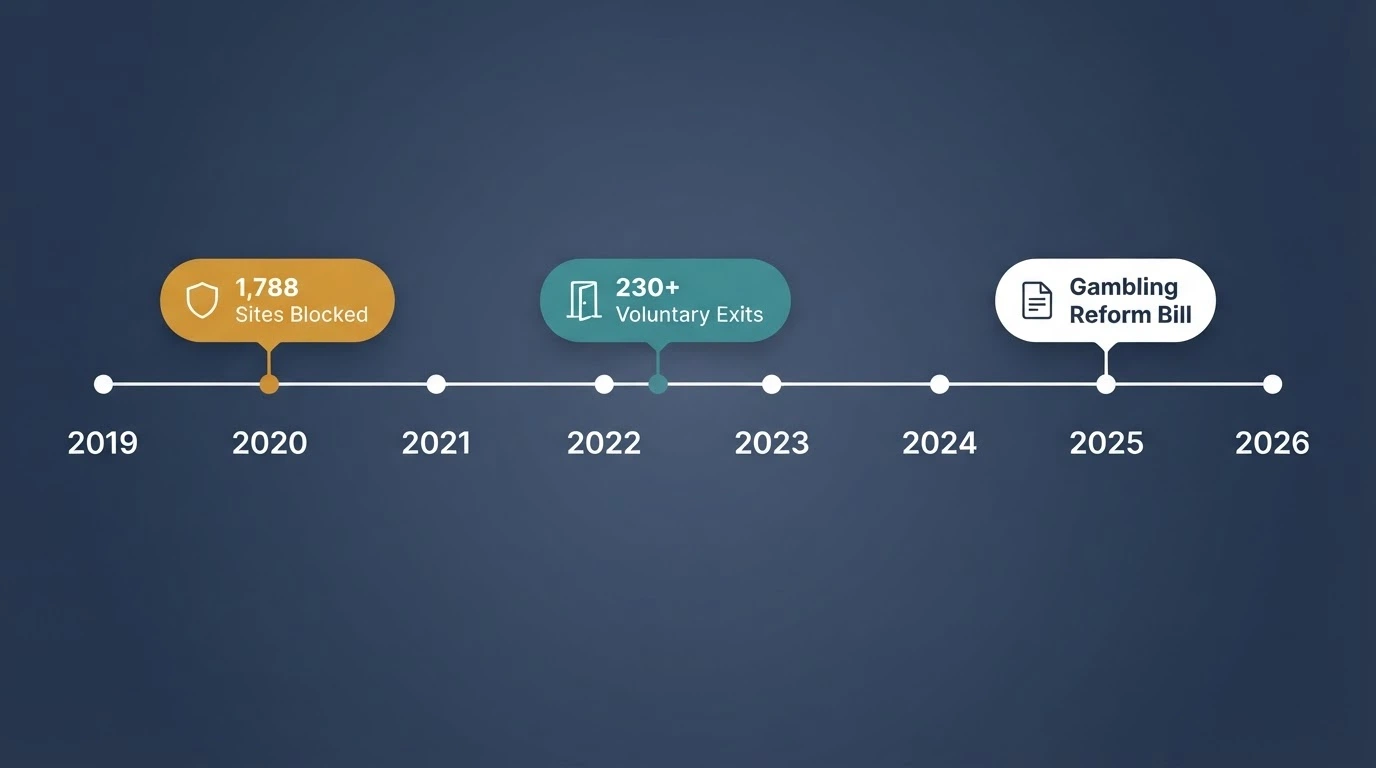
ACMA Enforcement: 1,788 Sites Blocked and Counting
The Australian Communications and Media Authority has blocked 1,788 illegal gambling and affiliate websites since November 2019. The number is current to the regulator’s public count, and it grows every quarter. The blocking power sits under the Interactive Gambling Act, and it covers both casino sites and the affiliate pages that advertise them — which is why an Australian player who clicks a “200 free spins” link today may find themselves at a domain that has already been blocked.
The ACMA also counts voluntary exits: over 230 illegal services have left the Australian market on their own initiative since 2017, having decided the regulator’s enforcement was not worth fighting. The blocking power is the stick. The voluntary exits are the proof it lands.
What this means for a player with funds on a blocked site: the site disappears, the balance stays with the operator, and the operator has no obligation to return it. There is no Australian regulator to escalate to. The blocks target providers, not players, so the player is not personally at legal risk — but the funds are functionally at risk.
Offshore Operators: No Licence, No Protection for Australian Players
A Curacao interactive gaming licence is what every operator featured here holds. It is a real licence — issued by a real regulator, with KYC and anti-money-laundering requirements behind it — but it is not an Australian licence, and it does not extend any of the protections Australian consumer law would otherwise give a player. There is no Australian dispute resolution service for an unpaid withdrawal. There is no BetStop coverage on an offshore casino. There is no connection to the National Gambling Helpline, no customer-set deposit limit enforced by an Australian regulator, no recourse when the operator’s terms say something different from what the affiliate page advertised.
Civil penalties under the Interactive Gambling Act are real — up to A$12,375,000 per day for a corporation providing prohibited interactive gambling services to Australian customers — but they apply to the operator, not the player. The player is the customer the operator is being penalised for serving. The enforcement action does not result in a payout to affected players.
The honest summary: an offshore casino pays out when it wants to, in the currency it chooses, on the timeline its terms page says. A player who values Australian consumer protection has, in practice, very little of it offshore.
What the 2026 Gambling Reform Means for Players
The Interactive Gambling Amendment (Gambling Reform) Bill 2026 passed Parliament and commences on 1 January 2027. It tightens advertising restrictions on licensed Australian wagering operators, limits broadcast gambling ads, and bans direct marketing of sign-up inducements for 14 days after a player registers.
The reform applies to the licensed Australian market — sports and racing wagering, lotteries, keno — not to offshore casinos, which are already prohibited under the existing IGA. For a punter who plays only at licensed Australian operators, the 14-day direct-marketing ban means the period after sign-up will look quieter: fewer bonus emails, fewer “come back to us” SMS messages, fewer targeted inducements. For a player using offshore casinos, the reform changes nothing about their experience, because offshore inducements were already illegal and already not covered by the framework being reformed.
Responsible Gambling Tools Every Australian Player Should Know
BetStop, deposit limits, the National Gambling Helpline — the licensed Australian market has the harm-minimisation framework. The offshore market is not connected to it.
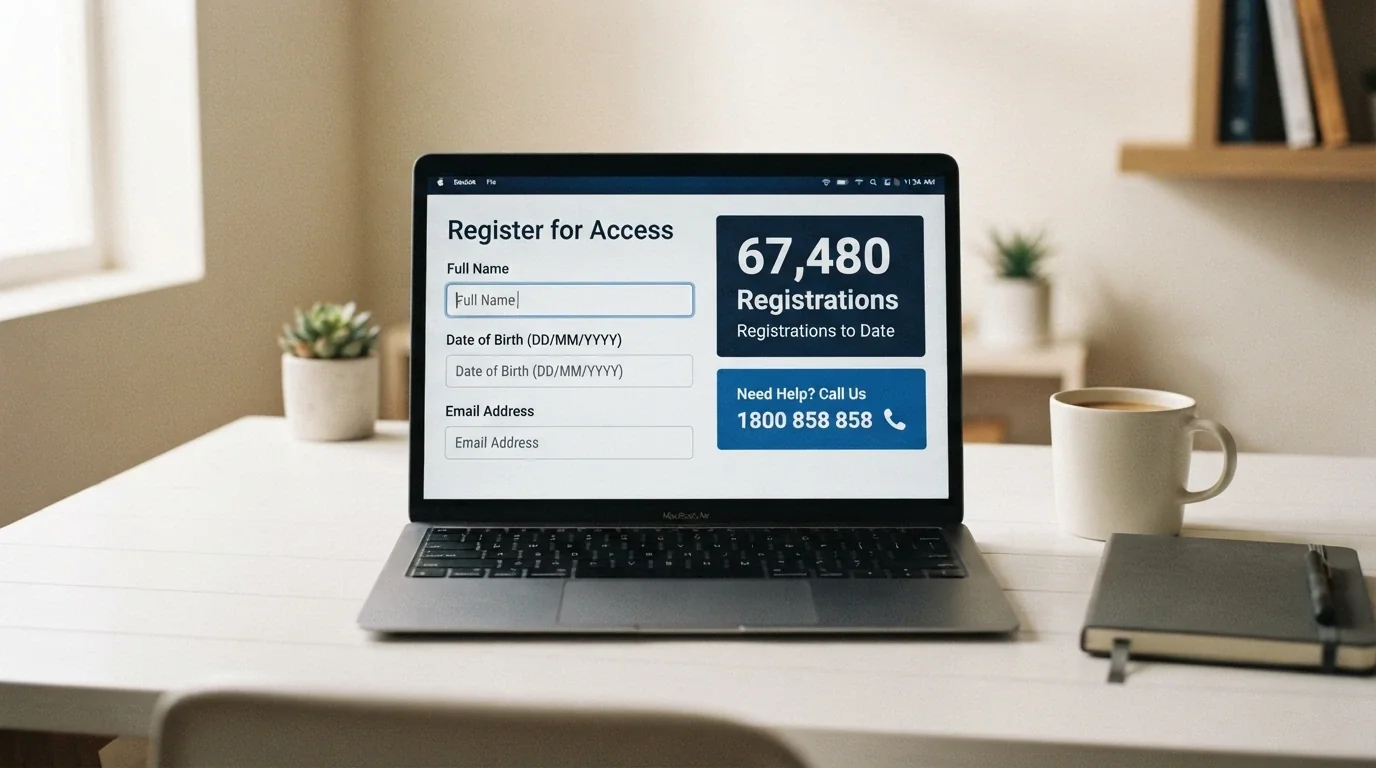
BetStop: 67,480 Australians Have Already Registered
BetStop — the National Self-Exclusion Register — went live in August 2023 and had 67,480 registrations by 31 July 2026. It is free, federally funded, and the single most effective harm-minimisation tool available to Australians who gamble online. A player who registers is excluded from every licensed Australian wagering operator for a period they choose — three months, one year, or lifetime. The operator must close the account, return the balance, and refuse new sign-ups for the duration.
The critical limitation for an Australian-facing offshore player: BetStop does not cover offshore casinos. The offshore operators are not connected to the Australian self-exclusion register, and registering with BetStop does not stop an offshore casino from accepting the player’s deposits or marketing to them. The 67,480 registrations on the register reflect the licensed Australian market. The offshore market is a parallel universe the register cannot reach.
For a punter who uses both licensed and offshore operators, the practical reality is that BetStop covers the licensed half only. Self-exclusion from the offshore half requires contacting each operator directly, which is a slow process with no guarantee of compliance.
Deposit Limits and the Real Cost of Harm
Licensed Australian wagering operators must offer customer-set deposit limits. The player chooses the ceiling, the operator enforces it, and the limit applies across the licensed Australian market. It is one of the strongest harm-minimisation tools in the Australian gambling framework, and it is not optional — licensed operators who do not offer it breach their licence conditions.
Offshore casinos are not subject to that requirement. Some offer deposit limits voluntarily. Most do not. The player who self-imposes a limit at an offshore casino is relying on the operator’s good faith, with no regulator backing the limit up.
The harm statistics explain why the question matters. Australians lost A$36.0 billion to gambling between March 2025 and March 2026 — an average loss of A$1,527 per adult per year. Risky gambling rose from 13.7% in 2024 to 19.4% in 2025, and 56.1% of those who gambled at all did so mainly online. Problem gambling affects roughly 2.1% of Australian adults — around 430,000 people — and pokies alone account for 51% to 57% of gambling-related harm. The annual health loss is over 400,000 Years Lived with Disability.
These are not abstract figures. They are the cost of a product where the average Australian adult loses A$1,527 a year and the heaviest users lose much more. The licensed Australian framework exists to put limits on that cost. The offshore market exists outside that framework.
If gambling is causing harm to you or someone you know, contact the National Gambling Helpline on 1800 858 858 — 24 hours, seven days, free and confidential.
How We Evaluated These Casinos
The operators featured here were assessed on three criteria: their licence status, the terms of their welcome offers as published on their own sites, and their accessibility from an Australian IP. The licence check was against the ACMA’s register of blocked services and the operators’ own claims of Curacao licensing, cross-referenced with the public Curacao master licence list where available. The welcome-offer terms were drawn from the operators’ published bonus pages and the affiliate aggregators that republish them. Australian player access was tested by the operators’ own country-restriction disclosures.
No operator featured here holds an Australian licence. They are listed because they are the brands an Australian player actually encounters, not because they are endorsed for use. The ACMA’s enforcement record applies to every one of them.
Should You Chase 200 Free Spins? Our Verdict
The 200-free-spins headline is a marketing claim, not a value claim. The arithmetic runs in three steps and each step shrinks the offer the headline built up. Two hundred spins at A$0.10 minimum is A$20 of bonus play. A typical 60x wagering requirement means A$1,200 of turnover to clear it, or roughly 17 hours of play. The max-cashout cap takes another slice and limits what survives to A$50 to A$100. A punter who clears the wagering path walks away with at most the cap. A punter who does not clear it walks away with nothing.
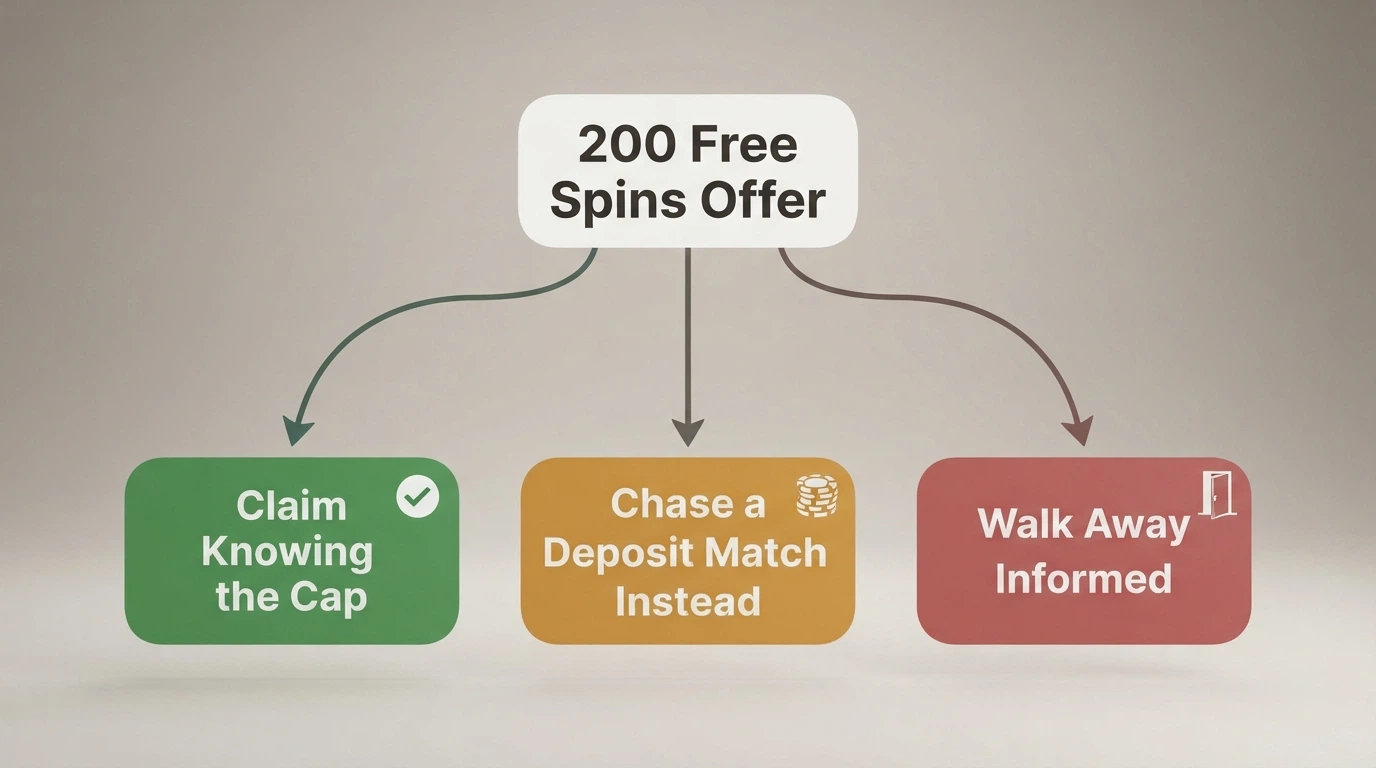
Every operator offering this product to Australian players is offshore and unlicensed in Australia. The Interactive Gambling Act prohibits online casinos here. The ACMA blocks the sites, the penalties are real, and the consumer protections an Australian player might expect elsewhere do not extend to the offshore market. A blocked site with funds on deposit is a real risk, and there is no Australian regulator to call.
For a player who has read the full picture and still wants to claim free spins: lowest wagering multiple, highest cashout cap, shortest expiry window. The offer with the best combination of those three is the one most likely to actually pay out, regardless of the headline spin count. The largest spin count is the marketing offer. The smallest wagering is the real one.
Frequently Asked Questions
Is a $200 no deposit bonus real in Australia?
A standalone $200 no-deposit bonus in Australia is exceptionally rare. The practical ceiling for any genuine no-deposit offer sits between A$50 and A$100, and offers above that band almost always carry wagering requirements of 50x to 80x. Above the practical ceiling, the bonus value lives mostly in the headline.
Can I win real money with 200 free spins no deposit?
Yes — but the real-money payout is bounded by the bonus’s max-cashout cap, which typically runs A$50 to A$100 on a no-deposit offer. Whatever the spins theoretically win is reduced to the cap before withdrawal. The path from spins to real money also requires clearing the wagering requirement, which is 40x to 60x on the bonus winnings in most cases.
What are the wagering requirements for free spins in Australia?
Typical no-deposit free-spin offers carry 40x to 60x wagering on the bonus winnings. The upper end stretches to 50x to 80x on the largest no-deposit bonuses. The wagering requirement applies to the bonus winnings, not to the original stake value, and must be cleared before any cash becomes withdrawable.
How do I withdraw winnings from a no deposit bonus?
The withdrawal path runs: clear the wagering requirement, pass KYC verification with photo ID and proof of address, request a withdrawal through the casino cashier, and wait for the operator’s processing time. KYC is the longest delay for first-time withdrawals at offshore casinos. The max-cashout cap applies at this stage and limits the final amount.
What is the maximum cashout for free spins?
The standard max-cashout cap on no-deposit free-spin offers in the Australian-facing market is A$50 to A$100. The cap applies to total withdrawable winnings from the bonus, regardless of what the spins actually paid out during play. Above the cap, the winnings disappear.
Are New Casinos More Generous With Free Spins?
The headline does the heavy lifting. The terms behind it are rarely better than the established operators’ terms — usually the same 40x wagering, the same A$50 to A$100 cashout cap, the same Curacao licence, the same absence of Australian protection.
The reason is competition math. A new casino needs to attract players away from established brands; the lever is a bigger headline number, not a smaller wagering multiple. A 50x-to-80x bonus is industry standard for the segment, and a new operator that drops to 30x would cannibalise the established brands’ margins and not last long. So the marketing pushes the spin count up while the terms stay heavy.
For an Australian player, the practical test is the same one an established operator gets: lowest wagering, highest cashout cap, shortest expiry window. A new brand that posts better numbers on those three is genuinely more generous. One that just posts a bigger spin count is playing the same game.