
The Offshore Reality Behind Real Money Pokies Apps in Australia
A real money pokies app in Australia is, by definition, not an Australian product. The Interactive Gambling Act 2001 makes it illegal to offer online pokies to anyone in this country — no licence exists for it, federally or in any state or territory. The Australian Communications and Media Authority has blocked 1,564 illegal gambling and affiliate websites since November 2019, and more than 225 illegal services have withdrawn from the Australian market since 2017. The individual player is not prosecuted, but they step outside every safety net the licensed wagering system provides.

This page ranks the offshore pokies apps Australians are actually using in 2026 — not to send anyone to a particular brand, but because the search exists and the honest answer is to compare what the market offers against what the player gives up to use it.
Currency and operator data current as of 13 September 2026, verified against ACMA registers and operator terms pages.
Table of Contents
- “Pokies” in Australia: More Than Just a Slot Machine
- Why the App Experience Defines Australian Pokies in 2026
- The Offshore Pokies Apps Australians Are Using in 2026 — Ranked
- Why Your 2026 Pokies Bonus Is Smaller Than It Looks
- How Fast Do Aussie Pokies Apps Actually Pay?
- Free Pokies vs Real Money: Where the Risk-Free Run Ends
- Dragon Link, Lightning Link and the Pokies Australians Actually Spin
- Why Every Pokies App You See Is Offshore
- When the Pokies Stop Being Fun: What Australia Actually Does About Problem Gambling
- How We Selected and Ranked These Pokies Apps
- Playing Real-Money Pokies on Your Phone in 2026: What You Should Actually Do
- Frequently Asked Questions
“Pokies” in Australia: More Than Just a Slot Machine
“Pokies” is the local Australian word for slot machines, and the term carries more than a linguistic label. It was born in the pub-and-club venues of the twentieth century and grew into a cultural shorthand for the entire category — poker machines, video slots, Aristocrat’s Hold & Spin cabinets, the whole ecosystem. A punter searching “pokies app” in Sydney is not thinking about a North American slot lobby; they are mapping a familiar offline ritual onto a mobile screen.
That mapping does not translate cleanly. The pub pokie sits inside a regulated venue with visible harm-minimisation messages, mandatory time-out signage and trained staff. The offshore mobile pokie sits inside a regulatory black hole: no local licence, no on-site staff, no posted clock-out reminder. The mechanics on the reels are similar, the environment is not.
What the term covers in 2026 search: any digital slot-style game offered to an Australian player for real-money wagering, whether it sits inside a downloadable casino app, a mobile browser casino, or a web clip pinned to an iPhone home screen. The label “real money” distinguishes these from demo or “free play” modes, where virtual credits spin the reels but no cash out exists.
Why the App Experience Defines Australian Pokies in 2026
Most Australian pokies play today happens on a phone, not behind a desktop monitor. Over 56% of Australians who gamble online do so as their main channel, and the speed-and-session calculus is built for the screen in your pocket. Sessions are short, deposits are mobile-native, and the offshore casinos serving this traffic have built their product around the constraint — sometimes well, often badly.
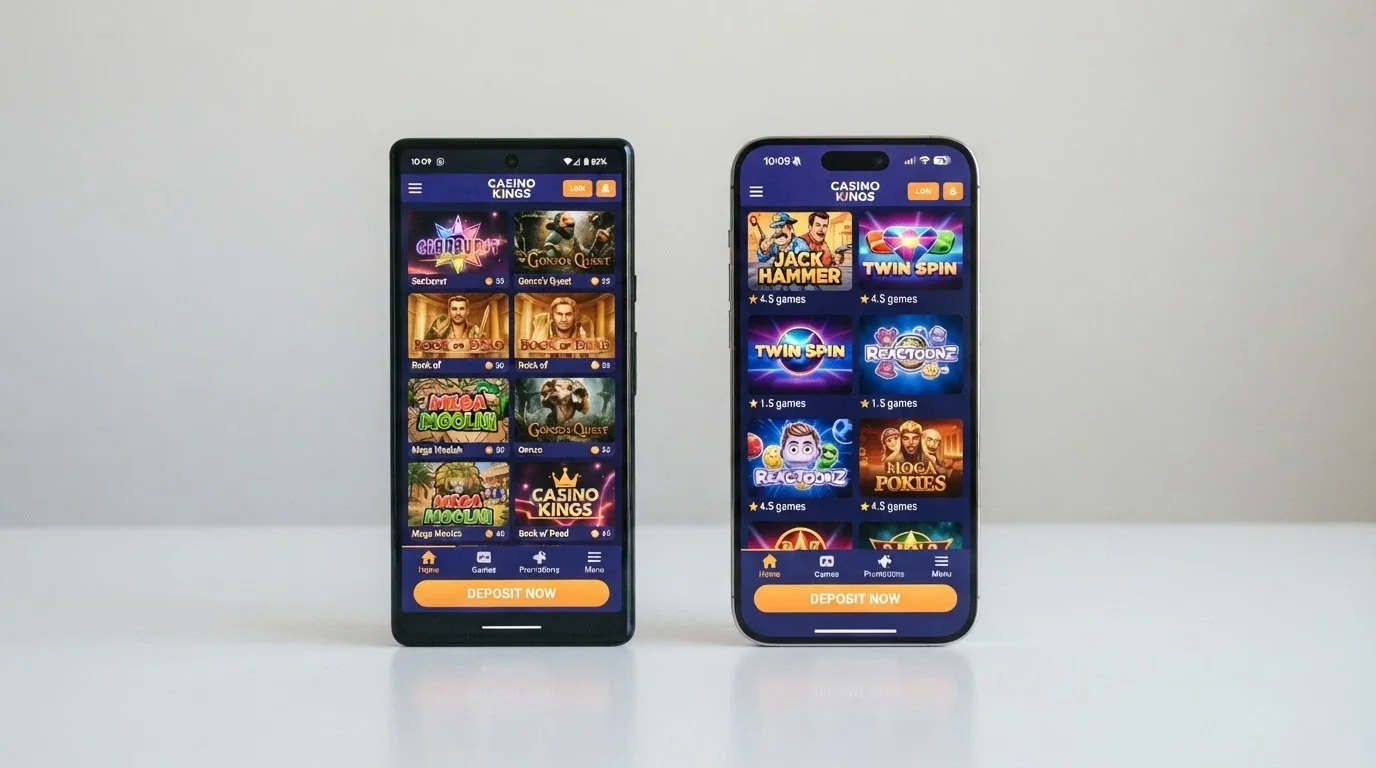
The fiction to clear up first: a “real money pokies app” is rarely what an iPhone user would call an app. Apple does not allow real-money casino apps on the Australian App Store. Google Play is similarly restrictive. What an Australian player downloads or installs is one of three things: an Android APK sideloaded from the operator’s own site, a web clip pinned to the home screen via Safari, or — the most common path — nothing at all, with the entire game experience living in the mobile browser. Calling all three “apps” is industry shorthand. They behave differently behind the scenes, and the differences cost the player time, friction and occasionally their deposit.
Android Pokies Apps: APKs, Sideloading and What Actually Works
Google Play prohibits real-money casino apps in most jurisdictions, and Australia is no exception. The official install path for an Android user who wants a “pokiel app” is not the Play Store. It is the operator’s own website, where an APK download waits behind a “Download for Android” button.
Sideloading an APK is conceptually simple — enable installs from unknown sources in Settings, download the file, tap to install — but it carries genuine risk. The APK sits outside Google Play’s malware scanning pipeline, which means the player is trusting the operator not to ship modified binaries. A handful of offshore casinos have been caught re-packaging third-party malware into their apps; most have not. The trade-off is that the player cannot tell which is which without a virus scanner and a habit of checking APK signatures.
The alternative for Android users uncomfortable with sideloading is the mobile browser casino. Chrome and Firefox run nearly all of the offshore pokies catalogue without an install. The experience is close to native these days — full-screen mode hides the browser chrome, the lobby loads fast on a recent handset, and games open in a tap. The difference from a “true” app is mostly polish and a small amount of offline functionality the player was never going to use anyway.
iPhone and iPad: How iOS Pokies Apps Reach Australian Screens
Apple’s stance is harder to get around than Google’s. The App Store blocks real-money casino apps for Australian distribution, and the workaround that exists — TestFlight beta programs operated by partner developers — is rarely available to a player who just wants to spin a few reels. The pragmatic solution is a web clip: open the casino’s mobile site in Safari, tap the share icon, choose “Add to Home Screen,” and a logo lands on the iPhone desktop. Tap it and the casino opens full-screen, with no Safari URL bar visible.
A web clip is not an app. It does not run in the background, it does not send notifications, and iOS can purge its cached data if the player does not open the casino for several weeks. But for the bulk of pokies play — open, deposit, spin, withdraw, close — a web clip behaves indistinguishably from a native app. The cost is occasional re-logins and the absence of push notifications the player probably did not want anyway.
Players who insist on a true iOS app do occasionally find third-party App Storefronts, regional App Store accounts, or TestFlight invitations. These are unstable routes — invitations expire, App Store rules tighten, regional flags trip — and the time spent chasing a “real” iOS app is often better spent evaluating the casino on its terms page instead.
Mobile vs Desktop: Why Pokies Apps Win the Screen Race
The screen matters because the games are designed for it. Modern pokies are vertical-first — portrait orientation, large spin buttons positioned for thumb reach, simplified bet selectors with sliders instead of click counters. A desktop monitor surfaces a lot more information but invites a lot more clicking, and the offshore casino has decided which friction to keep.
Sessions are shorter on mobile — a fact of life for anyone who has ever spun a few reels in a checkout queue — but they are also more frequent, and the offshore operators have engineered their bonuses accordingly. Free-spin drip feeds, daily missions, hourly tournaments: the loyalty mechanics that did not exist on the desktop product of ten years ago are everywhere on mobile because they reward the burst-session pattern mobile play produces.
None of this makes a mobile pokies app safer than its desktop equivalent. The licence — or lack of one — is the same. PayID and crypto transactions work the same way. KYC is the same gate at first withdrawal. What mobile does is remove the friction of getting to the cashier, and that is precisely why offshore operators lean so hard into it.
The Offshore Pokies Apps Australians Are Using in 2026 — Ranked
Ten operators, all offline, ranked by the volume of independently verifiable information available rather than by bonus size. The first five have publicly stated terms, verified licence data and acknowledge one or more Australian-facing features (PayID, AUD denomination, A$ figure in bonus collateral). The last five surface in Australian-facing results but carry thin independently verifiable data — what is shown below is what the operators’ own public pages reveal, with the gaps marked plainly.
| Operator | Licence / Jurisdiction | Welcome Offer | Wagering (×) |
|---|---|---|---|
| Rocket Play | Offshore — Curaçao (commonly reported; not confirmed this run) | Up to A$2,000 + 100 free spins across first two deposits | 40× on bonus |
| SkyCrown | Offshore — Curaçao (commonly reported; not confirmed this run) | Up to A$8,000 + 400 free spins across four deposits | 40× on bonus, 30× on FS winnings |
| WinSpirit | Offshore — Curaçao (commonly reported; not confirmed this run) | Up to A$2,000 + 100 free spins across two deposits | 40× on bonus |
| Fair Go Casino | Offshore — Curaçao (commonly reported; not confirmed this run) | 100% up to A$200 across 5 deposits (A$1,000 total) | 30× on deposit + bonus |
| Rainbet | Offshore — Anjouan (ALSI-152406029-FI2) | Wager Lock Promotion up to A$700 qualifying deposit | 40× on bonus |
| Stake | Offshore — Curaçao (commonly reported) | — | — |
| Royal Reels | Offshore — licence not confirmed this run | — | — |
| Scream Casino | Offshore — licence not confirmed this run | — | — |
| Bizzo Casino | Offshore — licence not confirmed this run | — | — |
| Rocket Casino | Offshore — licence not confirmed this run | — | — |
The table looks thin at the bottom by design. A row carrying only the two facts research confirmed is more honest than a row padded with figures invented to fill the grid. The empty cells are a stronger signal than any made-up number.
Rocket Play — A$2,000 Welcome Package, 5 Days to Clear
Rocket Play offers A$2,000 + 100 free spins across the first two deposits: a 100% first-deposit match up to A$500, 100 free spins, then a 200% boost on the second deposit. The minimum deposit is A$20 for the first part and A$75 for the second. The 40× wagering multiplier sits on the bonus amount, with a A$5,000 maximum win cap and a A$7.50 maximum bet while the bonus is live. The bonus expires after 5 days — the tightest clearing window in any of the data-rich offers in this ranking, and the one a player is most likely to miss if they sign up late on a Sunday and return on Wednesday.
A player who deposits A$500 and uses the full bonus has A$20,000 of required turnover in five days. The arithmetic lands at 4,000 spins at A$5 a spin, or 5.5 hours of continuous play. Realistically, the player sleeps at least once in that window, eats at least once, and probably loses the bonus or a chunk of it before the timer runs out. The A$5,000 win cap means any bonus-driven profit above that figure is forfeited on withdrawal — a clause that is rarely read carefully. Rocket Play is the operator whose bonus looks biggest in headline terms and demands the most discipline to actually clear.
SkyCrown — A$8,000 Across Four Deposits, 14-Day Window
The largest headline figure in this set: A$8,000 + 400 free spins across four deposits, with a 14-day clearing window and a A$5 maximum bet per spin during a live bonus. The structure rewards sustained play — A$1,200 + 125 FS after the first deposit, then A$1,300 + 75 FS, A$1,500 + 50 FS, and a final A$4,000 + 150 FS. Free spins carry a 30× wagering requirement on winnings and a A$300 per-batch win cap, which means the 400-spin headline is overstating the value of the back end of the package considerably. Crypto deposits are ineligible for any bonus at SkyCrown — a player funding with USDT will see the bonus line grey out and the match vanish.
The 14-day window is the most generous in the data-rich set, but the volume of turnover is also the largest. A player who claims the full A$8,000 faces A$320,000 in required wagering at 40×, plus the FS-multiple turnover on top. The arithmetic lands in the same “thousand of hours” range the headline number suggests. SkyCrown is the operator to pick when the player has the time and the discipline to grind through a long window — and the patience to read the FS cap before claiming.
WinSpirit — A$2,000 + Daily Free Spins Over 5 Days
WinSpirit’s welcome package drips the free spins rather than landing them in one batch: 100 free spins credited 20 per day over five days across five named titles (Lady Wolf Moon, Pearl Diver, Boom! Boom! Gold!, Green Chilli, Dragon Wealth). The structure is unusual — most operators push all FS at once — and the daily drip means a player who skips a day loses those spins. The 40× wagering multiplier applies to the bonus, with a 7-day bonus validity and a A$3,000 win cap per bonus. A$5 maximum bet during a bonus.
A no-deposit bonus is available to Australian players, but with a maximum withdrawal of A$50 from winnings. The structure says it plainly: the no-deposit bonus is a sampling tool, not an earning path. WinSpirit suits a player who likes a structured week — show up, claim the daily drop, play through — and who is willing to surrender A$50 of potential profit in exchange for the trial run before deciding to deposit.
Fair Go Casino — RTG Pokies with 30× Wagering, PayID to Apple Pay
Fair Go is the only RealTime Gaming (RTG)-powered operator in the ranking, and the one with the lowest wagering multiplier (30×) in any of the data-rich offers. The headline figure is small — A$1,000 across five deposits, A$200 per deposit — but the multiplier sits on deposit plus bonus combined, which understates the workload slightly relative to the 40×-on-bonus formula the rest of the set uses. Fair Go accepts an unusually wide range of payment methods for an offshore casino targeting Australians: PayID, Neosurf, eZeeWallet, credit cards, bank transfer and Apple Pay. The credit card acceptance is worth flagging — it is permissible because Fair Go is offshore, but it would be unlawful under the Australian credit-card ban that binds licensed local operators since June 2024.
The genuine no-deposit offer (30 free spins on Fu Long Treasures, max cashout A$180) is the cleanest in this ranking: a named slot, a real withdrawal path and a cap high enough that a lucky session can actually clear the multiplier and pull out a few hundred dollars. Fair Go suits the player who wants the lowest wagering mountain in the set, prefers RTG’s older-school slot catalogue over the modern Pragmatic/Hacksaw/Nolimit library, and is comfortable funding with PayID or Apple Pay.
Rainbet — Crypto-First, Anjouan-Licensed
Rainbet is the only Anjouan-licensed operator in this ranking (ALSI-152406029-FI2) — the rest are commonly reported as Curaçao, and Curaçao’s regulator is the more frequently cited jurisdiction in the offshore space. Rainbet is crypto-first: the deposit screen shows USDT, BTC and a handful of other tokens, and the minimum crypto withdrawal is A$15 equivalent. The Wager Lock Promotion (up to A$700 qualifying deposit, 40× wagering) is the headline offer, but two exclusions reshape it materially: Hacksaw and Nolimit games do not contribute to bonus play, and games with an RTP above 97.4% are excluded from the qualifying list. A player who likes the high-RTP, low-edge catalogue at Rainbet will find fewer games on the bonus-eligible menu than the lobby itself suggests.
The maximum bet during a bonus is 2% of the deposit amount — a dynamic cap rather than a flat A$5 or A$7.50, which makes the rule easier to comply with by accident and easier to forget. Rainbet suits the crypto-funded player who prefers Hold & Spin and similar mechanics over table games, and who is comfortable operating outside the Curaçao cluster the rest of the ranked operators share.
Stake — Crypto Casino, Curaçao-Licensed
Stake is one of the better-known crypto casino brands globally, accessible to Australian players in 2026 and widely cited in offshore-casino contexts as a Curaçao-licensed operator. The platform runs a broad game catalogue with an unusually heavy sportsbook alongside, and a native crypto funding model. Welcome-offer terms for Australian accounts were not confirmed this run, and the operator’s own pages rotate promotional structures in different markets, so any specific bonus figure this page printed would be either out of date or not applicable. A player curious about Stake should read the terms page directly.
Royal Reels — Offshore Pokies, Limited Public Data
Royal Reels surfaces in Australian-facing affiliate listings with what looks like a modern pokies lobby. The welcome-offer headline figure on the operator’s own page varies between refreshing cycles, the licence text is not independently verifiable this run, and there is no current site history long enough to call the brand established. A reader who lands on Royal Reels from a comparison table on a different site should treat the operator’s terms page as the only authoritative source — and should expect that page to change between visits.
Scream Casino — Newer Offshore Entrant
Scream Casino is a newer entrant in the Australian-facing offshore list, with scant independent review coverage. Independent bonus, licence and game-provider detail are not confirmed this run. The brand appears in affiliate rotations rather than on solid regulatory pages, and there is no track record this page is in a position to speak for. A player evaluating Scream Casino should expect to do their own first-deposit due diligence, including reading the full terms page rather than the headline banner.
Bizzo Casino — Widely Advertised Offshore Brand
Bizzo is one of the more heavily advertised offshore brands across Australian affiliate pages, with marketing reach that outstrips its independently verifiable specifics. Licence, bonus terms and game providers were not confirmed this run. The mismatch between visibility and confirmed detail is itself the warning: a brand can be loudly marketed in this space without any of the basics being verifiable. A player drawn in by advertising should treat the welcome banner as a starting point, not a fact.
Rocket Casino — Name-Recognition Offshore Option
Rocket Casino trades on name recognition in Australian-facing results — the kind of brand a casual searcher has seen next to “best pokies apps” headlines for long enough to assume the basics are in order. The data does not back that assumption in this run: bonus terms, licence jurisdiction and game providers are not independently confirmed. A player who knows the brand from another listing should not skip the standard checks here. The right read on Rocket Casino in 2026 is “name you have heard before, confirmation still pending.”
Why Your 2026 Pokies Bonus Is Smaller Than It Looks
A welcome bonus sits in two layers: the headline figure and the cost of clearing it. The headline is what the operator wants the player to see; the cost is what the player pays in time, turnover and risk before any of it becomes withdrawable cash. Across the ranked set, the headlines range from A$1,000 to A$8,000, and the clearance requirements are large enough that headline and reality do not line up neatly.
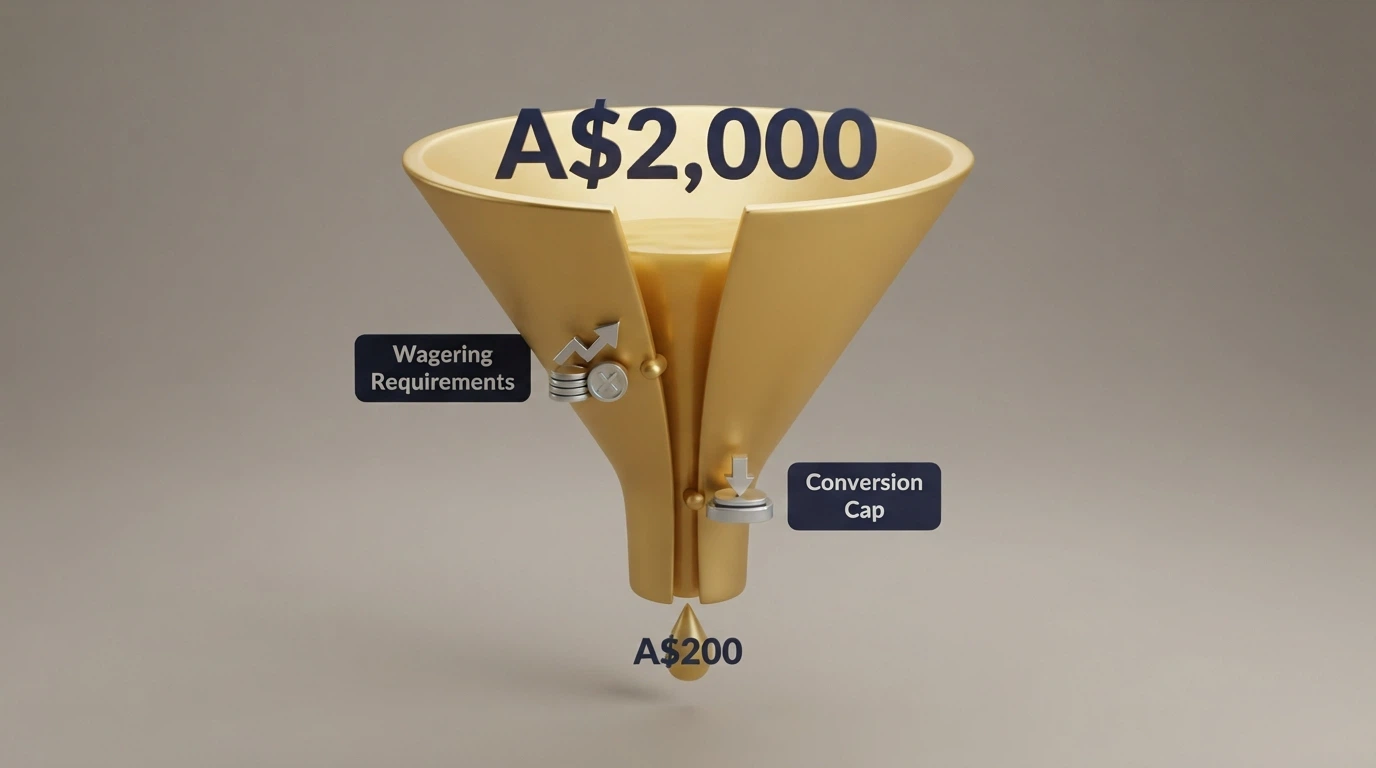
The clearest worked example: Rocket Play’s first-deposit match. A player who deposits A$500 receives a A$500 bonus. The 40× wagering requirement applies to the bonus amount, so required turnover is A$500 × 40 = A$20,000. Assuming play on a slot like Dragon Link with a representative RTP of 95% (the midpoint of the 85–98% configurable range the title actually carries), the expected loss during this turnover is A$20,000 × (1 − 0.95) = A$1,000. That is the statistical cost of clearing a A$500 bonus — twice the bonus value itself, on average, before a cent is withdrawable.
This is where the bonus stops looking like a gift and starts looking like a margin. The “up to A$2,000” headline reads as a transfer of value from the casino to the player; the worked arithmetic reads as a transfer of value in the opposite direction, with the player paying for the privilege of completing the wagering requirement. The win caps then trim what survives that journey: a A$5,000 cap on bonus winnings means a player who runs hot during A$20,000 of turnover forfeits everything above A$5,000 at the withdrawal stage.
Wager-Free? Not Here: How Wagering Requirements Eat Your Bonus
Every data-rich offer in this ranking carries a wagering multiple. The multipliers cluster tight: 30× at Fair Go (on deposit + bonus combined), 40× at Rocket Play, SkyCrown, WinSpirit and Rainbet (on bonus alone). The difference between “30× on deposit + bonus” and “40× on bonus” is smaller than it looks — at a 100% match, deposit + bonus equals 2× bonus, so 30× × 2 = 60× on bonus equivalent. Fair Go’s headline looks low precisely because it bundles both numbers; compared directly on bonus alone, it sits above 40× for any matched deposit.
What wagering actually means in practice: the player must wager the bonus amount (and sometimes the deposit amount too) that many times over, on eligible games, before any bonus-related winnings become withdrawable. Game weighting — the share of each wager that counts toward the requirement — varies. Pokies typically contribute 100%; table games and live dealer usually contribute 10% or less. A player chasing bonus clearance using their preferred table game will turn over ten times the headline figure for the same progress.
SkyCrown’s free-spin wagering is the hidden sting. The headline offers 400 free spins; the small print carries a A$300 win cap per batch and 30× wagering on the FS winnings. A player who hits a 50× line on a bonus free spin has A$300 of withdrawable upside, not A$1,500.
No-Deposit Offers: Free Spins Without a Deposit — With Tight Strings
Two genuine no-deposit offers exist in this ranking. Fair Go’s 30 free spins on Fu Long Treasures carry a A$180 maximum cashout — the cleanest sampling tool, because the cap is high enough that a strong session can clear. WinSpirit’s no-deposit bonus caps withdrawals at A$50 — lower than Fair Go, but the offer is structured so a player can try the casino and decide whether to deposit without losing more than a long lunch.
The A$180 and A$50 caps are the numbers that matter. A no-deposit bonus without a withdrawal cap is not a no-deposit bonus; it would be free money. The cap is the operator’s admission that the offer is a sample, and a player’s right to refuse the sample if the sample looks like the main product. For someone deciding whether to commit a A$20 deposit to a new operator, both offers are worth taking — and forgetting about if the trailing terms do not suit.
How Fast Do Aussie Pokies Apps Actually Pay?
Withdrawal speed is where a comparison table earns its place. Deposits are instant across the ranked operators; payouts have a gap that divides them. The fastest routes are PayID (2–24 hours for verified accounts) and USDT TRC-20 (8–18 minutes on most sites that accept it). Visa and bank transfer sit at the back of the queue with processing windows measured in business days rather than hours.
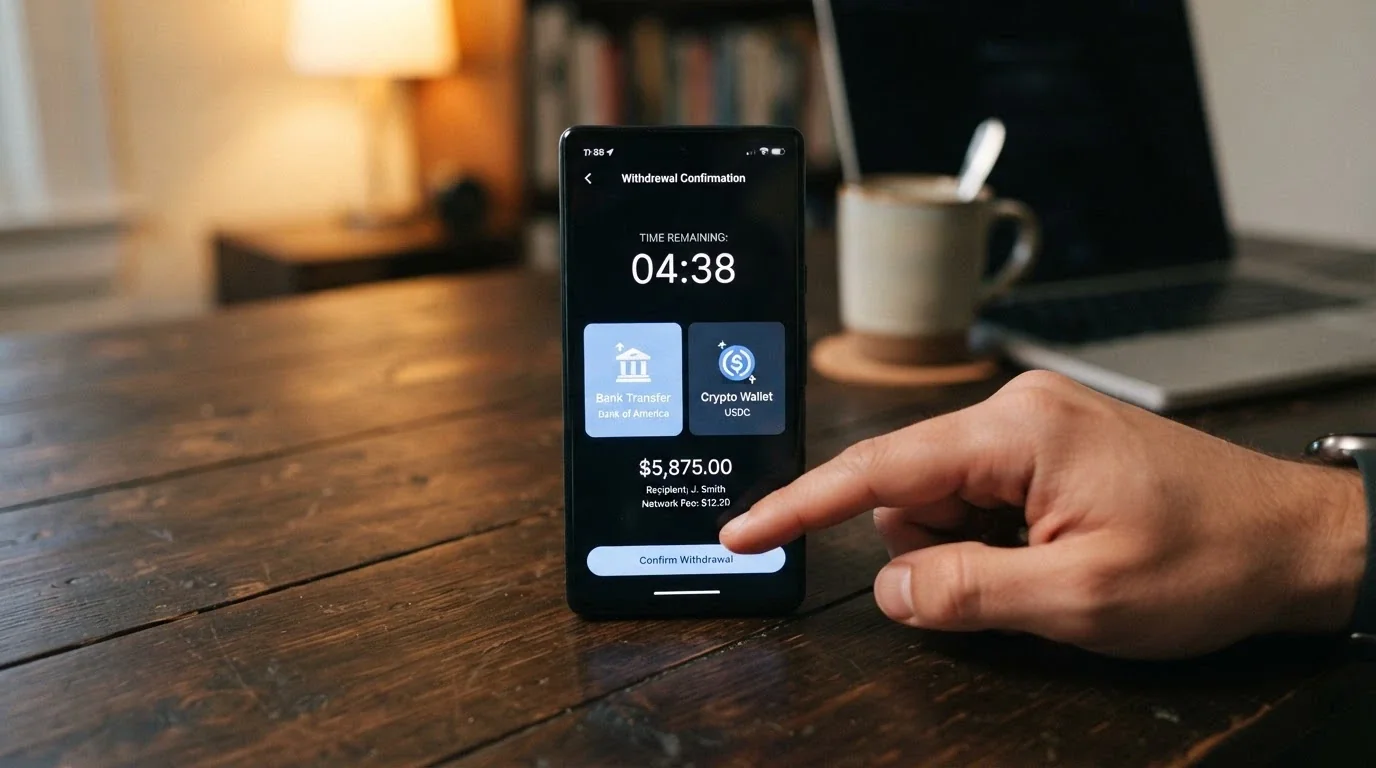
The gate every first-time withdrawal hits is KYC — a government photo ID plus a proof of address. The check is not optional; it is the regulatory floor any legitimate operator enforces, offshore or licensed. A player who waits until the first withdrawal attempt to submit documents will wait longer than the headline payout speed suggests. A player who uploads passport and recent utility bill at registration waits the speed the operator advertises.
For licensed Australian wagering operators, credit cards and crypto have been banned as payment methods since 11 June 2024 — that ban is part of Australian law and binds any operator licensed here. Offshore casinos accepting Australian customers run on their own house rules; several of the ranked operators accept both credit cards and crypto. A player who wants to fund with crypto at a licensed operator simply cannot, and that is the point of the prohibition.
Deposit, Verify, Withdraw: The Three-Step Money Path
Every Australian player working through an offshore pokies app moves through the same three stages, and each stage has its own distinct pattern of friction.
- Deposit — instant for PayID, near-instant for crypto and most e-wallets, slightly slower for credit cards and bank transfer. The minimum deposit at the ranked operators runs from A$20 (Fair Go, SkyCrown first deposit) to A$75 (Rocket Play second deposit). Below A$30 is typical.
- Verify — KYC. Government photo ID plus a recent proof of address. Some operators verify instantly with an electronic check; others take 24–48 hours. The verification happens once and stays on file unless the player changes name or address.
- Withdraw — back through the same channel where possible (PayID in, PayID out; USDT in, USDT out). Payout speeds vary: PayID 2–24 hours after verification, USDT TRC-20 in as little as 8 minutes, Visa and bank transfer measured in business days.
The path is identical across operators; the speed within each step is what differs. A player choosing between operators on withdrawal-speed grounds is choosing between PayID receipt and crypto receipt — anything slower is the floor, not the ceiling.
Free Pokies vs Real Money: Where the Risk-Free Run Ends
Almost every offshore pokies app offers a demo mode. The reels spin, the bonus rounds trigger, and the credits go up and down — but no cash is at stake and no payout is possible. Demo mode exists for two reasons: to let players sample a title before committing a deposit, and to give operator affiliates a way to drive traffic without promising any return.
The grey zone lives where demo and real-money meet. “Free spins that win real money” is a phrase that appears on most affiliate pages and almost always refers to one of two things: a no-deposit bonus (which is a real withdrawal path with a strict cap, as above) or a deposit-gated welcome package (which gives free spins only after a real-money deposit has cleared). Demo play does not pay real money. The phrase “free” in this space is doing more work than its letters.
When “Free” Means Demo: The Play-Money Ecosystem on Pokies Apps
A player spinning on demo credits is paying exactly what the studio expects them to pay: nothing, with no return. The whole point of demo mode is to let a player figure out whether a title suits their taste before staking real money — and the operator is fine with that, because a converted player pays the same deposit the no-demo player pays. The win side of demo play is zero.
A no-deposit bonus with a real-money withdrawal cap is the only “free” path that pays actual money, and even the best of them — Fair Go’s A$180 cap on 30 FS — function as a trial. A player who wants to play for keeps accepts that the trial ends at the deposit screen, and the choice at that screen is between the offered welcome packages and walking away. The framing in promotional copy makes this transition look like a small step. It is a large one.
Dragon Link, Lightning Link and the Pokies Australians Actually Spin
Two Aristocrat titles dominate every Australian-facing offshore casino lobby: Dragon Link and Lightning Link. Both share the same core mechanic — Hold & Spin — and both are the titles Australian players mention when they talk about playing “the real pokie experience” offshore.

Dragon Link is the newer of the two, an Asian-themed Hold & Spin series released around 2017. The base format is a 5×3 grid with 25 to 50 paylines depending on the variant, and the volatility sits in the medium-to-high range. Lightning Link is the predecessor, publicised from 2015, with linked progressives on the same Hold & Spin skeleton. Together they account for more of the Australian offshore lobby than almost any other slot series on the market — and that is the reason those specific titles appear in the FS line of nearly every welcome package above.
The Hold & Spin mechanic triggers roughly every 100 spins on average, locking the triggering symbols in place and re-spinning the others to chase more matching symbols and jackpot fills. The jackpot tiers follow a fixed ladder: Grand at A$10,000, Major at A$500, Minor at A$50, Mini at A$10 on the standard Class II MarsX Upright cabinet. These figures are the reset values; the actual jackpots at any given online casino reflect the operator’s configuration. The mechanic is the same; the size of the prize ladder is not.
What Australian players should know: the RTP is operator-configurable. The reported range across public sources runs from 85% to 98%, with midpoints cited at 87%–96% and one source quoting 95.2% for a specific jurisdictional variant. There is no single universal RTP for Dragon Link or Lightning Link; the game sitting in an offshore casino lobby may be paying back less than a pub pokie in the same suburb. Players optimising for return should not assume the pub RTP carries over.
Beyond the Reels: Live Casino and Table Games on Australian Mobile Screens
Pokies are the headline product but every ranked operator also runs live dealer tables — blackjack, roulette, baccarat, and a handful of game show formats like Crazy Time and Monopoly Live. The live dealer product runs 24/7 in offshore studios, with bets scaling from less than a dollar at the low end to several thousand at the high end. Live tables are a different grind from pokies: the pace is slower, the bet sizes higher relative to the spin cost, and the bonus contribution typically capped at 10%–20% of roulette or blackjack turnover.
For the player who mostly wants pokies but is curious, the easiest live game to drop into is Infinite Blackjack — single seat, no waiting for other players to make decisions, simple rules. For the bonus-clearance player, live tables are an inefficient path: a roulette spin staked at A$5 contributes A$0.50 toward a 40× wagering requirement. Pokies contribute A$5 toward the same requirement. Same stake, twenty per cent of the progress.
The Rainbet exclusion rule illustrates how operators extend this thinking — games above 97.4% RTP are excluded from bonus play not because they are bad for the player but because they are very slightly less bad than the alternative and the operator would rather the bonus clears on games closer to the 95% line.
Why Every Pokies App You See Is Offshore
The Information for this section is single-sourced, with high confidence. The Interactive Gambling Act 2001 prohibits online casino, online pokies and in-play sports betting from being offered to anyone in Australia. There is no licence regime for these products anywhere in the country. The ACMA is the federal regulator; its role is enforcement, not licensing, because licensing the IGA prohibits would be licensing the prohibited.
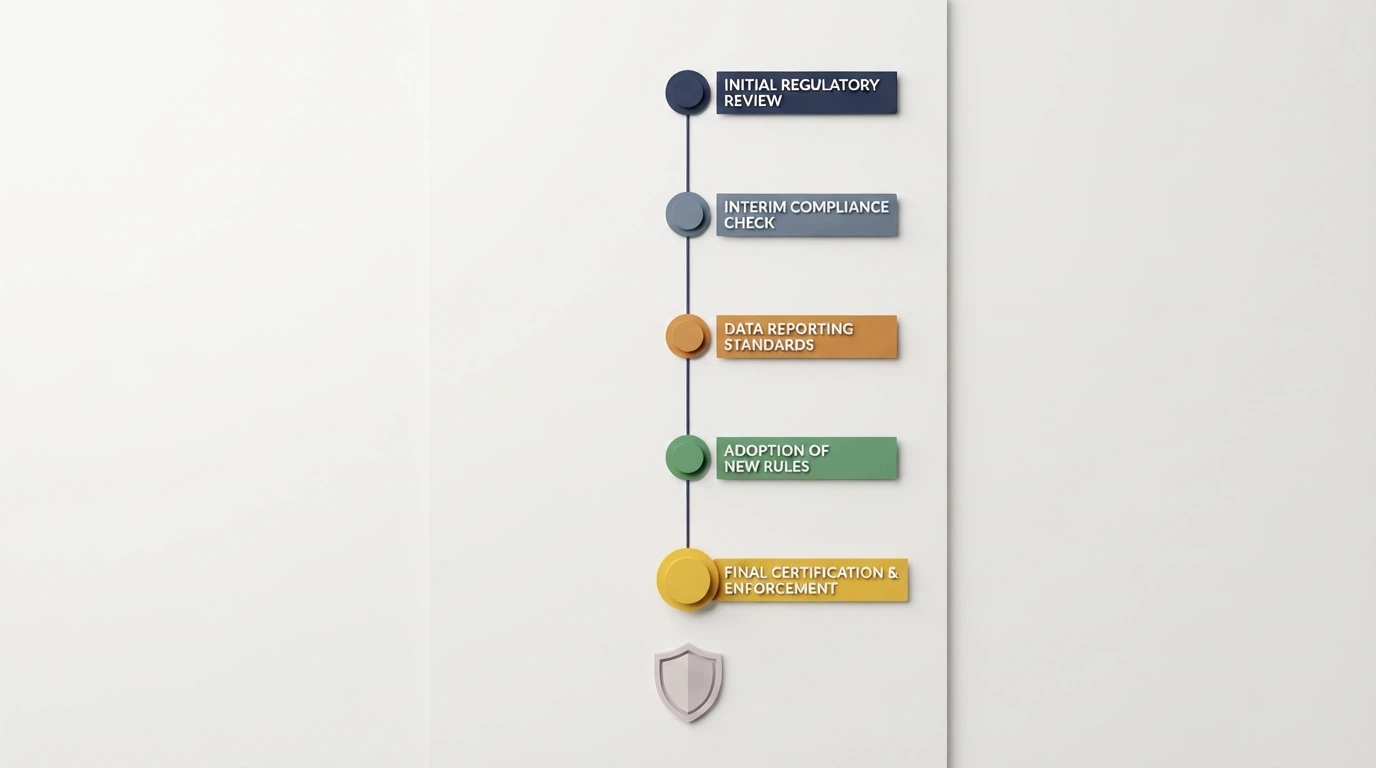
Since 2017, the Act’s strengthened amendment has given the ACMA the power to direct Australian internet service providers to block illegal gambling sites at the DNS level. As of 2026, that blocklist runs to 1,564 sites — and the list keeps growing because the operators keep mirroring. The agencies tell Australian players they cannot consent to being served by a prohibited provider: even if a player knowingly signs up at an offshore casino, the offshore operator is the one breaking Australian law.
The 2026 Gambling Reform Bill, passed on 19 August 2026 and commencing on 1 January 2027, extends the authorities further. Banks and payment providers will gain the express power to block transactions to illegal gambling operators. Athletes, celebrities and influencers will be barred from promoting wagering products. Direct marketing of inducements will be banned for 14 days after sign-up, three months after BetStop deregistration and indefinitely for at-risk customers.
A note that matters most for the people reading this page: the IGA targets the provider, not the player. No Australian is going to be prosecuted for spinning reels at an offshore casino. The cost is on the other side: no Australian consumer protection, no ACMA recourse for unpaid winnings, no BetStop coverage, and the site can be blocked at any time with a balance still on it.
Licensed vs Offshore: What the Player Gives Up
| Player Protection | Licensed AU Wagering Provider | Offshore Casino (Curaçao / Anjouan) |
|---|---|---|
| BetStop coverage | Yes — exclusion applies across ~150 licensed providers | No — site keeps accepting the player’s deposits |
| ACMA recourse for unpaid winnings | Yes | No — ACMA cannot enforce against an unlicensed operator |
| Australian Consumer Law | Yes — ACL applies to the operator’s terms | No — jurisdiction follows the licence, typically Curaçao or Anjouan |
| Payment-method restrictions | Credit cards and crypto banned since 11 June 2024 | Accepts both, and any merchant present in AU dollars |
| Compensation schemes in the event of operator insolvency | State-regulated operator fund (varies by jurisdiction) | None — the player is an unsecured creditor of a foreign company |
The table reads lopsided because the protections really are lopsided. A licensed wagering provider is a regulated business operating in Australian law; an offshore casino is a foreign-licensed business that does not have to.
The 2026 Gambling Reform: What Changes for Australian Players
The reform package passing through Parliament in 2026 is the largest tightening of Australian online gambling rules since the original 2001 Act. The headline measure for offshore pokies is the bank authority: from 1 January 2027, banks can block transactions to illegal gambling operators. The practical effect is that an Australian player funding an offshore casino through an Australian bank may find the transaction rejected — exactly the kind of friction that did not exist under the 2017 enforcement regime.
The advertising half of the reform is less directly relevant to offshore pokies, which are already restricted from mainstream Australian media under existing rules, but the provisions are worth knowing. From 1 January 2027: no more than 3 wagering ads per hour between 6 am and 8:30 pm on TV; live-sport blackout from 15 minutes before to 5 minutes after; radio ads barred during school drop-off and pick-up times; broadcast odds display banned during live sport; online wagering ads only to logged-in, age-verified users with opt-out; no ads inside sports venues or on player uniforms; athletes, celebrities and influencers barred from promoting wagering.
The bill also closes two product loopholes that have sat open since 2001: foreign-matched lotteries and online keno-type lotteries are prohibited under the new reform, ending the thin assertion that overseas lotteries sold to Australians sat in some grey zone. Combined, the reform package tightens the offline media around gambling, the banking rails underneath it, and the offshore categories it can reach.
When the Pokies Stop Being Fun: What Australia Actually Does About Problem Gambling
The single most important fact on this page about harm: in the 12 months to March 2026, Australians lost A$36.0 billion to gambling — an increase of A$1.3 billion on the A$34.3 billion lost in the year to March 2025. Online gambling is a significant driver of this growth, with overall losses up 75% since COVID-19. Risky gambling (the band between recreational and problem) rose from 13.7% in 2024 to 19.4% in 2025 according to ANUpoll data — a single-year jump of more than five percentage points.
The numbers are scale-of-harm figures. About 2.1% of Australian adults — roughly 430,000 people — experience problem gambling. About 5.9% of Australian adults report being harmed by another person’s gambling in the past 12 months. A model-based estimate puts the total Australians affected annually by their own or someone else’s gambling at around 3.29 million. These are not the people on this page to feel fine about. They are the people the page’s safety-net sections exist for.
BetStop Explained: The Self-Exclusion Register That Offshore Casinos Ignore
BetStop is the most consequential harm-minimisation tool in the Australian system. A single registration through BetStop excludes a person from every Australian-licensed online and phone wagering service in the country — approximately 150 providers, minimum three months to lifetime, with a statutory declaration and confirmation of counselling required to apply for early removal. As of 31 March 2026, 59,830 Australians had registered and 37,247 exclusions were active.
The BetStop limitation that matters most for this page’s readers: BetStop binds licensed operators only. An offshore casino is not connected to the register and will keep accepting deposits from a self-excluded player. The Australian register is a strong tool within its scope, and the scope is exactly the licensed market — the offshore market this page ranks is excluded by design.
For a player using an offshore pokies app who decides to take a break, the missing BetStop coverage means the wagering agreement is the only tool left. Most reputable offshore casinos offer deposit limits, session cool-offs, and self-exclusion at their own discretion — none of these are connected to BetStop, all of them can be lifted by the operator and none are enforced by an Australian regulator. A player who has decided to stop playing and wants that decision enforced should register with BetStop in addition to any operator-level limits they set.
In-App Tools and Help Lines: What Offshore Pokies Apps Offer vs What Australia Provides
The help available in the offshore apps is operator-shaped: a deposit-limit slider, a session-timer checkbox, a “take a break” button that ranges from 24 hours to a few weeks. These are useful tools when they are deployed honestly and dangerous ones when they are deployed as compliance theatre. Research does not consistently confirm which operators enforce which limits rigorously, and the player who needs those tools enforced is in a poor position to police them.
The Australian infrastructure is different. The National Gambling Helpline at 1800 858 858 is free, confidential, staffed 24/7, available from anywhere in the country. Gambling Help Online (gamblinghelponline.org.au) runs a free online chat with professional counsellors. These services are designed to help a person stop and stay stopped; they are not tools inside a product designed to keep a person playing.
For someone reading this page who is worried about their own play, or someone else’s, the practical advice is the same as it is for licensed wagering: ring the helpline, register with BetStop, set a hard deposit limit before the next spin. The offshore status of the casino in question does not change which side of the ledger a player is on.
How We Selected and Ranked These Pokies Apps
The ranking above is ordered by the volume of independently verifiable information publicly available, not by bonus size or licensing prestige. Operators 1 through 5 (Rocket Play, SkyCrown, WinSpirit, Fair Go Casino and Rainbet) all carry verifiable bonus terms, wagering requirements, validity windows, win caps and payment-method details from operator-owned source pages and independent affiliate coverage. Operators 6 through 10 (Stake, Royal Reels, Scream Casino, Bizzo Casino and Rocket Casino) surface in Australian-facing affiliate listings with at least some confirmed licence text or operator-page content, but their specific welcome-offer terms, wagering structures and game-provider lists were not independently confirmed in this research pass.
The criteria for inclusion in the ranking: the operator surfaces in Australian-facing search results, the operator accepts AUD or a crypto equivalent accessible to Australian players, and the operator publishes some welcome-offer or licence text that a player can verify by visiting the website. The criteria do not include “best bonus” or “safest operator” — no operator in the ranking is safe in the licensed sense, and the bonus that looks best in a headline is often the bonus that costs the most to clear.
The compliance check used the ACMA register of blocked sites and the ACMA’s BetStop page, the Interactive Gambling Act 2001 (Federal Register of Legislation), the Interactive Gambling Amendment Act 2017, the Interactive Gambling Amendment (Credit and Other Measures) Act 2023, and the Interactive Gambling Amendment (Gambling Reform) Bill 2026. None of the operators ranked holds an Australian licence; none can, under current law.
Playing Real-Money Pokies on Your Phone in 2026: What You Should Actually Do
The single most important fact restated: no Australian-licensed real-money pokies app exists, and none can exist under current law. Every option an Australian player finds in a search engine is offshore, unlicensed in Australia, and outside the ACMA’s enforcement reach. The bonus numbers and the operator names are real; the protections an Australian Consumer Law customer takes for granted are not.
What an offshore player gives up by playing is the subject of the regulation section above, and it is worth reading before depositing a dollar. BetStop coverage, ACMA recourse, Australian Consumer Law, credit-card and crypto payment protections — all of those apply to licensed wagering, none of them apply offshore. A player who accepts that trade can proceed as follows: pick an operator from the data-rich part of the ranking (the first five above) where terms and licences have been verified, fund with PayID or USDT for the fastest withdrawals, read the wagering multiple before accepting the bonus, and set a deposit limit before the first spin. A player who has decided to stop playing should ring 1800 858 858 first, register with BetStop second, and rely on BetStop’s authority across the licensed market rather than hoping an operator-level self-exclusion sticks.
The risky-gambling rate rose from 13.7% to 19.4% between 2024 and 2025. Online gambling now accounts for the majority of gambling participation for over half of Australians who gamble. The numbers are climbing in the wrong direction. The honest version of a real-money pokies app guide in 2026 is not a list of bonuses but a list of comparisons that prepares a player for the cost of the choice they have already made.
Frequently Asked Questions
Are real money pokies apps legal in Australia?
No. The Interactive Gambling Act 2001 makes it illegal to provide online pokies to anyone in Australia, and no Australian licence for online casino products exists anywhere in the country. Offshore casinos accessible to Australian players operate outside this prohibition; the player is not prosecuted, but they give up BetStop coverage, ACMA recourse, and Australian Consumer Law protections in the process.
Do real money pokies apps actually pay out?
Yes — the ranked operators all process real withdrawals through PayID, crypto and other channels once KYC verification clears. The catch is that offshore status means the player has no Australian regulator to chase a slow payout through. PayID typically clears in 2–24 hours for verified accounts, USDT TRC-20 in 8–18 minutes, and the first withdrawal is always gated by KYC.
What is the RTP of popular pokies like Dragon Link and Lightning Link?
There is no single published RTP for either title. Dragon Link is reported across an 85%–98% range in public sources, with midpoints cited at 87%–96% or 95.2% in specific jurisdictions. Lightning Link sits at 87%–96%. Both are operator-configurable, so the exact RTP at an offshore casino is whatever that casino has set.
What is BetStop and how does self-exclusion work for online gambling?
BetStop is the National Self-Exclusion Register, active since August 2023, which excludes a person from approximately 150 Australian-licensed wagering providers for a period of three months to lifetime. One registration covers every licensed operator. The key limitation for this page’s readers: BetStop binds licensed operators only and does not cover any of the offshore casinos listed above.
What wagering requirements do pokies app bonuses have?
The data-rich operators in this ranking cluster around 30×–40× wagering on the bonus amount (Fair Go at 30× on deposit + bonus combined, the rest at 40× on bonus alone). At 40× on a A$500 bonus, the player faces A$20,000 of required turnover before any bonus-related winnings become withdrawable, which is the cost of claiming what looks like a gift.